Brain Rot in the Rabbit Hole: On Architectural Media and the Right to Be Seen

Ibrahim Fawakherji — ArchUp
I read a piece of news recently that stayed with me longer than I expected.
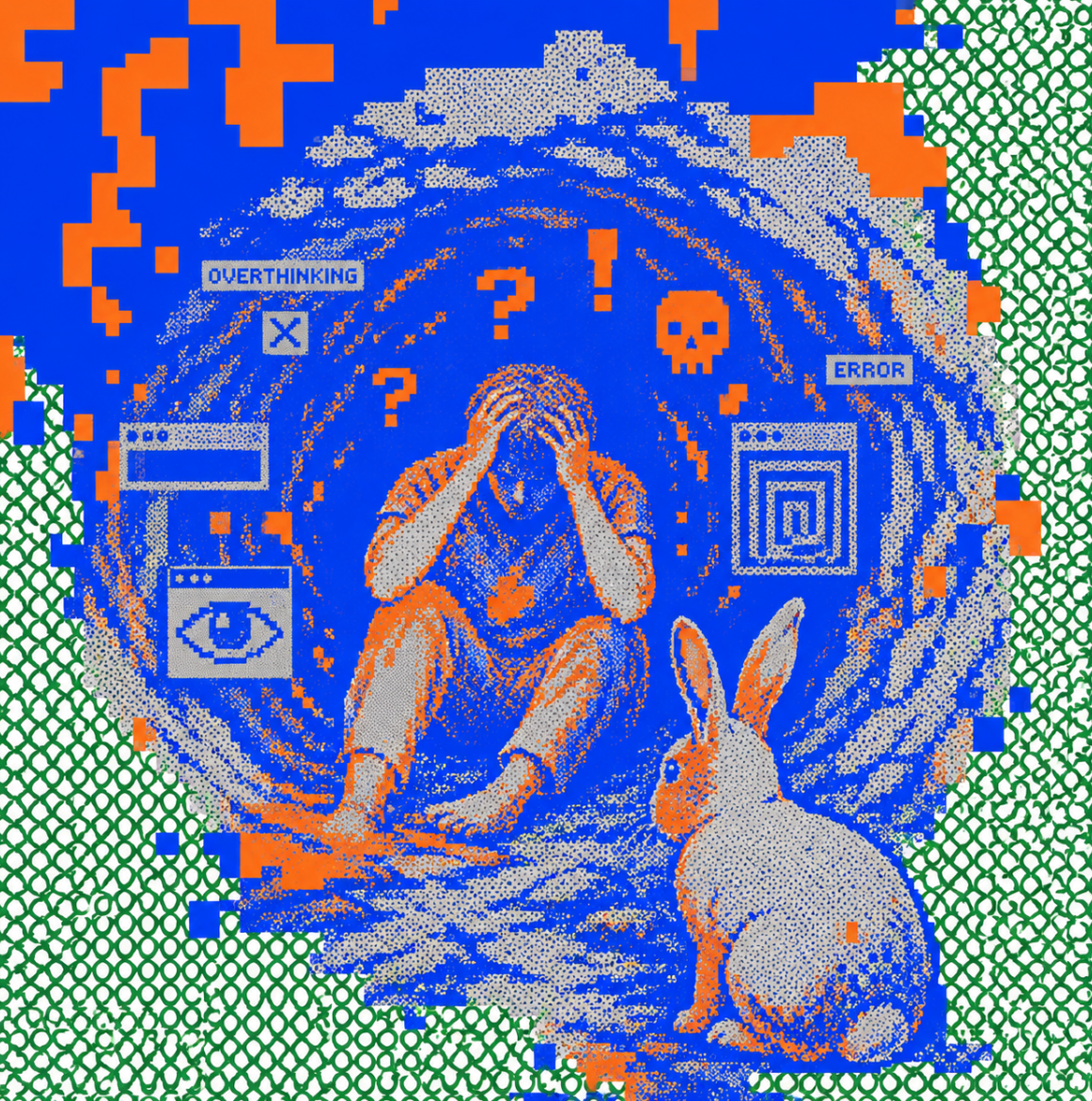
European regulators were moving against one of the largest social media platforms over allegations that its recommendation engine was deliberately pushing younger users into what the industry now calls the Rabbit Hole. That algorithmic corridor that begins with a single video and ends, an hour or two later, somewhere the user never intended to go. The platform was not accused of publishing harmful content. It was accused of something subtler: building a system designed to make stopping feel unnatural.
Connected to this is Brain Rot. The term describes what happens to a mind sustained on fast, repetitive, low-density content. Attention shortens. Depth becomes uncomfortable. The appetite for consumption remains but the capacity for genuine return on that consumption quietly erodes. The expression began as internet slang. It has since attracted enough serious attention that regulators and researchers now use it without embarrassment.
I was thinking about both of these things when I remembered a conversation with a colleague.
He is a respected architect. His work is good. His projects carry genuine thought. He is not a specialist in digital marketing or architectural photography, which is to say he is a normal practicing professional rather than a media-optimized one.
He submitted a completed project to one of the internationally recognized architectural platforms. The kind of platform whose selection shapes what gets seen, and therefore what gets remembered.
The rejection came with a specific reason.
Not the architecture. Not the idea. Not the resolution of the design problem.
The photographs.
Divisare, the Italian platform whose editorial position is worth naming here, operates differently. No advertising. No algorithm designed to maximize time on site. No engagement metrics driving what gets selected. The work is presented in a standardized format and asked to carry its own weight. Its criteria are primarily architectural, not photographic.
This contrast is worth holding onto, because it describes two genuinely different philosophies about what architectural publishing is for.
The dominant model in architectural media today shares its underlying logic with the platforms currently under regulatory scrutiny in Europe. Content is selected partly based on its expected visual performance. The project that photographs well has a structural advantage over the project that was built thoughtfully but documented modestly. The platform’s interest in its own reach and the architect’s interest in honest documentation are not always the same interest.
What my colleague encountered was the downstream consequence of this misalignment. His project was filtered by its packaging before it was evaluated by its content. The photographs failed the first test, so the architecture never reached the second.
I have written before about the importance of architectural photography and I stand by that position. A completed project deserves documentation that preserves it for the archive and the historical record. The photograph is often the medium through which a building enters the professional conversation and stays there.
But there is a meaningful distance between serving architecture through photography and making photography the condition under which architecture is permitted to be seen.
The same logic that produced impossible skin in portrait photography, skies that do not exist above the buildings they are shown above, light behaving in ways that the actual site at the actual time could never produce, has arrived in architectural documentation. Buildings with reflections that physics does not permit. Atmospheres assembled in post-production. Landscapes that bear no relationship to the real conditions of the real project on a real day.
These images are sometimes beautiful. Some of them are genuinely skillful. But they are building an expectation of the built environment that the built environment cannot satisfy, because the built environment exists in actual weather under actual light with actual imperfections, and visiting a building you know from its published images can produce a genuine dissonance. The building is often good. But it is not that image.
The problem in that case is not the architecture.
It is what the image promised.
At ArchUp we have thought about where we want to stand in relation to this.
We are not against beautiful photography. We use it when it serves the work. We believe in serious documentation. But we are not willing to make photographic quality the primary filter through which architectural value is assessed.
If a project arrives with photographs taken on a phone by the architect himself, and the project carries genuine value, and the text adds real knowledge for the reader, we will look at the project before we look at the lens.
Architecture should not be reducible to the quality of its packaging.
On the question of how we structure the reader’s experience: we use internal linking, we build a coherent archive, we care about search visibility. These are legitimate editorial tools. But there is a specific distinction between helping a reader find knowledge that is genuinely relevant to them and building a system designed to keep them inside the platform regardless of whether they are getting anything from the time they spend there.
We are not interested in burning hours of your day.
We want you to arrive, read something that repays the time, and leave with something you did not have before.
The Rabbit Hole is not a problem because it begins with a video.
It is a problem because it is designed to make the original reason for entering irrelevant.
Brain Rot is not caused by consuming a lot of content.
It is caused by a sustained diet of content that extracts attention without returning value, until the capacity for sustained attention itself begins to quietly degrade.
Both phenomena have direct architectural equivalents. A media environment that selects projects primarily on photographic spectacle gradually trains its audience to expect spectacle and to distrust everything that does not deliver it. The architect who understands this adjusts accordingly, investing in photography that produces the expected visual register whether or not that register honestly represents what was built. The audience receives images that look like architecture. The connection between those images and the actual condition of the built environment grows progressively looser, and no one inside the system has a strong incentive to close the gap.
The most consequential competition in architectural publishing right now is not for traffic or session duration.
It is for the right to decide who gets into the architectural memory and who does not.
Because the platform that controls the image controls the archive.
And the archive, in the long run, is what survives.
Real architecture does not need the eye to be deceived.
It only needs to be given a fair chance to be seen as it actually is.
✦ ArchUp Editorial Insight
The photographic rejection that opens this article is not an editorial failure — it is the recommendation algorithm made visible at the point of entry, because the dominant architectural platforms have structurally aligned their selection criteria with the visual performance metrics that govern their distribution channels, and a project that cannot produce a thumbnail capable of stopping a scroll is, within that logic, a project that does not exist. What the article correctly identifies as a misalignment between photographic quality and architectural value is in practice a market signal: the platforms that control the architectural archive have discovered that their economic model — whether advertising-dependent or reach-dependent — rewards images that generate engagement before they reward buildings that resolve problems, and the architect who understands this adapts by investing in post-production atmospheres and non-existent skies rather than in the building itself, producing the same decoupling between appearance and reality that I Miss the Render identified in AI-generated visualization — the hallucination of coherence without its substance — while the Starchitect media machinery examined in The Manufacture of the Icon provided the original template: control the image, control the archive, and the archive, in the long run, is the only history the profession will remember.