Vitra Fire Station: Movement and Architectural Mass

Spatial Dynamics and Mass Deconstruction
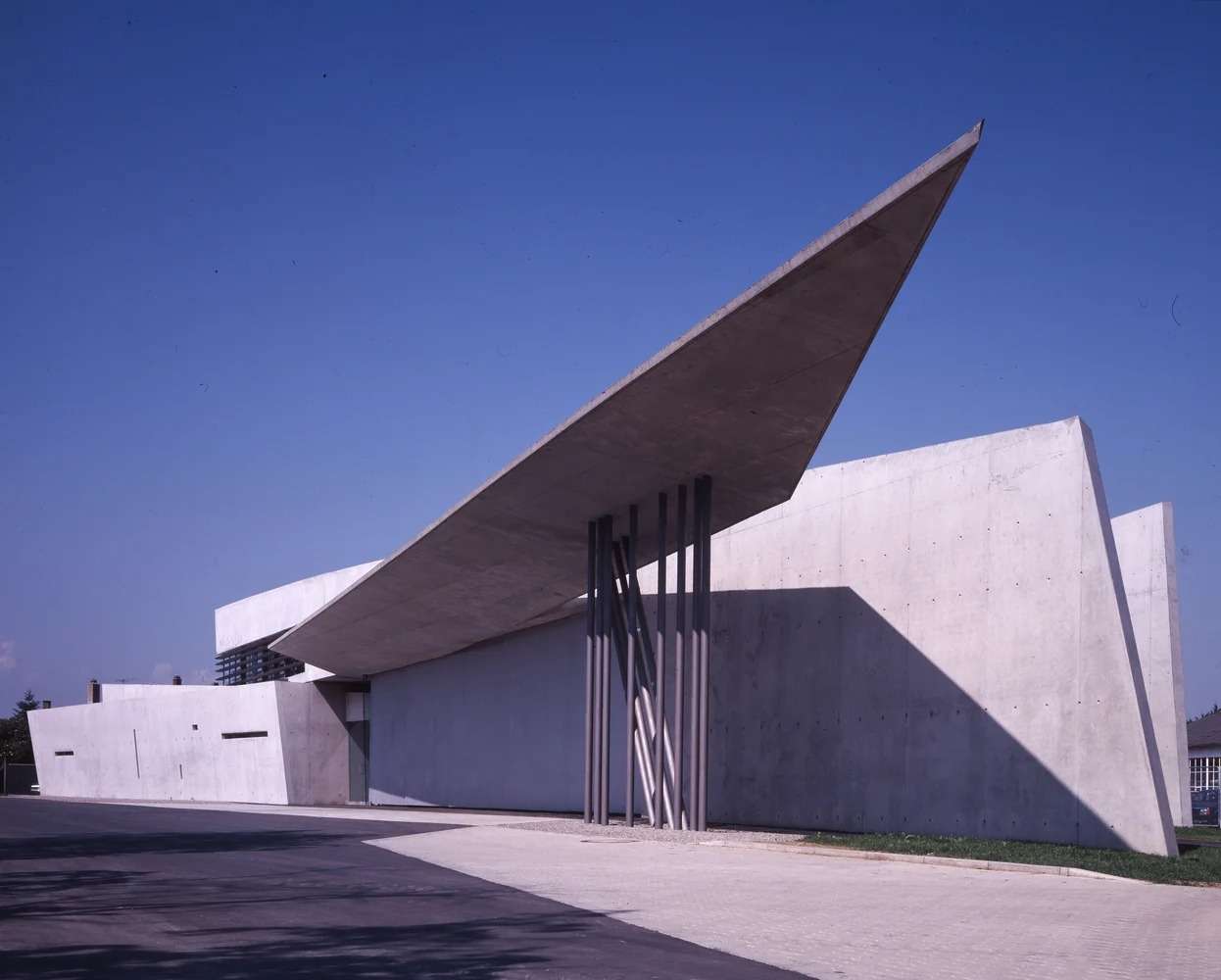
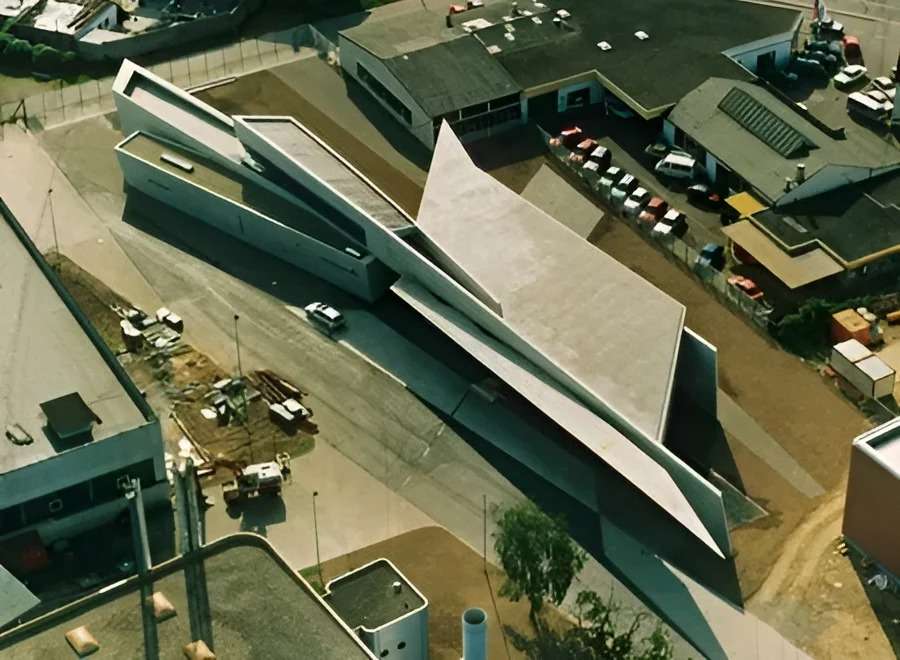
The Vitra Fire Station transcends the concept of a conventional functional facility to assume an urban role in organizing the industrial campus and defining its primary axis. This role is expressed through a system of in-situ cast reinforced concrete walls that intersect at sharp angles, forming a linear composition that directs movement and redefines the relationship between the building and its surrounding landscape. Rather than treating walls as static structural elements, the design employs concrete masses as instruments for shaping circulation routes and establishing visual boundaries, directly translating the deconstructivist ideas that characterized Zaha Hadid’s early theoretical work in Architecture.
Site Organization and Sequential Movement
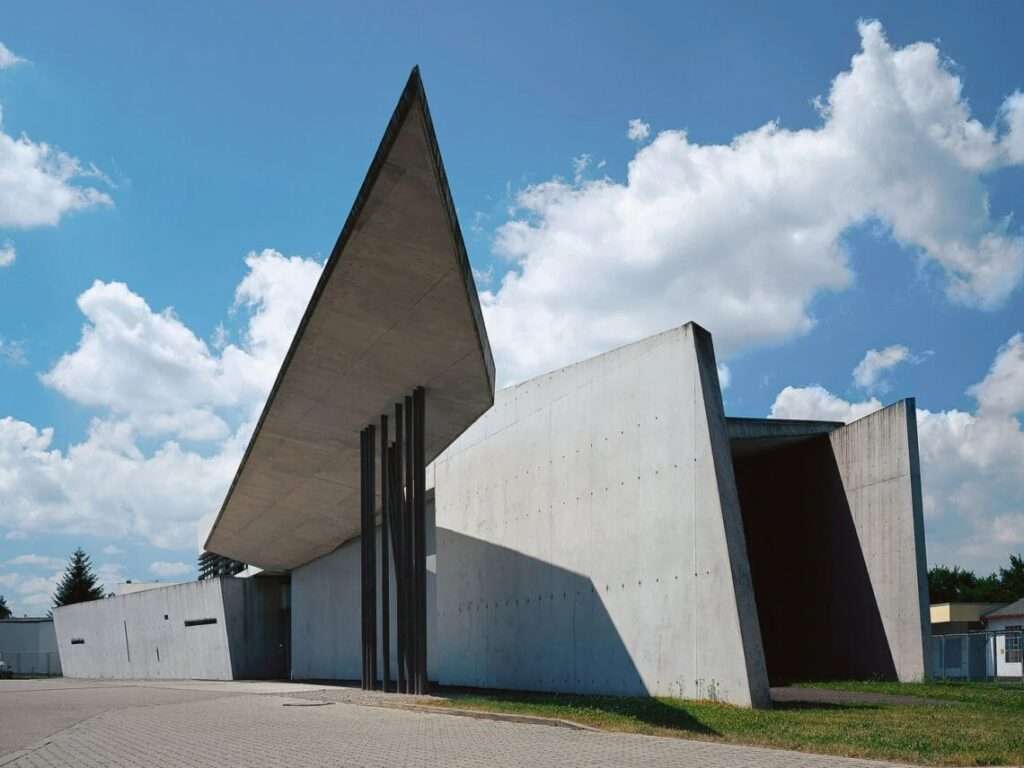
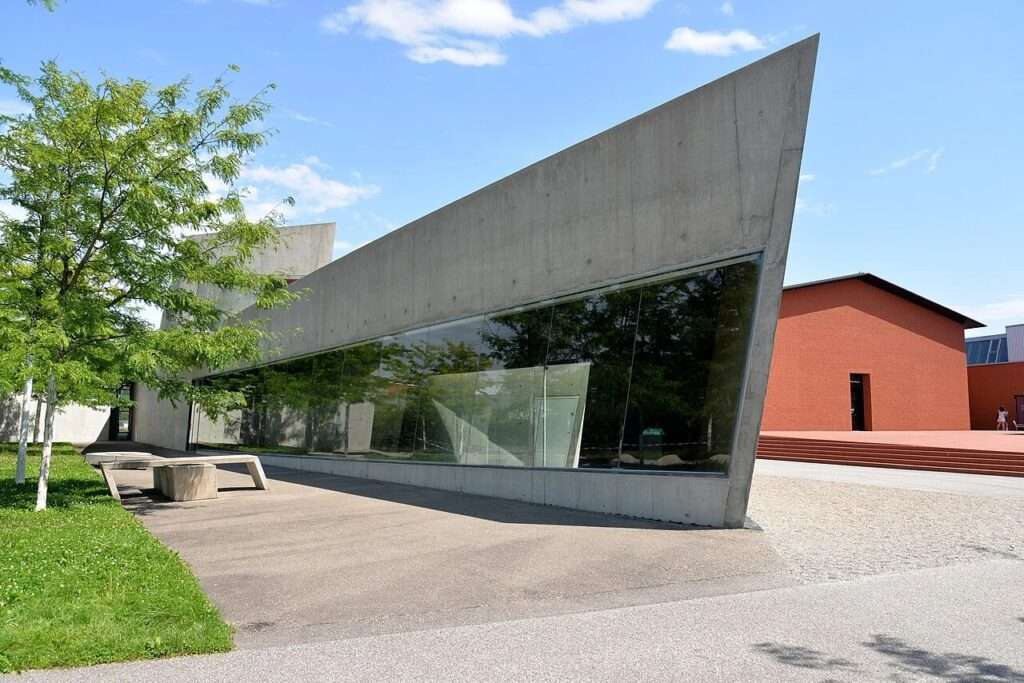
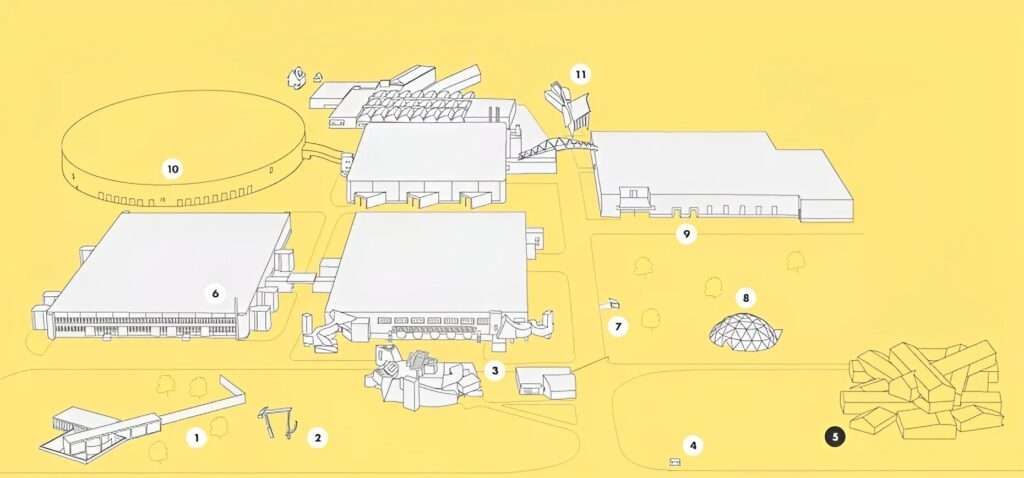
The building responds to its spatial context by extending alongside the main internal roadway, functioning as an urban edge that separates the industrial campus from the surrounding agricultural landscape. Supporting elements, including the training area and external facilities, are integrated into this linear composition, forming a continuous extension of the project’s architectural language. As visitors approach the building, the mass gradually unfolds through a sequence of shifting perspectives created by the interaction of inclined walls and layered spaces, intensifying the sense of movement and transforming circulation into a constantly evolving spatial experience within the broader context of contemporary Projects.
Layered Composition and the Relationship Between Mass and Void
The interior organization is based on a series of overlapping concrete layers that generate functional spaces between them, including the fire engine garage, changing rooms, meeting areas, and service spaces. This arrangement creates varying degrees of openness and enclosure, allowing the building to appear solid and monolithic from certain viewpoints while revealing its internal spaces from others through openings and glazed surfaces. This contrast reinforces the close relationship between movement and visual perception, as the reading of the building shifts according to the observer’s position and path through the site, a theme frequently explored in architectural Discussion.
Material Purity and Structural Abstraction
The project’s material language relies on exposed reinforced concrete as the primary medium of architectural expression, reducing secondary details and decorative finishes to a minimum. Walls and roofs are joined in a cohesive composition defined by precise, sharp edges, while frameless glazing strengthens the continuity of the visual relationship between interior and exterior spaces. This abstract approach gives the building a distinctly sculptural presence, where materiality and structure become integral components of architectural expression rather than merely means of achieving it, reflecting innovations in Building Materials and modern Construction practices.
From Theory to Built Architecture
The Vitra Fire Station represents a pivotal turning point in Zaha Hadid’s career, marking the transition of concepts derived from abstract drawing and Suprematist compositions into tangible architectural reality. These references are embodied in the building’s overlapping planes, inclined lines, and shifting perspectives, all of which impart a continuous sense of movement. In this sense, the project is not viewed merely as a fire station, but as an architectural experiment that demonstrated the feasibility of transforming radical theoretical ideas into built form, establishing many of the principles that would later define Hadid’s subsequent works and influence future Research.
Mass Movement and Transforming Perspectives
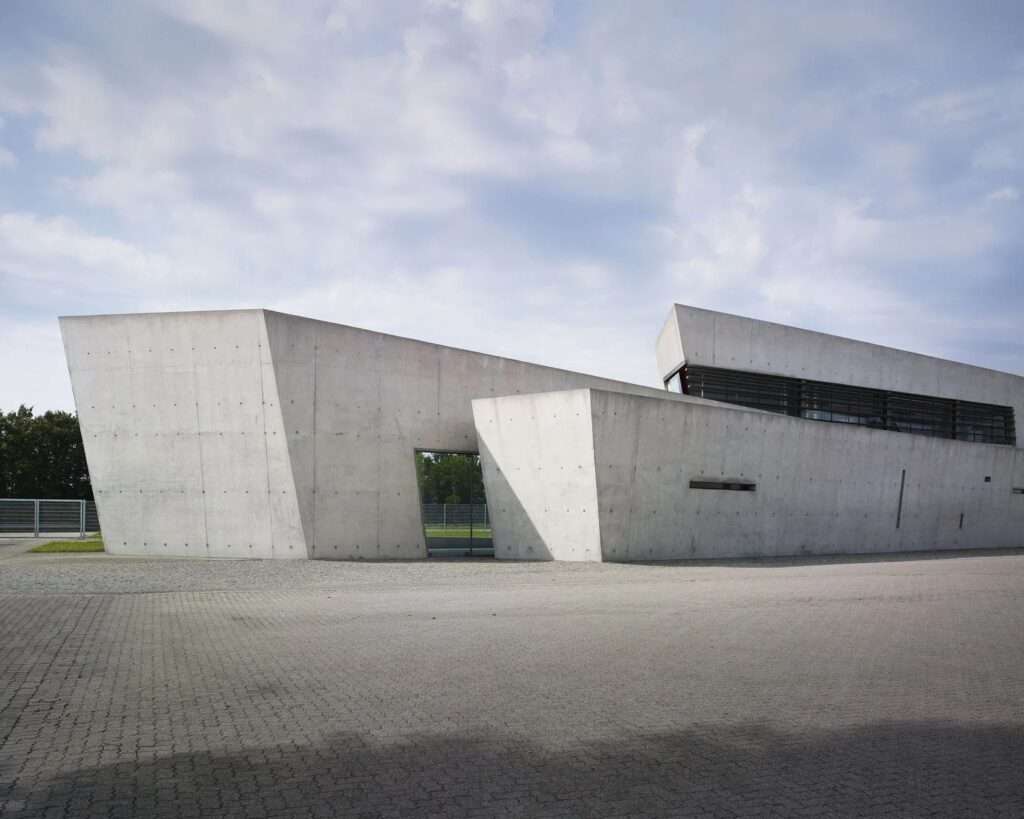
The formal language of the Vitra Fire Station is founded upon a sequence of sharply angled concrete walls that intersect to generate a visual impression of movement despite the static nature of their structural elements. The large garage doors reinforce this rhythm through their integration into the overall façade composition, causing the mass to appear in a constant state of transformation depending on the viewing angle and movement around the building. This configuration produces shifting perspectives that challenge conventional readings of architectural mass and emphasize the relationship between form and function in a project designed to accommodate rapid response and continuous motion, securing its place among significant contemporary Buildings and notable works featured in Archive.

Architectural Validation of Theoretical Ideas
The project represents the first practical test of the ideas Zaha Hadid developed during her years of theoretical exploration. The sharp compositions and intersecting lines that appeared in her drawings and unrealized projects were transformed into a functional architectural structure. Through the organization of masses and voids and the direction of movement throughout the site, the building demonstrates the possibility of translating experimental concepts into built architecture without sacrificing their expressive qualities or spatial complexity, making it a defining milestone in Hadid’s professional career and a valuable subject for architectural research.
Functional Transformation and Conceptual Continuity
Only a few years after its completion, the building lost its original function as a fire station following the dissolution of Vitra’s internal fire brigade. It was subsequently converted into an exhibition and event venue operated by the campus’s design institution. This transformation reflects the flexibility of the project’s spatial organization, as its open spaces and unconventional compositions were capable of accommodating new functions without requiring substantial alterations to its architectural structure. The continued use of the building further demonstrates that its significance extends beyond its original purpose, residing instead in the spatial system that became one of the most prominent manifestations of Deconstructivist architecture in the late twentieth century, a topic frequently explored in architectural discussion.
Architectural Legacy of the Project
The significance of the Vitra Fire Station extends far beyond its functional program, residing in its influence on the evolution of Zaha Hadid’s architectural language. Concepts that would later become recurring themes in her work, including fluid movement, mass fragmentation, and dynamic compositions based on overlapping planes and intersecting lines, appeared here at an early stage. As a result, the building became a landmark within her professional trajectory and an early example demonstrating how architecture can evolve from an experimental theoretical proposition into a fully realized spatial experience with a lasting presence in the history of contemporary architecture. Its impact continues to be recognized across major architectural archives and critical studies.

✦ ArchUp Editorial Insight
The article presents the Vitra Fire Station as the moment when Zaha Hadid’s theoretical explorations transitioned from the realm of drawing and abstraction into a functional architectural reality. The project does more than serve as a utilitarian facility; it reorganizes movement, spatial boundaries, and visual perception through a system of intersecting concrete planes. Its significance lies in its ability to transform experimental ideas into a built structure that contributed to redefining the language of contemporary architectural design and the relationship between mass, movement, and site.
However, this interpretation may place excessive emphasis on formal and aesthetic value at the expense of functional performance. The building’s relatively early transformation from a fire station into an exhibition venue raises questions about its effectiveness as a specialized operational facility. From this perspective, the project can be understood as a powerful architectural statement whose cultural significance ultimately surpassed its original purpose, rather than as an ideal model for the long-term integration of functional requirements and architectural construction processes. The project remains a notable reference within contemporary architectural news and critical discourse.