تصميم منزل لزها حديد في غابة بموسكو ليكون تحفة معمارية مميزة
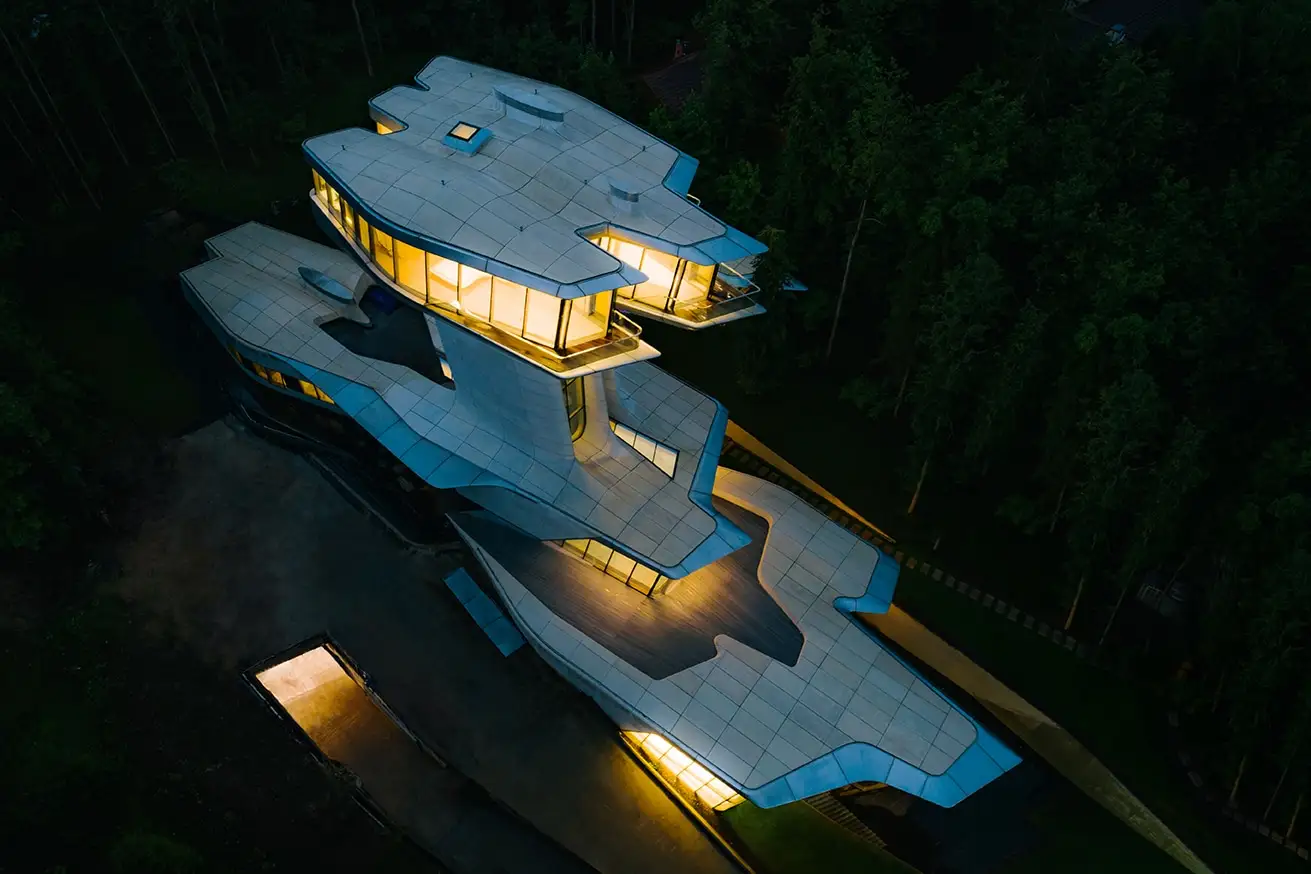
Zaha Hadid’s home, owned by businessman Vladislav Doronin in Barvikha Forest near Moscow,
features three spacious floors partially integrated into the sloping terrain below.
The floors feature angled glass facades facing the forest,
and wide ceilings with irregularly stepped edges hang from the glass walls of each floor.
The late Iraqi-British architect designed the Capital Hill Residence complex for businessman Vladislav Doronin.
Who runs the real estate companies Capital Group and OKO Group,
and is also the owner of the luxury hotels and resorts brand Aman.
The idea for the project was first conceived more than a decade ago,
when the duo met in London and Hadid sketched a design on a napkin.
Images of the project were first revealed in 2008. Initial images of the project appeared in 2011,
long before Hadid’s death.
But these pictures indicate the complete completion of the housing.
Designing a house for Zaha Hadid in a forest in Moscow to be a distinctive architectural masterpiece
Hadid’s former business partner, Patrick Schumacher,
who took over the leadership of the company after her death in 2016, describes the project as a dream.
It was a dream house. No architect would turn down such a task. Zaha knew Vladislav,
She describes him as a very elegant man who resembled the Russian James Bond,
who had the taste and wealth to create something extraordinary.
Design features
This project is an absolute testament to Zaha’s genius,
for someone who develops new levels of enjoyment of life on this planet.
This masterpiece is characterized by Zaha Hadid’s distinctive features of organic complexity and the complexity of spatial arrangement.
Lots of surprises, lots of ingenuity and beauty.
British architect Norman Foster praised the “exceptional” project.
Foster recalls Doronin proudly showing off photos of his completed home at a dinner party,
feeling “tremendously disappointed” that he would never be able to share the praise with Hadid.
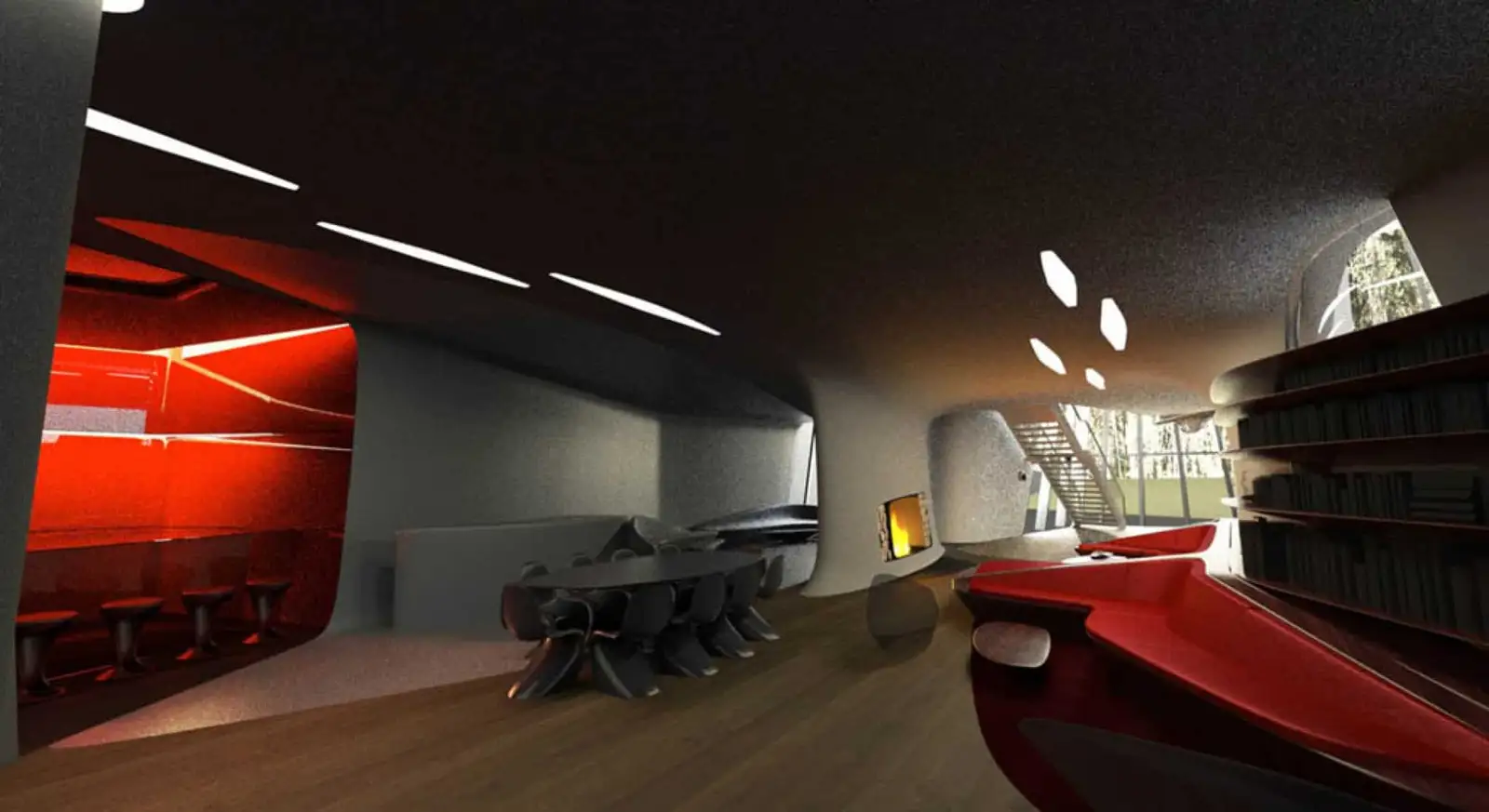
The basement contains entertainment facilities, while there is a lounge, living room and kitchen.
Along with entertainment spaces and a swimming pool on the ground floor.
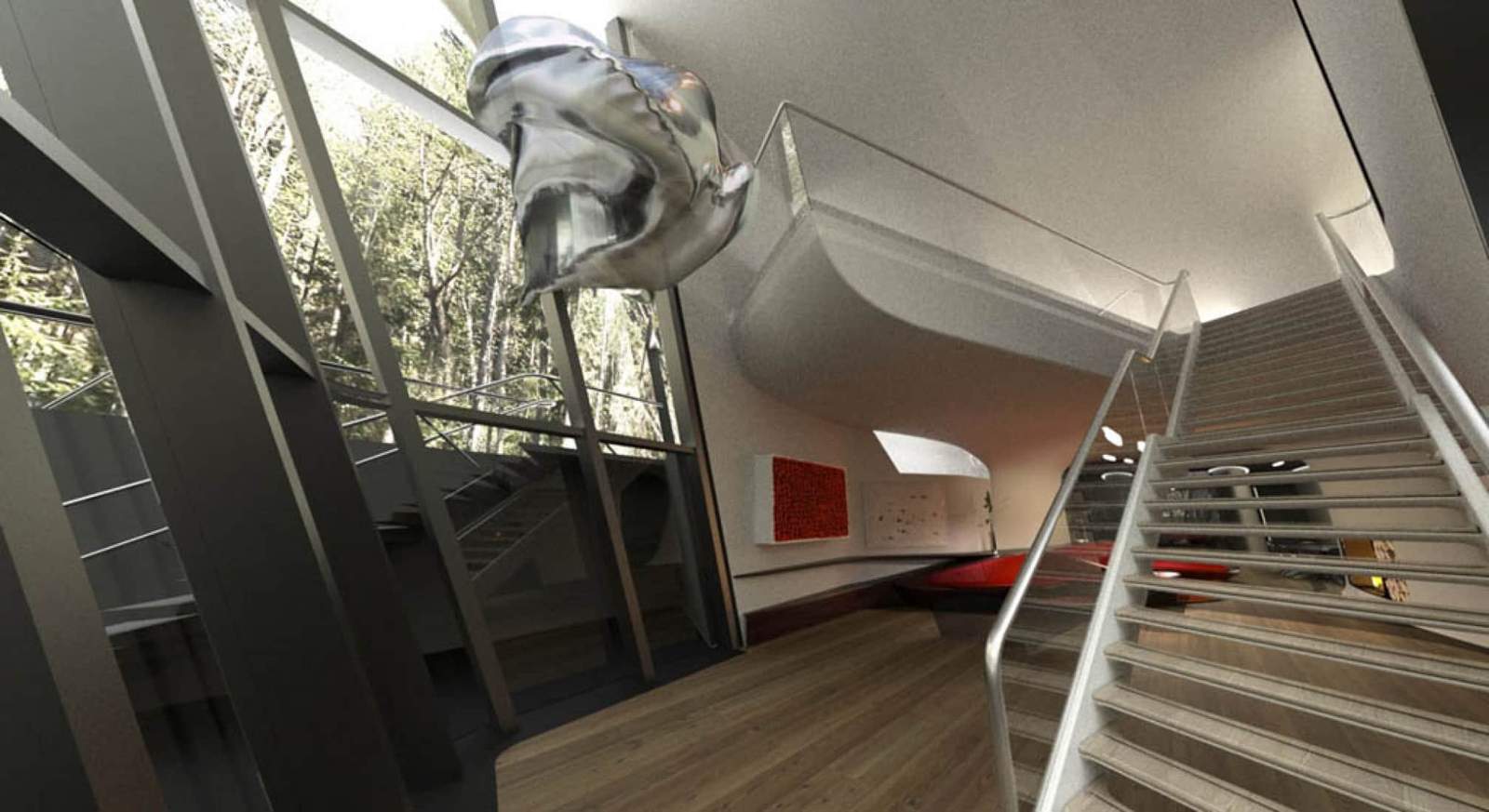
The entrance, guest and children’s bedrooms and the library are located on the first floor.
It was not announced when the project was designed that it would be the only private residence to be designed and executed by Pritzker Prize winner Zaha Hadid.
The house cost $140 million, and Doronin chose Barvikha Forest, located just outside Moscow.
to be home to the 36,000-square-foot space, which was eventually named Capital Hill Residence.
The plot of land was located on a steep hill, so Hadid and her team carved out the slope itself, creating a structure that grew from the terrain.
Some amenities are located on the property, such as a 65-foot swimming pool,
It is connected to the rest of the house via a slender staircase,
and provides the required sweeping views over the treetops like a Rebel Alliance bunker.
✦ ArchUp Editorial Insight
The article showcases the Capital Hill Residence, an architectural masterpiece by Zaha Hadid, as a study in spatial dynamics and form. The design features a structure partially integrated into a sloping terrain, with signature organic complexity and an elevated master bedroom. While the article effectively highlights the project’s iconic status and unique features, it provides limited insight into its functional design strategies or long-term contextual relevance. The text focuses heavily on the project’s celebrity connections rather than offering a deeper analytical perspective on its material expression or sustainability. Nonetheless, the project stands as a singular, powerful example of avant-garde residential architecture and a testament to Hadid’s bold conceptual vision.
Architectural enthusiast and writer, delving deep into the realms of design, space, and human experience. Passionately penning the evolution and innovation of architecture
The comprehensive guide to waterproofing cement,Cement waterproofing is a cost effective and durable solution for protecting surfaces from moisture and…
Each year, Halloween turns cities worldwide into spaces of imagination and experimentation.This transformation appears not only in people’s costumes but…