A Service Centre Is Not a Row of Counters

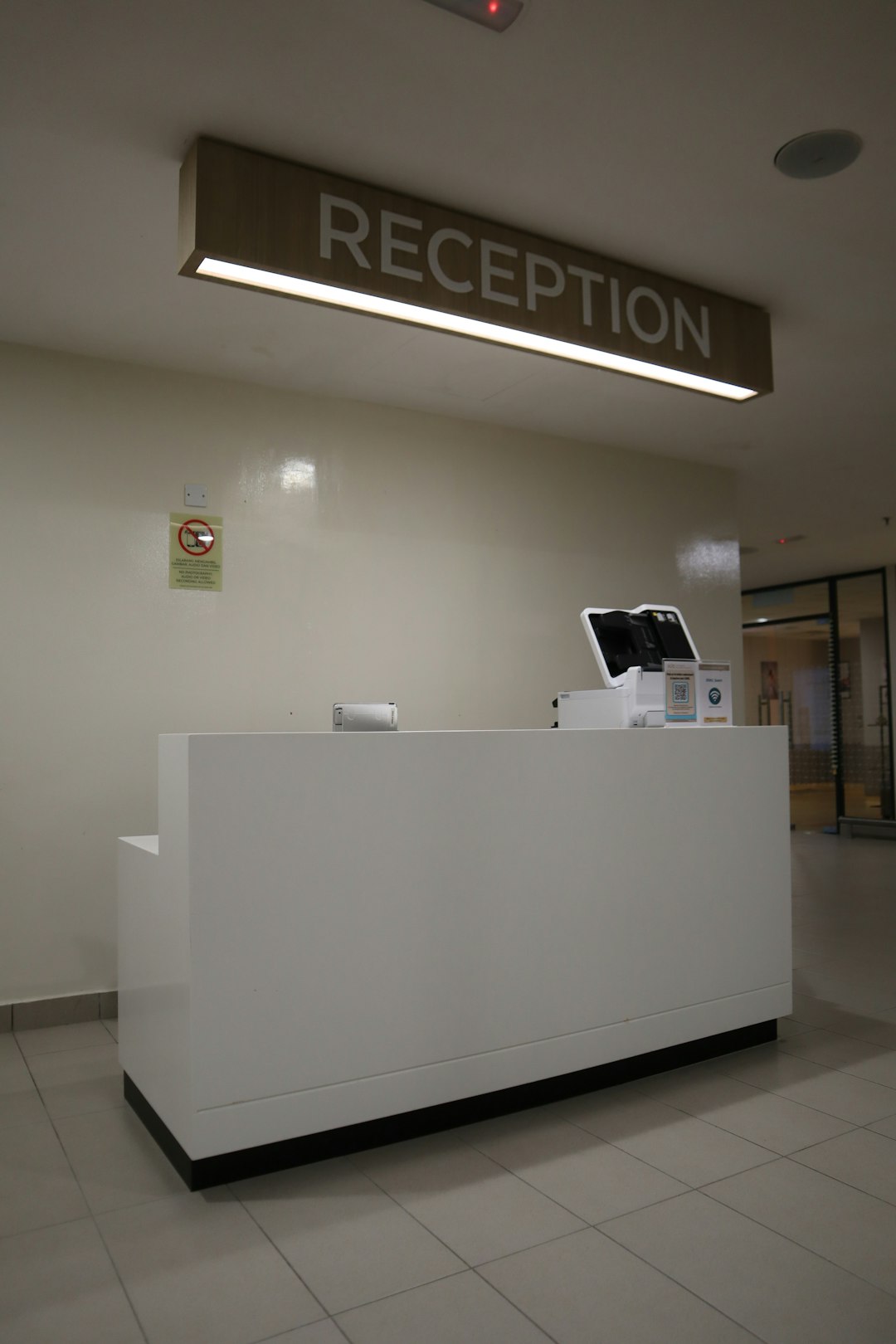
A municipal service centre is usually drawn as a hall of counters. But the citizen does not experience counters; they experience a sequence — arrive, orient, wait, be served, and often come back. The quality of the building is the quality of that journey.
Ask how a government service centre is briefed and you usually get a number: so many service windows, so many staff, so many visitors a day. From that number a plan is drawn — a counter line, a waiting hall, a car park. The count is not wrong, but it describes the building as a throughput machine and says nothing about the thing the visitor actually lives through: the path from the front door to a resolved transaction, and sometimes back again next week because a document was missing. Design the counters and you have designed a quarter of the building. The rest is the journey between them.
The transaction journey, step by step
Arrival and orientation. The first decision a visitor makes is where to go, and they make it in the first few seconds, often under mild stress and sometimes in a second language. If the answer is “ask someone,” the building has already failed its first test. As an earlier ArchUp piece on the cost of getting lost argued, wayfinding is not signage bolted on at the end; it is the legibility of the plan itself. Romedi Passini’s foundational work on wayfinding framed it as a spatial problem-solving process: people read the building before they read the signs, and a plan that is clear needs fewer of them.
The wait. Most of the visit, measured in minutes, is spent waiting, and here the design problem is as much psychological as spatial. David Maister’s 1985 study The Psychology of Waiting Lines established the principles that still govern the field: occupied time feels shorter than unoccupied time, uncertain waits feel longer than known ones, and unexplained waits feel longer than explained ones. Above all, people tolerate a wait they believe is fair and resent one they believe is not — which is why a visible, honoured first-come-first-served order matters more than raw speed. Donald Norman, revisiting Maister, added that emotions dominate the experience and that the memory of the wait, shaped most by its beginning and end, outlasts its actual length. A ticketing system that tells people their position, a seat rather than a standing line, and a clear endpoint are not amenities; they are the design of the wait.
The counter. The moment of service is where privacy collides with efficiency. An open counter line is fast to build and cheap to staff, but it conducts a citizen’s personal business — a benefit claim, a legal status, a debt — within earshot of the next person in line. The over-the-shoulder problem is a design decision, resolved by counter spacing, acoustic separation, and a private room for the sensitive case, not by asking staff to lower their voices.
The return. The transaction that cannot be completed in one visit is the hidden cost of a badly briefed service centre. A missing document, a wrong queue, a form that had to be fetched and filled sends the visitor home and back again, doubling the load the throughput count was supposed to measure. The building that explains its requirements before the queue — a greeter, a checklist, a triage desk — converts three visits into one.
Design decisions the count cannot make
Three moves separate a service centre that works from one that merely opens. The first is triage: separating the fast, standard transaction from the slow, exceptional one, so a five-minute errand does not sit behind a forty-minute case. The second is the queue as a space, not a line — seated, informed, and legibly ordered, following the waiting principles above rather than defaulting to a rope and a corridor. The third is privacy graded by need: open counters for routine business, enclosed rooms for the sensitive, and the circulation to move between them without announcing which a visitor needs.
What digitisation leaves behind
In the Gulf, much of the routine transaction has already moved online. National platforms now handle the renewals, payments, and certificates that once filled a service hall, and that shift changes who still comes in person. The visitor who remains is disproportionately the complex case, the exception the portal rejected, the person without the device or the literacy or the language to self-serve. The physical service centre is becoming the place for the hardest cases, not the average ones — and a building still measured by average throughput is being judged by the wrong metric. The citizen who walks in is, increasingly, the user the brief was least designed for.
Limits
Most of the service-design and waiting-line research comes from retail, banking, and healthcare, where the customer chooses to be there and can leave. A public service queue is mandatory and often non-substitutable, which may change how fairness, anxiety, and tolerance behave; the principles transfer, but the magnitudes should be re-measured, not assumed. Queue tolerance also varies by culture and by the stakes of the transaction. And the digital-transition argument depends on local adoption rates that differ sharply between and within countries. The journey is the right unit of analysis; its exact shape is local.
✦ ArchUp Editorial Insight
A service centre measured by visitors per day optimises for the transaction that no longer needs the building. As the routine case migrates to the screen, the counted throughput falls, and a naive reading calls that success and shrinks the hall. But the cases left behind are the slow, the exceptional, and the vulnerable — exactly the ones a screen cannot serve and a stopwatch cannot see. The honest metric for a modern service centre is not how many it processes but how well it resolves the cases that reached it because nothing else could. That is a journey to be designed and measured, not a counter to be counted.
References
- Maister, D. H. (1985). The psychology of waiting lines. In J. A. Czepiel, M. R. Solomon, & C. F. Surprenant (Eds.), The Service Encounter. Lexington, MA: Lexington Books.
- Norman, D. A. (2009). The Psychology of Waiting Lines. Essay, jnd.org.
- Arthur, P., & Passini, R. (1992). Wayfinding: People, Signs, and Architecture. New York: McGraw-Hill.
- Larson, R. C. (1987). Perspectives on queues: Social justice and the psychology of queueing. Operations Research, 35(6), 895–905. doi:10.1287/opre.35.6.895