Baobab Waterfall: Energy and Floating Maritime Design

Spatial Rootedness and the Movement of Maritime Masses
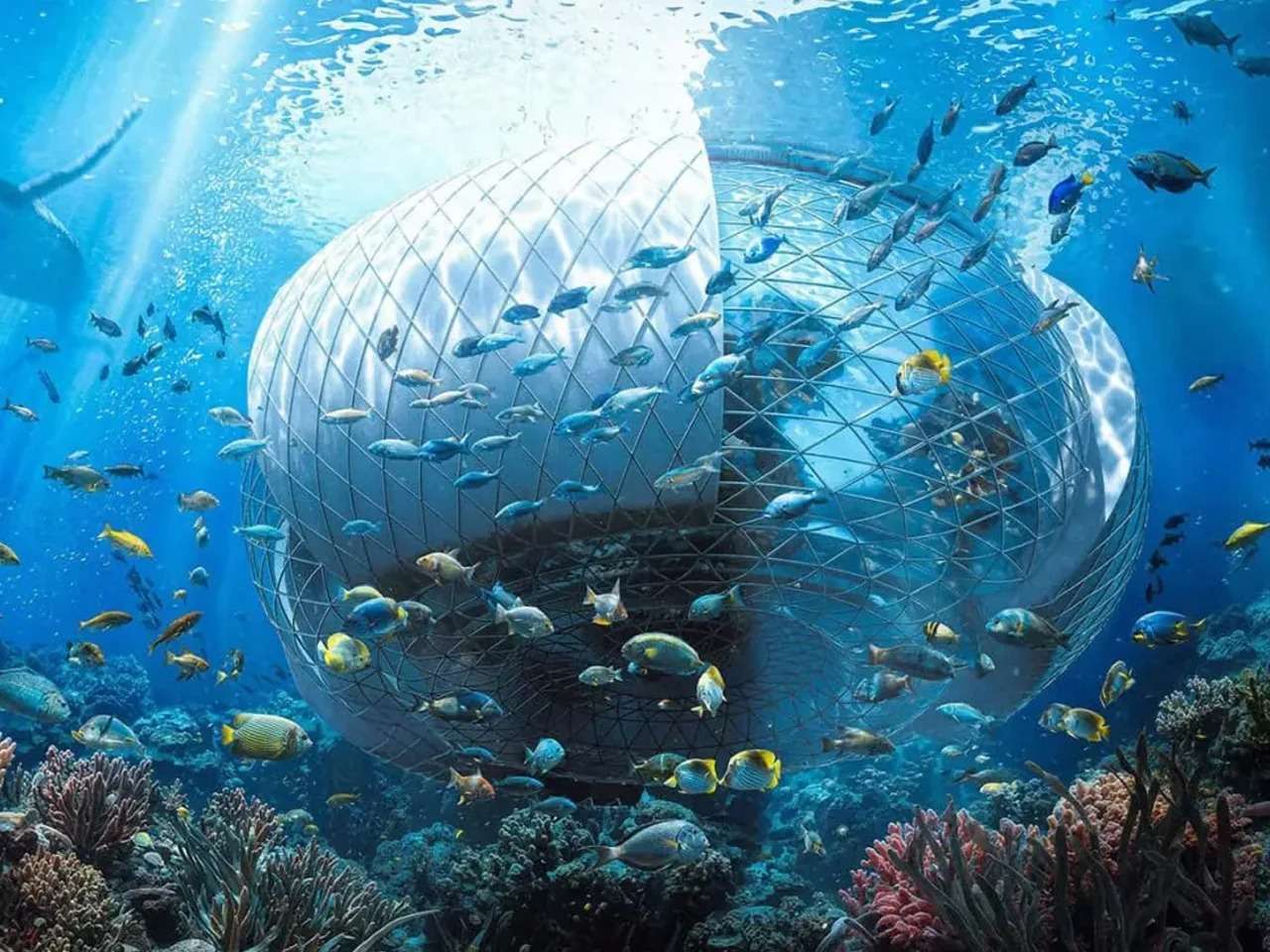
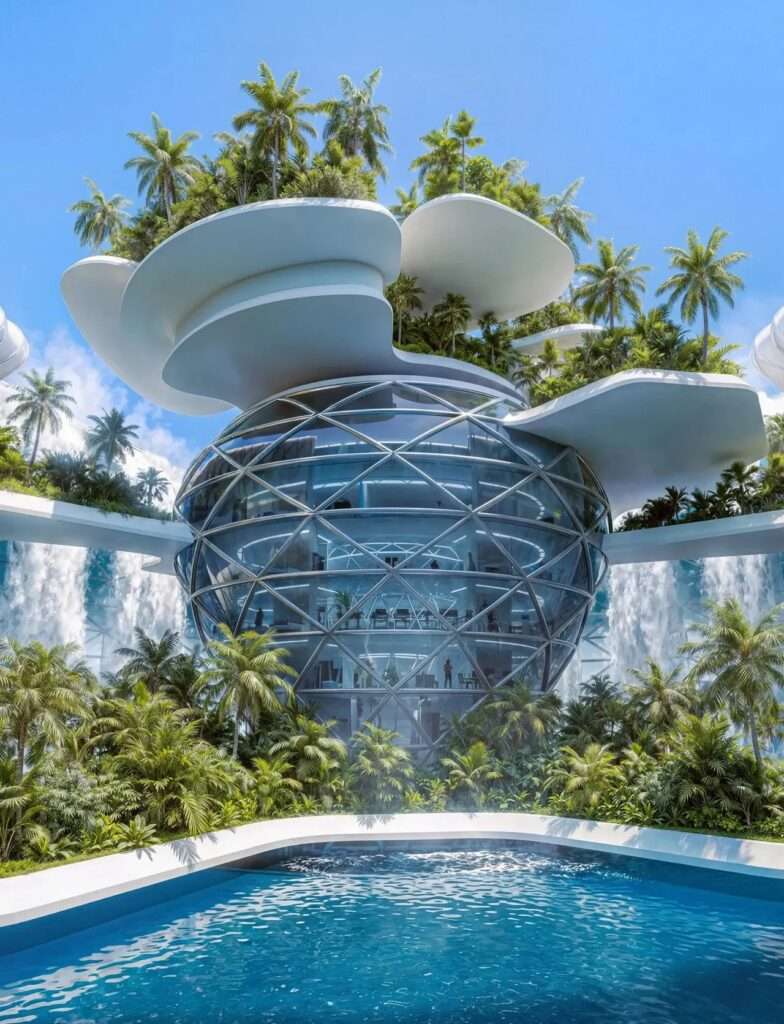
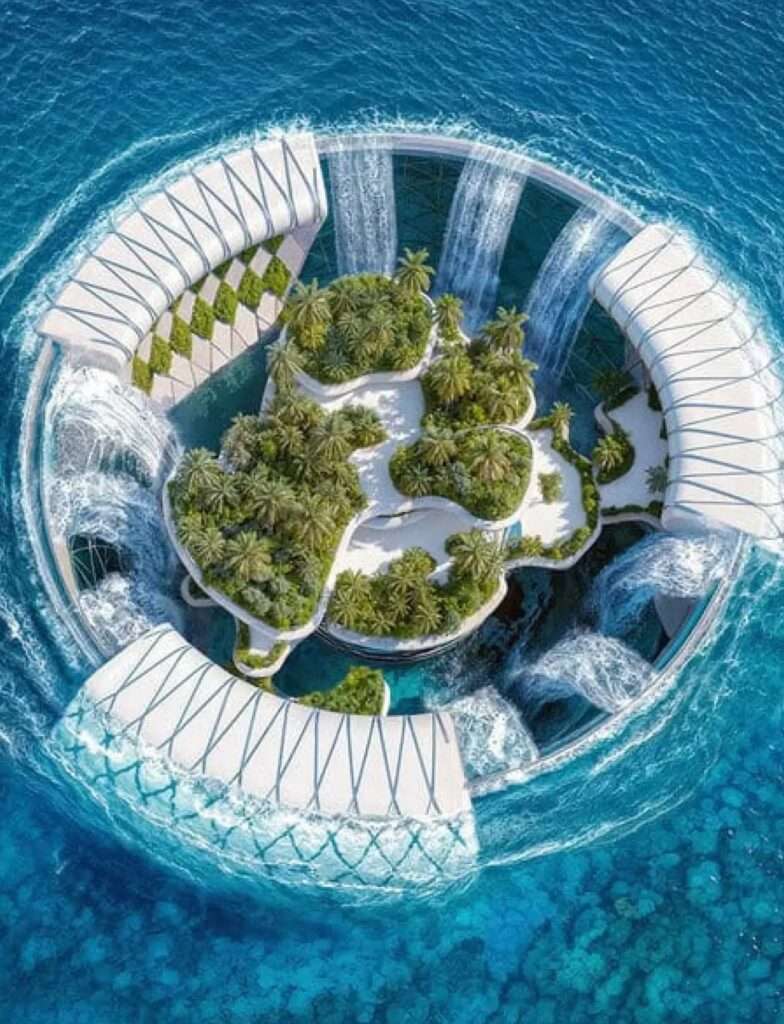
The floating infrastructure in this proposal transforms from a mere functional platform in the open ocean into volumetric spatial masses that emulate the biological logic of the inspired baobab tree. The massing analysis of the project reveals a gradual expansion that begins at a base rooted within its marine environment and rises upward toward the top, creating a visual and scenographic experience that redefines the relationship between floating structures and the open maritime horizon. This structural formation does not merely function as a container for multi-use components; it instead imposes a kinetic pathway through which the user moves across varying spatial levels of openness, enhancing a sense of stability and containment within the dynamic nature of the Indian Ocean.
Bio-interaction and Environmental Scenography
The design language integrates with surrounding natural elements by orienting the masses to capture the sun path and air movement, generating a continuous contrast between shadows and extended surfaces. The materials employed contribute to a psychological and material effect that transitions the user from a dry extractive and generative environment into an interactive experience that mirrors the resilience of Madagascar’s ecosystems. This spatial evolution is manifested in how the structure gradually transforms from energy-generation and storage infrastructure into spaces prepared for social rehabilitation and eventual development into a resort, where environmental scenography plays a central role in enabling this functional transition through the interplay of natural light and interior volumes.
Functional Integration and Spatial Dynamics
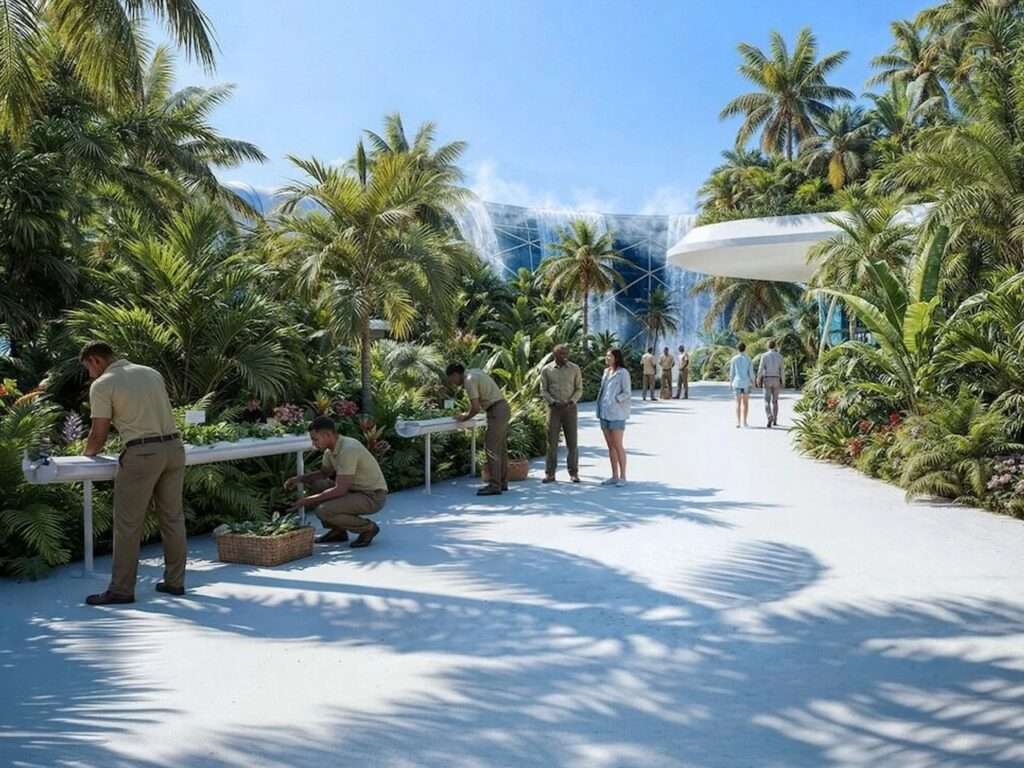
The architectural structure of the project transcends the conventional concept of dry industrial stations, evolving instead into a living spatial system based on continuous flow. This integration is reflected in the central tower, which incorporates within its core transparent greenhouse units, creating a striking material and visual contrast between the solidity of the structural system dedicated to hydrological energy production and the permeability of the agricultural glass surfaces. Within this space, the user experiences a unique visual condition where the movement of flowing water merges with light passing through transparent façades, elevating the quality of the interior space and liberating it from functional monotony toward a broader environmental horizon where industrial production and agricultural activity coexist.
Scenographic Transformation and the Human Dimension
The critical value of the project lies in its temporal and spatial flexibility, designed to serve and elevate the human experience. The space begins its journey as a center for rehabilitation and social reform, where design language and materiality are employed to create a restorative environment that embraces the user and provides carefully structured movement paths oriented toward the surrounding nature, reducing the intensity of isolation within the oceanic context. As this social program matures, the building undergoes a seamless scenographic transformation in the function of its spatial mass, evolving into a multi-use resort and green energy hub; this functional transition reshapes the psychological and material impact of the place, turning it from a space of healing and reform into a destination of prosperity and visual openness toward the maritime horizon.
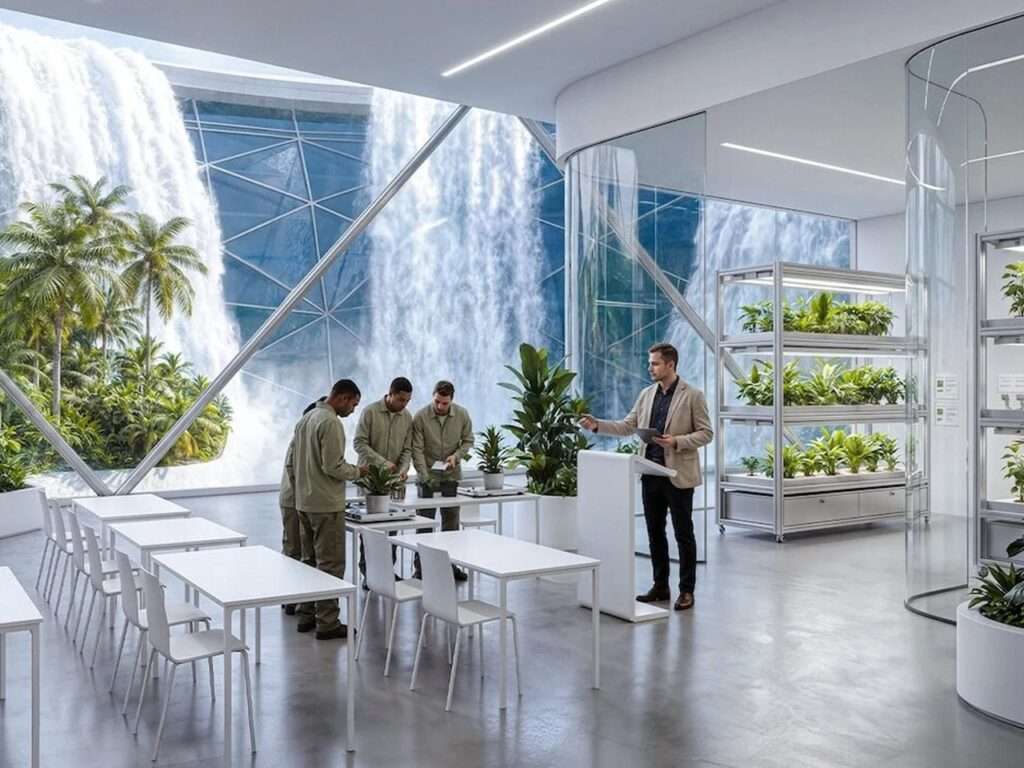 Internal spaces transition from rigid instructional areas to therapeutic biophilic environments overlooking the central water system..
Visual Embodiment and Spatial Drama
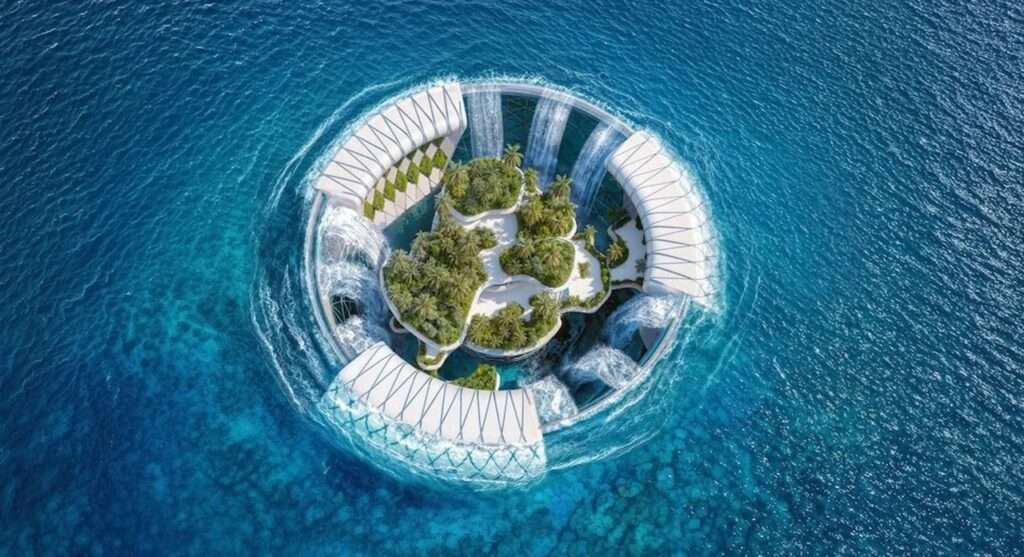
The digital approach of the project reveals a deliberate dramatic contrast between the raw forces of the open ocean and the designed architectural mass, where parametric algorithmic solutions reflect a monumental gradation in architectural scale. This visual scenography highlights the dynamic interaction between structural surfaces, water movement, and shifting shadows, granting the imagined user a sense of inevitable yet calm stability in the face of a volatile maritime environment. The visual effect here does not merely simulate reality; rather, it deconstructs the dialectical relationship between material solidity and light permeability, allowing human experience of space to unfold textually and sensorially through a sequence of monumental structural impressions.
Design Holism and Architectural Logic
The proposal raises a fundamental critical question about architecture’s capacity to move beyond singular solutions toward comprehensive environmental and functional integration. In this model, infrastructure appears as a flexible entity that refuses to address isolated technical problems, instead evolving as an extended spatial phenomenon that mirrors natural systems in their capacity for adaptation and transformation. This critical approach redefines the concept of maritime infrastructure, transforming it from silent engineering devices into living human and social environments that interact with their physical and social context with depth and efficiency.
✦ ArchUp Editorial Insight
The proposal diagnoses Madagascar’s energy crisis through a maritime self-sufficiency model that integrates hydrological energy harvesting with spatial and social rehabilitation. By emulating the biological storage logic of local flora, this floating typology reinterprets structural engineering as a catalytic tool within open maritime design, attempting to merge rehabilitative, agricultural, and urban spaces into a unified and adaptable structural mass.
However, this highly idealized vision contains a utopian blind spot, assuming that correctional rehabilitation labor can seamlessly transition into luxury hospitality services. Relying on complex algorithmic infrastructures and speculative marine engineering, the project overlooks the harsh maritime realities of saline erosion and the massive capital investments required to sustain such an imagined floating urbanism.