Lucia Floating Home in Lake Como: Rethinking Aquatic Architecture

Spatial Dynamics and Cultural Reinterpretation
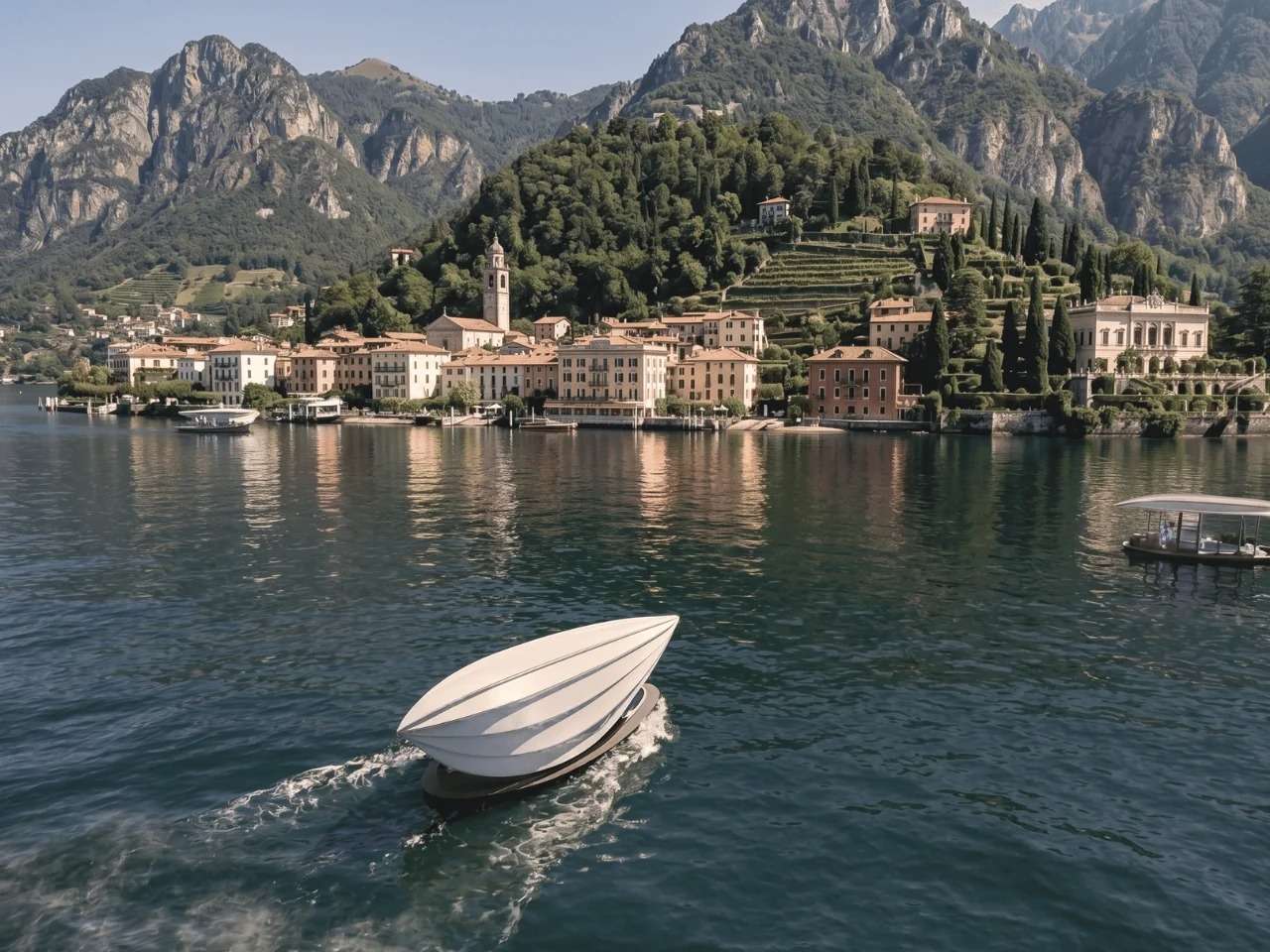
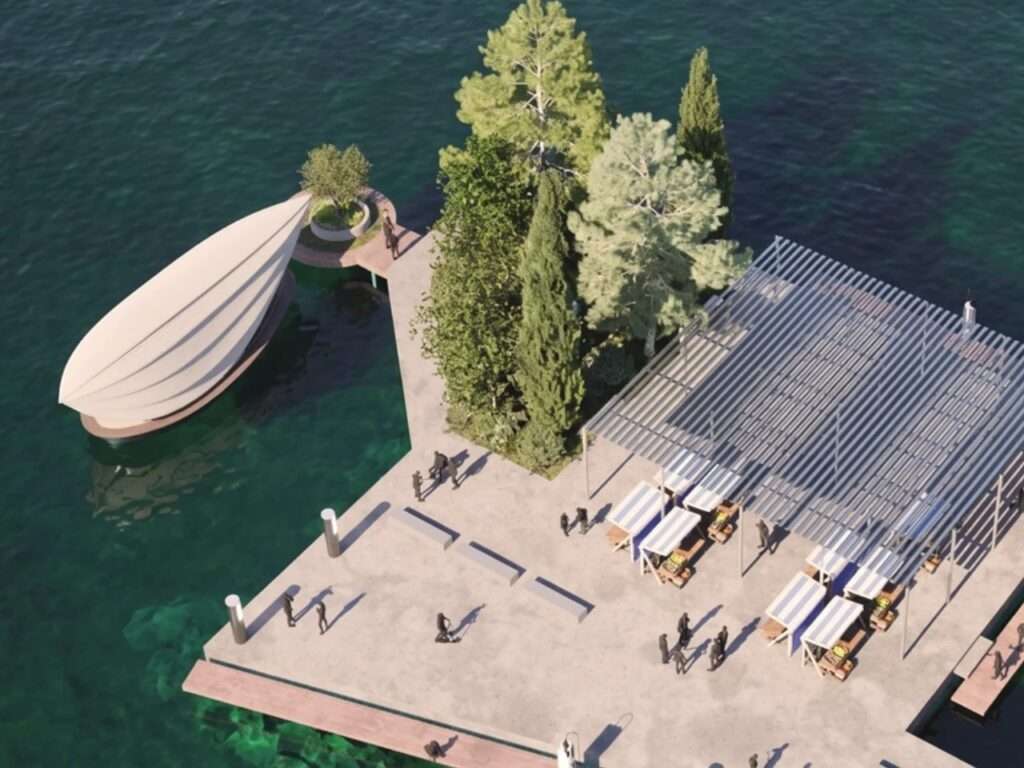
This floating design proposal goes beyond being merely a compact residential solution, becoming a study in deconstructing and reinterpreting the historical patterns of the traditional “Patel boat.” The massing composition is based on clean white horizontal lines that visually interact with the surface of Lake Como, where the structure transforms from a simple flat-bottomed fishing boat into a sustainable scenographic Architecture void. This transition grants the mass cultural weight, linking the architectural product to the emotional memory of the site, turning the structural form from a solid floating box into a natural extension of the surrounding aquatic environment.
Human Experience and Scenographic Spatial Analysis
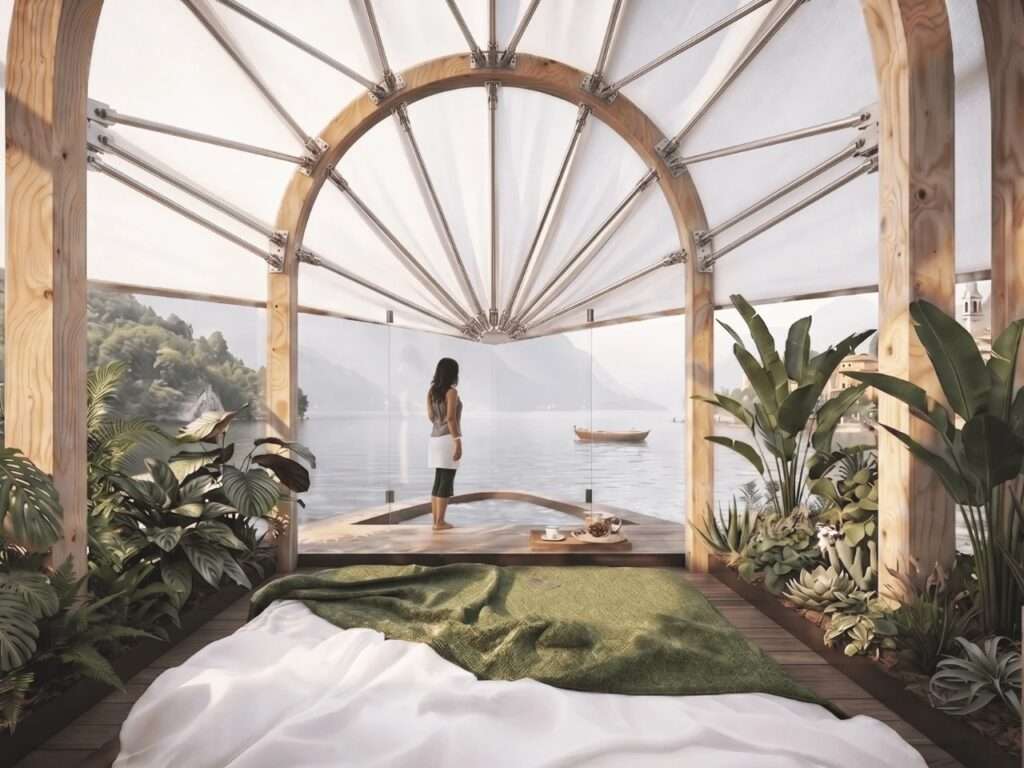
Visual permeability is embodied in the Design through the transparent glass surface that reconfigures the user’s relationship with the exterior, where the movement of water and shifting shadows throughout the day become an integral part of the internal spatial dynamics. The human experience of the structure unfolds through a circulation path that connects the rigidity of the white structure with the fluidity of the surrounding environment, creating an environmental and visual balance that influences the psychological perception of the compact space. The Interior Design governs the direction of natural light and the sun’s path, transforming living within the mass into a continuous, living experience emerging from rituals of passage and dwelling above water.
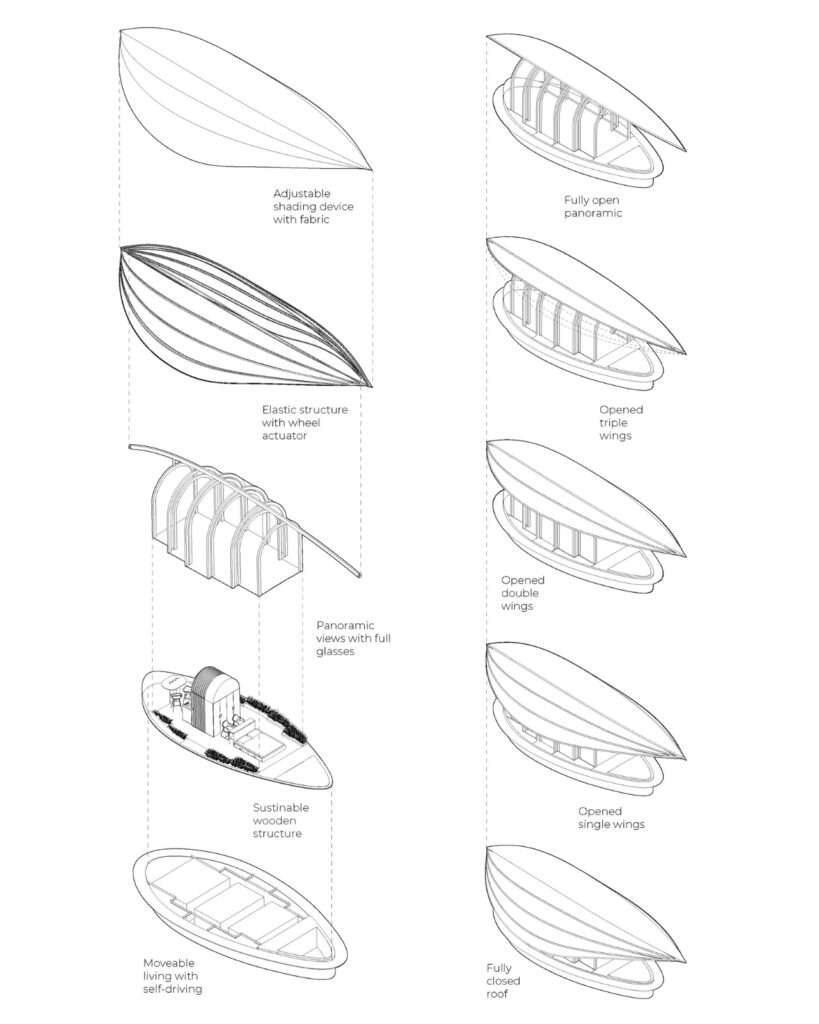
Flexibility of the External Envelope and Spatial Negotiation
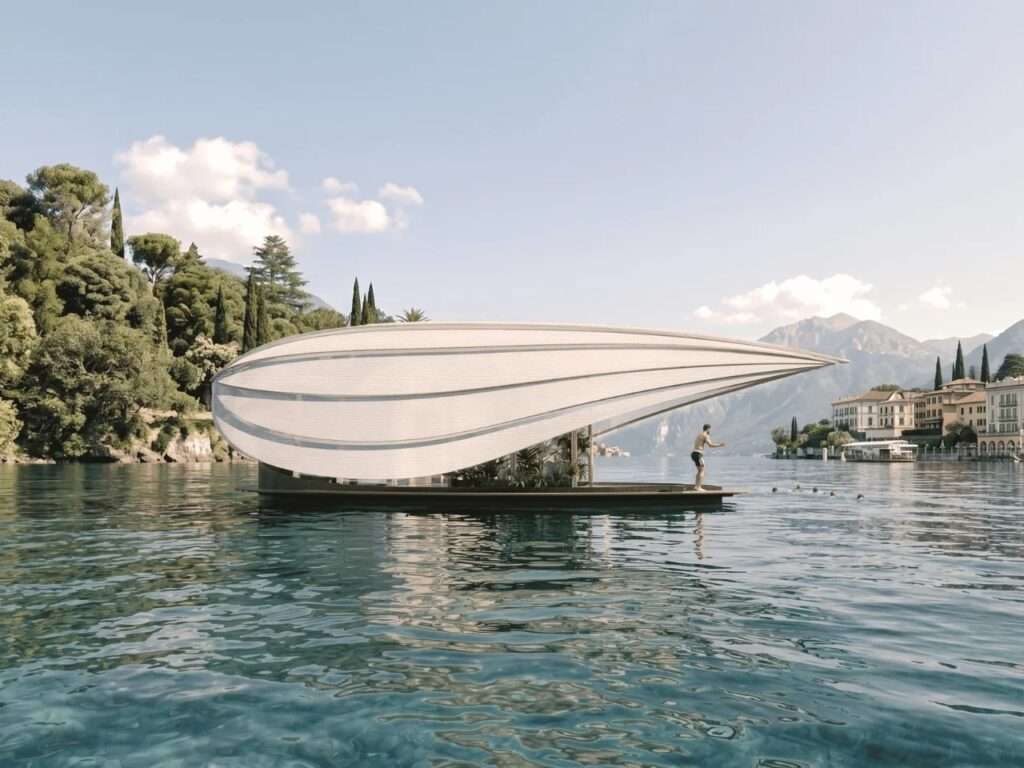
The foldable roof controls the scenography of the interior space, acting as a dynamic tool for regulating the relationship between exposure and isolation, as well as varying levels of light and shadow. When this structural envelope retracts, the boundaries between Architecture and the aquatic environment dissolve, allowing natural phenomena to flow directly into the depth of the residential mass. Conversely, closing the roof produces an immediate material and psychological shift toward enclosure and privacy, granting the user a conscious architectural mechanism to control visual and kinetic tension with the changing lake environment.
Mass Efficiency and Integrated Infrastructure
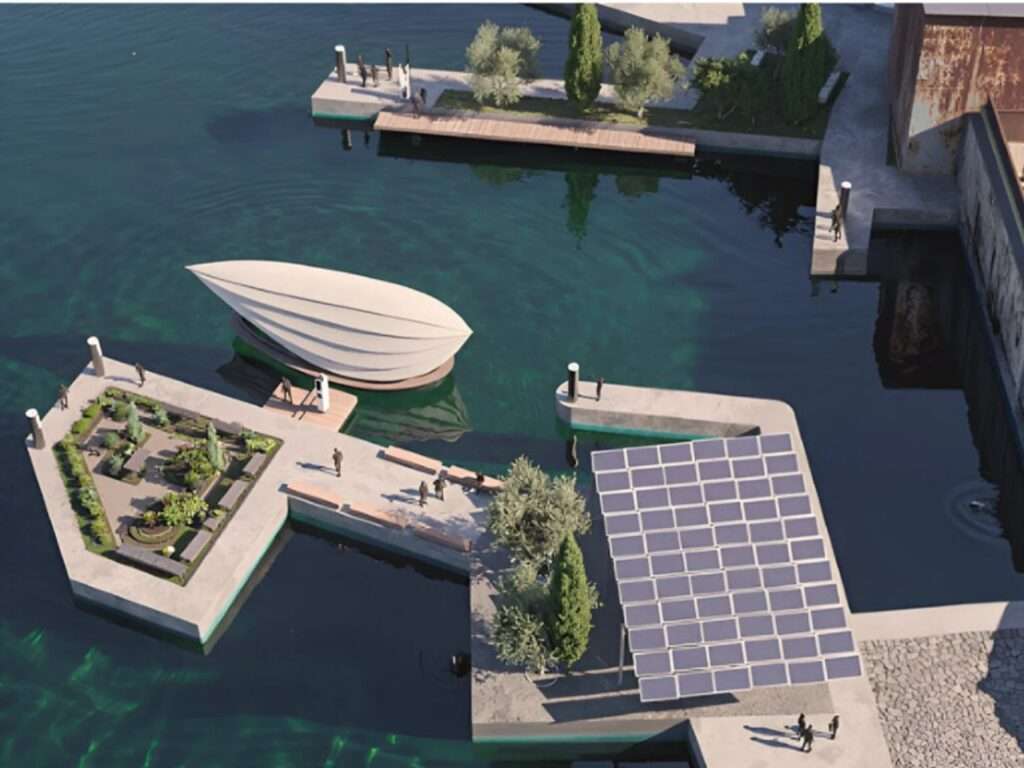
The quality of the human experience within the single-floor layout is founded on the strict use of multifunctional modular furniture, where the interior space is shaped by a philosophy of structural austerity that eliminates waste and avoids formal excess. The Construction relies on materials that prioritize reuse, adopting this constraint as a critical stance that confronts the visual noise of the external landscape with calculated architectural simplicity. This compact space is integrated with a network of solar-powered docking stations (Darsena Link), transforming infrastructure into a primary engine for the movement and orientation of the mass, enabling flexible repositioning and the adjustment of sunlight and airflow angles throughout the day.
Conceptual Positioning and Activation of Cultural Fabric
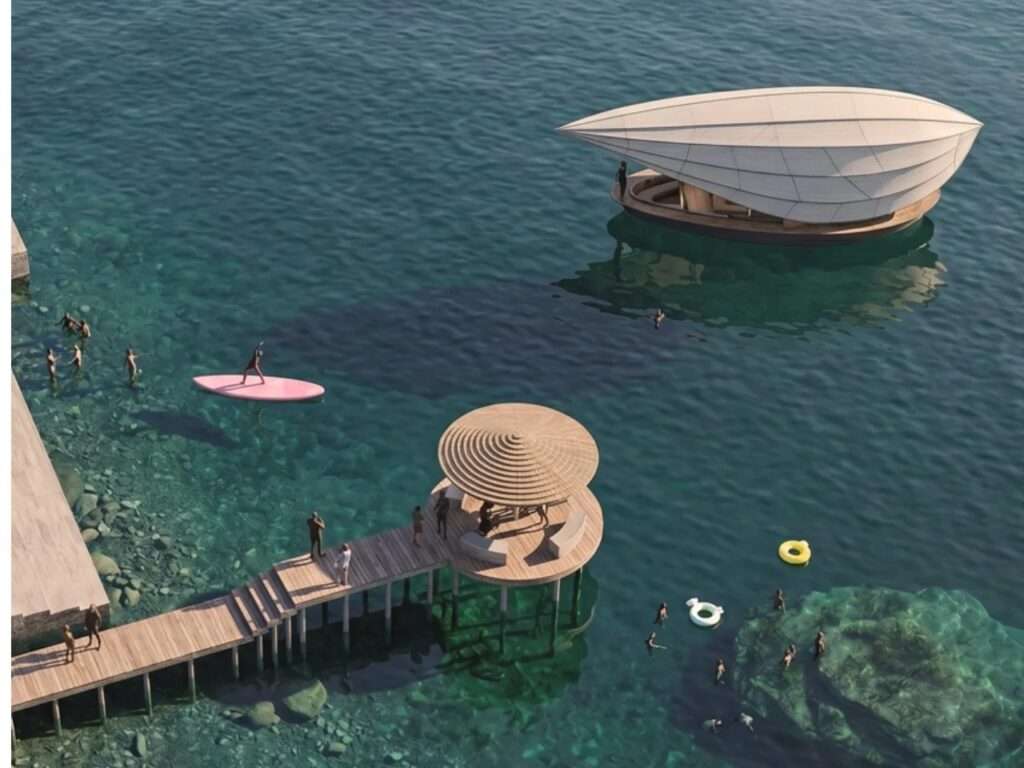
This architectural proposal presents a critical thesis that goes beyond the traditional boundaries of land-based tiny-house movements, redefining aquatic habitation outside the conventional engineering frameworks of traditional houseboats. The Design language does not treat the mass as a boat attempting to replicate residential functions, but as a conscious architectural structure endowed with buoyant properties, an essential distinction that fundamentally transforms the visual and material perception of the structure. The mass acquires a kinetic role as a “pollinator” and social connector moving between shoreline communities, stimulating human interaction with non-standard spatial configurations within the lake and reshaping cultural connections in a dynamic contemporary manner. This approach aligns with broader discussions in Cities and Research on adaptive urbanism.
Scenographic Paradox and Environmental Impact
Within a visual context dominated by villas and luxury hotel structures characterized by heavy, static massing, the proposal offers an alternative architectural language defined by calmness and calculated mobility over the water surface. The structure moves as a lightweight element that avoids imposing a heavy physical presence on the natural landscape, offering a human experience grounded in psychological balance and integration with nature rather than competition with it. Freeing the residential space from the constraints of gravity and tectonic stability opens new possibilities for experiencing architectural space, where movement and instrumental reduction become the building’s primary expressive values. These ideas resonate with contemporary Top News in sustainable design.
✦ ArchUp Editorial Insight
The text diagnoses a shift in tiny-house discourse, elevating the concept of “Lucia” from a simple floating dwelling to a flexible model within nomadic design. By referencing the historical patterns of Lake Como, the project liberates the mass from terrestrial constraints, introducing a kinetic envelope and solar docking networks as a poetic remedy to spatial congestion and the overgrowth of static architectural masses. This is particularly relevant given current Architectural Jobs trends toward adaptive reuse and lightweight structures.
However, this critique overlooks the rigid socio-economic realities of contemporary coastal architecture. Romanticizing highly mobile luxury units ignores the legal constraints of maritime zones, shoreline property rights, and environmental degradation caused by transboundary waste. In the absence of genuine structural strategies for scalability, such proposals remain floating luxuries of visual speculation rather than democratic solutions with real-world applicability. For further context, Buildings and Building Materials are critical factors in any serious discussion of sustainable aquatic habitation.