Layer House: Coastal Forest Residential Design Integration

General Context of the Project and Site
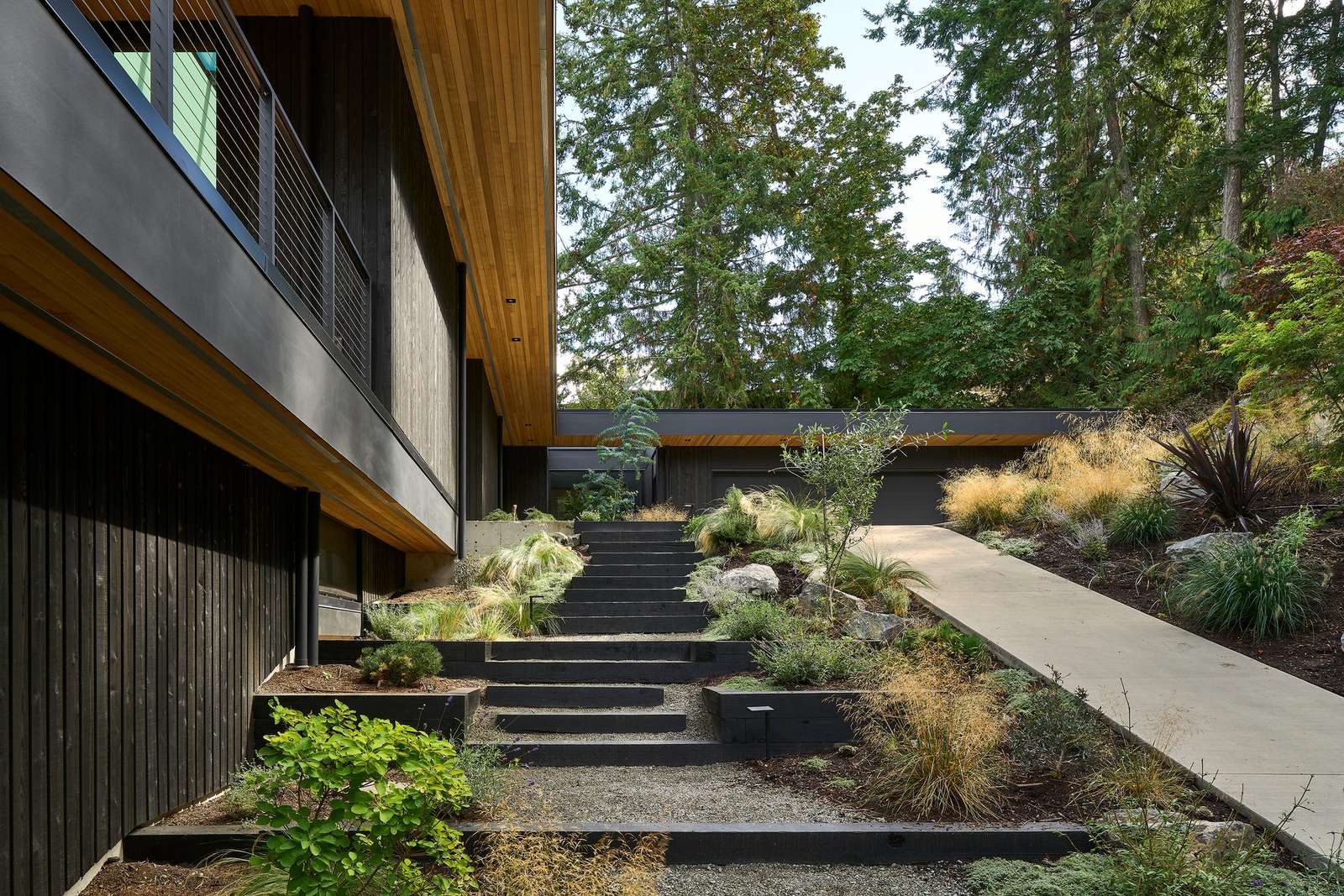
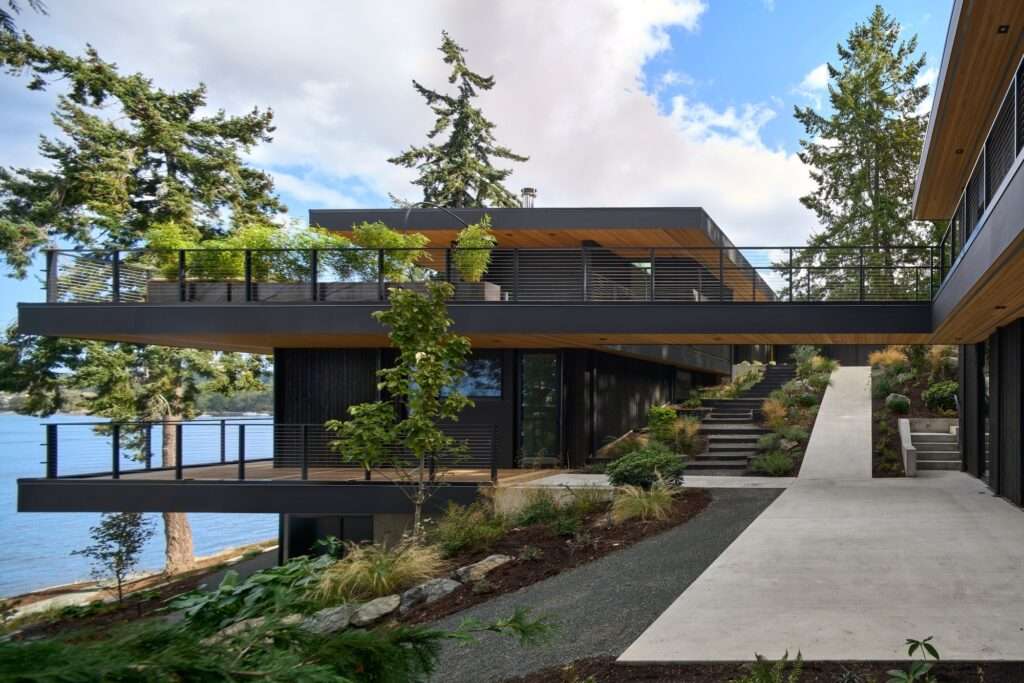
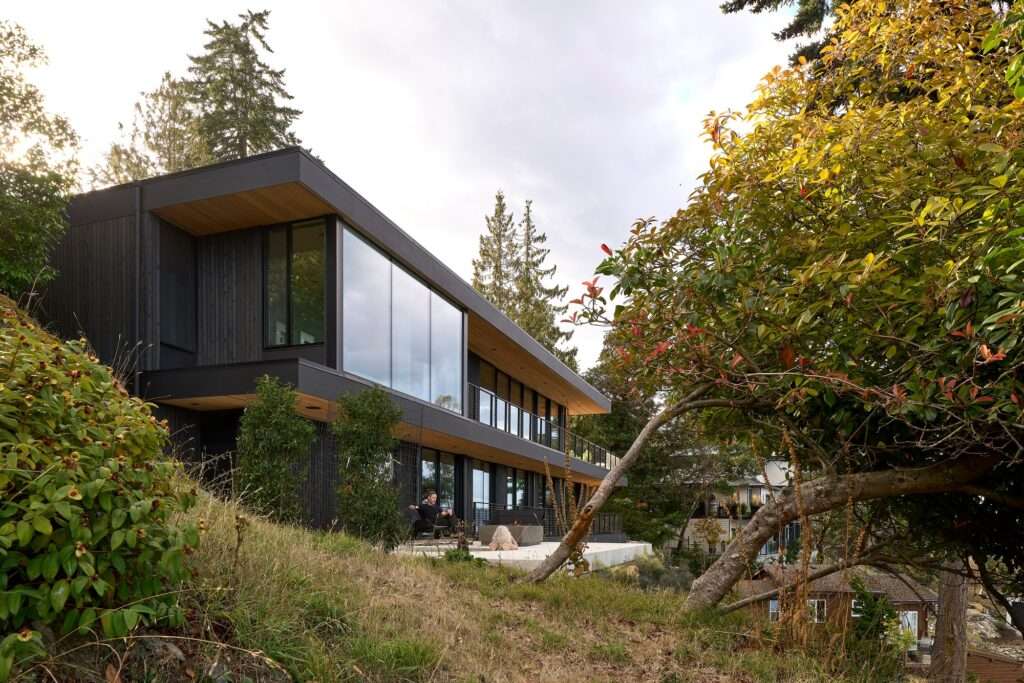
General Context of the Project and Site The “Layer House” project is located on a coastal site within the Willis Point area in British Columbia, set within a natural environment characterized by a forested landscape overlooking the sea. The building is positioned on a slope, allowing a direct visual connection with the natural scenery and the changing light conditions and marine movement below.
Architectural Concept and Spatial Organization
The Design is based on achieving a balance between privacy and openness, with a spatial distribution that allows for both secluded areas and zones of interaction. The project integrates living and working functions to serve the users’ needs, where spaces are developed to support different patterns of use without rigid separation between them.
Building Massing and Interconnection of Elements
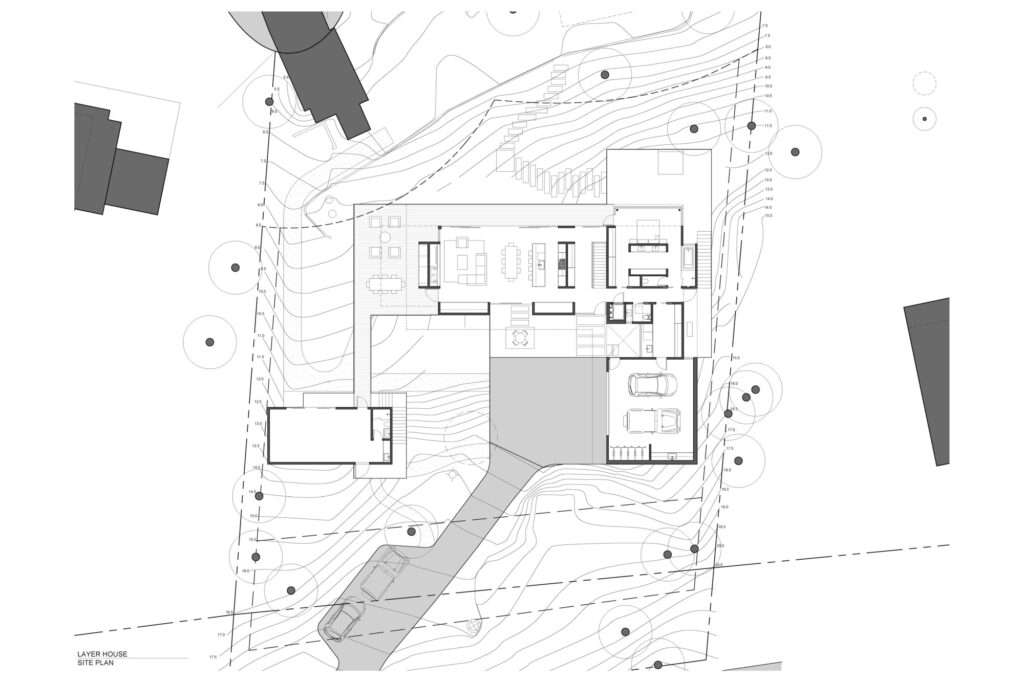
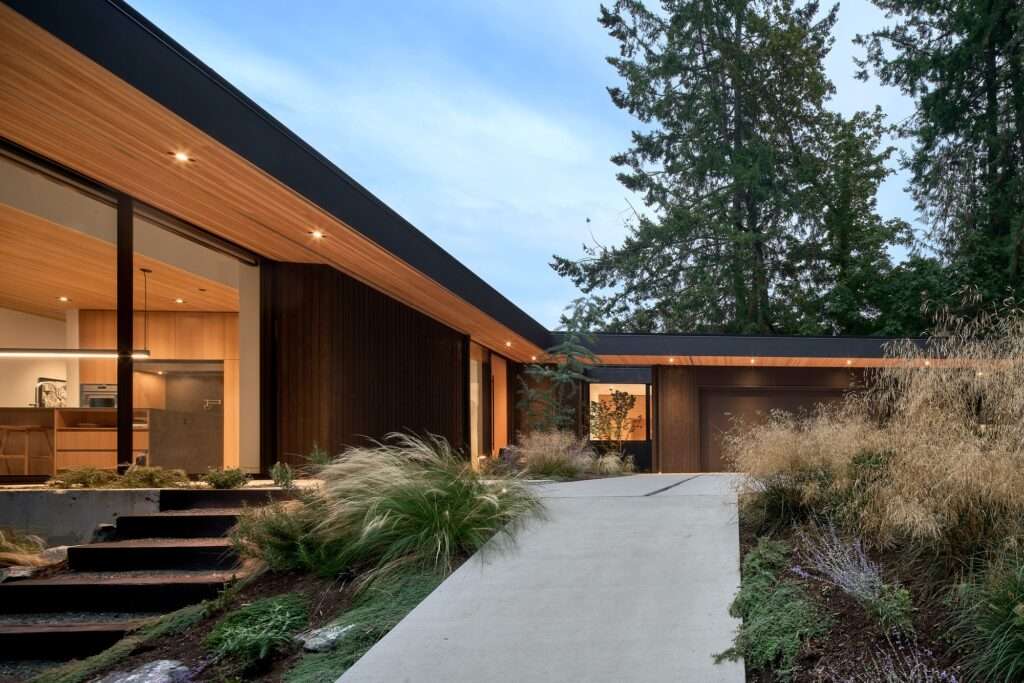
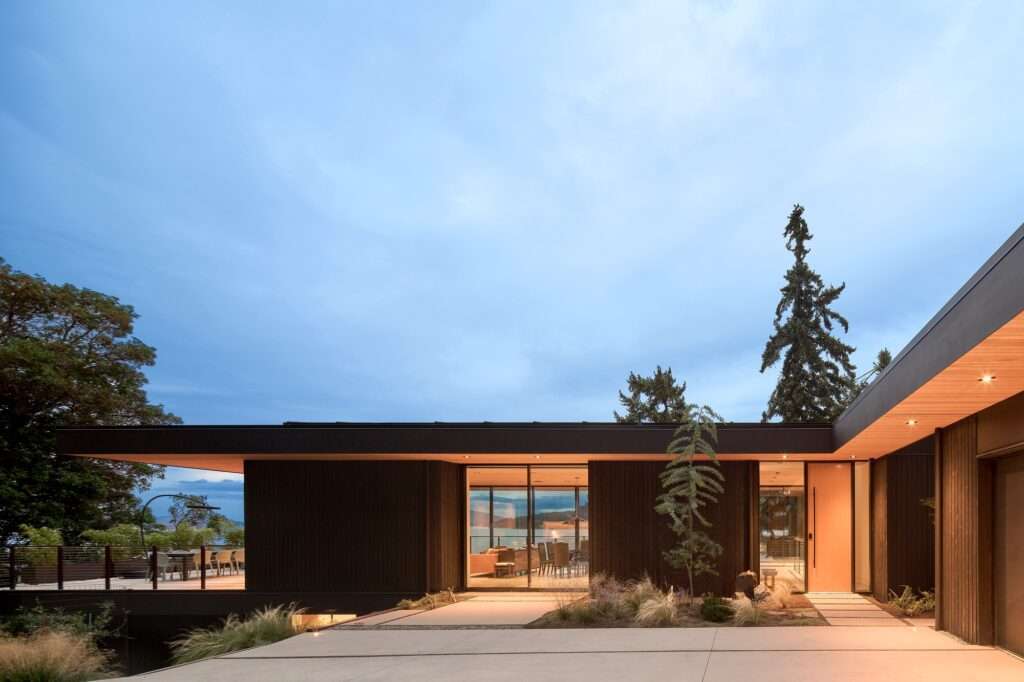
The project consists of a main building extending over two levels with an area of approximately 5,100 square feet, in addition to an annex building of 1,300 square feet. The two elements are connected through a bridge that provides a gradual transition between spaces, enhancing the functional continuity between residential and working areas within the project. For more on similar design approaches, explore other Projects.
Relationship Between Interior and Exterior
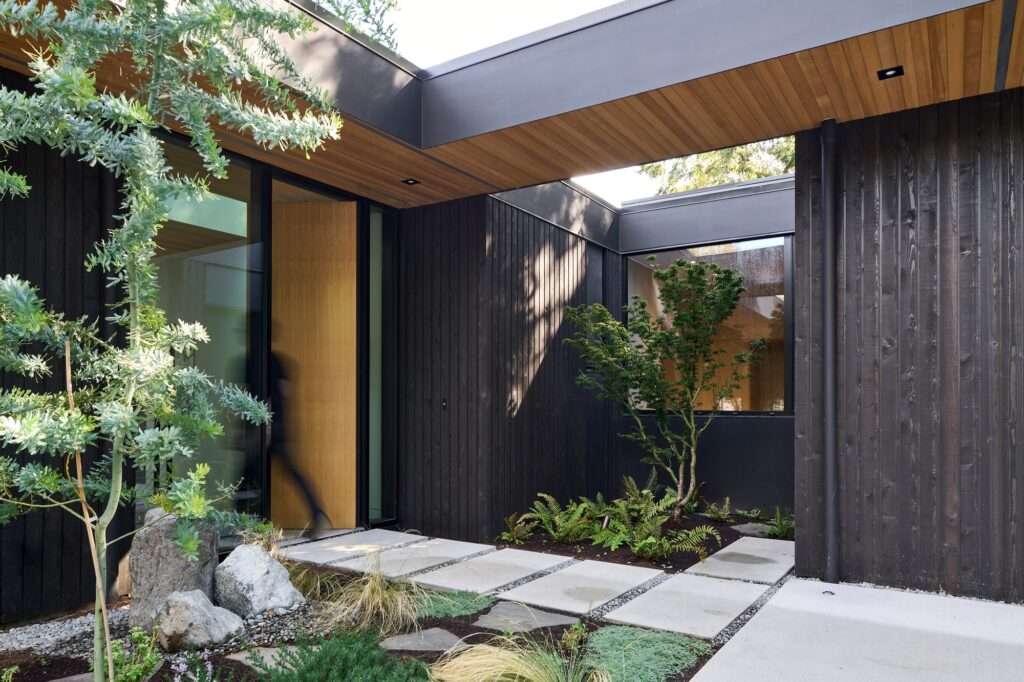
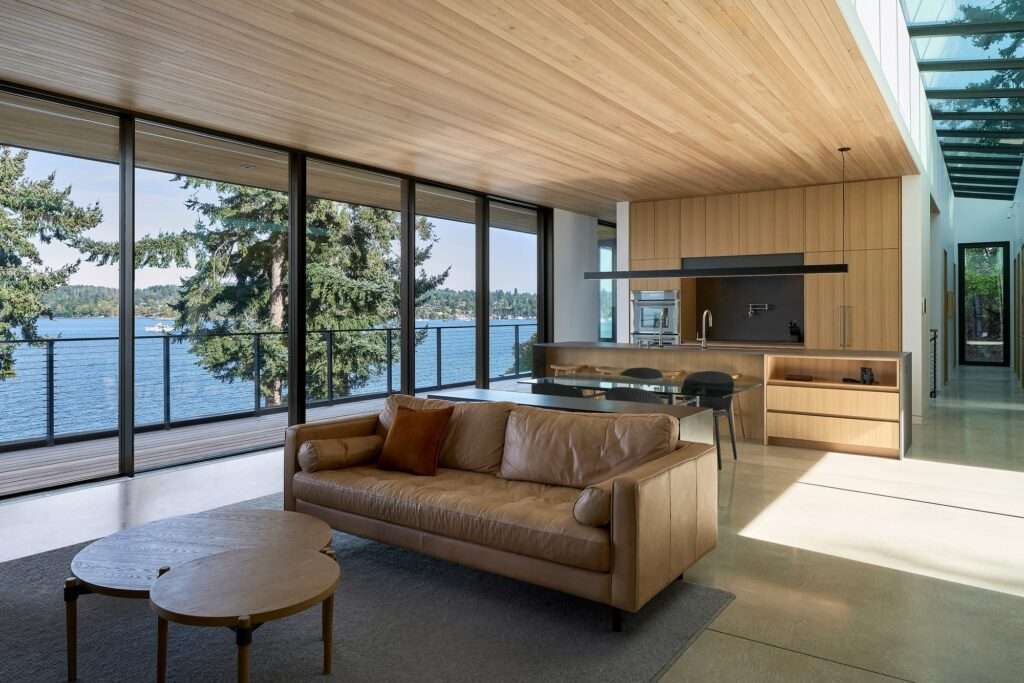
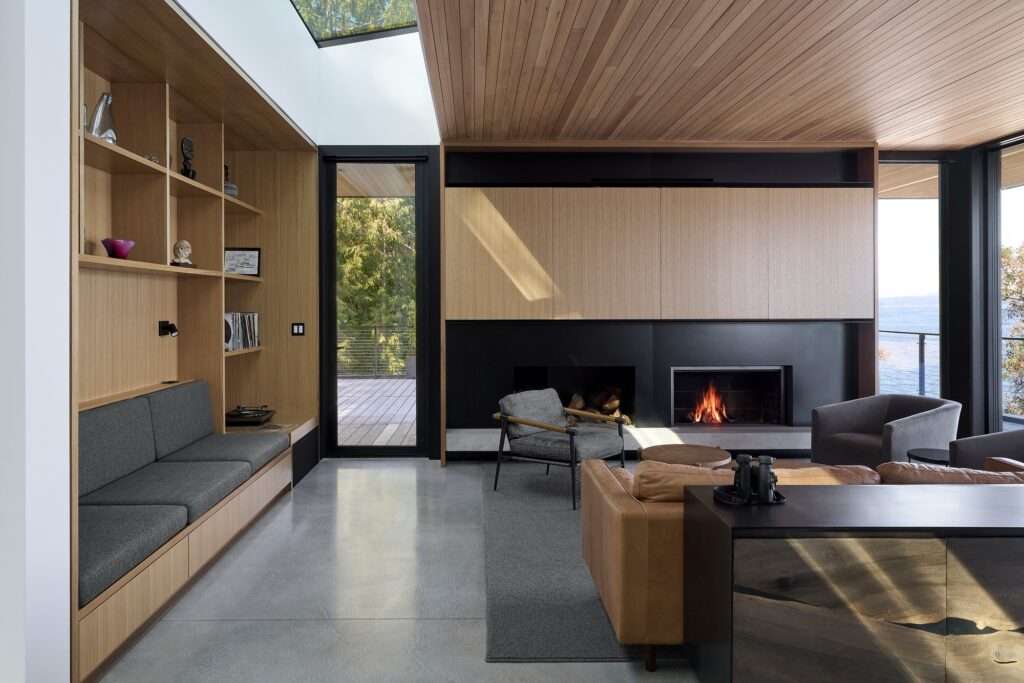
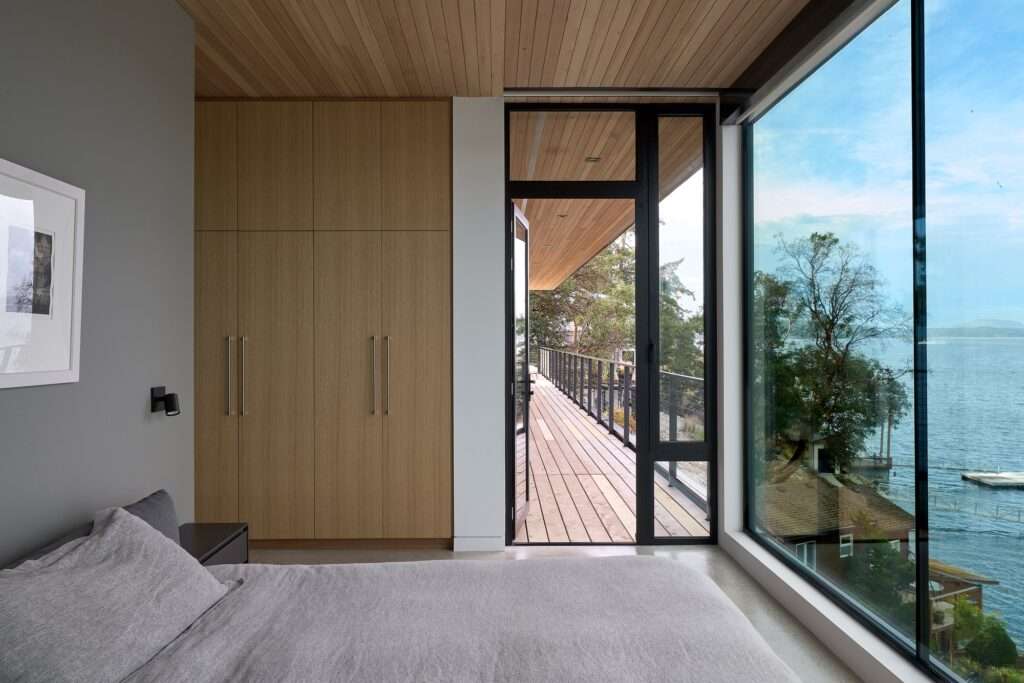
The façade treatment relies on large glazed openings that allow the natural landscape to merge with daily life inside the residence. The use of natural Building Materials further strengthens the building’s connection to its surroundings, producing a balanced relationship between interior space and the external environment.
Functional Distribution and Residential Spaces
The master bedrooms, along with the living and dining areas, are oriented toward open views of the strait. On the lower floor, guest rooms, an office, a gym, and a sauna are distributed, all connected to surrounding terraces and an outdoor deck that includes relaxation elements, offering diverse uses of space between comfort and daily activities. This thoughtful arrangement reflects principles found in Interior Design.
Annexes and Creative Spaces
The auxiliary Buildings are dedicated to artistic activities, where the upper floor houses a printmaking studio, while the lower floor contains a woodworking workshop. These spaces are directly connected to the natural landscape through openings, enhancing user interaction with the environment and integrating the design with the surrounding topography. See more about material specifications in Material Datasheets.
Environmental Response and Energy Efficiency
The design is rooted in embedding the building into the hillside, allowing it to benefit from the stable thermal mass of the soil to improve indoor thermal performance. Insulated structural elements such as high-performance glazing and thermally insulated doors help reduce heat loss while enhancing natural lighting and optimizing passive solar gain. Stay updated with the latest in the field through Architectural News.
Resource and Material Management
The project incorporates a rainwater harvesting system, where water is collected from roofs and filtered for irrigation and non-potable uses, reducing reliance on municipal networks. In addition, durable and low-maintenance materials such as local wood, concrete, and metals are used to support long-term structural performance. Insights into such methods can be found in Research.
Relationship with the Site
These strategies are reflected in an architectural configuration that harmonizes with the surrounding environment, where the building treats its site as a fundamental component in shaping the spatial experience. As a result, the project emerges as a residence that integrates with nature and reinforces the relationship between dwelling and the surrounding landscape. For more context on site planning, browse the Archive.
✦ ArchUp Editorial Insight
The Layer House project operates as a spatial outcome governed by the constraints of coastal land subdivision regulations, slope setback requirements, and mechanisms for maximizing real estate value associated with sea views. The composition does not originate from a purely formal design intention, but rather from a logic of site value optimization within a steep, forested topography where the buildable area is constrained by environmental protection and geographical limitations. Regulatory frictions appear in energy performance requirements, water management strategies, and structural adaptation to the terrain slope, which collectively drive a densification of the program into two volumes connected by an intermediate circulation structure. This reflects broader themes in Construction and urban resilience.
This results in a hierarchical distribution of living, working, and craft functions, where circulation becomes a negotiated system between varying degrees of privacy and overlapping uses. Glazing systems and rainwater harvesting strategies can also be read as instruments of regulatory compliance, translating performance requirements into spatial organization rather than purely formal design decisions. Discussions on such integrated approaches are featured in Discussion.