Battersea Power Station Moves Into Its Final Development Phase

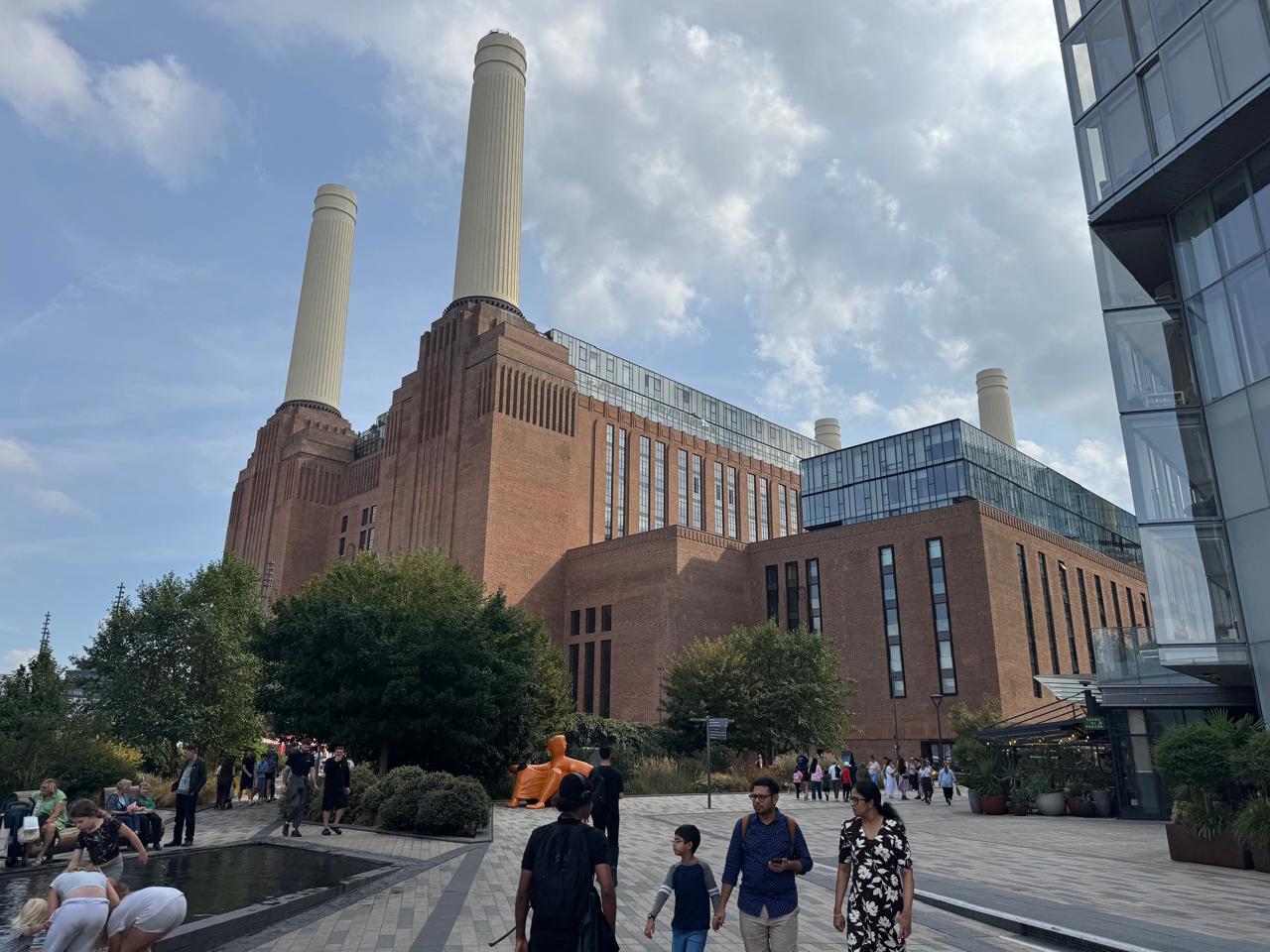
Battersea Power Station is moving into the next stage of its long redevelopment, as plans for the remaining 16 acres of the 42-acre riverside neighbourhood come forward in London.
The site is already one of the most visible examples of adaptive reuse in the city. The Grade II* listed power station, designed by Sir Giles Gilbert Scott and closed in 1983, reopened to the public in 2022 after decades of failed proposals and a large restoration programme. Around half of the wider neighbourhood has now been delivered.
The next phase is being shaped by Studio Egret West, appointed as master planner, urban designer and landscape architect for the undeveloped portion of the site. Battersea Power Station Development Company has said the future phases could deliver up to 3.2 million square feet of homes, workspace, cultural, leisure and community uses.
The shift matters because Battersea is no longer a single building story. It has become a test of whether a former industrial monument can support a working piece of city around it, rather than simply becoming a preserved shell with commercial space inside. That question was central to Ibrahim Fawakherji’s recent reading of Battersea as a machine becoming part of the city.
The completed portions already include about 2,200 homes, a Zone 1 Underground station, extensive retail and dining space, and major office occupation, including Apple. The remaining land is expected to connect more directly with Nine Elms Park and extend the pedestrian network that now frames the restored power station.
Recent construction activity has also begun at Prospect Place South, a Gehry Partners-designed residential phase expected to add about 300 homes, commercial space, a community hub and cycling facilities. ArchUp previously examined Prospect Place as a more animated counterpoint to Battersea’s industrial mass.
The revised direction does not erase Rafael Viñoly’s earlier masterplan, but it updates the unfinished parts of it for a different market and a different urban moment. The pressure now is not only architectural. It is civic: whether the last phases can strengthen the public realm, widen access and avoid turning one of London’s most powerful industrial landmarks into a closed premium district.
Sources for this report include Battersea Power Station Development Company, Studio Egret West and Wandsworth Council.