The Knowledge That Was Never Written Down

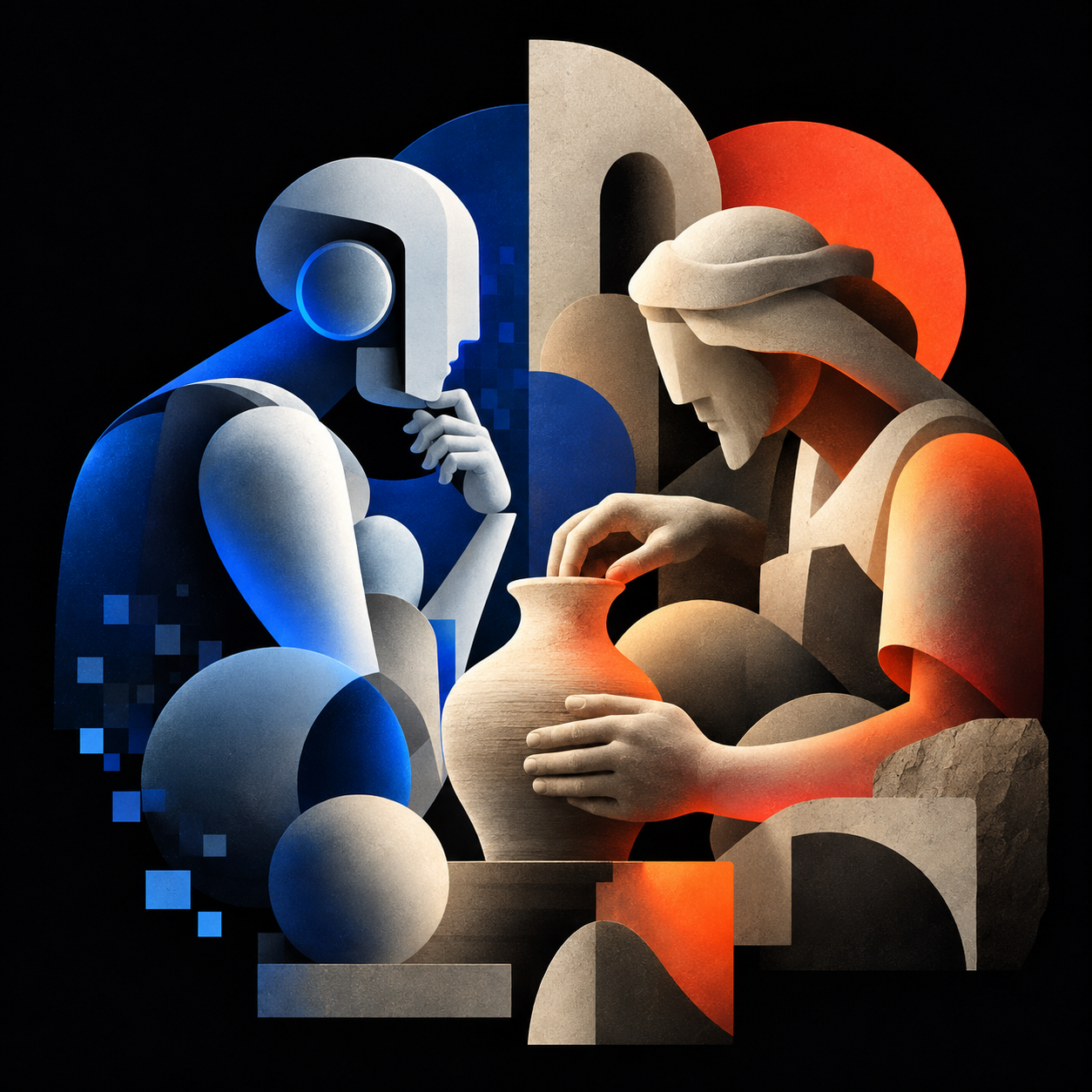
Artificial intelligence systems are trained exclusively on documented, explicit human knowledge, leading them to overlook tacit knowledge. This unwritten understanding, which includes embodied skills, intuitive judgment, and traditional crafts like architecture, cannot be fully expressed through text alone. As a result, AI mistakes written archives for complete human intelligence.
Much of this unrecorded wisdom, such as indigenous environmental management, is vanishing before it can be preserved. While AI cannot possess physical experience, new multimodal technologies could potentially capture some unwritten practices. Addressing this gap requires recognizing AI’s inherent limits and making deliberate efforts to preserve embodied knowledge.
I once watched an old builder settle an argument without saying a word that could be written down. The engineers had their calculations and the young architects had their drawings, and everyone was talking, and the man simply walked to the wall, put his hand flat against the stone, stood there a moment, and shook his head. He was right, as it turned out, about something the instruments confirmed only days later. When I asked him afterward how he had known, he looked at me the way you look at a child asking why water is wet, and he said something I have never forgotten, that he could not tell me, because knowing it and saying it were not the same thing. He had spent fifty years with that kind of stone. The knowledge was in his hand, and it would die in his hand, because no one, including him, could get it onto a page.
That afternoon has stayed with me because it names a fact about the intelligence we are now building that almost no one wants to sit with. Every artificial intelligence in the world, however powerful, knows only what humanity wrote down. It has read the vast archive of the literate, the books and papers and records we troubled to fix in a durable medium, and it mistakes that archive for the sum of human knowledge. But it is not the sum. It is only the portion that happened to be written, a far smaller and stranger thing, missing entire continents of what people have known. For most of the human story knowledge did not live in text at all. It lived in hands like that builder’s, in voices, in the trained senses of people who could do what they could not explain, and when they died without a scribe beside them, what they knew died with them. I raise this not to mourn a vanished past but because it is the most urgent question hiding inside the future we are automating, and because it touches our own work more directly than almost any other, since architecture has always been, at its core, a body of knowledge that resists being written.
The philosophical name for the missing continent is tacit knowledge, and the concept was given its sharpest form by Michael Polanyi in an aphorism that ought to hang over every AI laboratory in the world. We can know more than we can tell. Polanyi’s insight was that knowing is not confined to what can be stated, that a vast and essential part of human competence lives below the threshold of articulation, in the feel of a tool in the hand, the judgment of a situation, the skill that operates precisely because we are not consciously attending to its every part. He distinguished between what we focus on and what we know only subsidiarily, the way a craftsman attends to the work while the hammer becomes an unnoticed extension of the arm, and he argued that trying to make this subsidiary knowledge fully explicit does not capture it but destroys it, disrupting the very performance it enables. The strong form of the claim is the one that matters most here, that some knowledge can never be made explicit, no matter how much analytic effort is applied, because its nature is to be enacted rather than stated. And this is precisely the knowledge that artificial intelligence, built entirely on the explicit and the formalizable, cannot reach.
Two Streams of Human Knowing
To understand the gap, it helps to see that writing itself was never a neutral recording device. The scholarship on orality and literacy demonstrates that the technology of writing did not simply store thought that already existed but restructured human consciousness itself. Cultures without writing think differently, in ways the research describes precisely, their knowledge redundant and memorable by necessity, conservative in its guardianship of what has been learned, close to the lived world rather than abstract, situational rather than analytical, sustained in performance rather than fixed on a page. The arrival of writing created the conditions for abstraction, for the distancing of the knower from the known, for the analytical power that modern thought takes as the definition of intelligence itself. This was a genuine gain, and no serious person would wish it undone. But it was also a loss, and the loss is the part we have forgotten to count. The participatory, embodied, context bound mode of knowing that oral cultures possessed did not merely go unrecorded. It was actively marginalized by the triumph of the text, redefined as primitive, demoted from knowledge to superstition.
The consequence for the intelligence we are now building is direct and rarely stated plainly. The systems we call artificial intelligence are trained on the textual output of literate cultures, which means they inherit not only the content but the cognitive biases of literacy, its abstraction and its distance, while lacking any access whatsoever to the embodied situated knowing that oral cultures carried. What looks like a universal intelligence is in fact the concentrated essence of one particular way of knowing, the literate way, mistaking itself for the whole. The research on this point is blunt, describing the field’s working definition of intelligence as an imitation built on benchmarks that reward speed and pattern matching and linguistic fluency, resting on a centuries old equation of reason with calculation, a cultural narrowness dressed as innovation. When such a system is asked about a concept that lives outside its textual world, an indigenous relationship to land, a spiritual orientation toward the made object, it does not know what it does not know. It answers from the only world it has read, and it flattens the plural ways of knowing into the single measurable output its architecture permits.
The stakes of this flattening are not abstract, and the literature documents them across domains. Indigenous knowledge systems, which arrived at valid understandings of the world through intuition, embodied practice, and communal validation rather than through hypothesis and publication, have been systematically denied epistemic standing, even as their oldest cosmological insights are found to converge, uncannily, with the conclusions of modern physics and biology. These systems are now disappearing at speed, and their loss compounds with the loss of language itself, for the last speakers of perhaps half the world’s roughly seven thousand languages are alive today, and when a language dies it takes with it an entire structure of knowledge, the understanding of local plants and animals and ecosystems and medicine encoded in its grammar and its oral texts, gone irretrievably because the isolation that produced such diversity will not return. Every one of these losses is a subtraction from the total intelligence of our species, and none of it will ever appear in the training data of any machine, because none of it was ever written.
The Craft That Cannot Be Told
Nowhere is the untranslatable nature of undocumented knowledge clearer than in traditional craft, and this is where the question comes home to us, because architecture is a craft before it is anything else. The research on traditional makers describes a knowledge system with three interlocking parts, an understanding of the properties of materials, of the methods and standards of work, and of form and structure and ornament, and it describes how this knowledge was transmitted not through texts but through apprenticeship, the long slow embodiment of skill under the guidance of a master. A detailed study of papermakers captures the essence of why this knowledge resists writing. Recipes in the strict sense did not exist and could not exist, because the raw materials were too bulky to weigh and too variable in quality for exact measurement to be of any use, so what distinguished the master was not a secret formula but the capacity to harness biological processes that were never fully predictable, to produce constant quality from changeable material through trained judgment alone. A nineteenth century observer of the trade admitted the limit directly, that only those who have grown old in the work understand it, that words cannot exhaustively express these matters. The knowledge lived in the trained senses, in the feel of the pulp and the sight of the steam and the sound of the beating, and no text could hold it.
This is the exact character of the deepest architectural knowledge, and every experienced practitioner knows it even if the profession rarely says it aloud. The judgment of how a material will age, the sense of when a proportion is right that arrives before the calculation confirms it, the reading of a site that an experienced architect performs in minutes and cannot fully explain, the feel for how a space will be inhabited that no brief captures, all of this is tacit knowledge in the strict Polanyian sense, knowable in performance and only partially reducible to words. It is transmitted, when it is transmitted at all, the way craft has always been transmitted, through the studio, the apprenticeship, the years spent beside someone who knows, watching decisions made that are never fully articulated. The design intelligence that distinguishes a master is not, in its essential part, written in any book, and the construction wisdom of the experienced builder, the trade knowledge accumulated in the hands of the mason and the carpenter and the plasterer, has always lived closer to the papermaker’s craft than to the engineer’s manual. When these practitioners retire without transmitting what they know, and increasingly they do, as industrialization and speed sever the long chains of apprenticeship, the loss is exactly the loss the research describes across every vanishing craft, centuries of accumulated wisdom about materials and processes and forms, disappearing because it was never written and cannot be recovered from what was.
This places our own discipline squarely inside the problem rather than outside it observing. We are not neutral commentators on the death of undocumented knowledge. We are among its likely victims, custodians of a vast tacit inheritance that our own tools, increasingly, cannot see. An AI trained to design will learn from the drawings and the texts and the images we have documented, which is to say it will learn the explicit residue of architecture while remaining blind to the tacit judgment that produced it, the very thing that made the documented work worth learning from. The projects that fill the databases are the visible output of an invisible knowing, and a system that learns only the output is learning the shadow and missing the body that cast it.
Can We Teach the Machine What We Never Wrote?
Here I want to move from diagnosis to the harder and more hopeful question, the one worth the attention of anyone who takes both this technology and this heritage seriously. Artificial intelligence is genuinely excellent, and it will genuinely help us, and nothing in what I am arguing says otherwise. The question is not whether to use it but whether we can develop it further, whether the tool that currently learns only from the written can be extended to learn, at least partway, from the unwritten. And the honest answer is that this is one of the most important and least explored frontiers in the entire field, an architectural research and computational research agenda that has barely begun.
The obstacles are real and must be stated without flinching. Some tacit knowledge is tacit by nature and not merely by neglect, and no advance in capture will ever make it explicit, because the strong form of Polanyi’s claim holds, that certain knowing exists only in the doing and dies when abstracted from it. A machine that lacks a body and lacks phenomenal experience cannot know what it is like to feel the pulp or read the room, and the research on experiential knowledge is clear that description, however rich, cannot substitute for first hand acquaintance. This limit is genuine and it is permanent, and any honest account must concede it. But conceding the limit is not the same as surrendering the whole territory, because between the fully explicit and the permanently ineffable lies an enormous middle ground of knowledge that is undocumented not because it is impossible to capture but simply because no one ever tried, knowledge that was lost by default rather than by nature.
It is that middle ground where the real opportunity lies, and it changes what documentation could mean. If we understand that writing was only ever one technology for holding knowledge, and a technology biased toward certain kinds of knowledge at that, then the task ahead is not merely to write down more but to develop richer ways of capturing what text was always too narrow to hold. New forms of recording, sensor rich, multimodal, capturing the motion of the skilled hand and the sequence of the expert’s decisions and the sensory cues the master responds to, could preserve dimensions of craft that no treatise ever could, and AI trained on such records might learn patterns of expertise that were never written because they were never writable in words alone. This is a genuine possibility, and it reframes the machine from a threat to tacit knowledge into a potential, if partial, instrument of its rescue, provided we build it with humility about what it cannot reach. The cities and the crafts and the communities that still hold living tacit knowledge represent a closing window, a chance to capture in new ways what will otherwise vanish in a generation, and the design of tools humble and rich enough to attempt it is a task worthy of the most serious effort. There is even a sustainability dimension to this, since much of the vanishing tacit knowledge, indigenous ecological management, traditional low energy building, the working of local materials, holds exactly the wisdom a resource constrained future will need most, and losing it is not nostalgia but a genuine impoverishment of our options.
The most important shift is one of posture rather than technique, and it applies to how we build the intelligence and how we regard our own knowing. The systems we are creating should be designed humble enough to recognize the limits of their own foundations, to know that they know only the written portion of what humanity knows, and to treat that portion not as the whole but as a fragment, vast but partial, of a larger intelligence most of which was never recorded. A machine trained with that humility built in, that flags the edge of its textual world rather than confidently answering past it, would be a more honest and ultimately more useful tool than one that mistakes its archive for the world. The danger is not that AI knows so much. It is that it does not know what it is missing, and neither, increasingly, do we.
So the conclusion I reach is a double one, held without contradiction. Artificial intelligence is a remarkable achievement, and we should use it, develop it, and push it as far as it can go, including toward the unwritten knowledge it cannot yet touch. And at the same time we should hold, clearly and without sentimentality, the recognition that it presently knows only the documented sliver of human understanding, that the deepest knowledge of our own craft lives in the tacit register it cannot read, and that a great deal of what our species has known is already gone, having died unwritten in the hands and voices of people no machine ever met, people like the builder with his palm against the stone. The news will keep announcing what AI can now do, and the more important story, the one the most thoughtful competitions and research should pursue, is what it still cannot, and whether we are wise enough to preserve, before it vanishes, the enormous inheritance of human knowing that was never once written down. The measure of our intelligence, in the end, may be less what we can build a machine to remember, and more what we refuse to let die simply because no one thought to write it on a page.
✦ ArchUp Editorial Insight
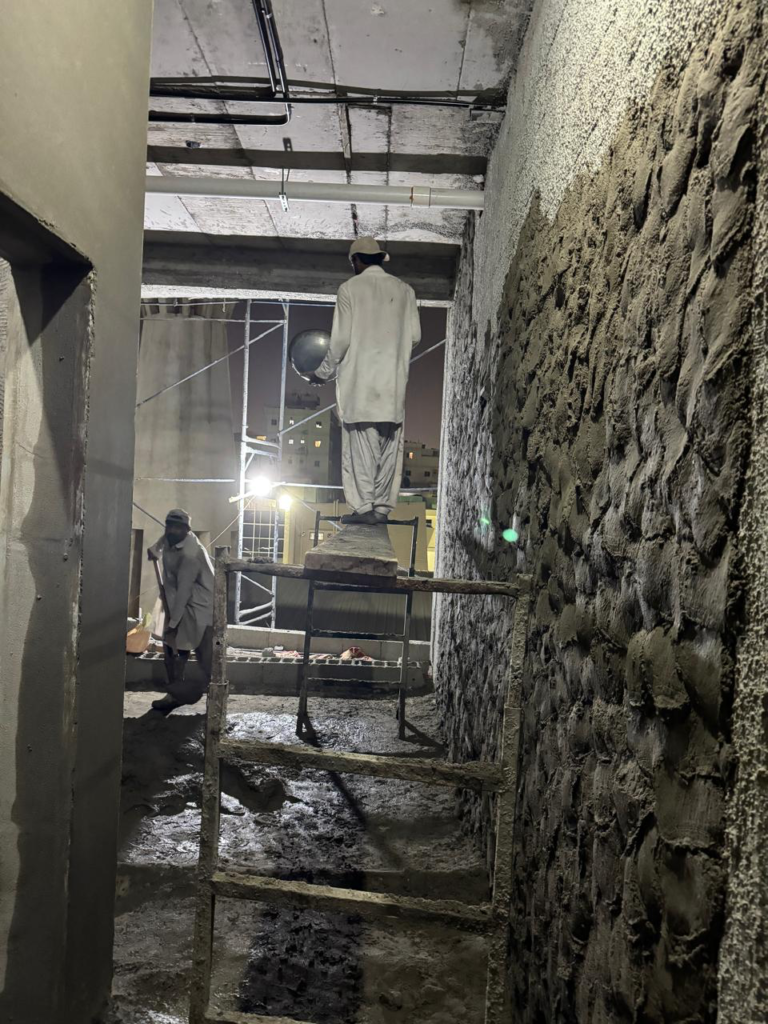
The builder’s palm against the stone is not a romantic image — it is a precise description of a knowledge category that the entire infrastructure of artificial intelligence has been architecturally incapable of reaching, and the article’s most structurally consequential argument is the one it states but does not fully pursue: that the systems we are building do not merely lack access to tacit knowledge, they lack the capacity to recognize its absence, which means they answer from the documented sliver of human understanding with the confidence of systems that have read everything, when what they have read is only the portion that literate cultures troubled to fix in a durable medium. The architectural profession sits in a position of unusual vulnerability within this condition, because its deepest intelligence — the judgment of how a material will age, the reading of a site that cannot be reduced to survey data, the sense of proportion that arrives before the calculation — is tacit in precisely the Polanyian sense: it exists in performance and is partially destroyed by the attempt to make it fully explicit, which means that an AI trained on architectural drawings, texts, and images is learning the shadow cast by architectural judgment while remaining blind to the body that cast it. The connection to what this archive identified in Makkah and Jeddah is structurally exact: the two remaining craftsmen who understood the lime plaster and the master papermaker who could not write down his recipe for the pulp are the same figure at different scales — both hold knowledge that the documentation apparatus arrived too late to capture, both represent the closing of a transmission chain that no archive, however well-intentioned, can reopen once the hand that held the knowledge has stilled, and both remind us that the most consequential losses in any knowledge economy are never the losses that register in the inventory, but the ones that were never counted because no one knew to look for them until they were already gone.
Ibrahim Fawakherji — ArchUp
Sources
- Malik A. Tacit knowing: what it is and why it matters. Episteme, 2021, 20(2), 349 to 366.
- Trainor P. Review of Orality and Literacy: The Technologizing of the Word by Walter Ong. The Modern Schoolman, 1984, 62(1), 67 to 68.
- Grecequet M. Traditional knowledge matters. Nature Climate Change, 2023, 13(5), 418.
- Younas A, Zeng Y. Metric monoculture: how AI’s flat intelligence erases cultural wisdom. AI and Society, 2025, 41(2), 1325 to 1326.
- Suzuki S. We need a culturally aware approach to AI. Nature Human Behaviour, 2023, 7(11), 1816 to 1817.
- Xu Y. The knowledge system of the traditional Chinese craftsman. West 86th, 2013, 20(2), 155 to 172.
- Eyferth J. Craft knowledge at the interface of written and oral cultures. East Asian Science, Technology and Society, 2010, 4(2), 185 to 205.
- Doebel R. Oral traditions and scientific knowledge: some remarks on the epistemological validity of the indigenous perspective. Asian Journal of Social Science, 2000, 28(1), 171 to 184.
- Pires A. What’s lost when languages die. Science, 2010, 328(5977), 431.
- Hull G. Dirty data labeled dirt cheap: epistemic injustice in machine learning systems. Ethics and Information Technology, 2023, 25(3).
- Aumann A. Art, imagination, and experiential knowledge. Synthese, 2023, 201(3).