New York City Opens Public Vote for Billie Holiday Monument in Queens


The New York City Department of Cultural Affairs is leading a public vote to select a permanent architecture and art monument dedicated to Billie Holiday. Six shortlisted proposals are now on display at the Jamaica Performing Arts Center in Queens, where the chosen design will eventually be built.
Six Artists, Six Visions for a Queens Landmark
Through its Percent for Art program, the NYCDCA convened a panel in 2025 to honor Holiday’s legacy in Queens, where she lived and performed for years. The panel invited six artists to submit monument proposals. The shortlisted artists are La Vaughn Belle, Nekisha Durrett, Nikesha Breeze, Tanda Francis, Tavares Strachan, and Thomas J. Price. Each proposal interprets Holiday’s life and impact differently, reflecting a broad range of artistic approaches. The public can submit feedback on the proposals through the end of May. These news developments mark a significant step in commemorating one of American music’s most influential figures in the cities where she once lived.
Figurative Proposals Explore Memory, Suffering, and Performance
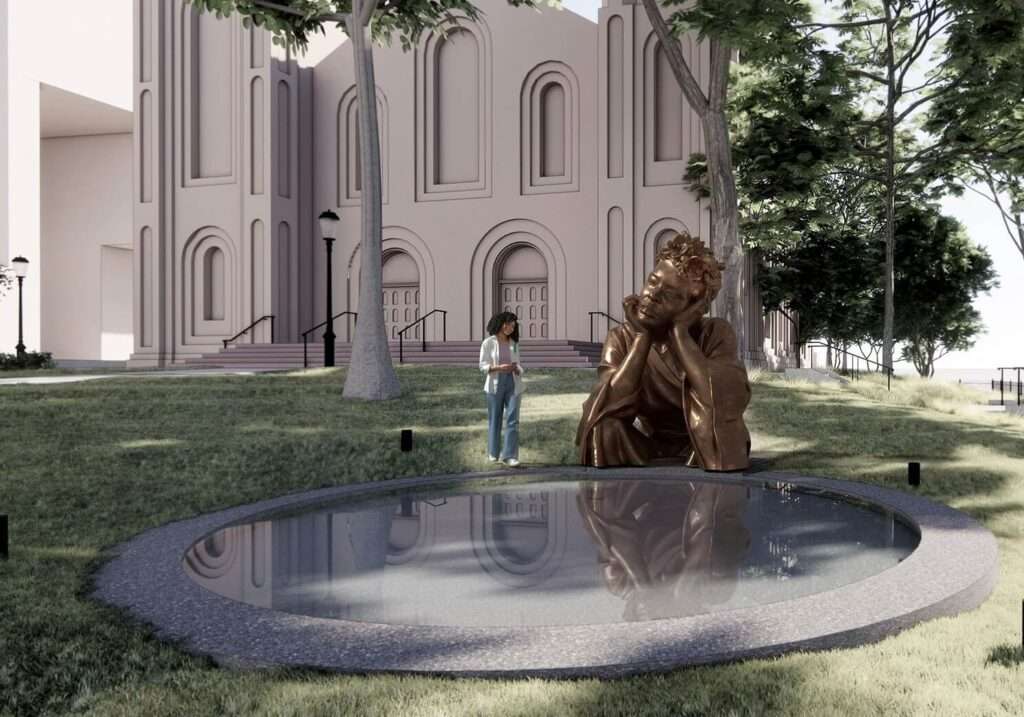
Several proposals take a figurative approach. Belle’s design, titled “Billie Holiday: Still, at the Crossing,” places Holiday at a reflecting pool in dual garments, one public and one private, meditating on her dual lives. Breeze’s “Lady Sings the Truth” carves Holiday mid-performance in black Nero Marquina marble with white marble gardenias. The choice of black building materials is deliberate, signaling dignity and permanence. Francis’s “Blood at the Root” positions Holiday over a healing pond, with blood-red tiles at the base acknowledging her emotional and physical suffering. Meanwhile, Strachan’s stone sculpture transforms Holiday’s historic photographic silhouette into an infinite mirrored vessel form, drawing from archival architecture of memory.

Abstract Proposals Reject the Myth, Prioritize the Person
Two proposals move away from direct likeness. Durrett’s “Bending the Note” uses a white marble gardenia petal emerging from a slender stem to represent Holiday abstractly. Ripples resolve into her profile on a circular granite plinth, with a small statue of her dog Pepe anchoring the composition. Furthermore, Price’s “Held Within” strips Holiday of likeness, costume, and era entirely. Composed of two bronze forms, the work resists mythologizing and instead presents a moment of unguarded human joy. Both approaches challenge conventional monument traditions. They raise questions about how public construction of memory shapes collective understanding. The Jamaica Performing Arts Center site grounds all six proposals within a neighborhood Holiday called home.

A Quick Architectural Snapshot
Six public monument proposals for Billie Holiday are now open for a community vote in Queens, New York. The site is the Jamaica Performing Arts Center. Materials range from black Nero Marquina marble to bronze and granite. Learn more about architecture, public buildings, and sustainability in civic design.

✦ ArchUp Editorial Insight
Public monument programs like Percent for Art do not emerge from artistic ambition alone. They respond to institutional pressure to diversify civic representation after decades of exclusion. The six proposals here reveal a split between two competing market forces in public commemoration: the demand for recognizable, accessible figuration versus the push for conceptual abstraction that resists reduction. The Jamaica Performing Arts Center site was not chosen arbitrarily. It reflects urban planning decisions about where cultural investment lands and which communities receive it. Moreover, the public vote mechanism transfers some institutional authority to residents, however the shortlisting process itself remains curatorial and top-down. The range of materials, from black marble to bronze to granite, also reflects budget parameters and fabrication logistics, not purely aesthetic choices. This project is the logical outcome of decades of underrepresentation in civic monuments + municipal percent-for-art funding structures + growing community advocacy for Queens as a cultural geography.