Black Butte Redefines Tiny Home Design

Small Homes: Concept and Design Boundaries
Some small home models clearly reveal challenges in interior design, where spatial limitations result in narrow kitchens, uncomfortable layouts, and bathrooms with restricted functional efficiency. In this context, the Black Butte model is presented as a different case study within this housing type.
Black Butte as a Design Model
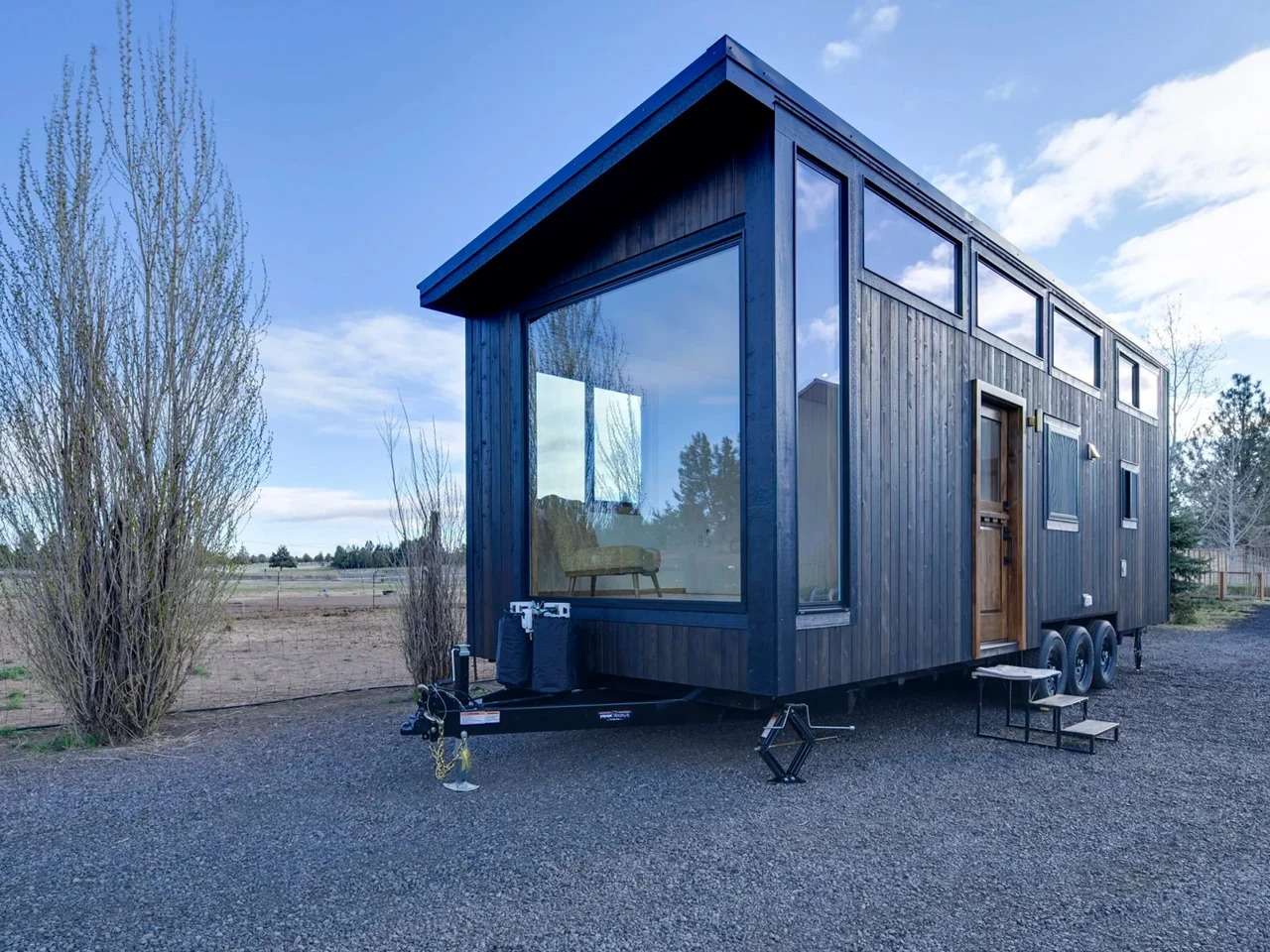
Black Butte was originally developed as a fully custom design before later being added to the Spindrift Homes catalog in Oregon. This transition came as a result of the attention the design received after its completion. The project falls within the category of towable tiny homes, with dimensions of 30 feet in length and 10 feet in width, placing it in the wider end of this residential typology.
The Impact of Proportions on Interior Experience
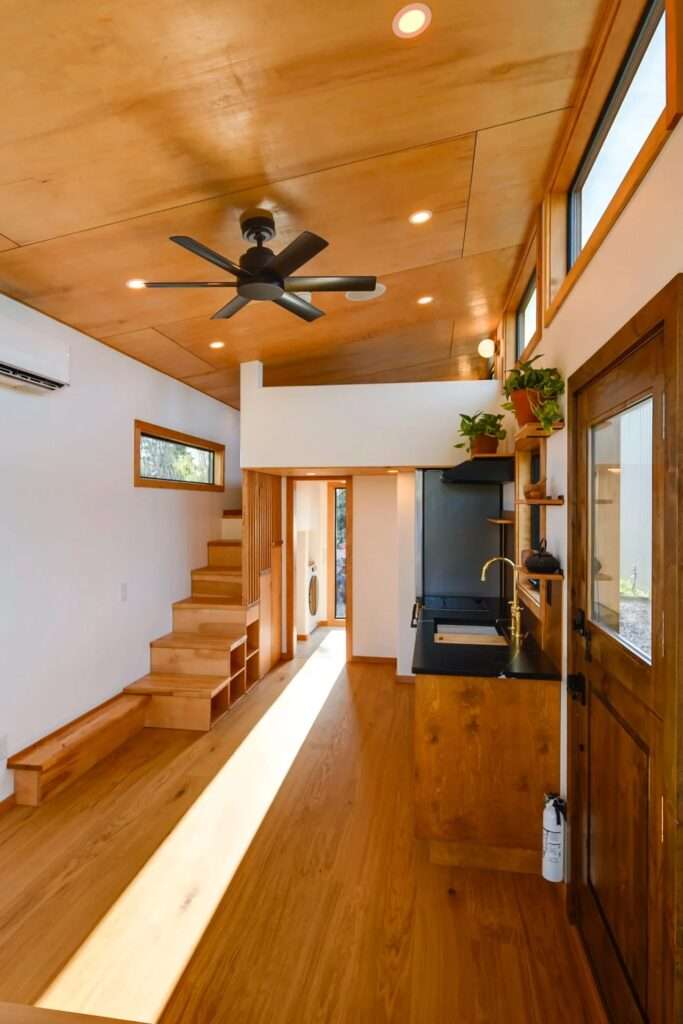
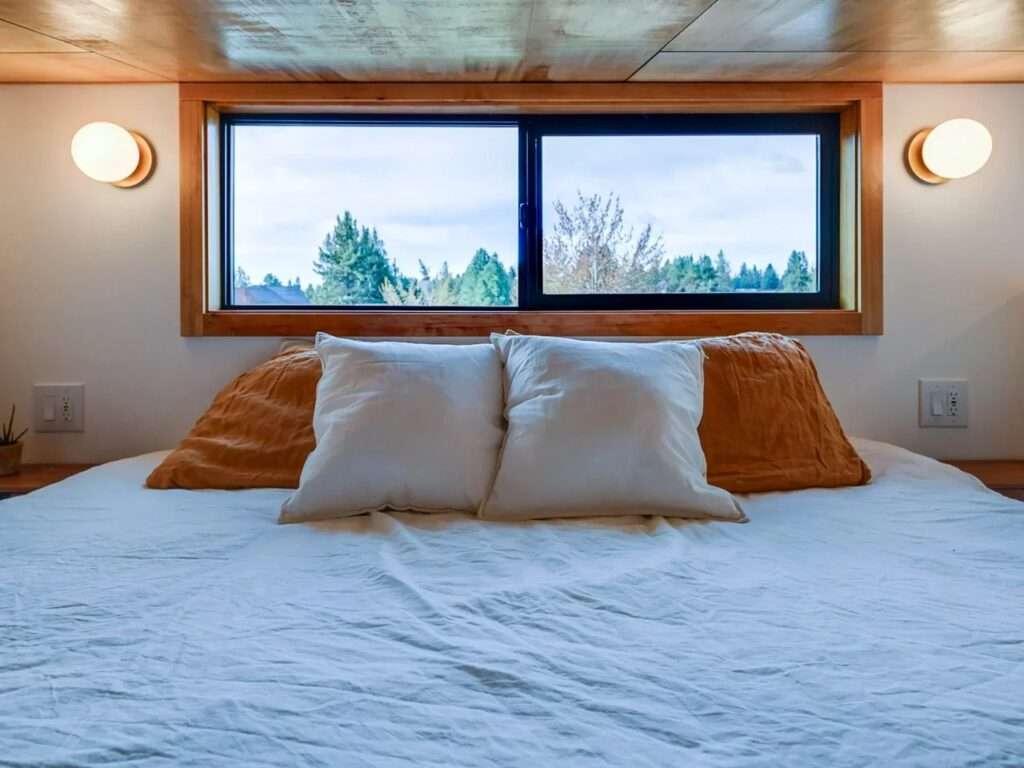
The additional width contributes to a shift in spatial perception, where the design moves from a sense of compression to a more balanced and flexible environment. This expansion also improves light circulation within the spaces and reduces conflicts between interior planning elements, resulting in a clearer functional organization within the residential unit.
Interior Space Organization
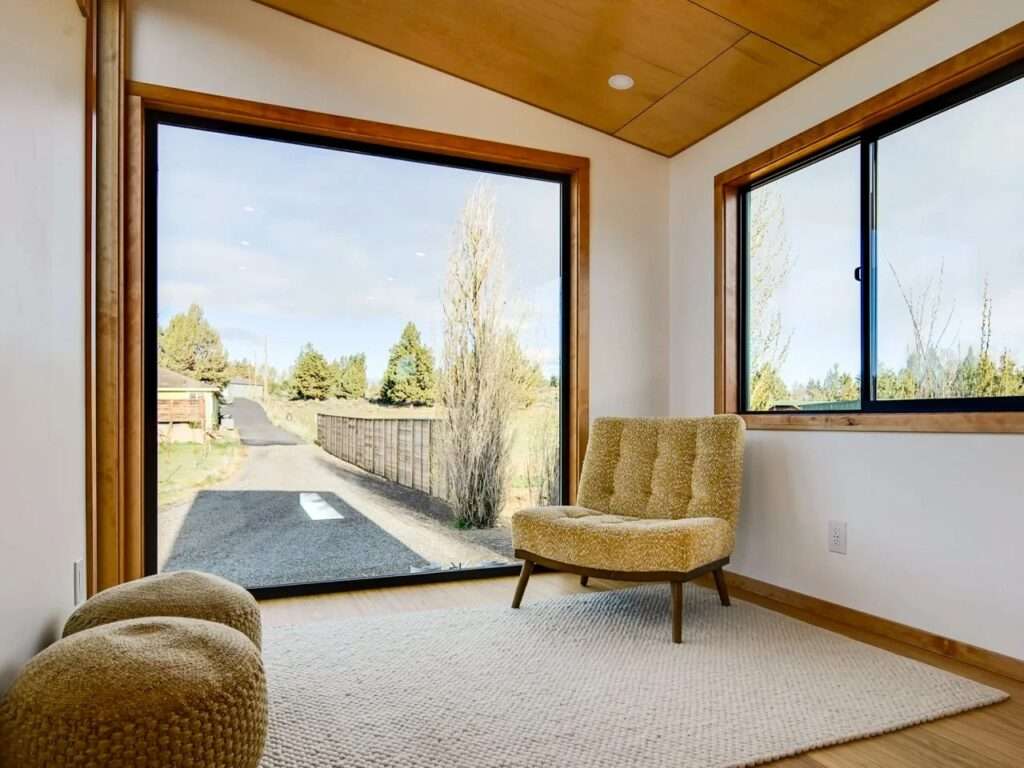
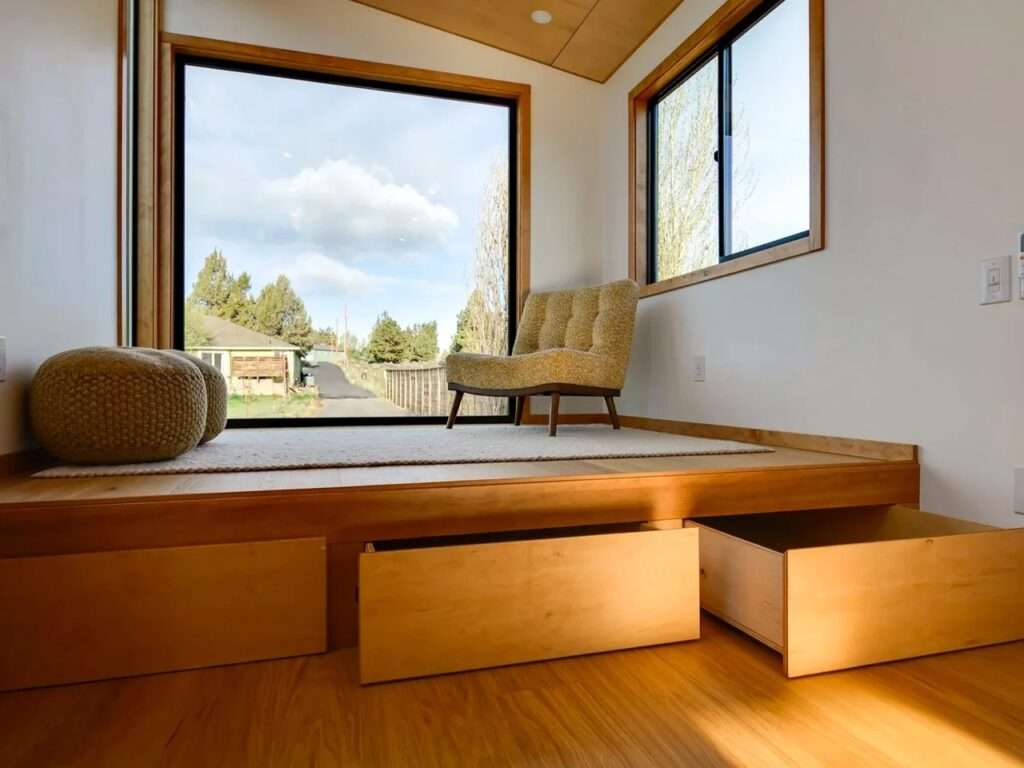
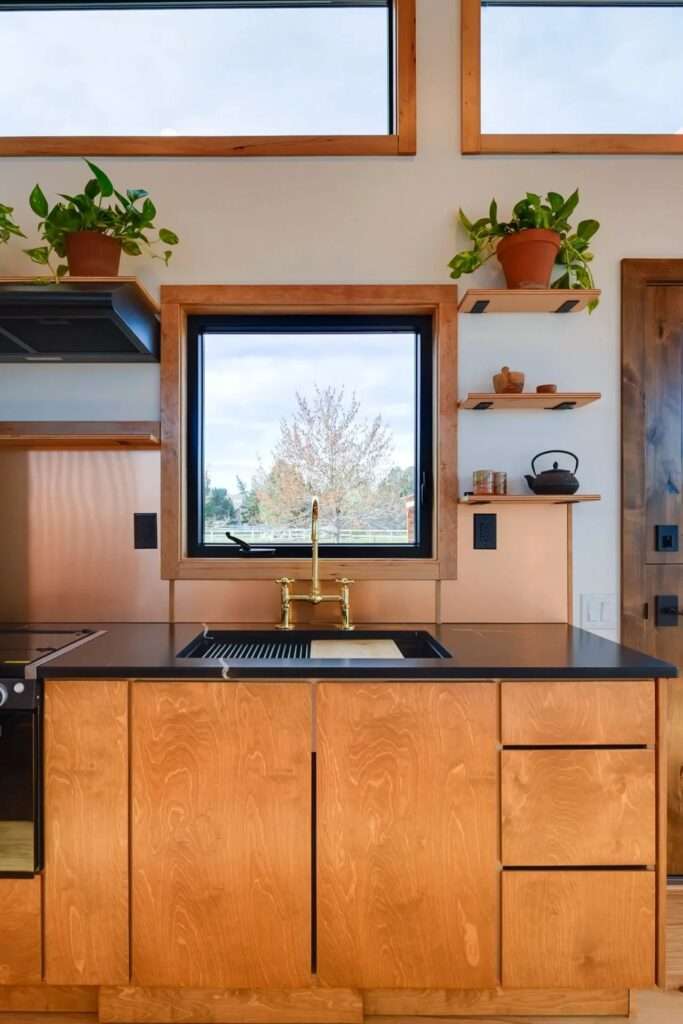
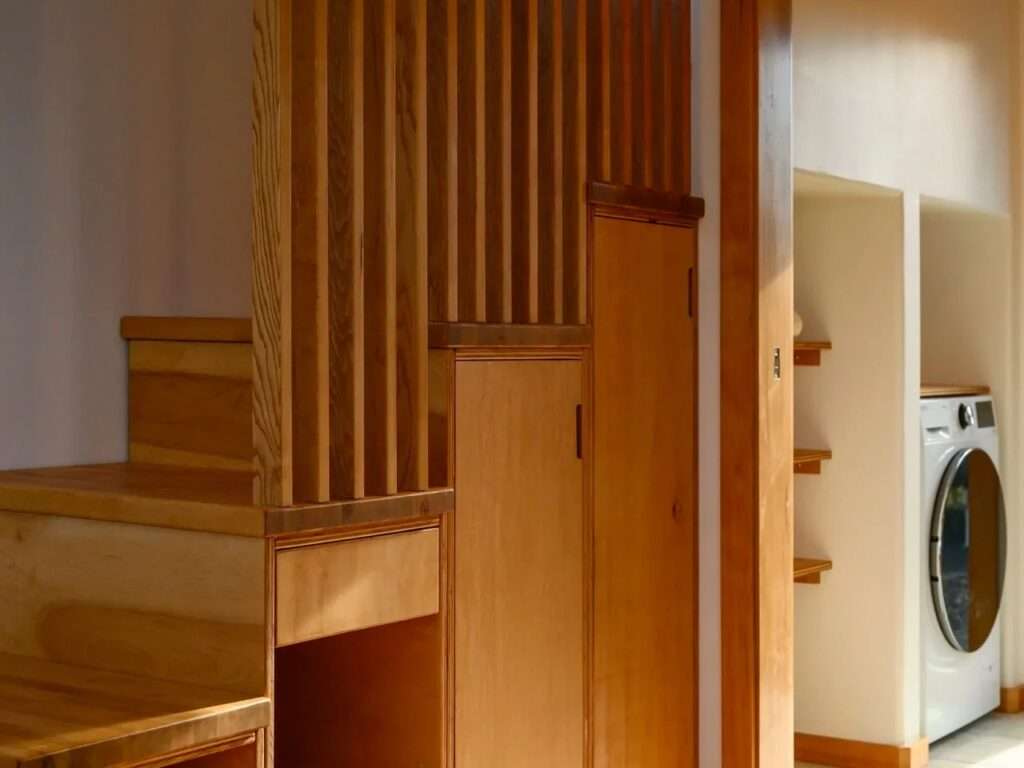
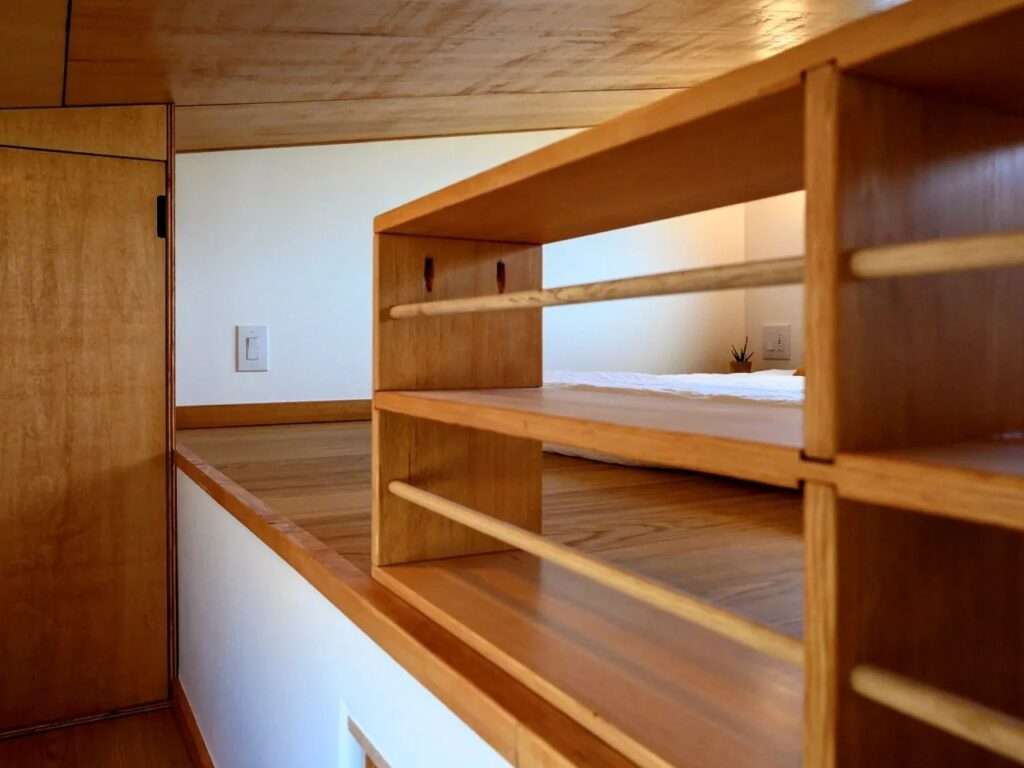
The living room is placed on a slightly raised platform, which simultaneously allows for hidden storage beneath it. This Architecture solution relies on utilizing indirect spaces without affecting daily use. The kitchen remains at ground level and is designed as a fully functional operational space, with a layout that prioritizes actual usability rather than minimal equipment. In this way, every centimeter is carefully utilized without visual or structural excess.
The Bathroom as a Functional Focus Point
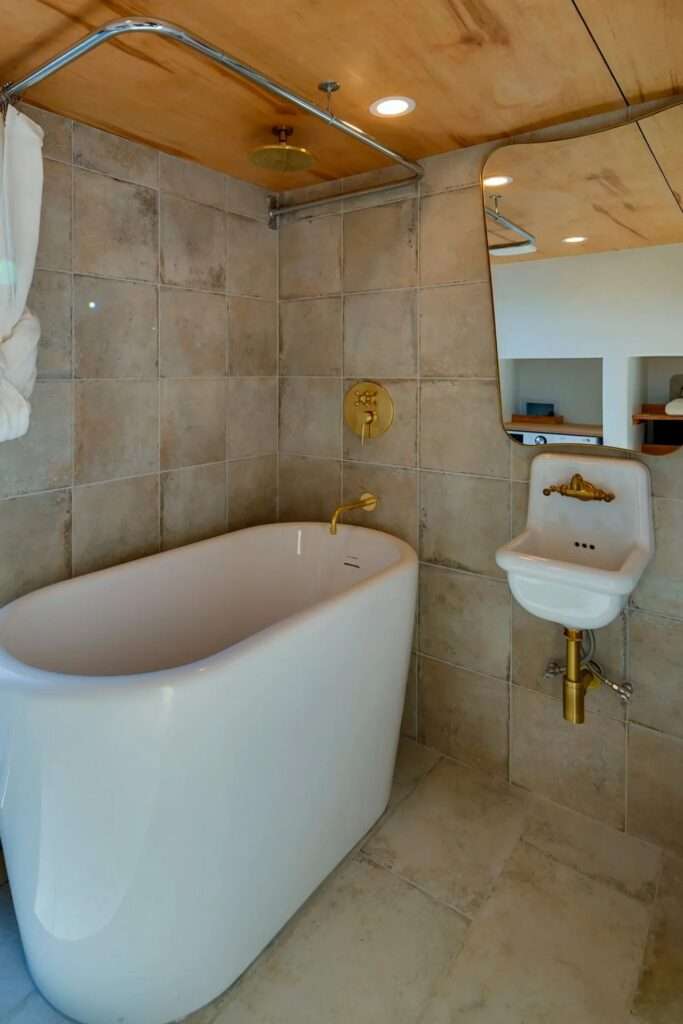
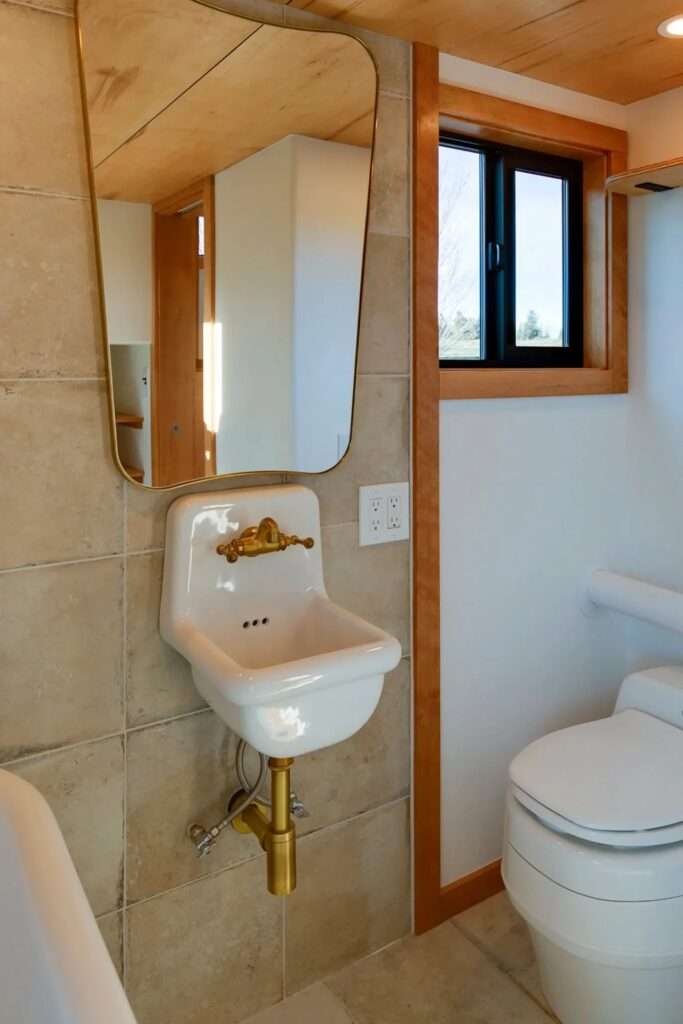
The bathroom stands out as the most architecturally expressive element of the design, as it incorporates a freestanding bathtub within a small home footprint. This decision alters the nature of the space, giving it the character of a semi-independent relaxation zone. Additionally, the technical system supports this experience through an instant water heater and an integrated mini-split heating and cooling system, enhancing daily efficiency within a limited residential unit.
Structural System and Nature of Use
Black Butte is built on a custom triple-axle trailer, making it technically a mobile dwelling unit. However, its design approach indicates a different intention, as it was developed to perform more efficiently when fixed in a single location. Therefore, it can be understood more as a functionally stationary residence than as a movable vehicle.
Customization Flexibility and Production Framework
The model starts at a price of approximately $160,000 before modifications, with expected deliveries scheduled for fall 2026. The design system allows for adjustments in finishes and interior details while keeping the core layout unchanged. This separation between fixed and variable elements reflects an approach based on stabilizing the main Construction while allowing flexibility in finishing components, within a predefined production framework.
✦ ArchUp Editorial Insight
Black Butte operates as a programmatic solution within the towable tiny housing market, where affordability pressures and land-use volatility redirect housing production toward standardized, reproducible models with limited customization aimed at stabilizing operational returns. The Projects is not driven by an aesthetic intention but by a financing and distribution model that relies on locking the overall layout to control production efficiency. Regulatory and logistical constraints such as axle limits, transport requirements, and spatial efficiency standards exert direct pressure on form, leading to the widening of the structure to 10 feet to balance internal density. This results in a graded functional distribution that reorganizes uses: elevating the living area to generate hidden storage, stabilizing the kitchen as an operational service core, and elevating the bathroom as a relative luxury unit within a constrained system. The outcome is not an individual design decision but a settlement between transportation regulations and fixed housing requirements, where Architecture shifts into the management of production constraints rather than formal expression.