Northview Apartments Balances Privacy and Openness

Massing Organization and Spatial Openness
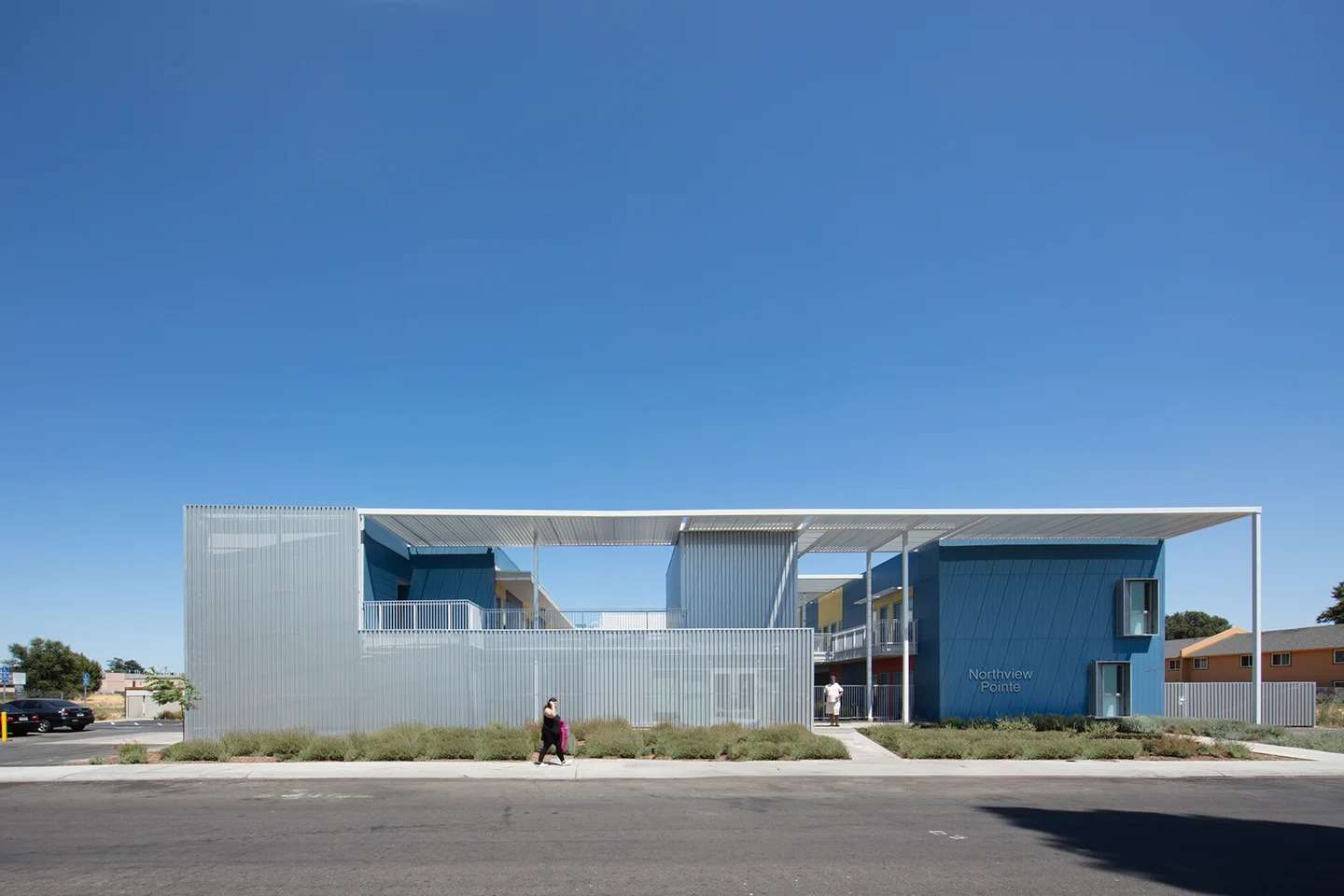
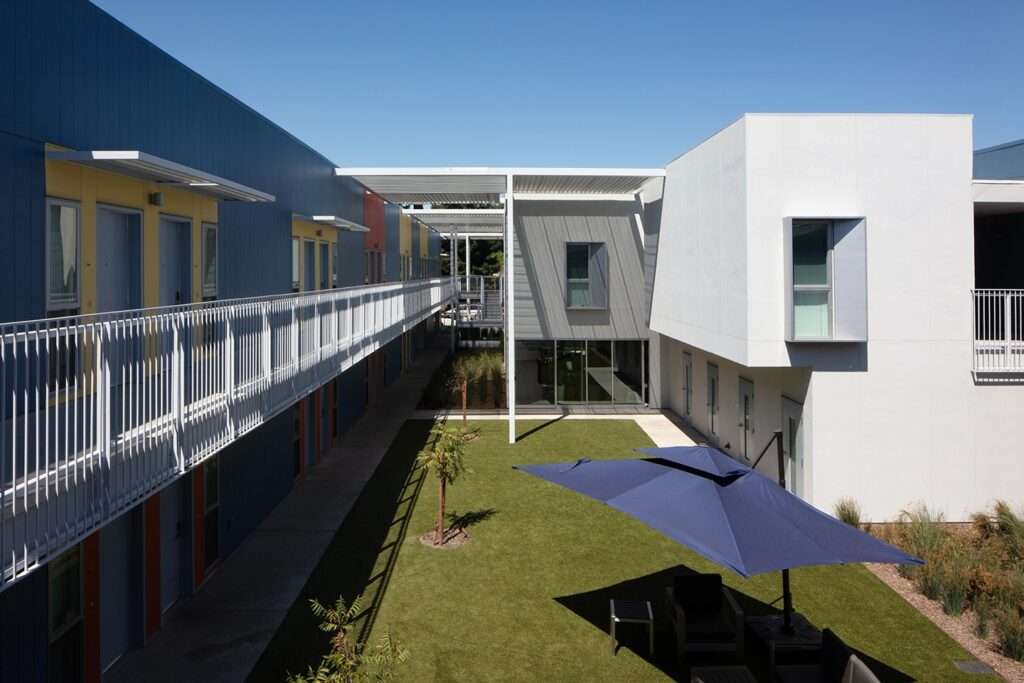
The project’s massing strategy is founded on the fragmentation of a solid building volume into a collection of low-rise, two-story residential buildings. This approach reduces the visual dominance of the built form while reinforcing a human-scale environment throughout the site. Unlike conventional gated housing developments, the buildings are organized around shared courtyards and outdoor communal spaces that serve as the primary organizing framework of the master plan. This configuration establishes a balance between visual openness and residential privacy, with housing units connected through a network of pathways and circulation routes that facilitate seamless transitions between public, semi-private, and private spaces.
The distribution of the buildings along the site perimeter, which extends across 1.23 acres, reflects a planning strategy aimed at freeing the center of the development for a shared garden and social courtyard. Rather than treating open spaces as residual areas between structures, the design assigns them a central role in organizing daily activities and visual relationships within the community. This arrangement accommodates 67 residential units within a total built area of 31,100 square feet while preserving a sense of spaciousness and openness at the heart of the project.
Central Courtyard and Visual Circulation Framework
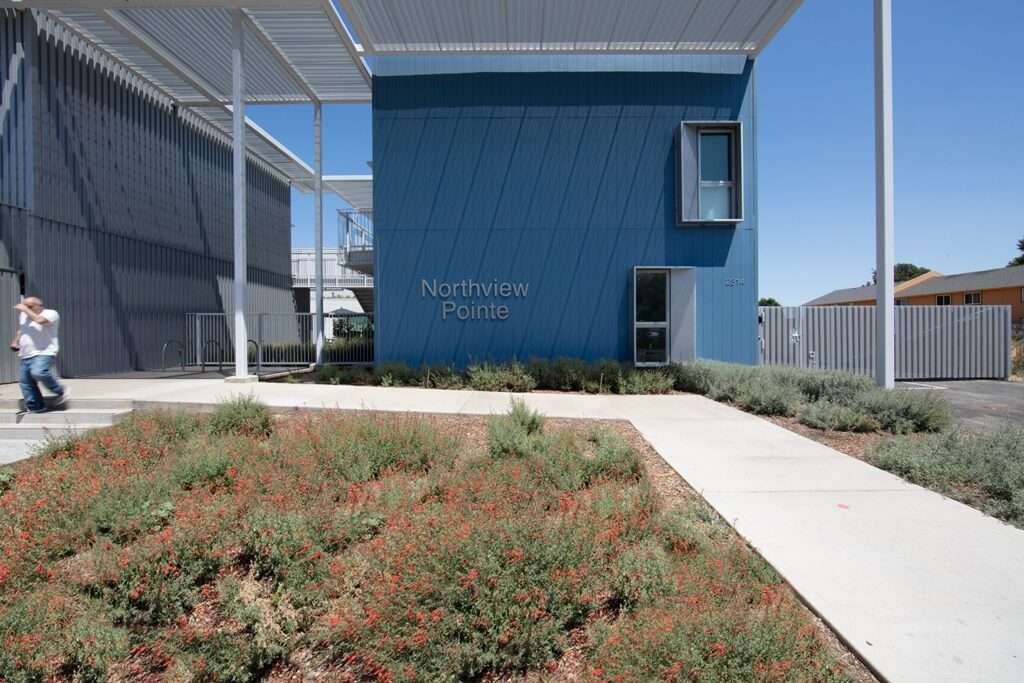
The central courtyard functions as the connective element linking the various parts of the development. Building façades, walkways, and pedestrian routes open toward this shared space, creating an urban framework that enhances accessibility and visual clarity. Windows and circulation corridors overlooking communal areas support the concept of natural surveillance of outdoor spaces (Eyes on the Street), increasing the vitality and usability of these areas without relying on physical barriers or conventional security measures.
Openings and passageways that penetrate the residential blocks further enhance permeability throughout the site, connecting parking areas, landscaped zones, and community facilities through a clear and direct circulation network. This spatial organization reduces the sense of enclosure and establishes a coherent sequence of interconnected spaces, integrating the project’s various components into a unified urban experience discussed across contemporary architecture and urban planning practices.
Environmental Sustainability and Airflow Optimization
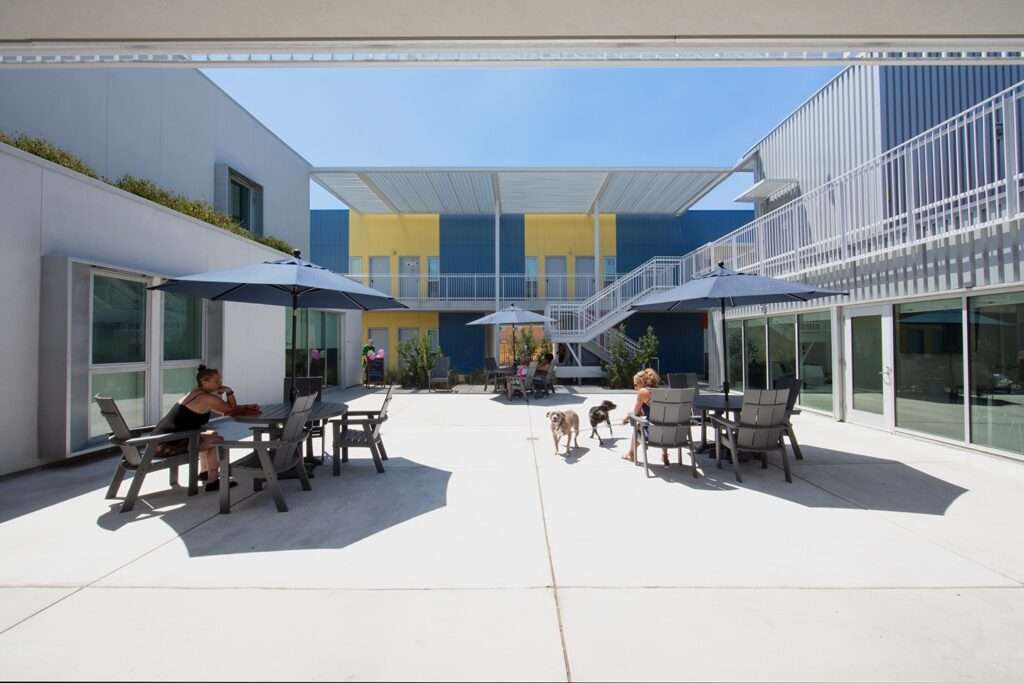
The architectural composition is closely integrated with passive environmental design strategies through the arrangement of buildings and courtyards that enhance cross-ventilation and capitalize on natural airflow. Rather than functioning as enclosed volumes that obstruct wind movement, the buildings are positioned to allow air circulation through carefully designed gaps and pathways, improving thermal comfort while reducing dependence on mechanical cooling systems.
This environmental approach is reinforced through the use of drought-tolerant vegetation and the reduction of impervious surfaces, helping to lower resource consumption while improving stormwater management and runoff control. These strategies are particularly significant given the project’s location near the confluence of the American and Sacramento Rivers, where landscape and water-management solutions contribute to broader objectives related to environmental sustainability and the protection of surrounding natural habitats, themes frequently explored in research and sustainable construction.

Shared Spaces and Functional Flexibility
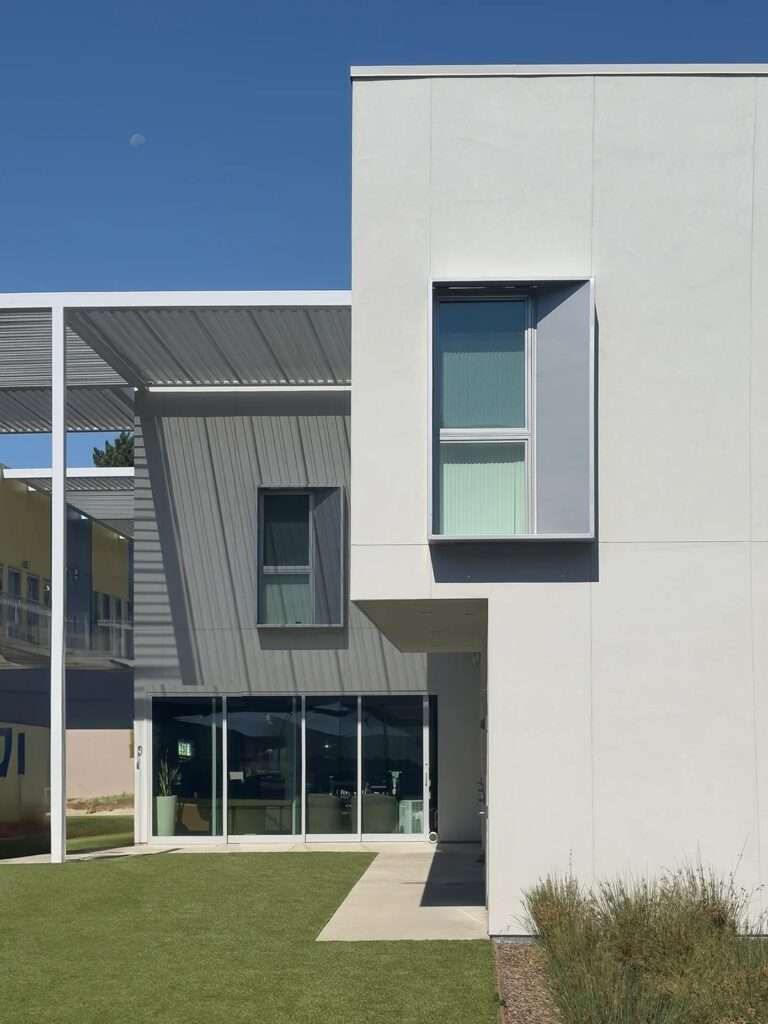
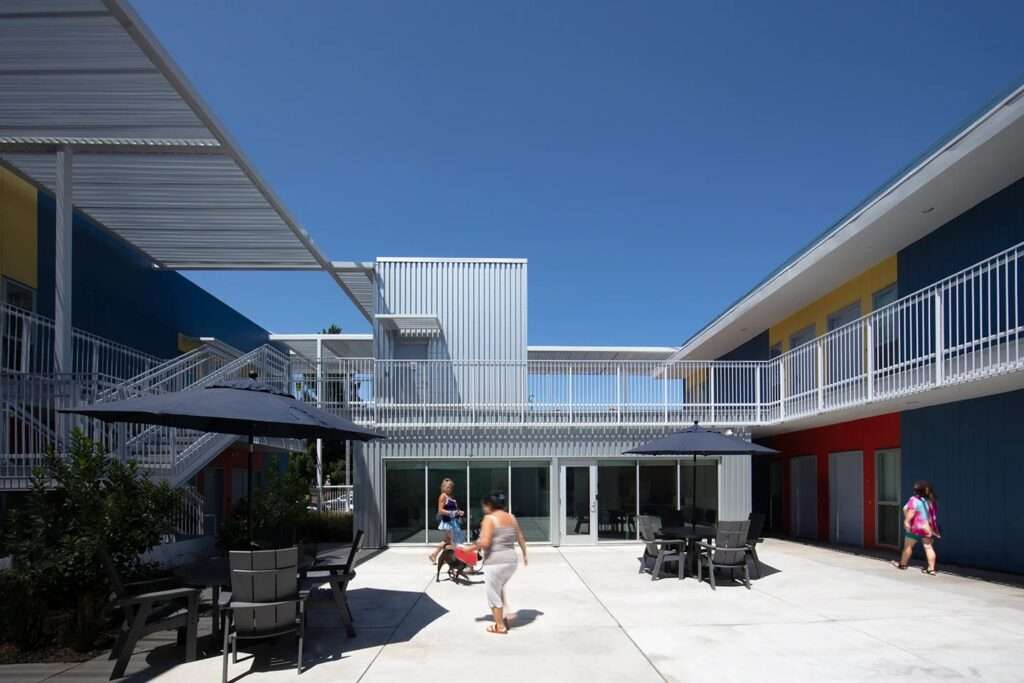
The community hall occupies a central position within the master plan, functioning as a link between indoor environments and surrounding outdoor spaces. The design incorporates large sliding glass doors that allow the hall to open directly onto adjacent courtyards, providing a high degree of flexibility and accommodating a wide range of activities at different scales. This integration between interior and exterior environments expands the everyday use of communal facilities while reinforcing the role of open spaces as an essential component of social life within the development.
This concept is complemented by a central open gathering space sheltered beneath a two-story lattice canopy that serves both environmental and functional purposes. In addition to providing protection from direct sunlight and enhancing thermal comfort, the canopy filters natural daylight, creating a dynamic visual atmosphere and giving the gathering area a distinctive architectural identity that supports its use throughout the day. Similar approaches can be found in innovative projects, contemporary interior design solutions, and evolving discussions within architectural discussion.

Ecological Integration and Natural Resource Management
The project demonstrates a strong connection to its natural setting near the confluence of the American and Sacramento Rivers within the San Francisco Bay watershed. This relationship is translated into a series of environmental strategies focused on minimizing impervious surfaces and implementing landscape elements that improve stormwater management and surface runoff control. These interventions enhance the environmental performance of the site while mitigating the negative impacts associated with extensive hardscape surfaces in urban environments, reflecting broader trends in sustainable construction and environmental research.
Green spaces extend beyond a purely aesthetic function, as drought-resistant plant species have been carefully selected to suit local climatic conditions and reduce irrigation demands. These planting strategies also support biodiversity by providing suitable habitats for pollinators and native species, strengthening ecological connectivity between the development and its surrounding landscape. As a result, sustainability extends beyond improving the environmental performance of the buildings themselves to encompass responsible resource management and the reinforcement of local ecosystems within an integrated urban framework frequently explored in contemporary architecture.

✦ ArchUp Editorial Insight
The project reframes affordable housing not as a defensive real estate asset, but as an integrated ecological and social framework. By replacing perimeter barriers with shared courtyards, the design leverages passive ventilation and localized climate moderation to dissolve spatial isolation, redefining low-cost residential typologies through hydrological integration. In doing so, it demonstrates how social equity can operate in direct alignment with environmental performance within contemporary urban contexts and innovative projects.
However, this programmatic reliance on permeable courtyards also reveals a potentially idealized assumption regarding long-term urban density and social interaction. Prioritizing shared spatial assets over physical boundaries presupposes a consistently engaged community structure while overlooking how climatic permeability may be challenged by increasingly extreme environmental conditions or the burden of ongoing maintenance. Such factors could ultimately threaten the project’s long-term resilience and transform its environmental ambitions into an additional operational responsibility, raising questions often examined within architectural discussion and architectural news.