Chessboard Design Conceals Its Technology Within a Stone Form

Spatial Scenography and the Archaeological Form
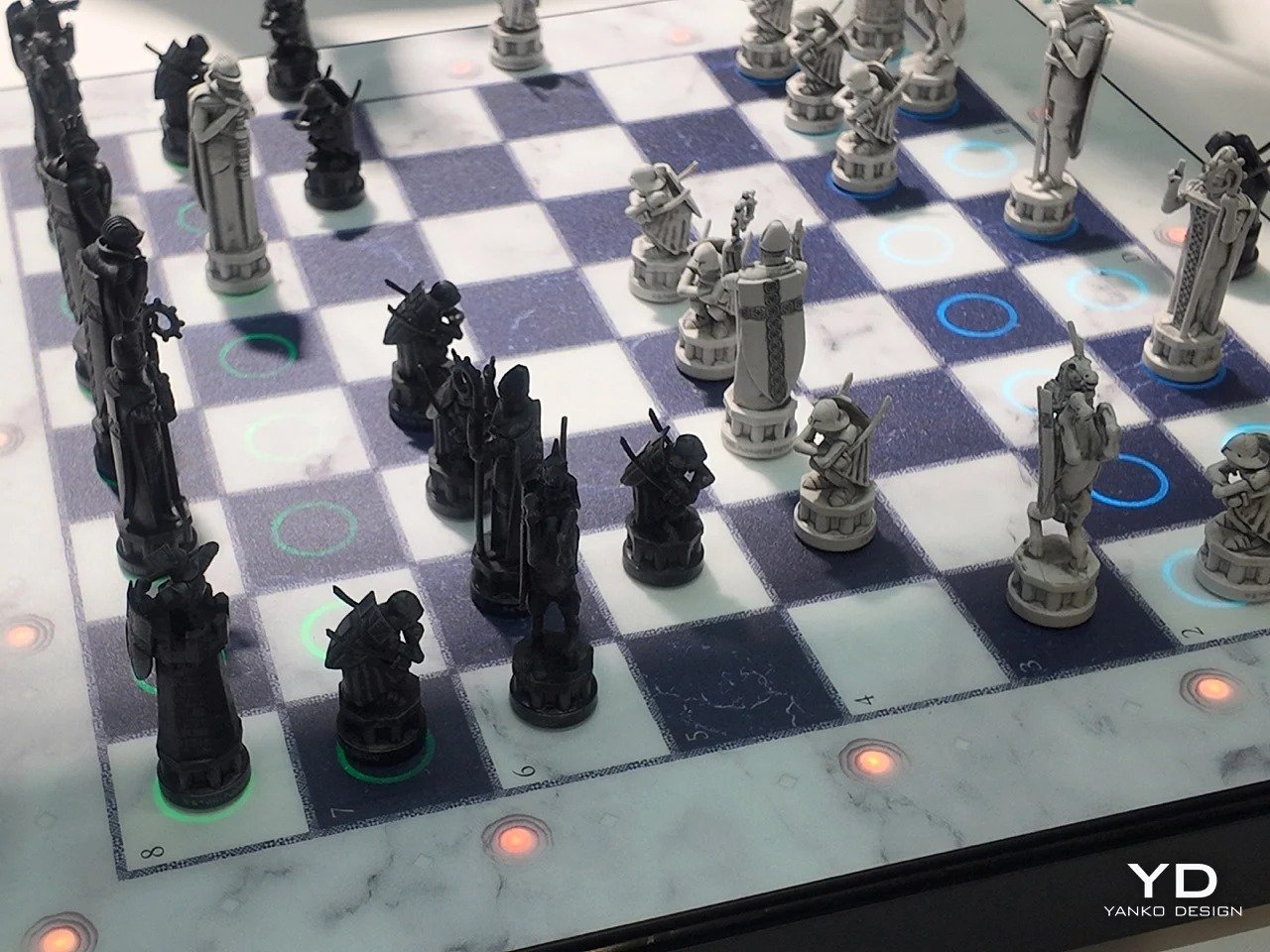
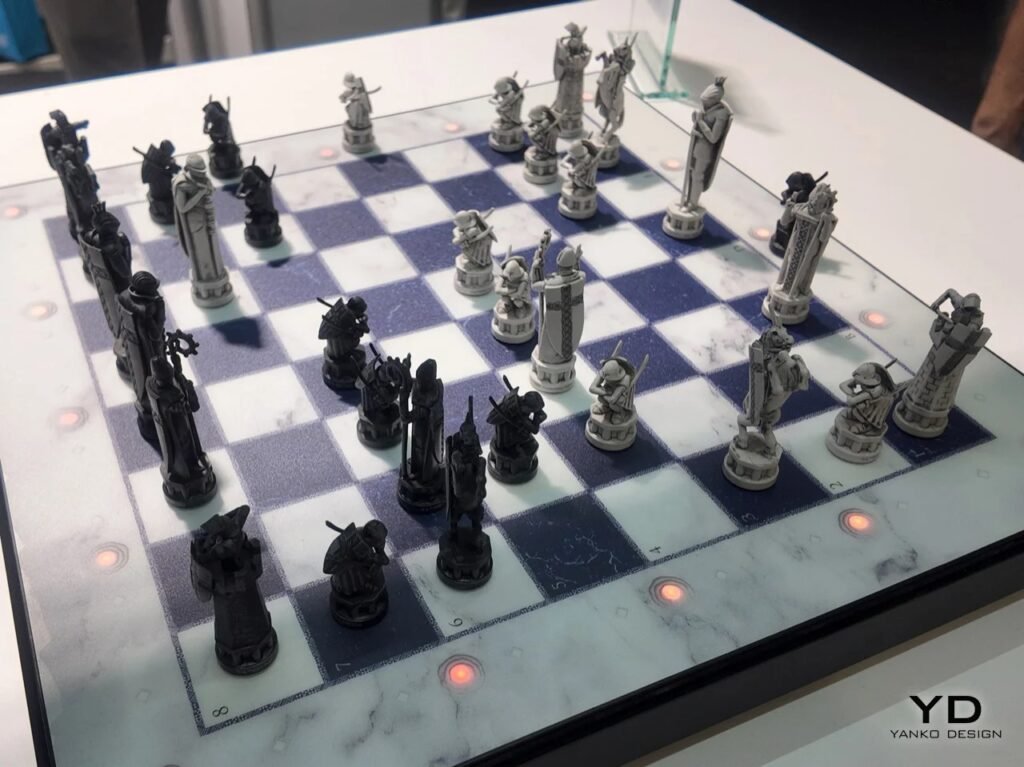
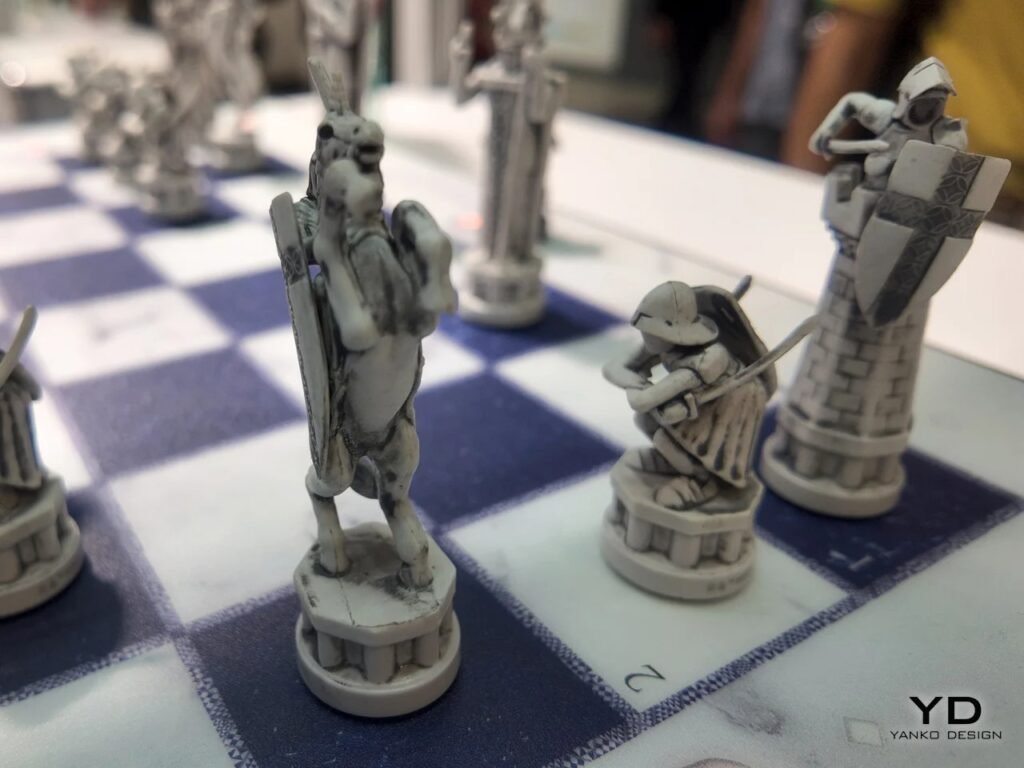
The chessboard transforms from a gaming tool into a self-contained scenographic element, taking the form of a carved stone mass that visually evokes the features of archaeological ruins. The illuminated marble surface gives the board a presence that extends beyond its immediate function, while the lighting interacts with the pieces and their configurations to create a visual scene that shifts with the movement of the game. In this way, technology is not presented as an exposed interface, but integrated into a material mass that draws its visual presence from the material itself.
Hidden Mechanics and the Experience of Movement
One of the board’s most prominent characteristics lies in concealing the piece-moving mechanism beneath the playing surface, making the movement appear to the user as though it originates from the stone mass itself. This relationship between the static surface and autonomous movement creates a distinct visual contrast: the material appears solid and heavy, while the pieces move across it independently of direct physical contact. As a result, the internal mechanism shifts from being a technical component to becoming part of the visual experience, as technology is not displayed before the user but perceived through its effect on the movement of the pieces.
Sculpture and the Formal Language of the Pieces
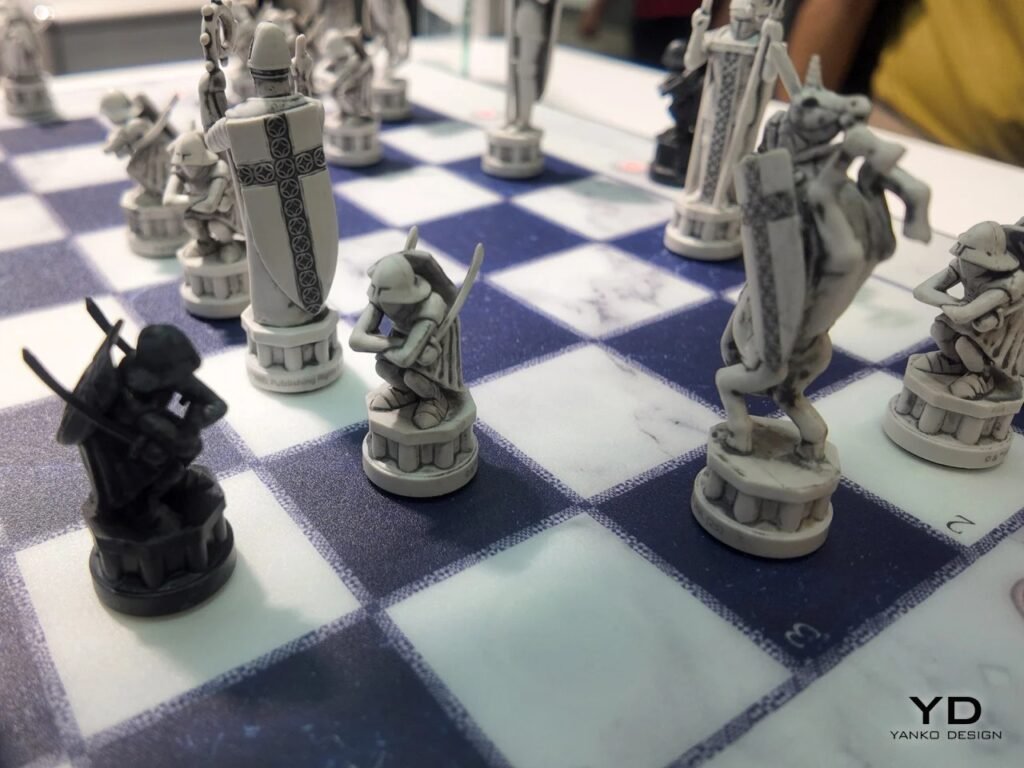
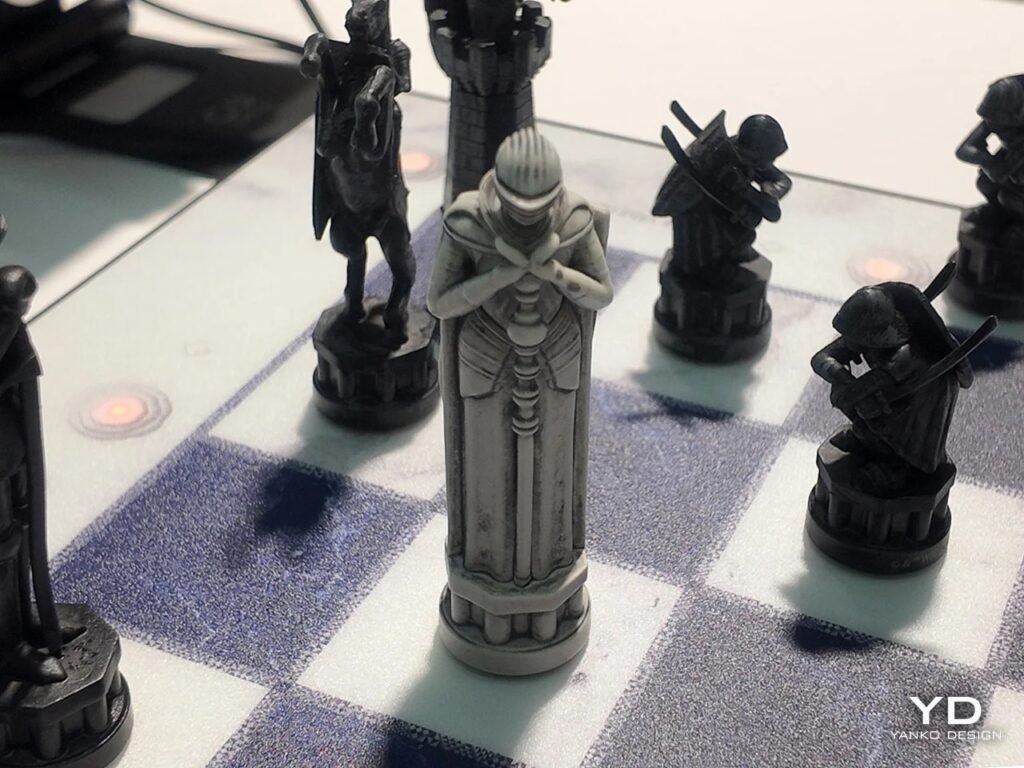
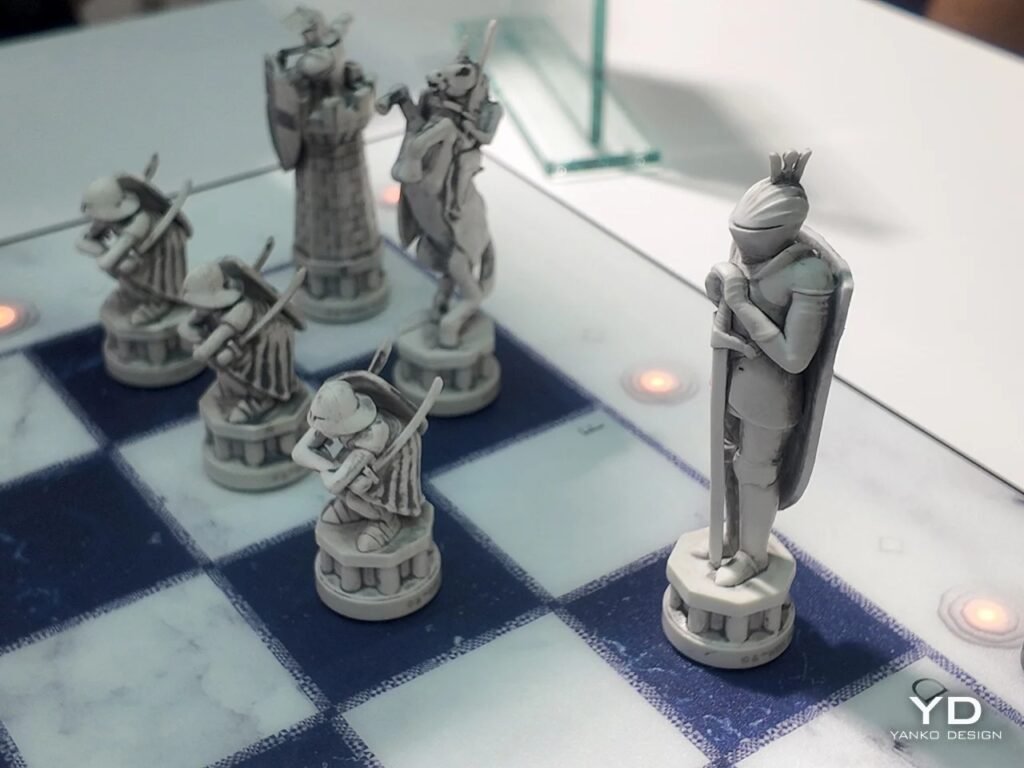
The chess pieces depart from the familiar formal reduction of traditional “Staunton” sets, moving instead toward a more detailed sculptural treatment that evokes the figures and knights of the historical imagination. This treatment gives each piece an independent visual presence, so that it no longer appears merely as a functional marker on the board, but as a sculptural element contributing to the composition of the entire scene. The pronounced details across the surfaces of the pieces also allow them to capture light and shadow at varying degrees, causing their visual reading to change with the movement of the lighting and the viewer’s position.
Glowing Marble and the Invisible Interface
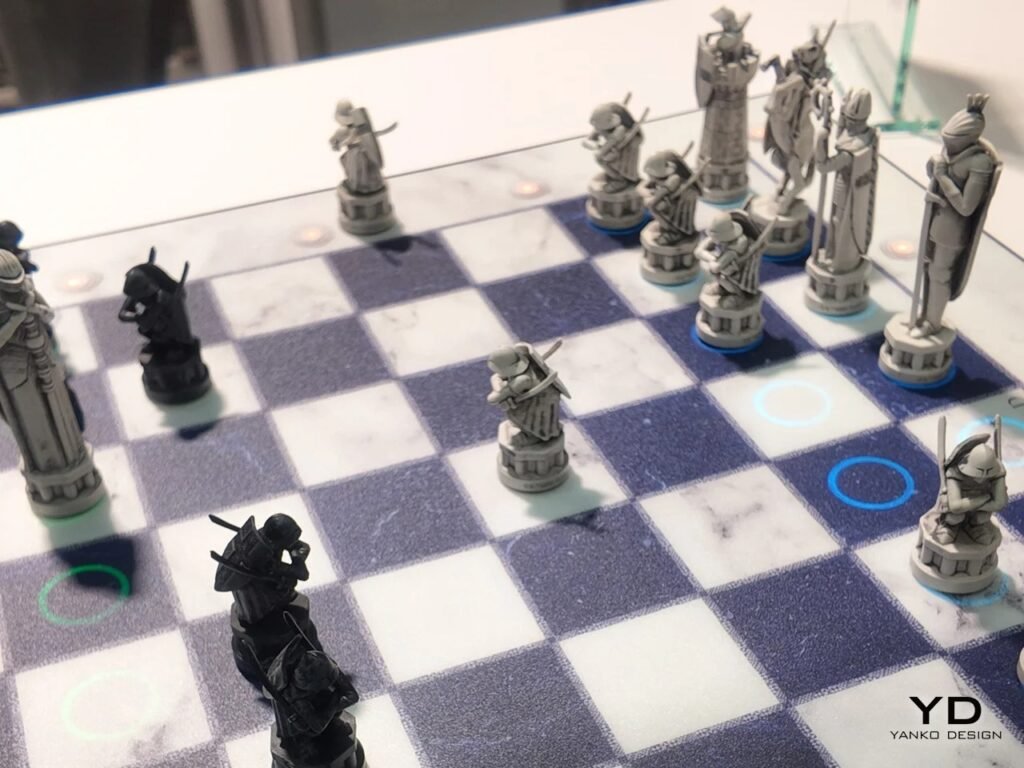
The playing surface abandons the traditional appearance of a two-tone chessboard, adopting instead an illuminated marble surface in which lighting elements are integrated into the design structure. Technology does not appear as a separate layer above the material; rather, it recedes into the material itself, emerging when necessary through light signals associated with gameplay. This integration gives the board a clear visual economy: digital information does not compete with the presence of the stone, but appears within it in a limited and directed manner, preserving the balance between technical function and the material character of the object.
Movement Dynamics and the Kinetic Mechanism
The interactive experience relies on an automated system that allows the pieces to move across the board’s surface without requiring manual intervention. The significance of this feature lies in the way automated movement becomes part of the scene itself: the piece does not merely move from one square to another, but reveals through its trajectory the presence of a hidden technological system beneath the surface. This movement integrates with the interaction capabilities provided by the system, transforming each move into a tangible visual event rather than leaving it as an invisible digital command.
Experiential Impact and the Presence of Technology
The board transcends its function as a smart device to present a different model for the relationship between technology and material. In an exhibition environment dominated by devices, screens, and digital interfaces, the board derives its strength from concealing most of its technology and revealing its effects only through light and movement. The sense of wonder here emerges from the contrast between a mass that appears static and traditional and an intelligent system operating within it without directly revealing its underlying structure. Technology thus shifts from being an object of display to becoming a concealed mechanism that supports the product’s sensory experience, reintroducing chess as a moving scene that brings together sculpture, light, and movement.


✦ ArchUp Editorial Insight
The chessboard redefines computing as integrated matter rather than as a visible interface. Its carved stone mass, illuminated marble surface, sculptural pieces, and concealed mechanism establish a miniature architectural system in which intelligence is perceived through movement and light. Within design, this strategy shifts the value of technology from its specifications to its spatial perception, making the machine legible through the behavior of material rather than through screens.
Yet concealing technology does not necessarily mean achieving a greater degree of sophistication. The sense of autonomy depends on a dense mechanical structure that remains outside the scope of material and spatial treatment. The archaeological character may also romanticize the absence of visible technology, overlooking questions of maintenance, energy consumption, component failure, and obsolescence. The architectural strength of the board, therefore, lies in revealing how tightly engineered systems can produce the illusion of an eternal mass.