Gable Villa Royan: Climatic Logic and Structural Hybridization

Gable Roof as a Climatic and Historical Solution
The gable roof is considered one of the oldest elements used in architecture. It is characterized by its sloped form, which has historically been associated with regions of heavy rainfall. This form was not originally a purely aesthetic choice, but a direct response to climatic conditions, especially in areas that require efficient water drainage. As a result, it became a recurring element in many traditional environments.
Reinterpreting the Form in a Contemporary Context
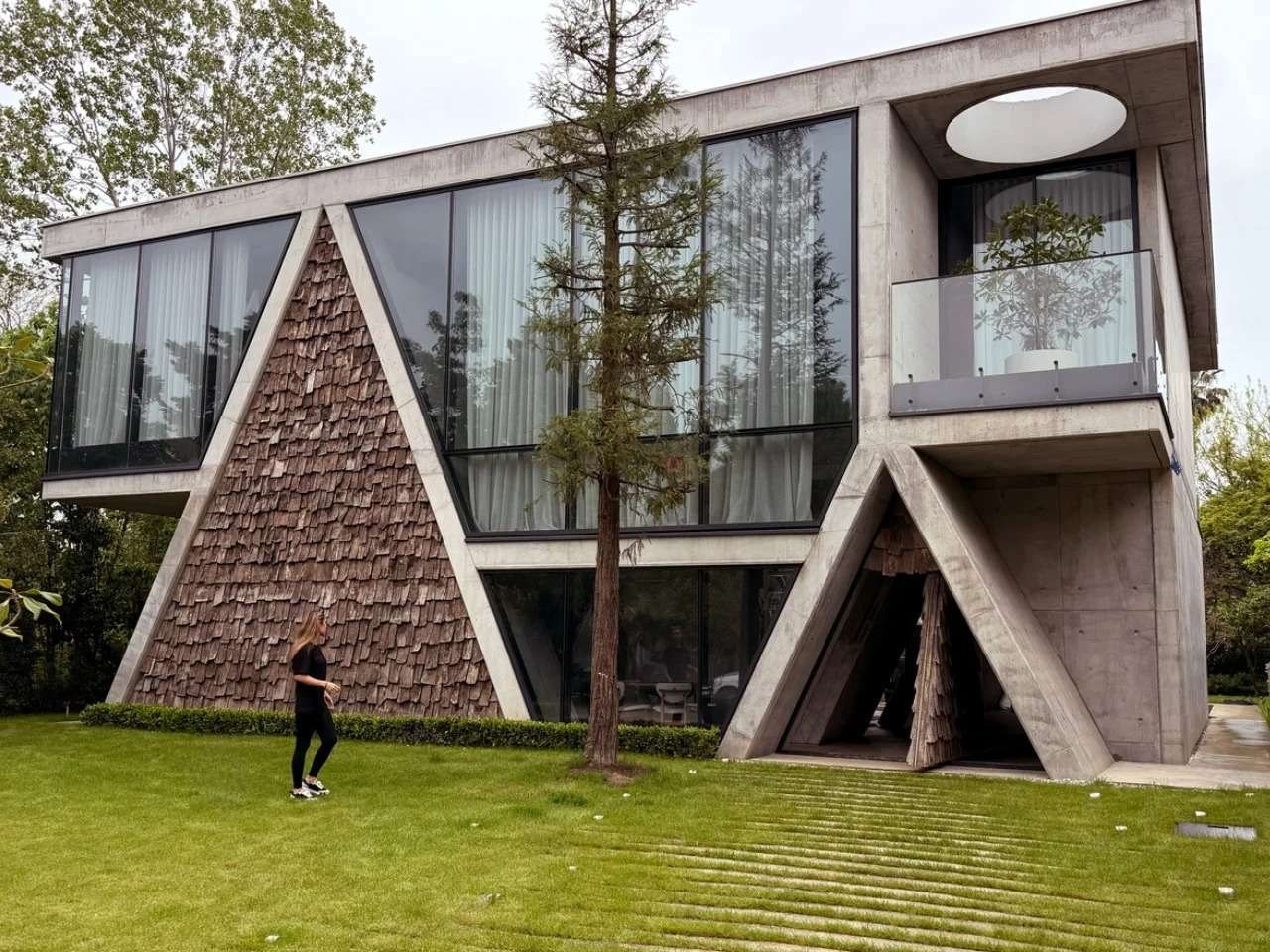
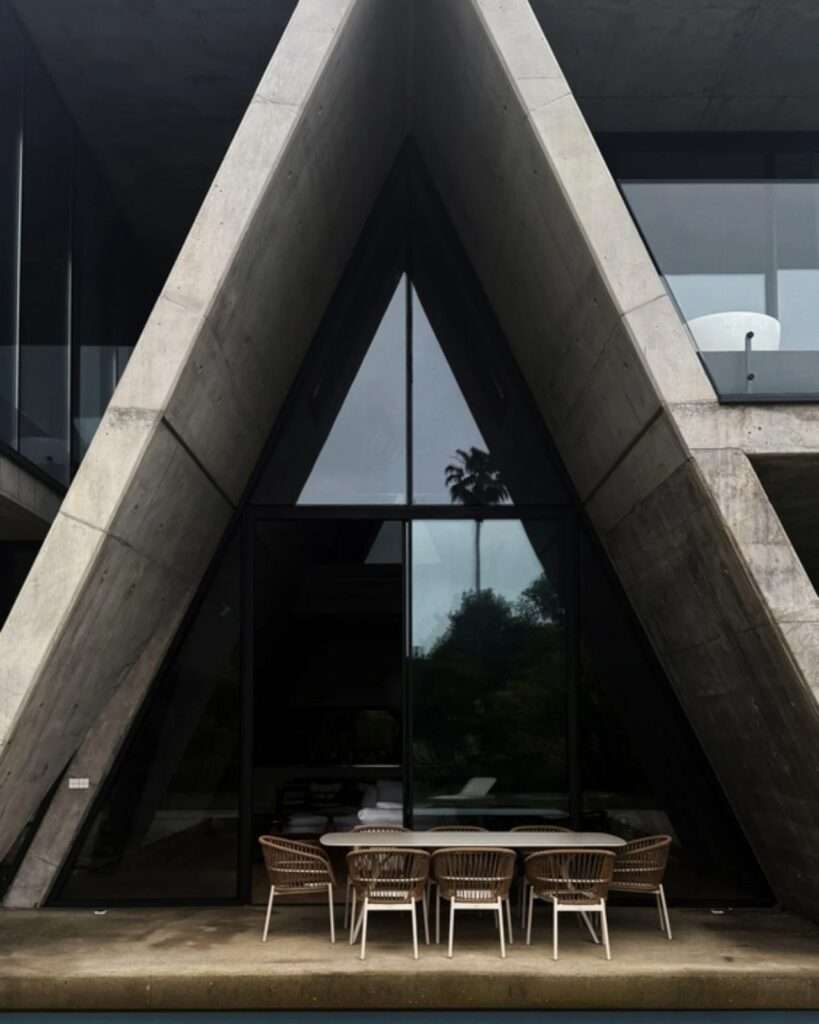
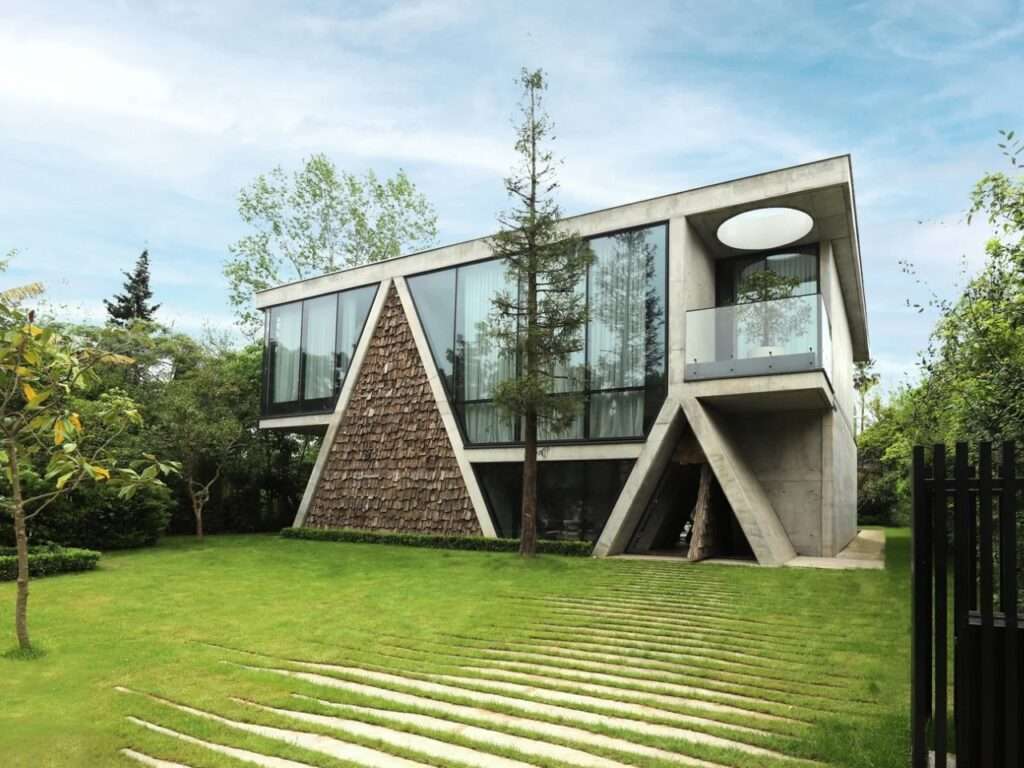
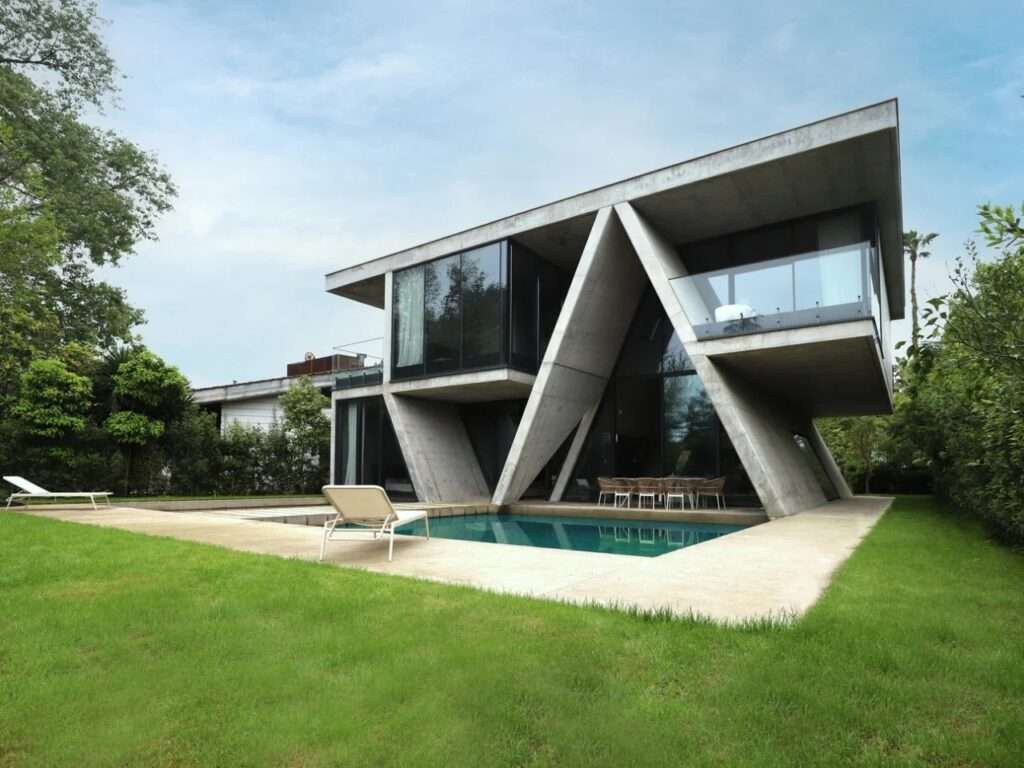
In the Gable Villa, completed in 2025 in the coastal city of Royan in northern Iran, this traditional form is treated as material for reinterpretation. The project, attributed to Next Office as a case study, does not reproduce the gable roof literally, but instead places it in direct confrontation with a modern architectural language based on right angles, creating a new reading of the relationship between traditional form and contemporary composition.
Interaction Between Local Context and Geometric Language
Royan is located near the Caspian Sea, where seasonal rainfall has historically been a key factor in shaping local architecture. In this context, the sloped roof appears as a deeply rooted climatic response rather than a decorative element. When inserted into a modern design system, it produces an interaction between the logic of the local environment and contemporary geometric language, demonstrating how traditional forms can acquire new dimensions within different design contexts.
Hybridization Between Traditional Form and Structural Logic
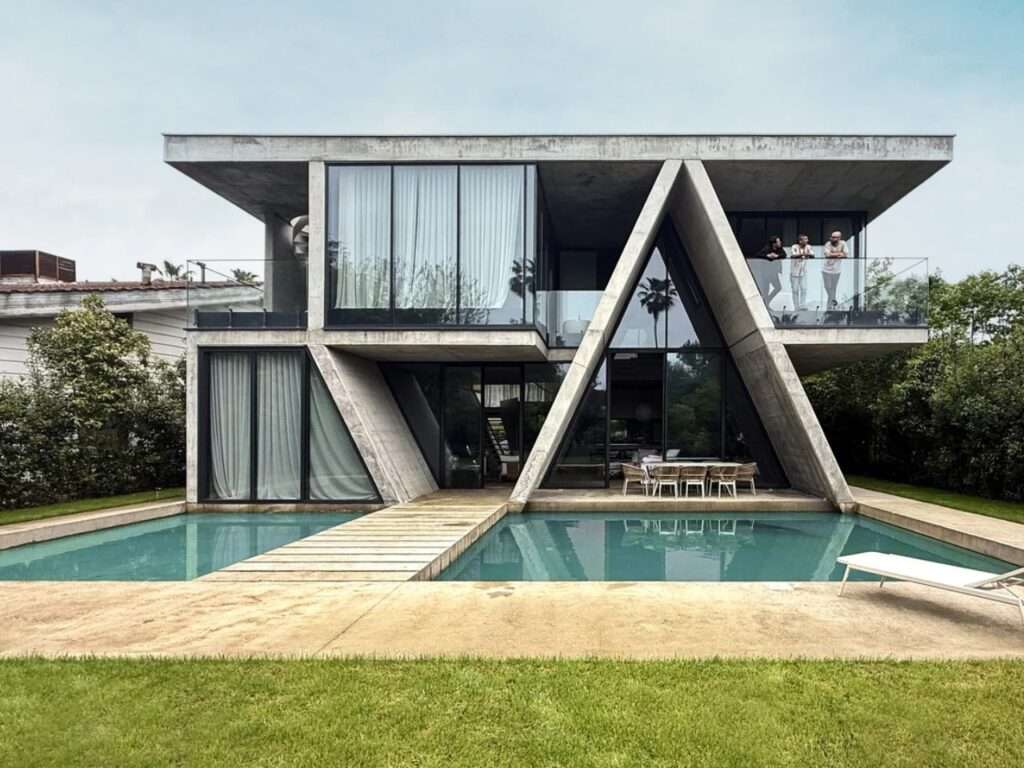
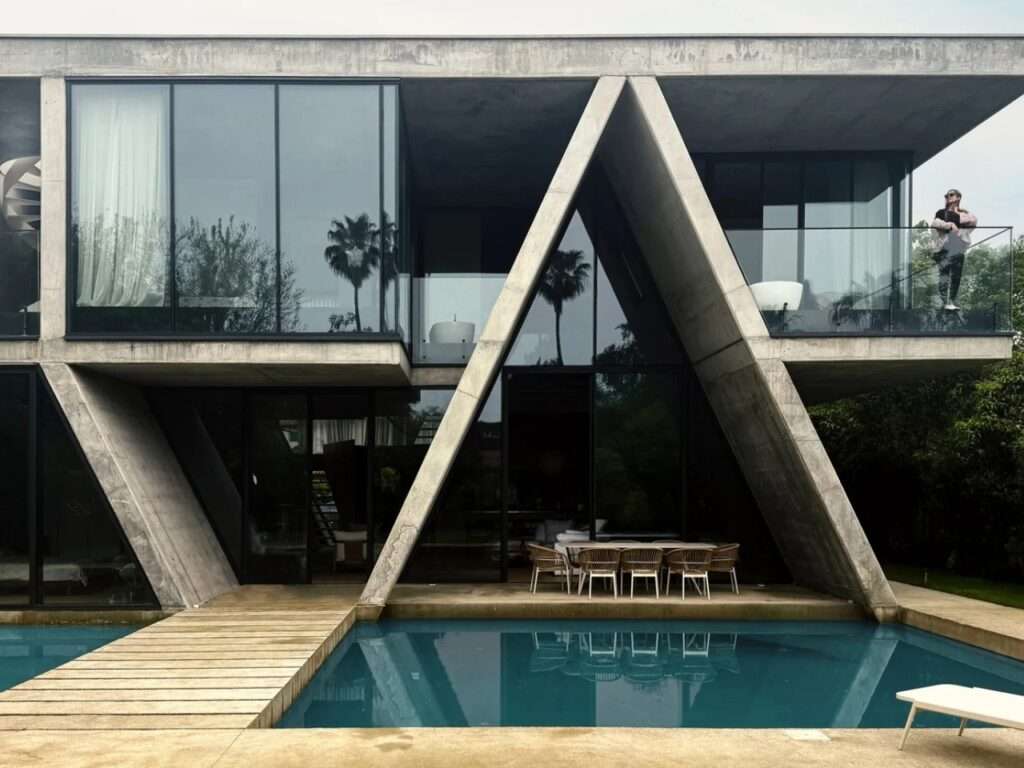
The design is based on the idea of hybridization between a sloped structure inspired by regional traditional architecture and a structural framework based on right angles. Although this overlap may theoretically be understood as a compromise solution prone to falling into imitation, its construction produces a more complex relationship between the two systems, where neither dominates the other.
Impact of Overlap on Spatial Experience
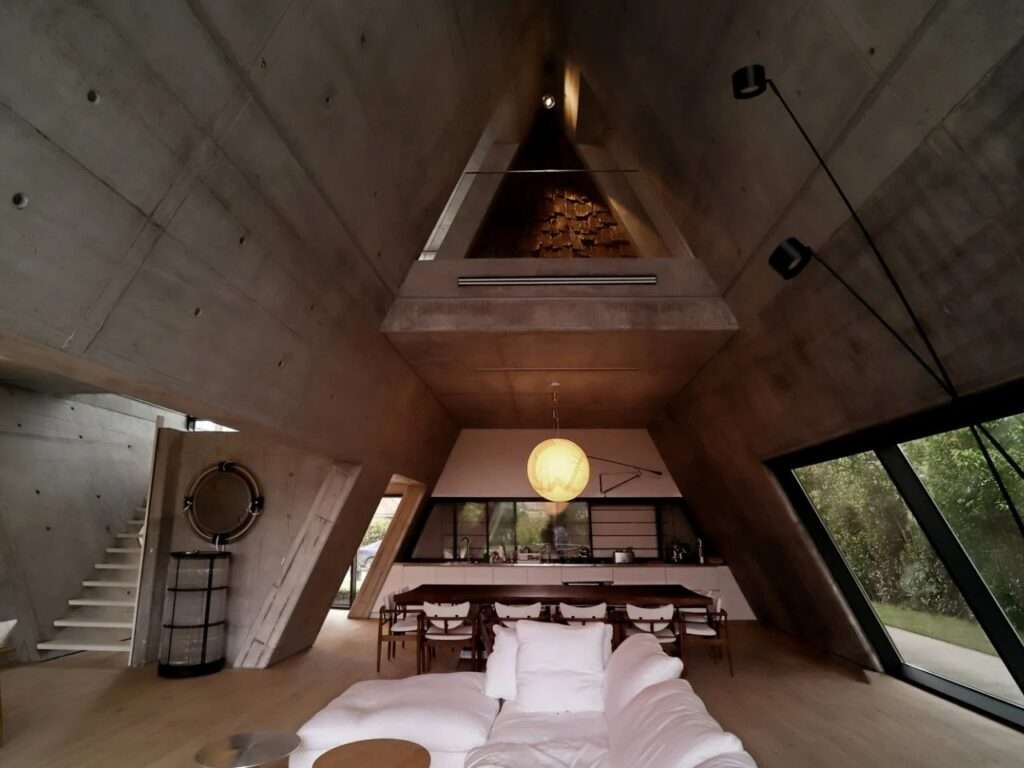
As a result of the collision between the two systems, heterogeneous yet balanced interior spaces are formed. The sloped roof does not only define the external envelope, but also reorganizes the internal perception of space. Some rooms visually expand with the rising slope, while others become lower and more intimate, creating a natural spatial gradient without the need for additional partitions, a strategy often explored in interior design.
A Methodological Context Within the Office’s Work
This approach is linked to the design philosophy of Next Office, founded in 2009, which focuses on the tension between contemporary architecture and local references. In earlier works such as the “Sharifi-ha House,” the idea of flexibility was explored through movable elements that change according to seasons. The Gable Villa, however, offers a quieter interpretation of this approach, relying on conceptual clarity without explicitly highlighting its mechanisms, reflecting an evolution in design methodology.

Commitment to Local Context as a Design Logic
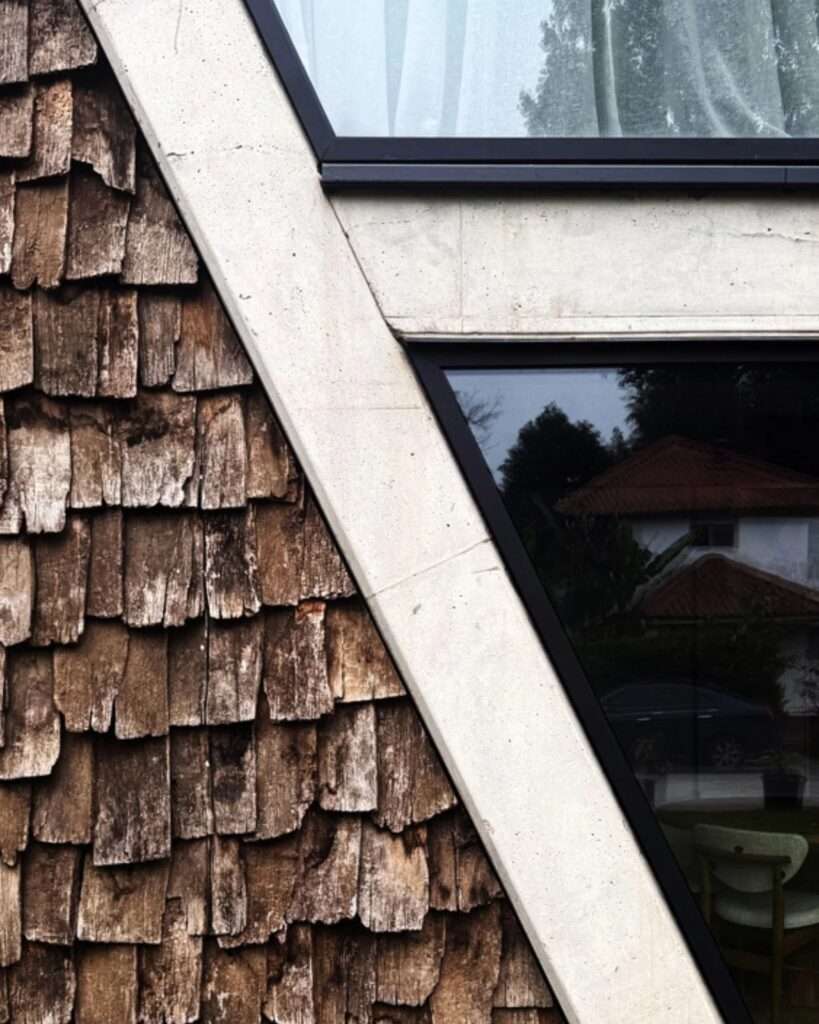
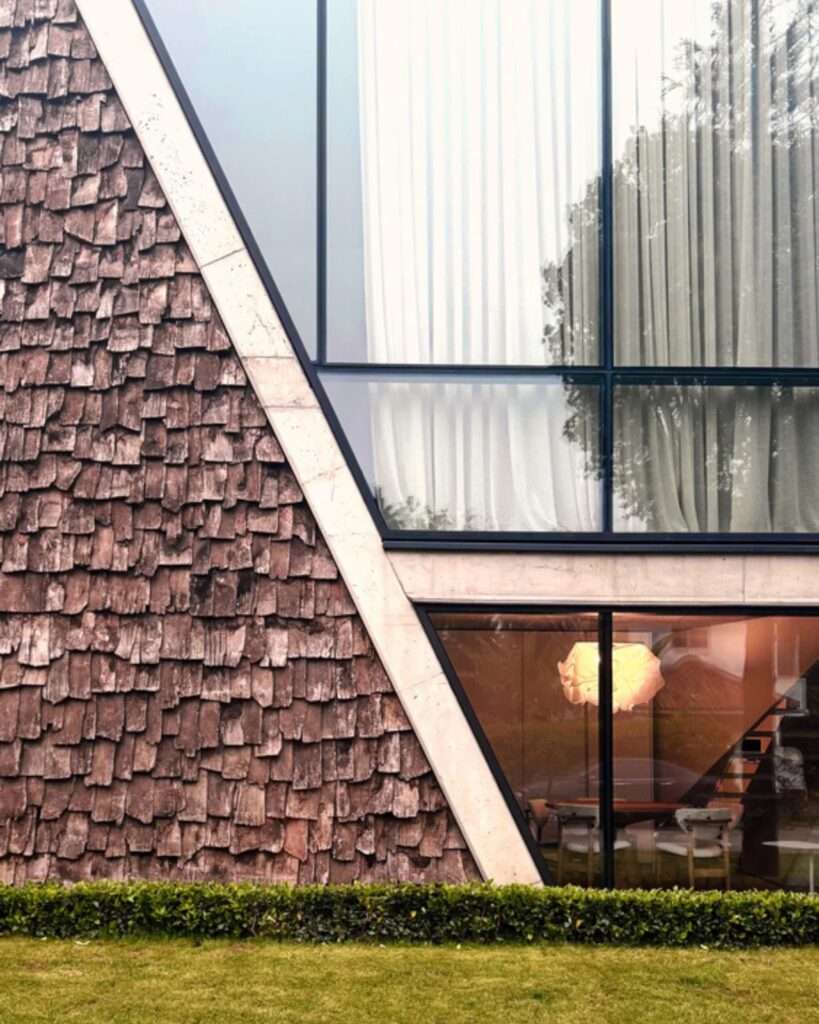
The Gable Villa clearly demonstrates an approach based on direct engagement with local character without attempting to aestheticize or repackage it as a decorative feature. In a global context that often tends toward homogenizing architectural language and reducing regional differences, the project treats the specificity of Royan as a structural component of the design idea rather than merely a spatial background, much like other notable buildings that prioritize context.
From Formal Heritage to a Logic of Thinking
The local “architectural DNA” is not used here as a visual quotation, but rather integrated into the logic of the building’s structural system. This shift distinguishes between replicating traditional form and absorbing the intellectual mechanism that originally produced it. In this sense, traditional references are reformulated within a contemporary language without relying on ornamentation or direct metaphor, relying on building materials that respect the local climate.
Visual Reading and Light Experience
The project’s imagery, captured by Ehsan Ahani, presents it in a state of visual calm consistent with its structural nature. The building does not attempt to attract attention directly, but instead appears within its context with a sense of stability tied to conceptual clarity. The variation of light across the gable surface adds a perceptual dimension different from flat roofs, an effect that is visually perceived even before being consciously analyzed.
Regional Architecture in a Globalized Context
For observers of contemporary architecture, the Gable Villa can be seen as a case that reopens the question of regional architecture within a global context that tends toward stylistic unification. This long-standing movement toward a single architectural language has reduced local distinctions, making projects that reintroduce regional logic appear as a reaction against this flattening. Such discussions are frequently featured in architectural news and critical debates.
Within this framework, simple and familiar architectural forms such as the gable roof or pitched roof emerge as elements that have not been fully exhausted, but can be reactivated when understood beyond their traditional formal dimension, as part of a broader design logic tied to context and environment.
Reinterpreting Familiar Forms
The Gable Villa does not reproduce these elements, but instead reintegrates them into a contemporary framework that allows reinterpretation. In this sense, forms associated with everyday visual memory become tools capable of generating different spatial perceptions and functions, rather than remaining fixed formal signs. Similar experimental approaches can be found in various architectural research studies.
A Quiet Reading of Architectural Practice
The project can be read as part of a broader tendency that seeks to rebalance the relationship between the local and the global in architecture without relying on spectacle. The work appears as a study in how familiar elements can be used through constructive restraint rather than visual emphasis, placing it within a wider discussion on the value of simplicity and reinterpretation of known forms in contemporary practice.
✦ ArchUp Editorial Insight
The Gable Villa model can be read as the outcome of an urban production system governed by historical climatic conditions along the Caspian Sea coastline, where high rainfall rates historically necessitated the adoption of pitched roofs within a traditional structural logic. This climatic driver later transforms into a reference layer reactivated within a contemporary context dominated by standardized structural systems based on rectangular grids and spatial efficiency requirements. Points of friction emerge in reconciling the logic of global structural repetition with pressures of local adaptation, including cost considerations, fabrication behaviors, and structural stability standards. The result is not an individual design decision, but a spatial negotiation between two systems: an inherited climatic memory and a globalized production framework. Interior space is redistributed through this tension, where the slope becomes an element that reshapes flows of use and vertical hierarchy rather than a formal sign, while the architectural authorial role recedes in favor of the logic of the structural system itself.