New Six-Lane Bridge Opens Between Detroit and Windsor, Easing Cross-Border Traffic

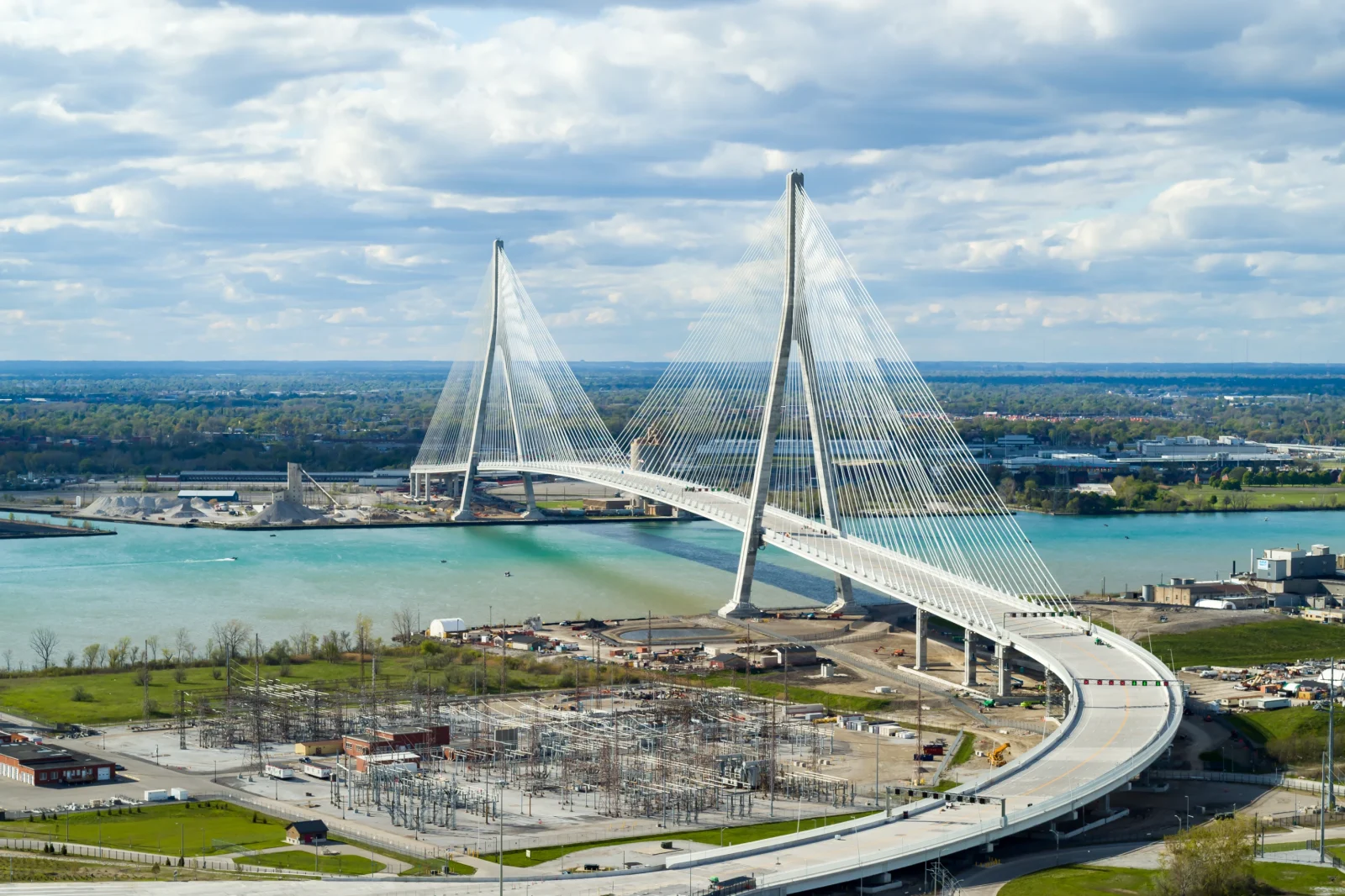
A six-lane bridge across the Detroit River has opened to traffic, giving the United States and Canada their first new crossing at this location in nearly a century. The structure adds a second major route for cars and trucks moving between the two countries, easing pressure on an aging bridge nearby that has long carried a large share of North America’s cross-border trade. Its opening marks the completion of one of the continent’s largest infrastructure projects, a crossing that took decades of planning before construction began.
The new crossing carries the official name Gordie Howe International Bridge, honoring the Canadian hockey player. Border agencies opened it to vehicles on July 27, connecting Detroit, Michigan, with Windsor, Ontario, across the Detroit River.
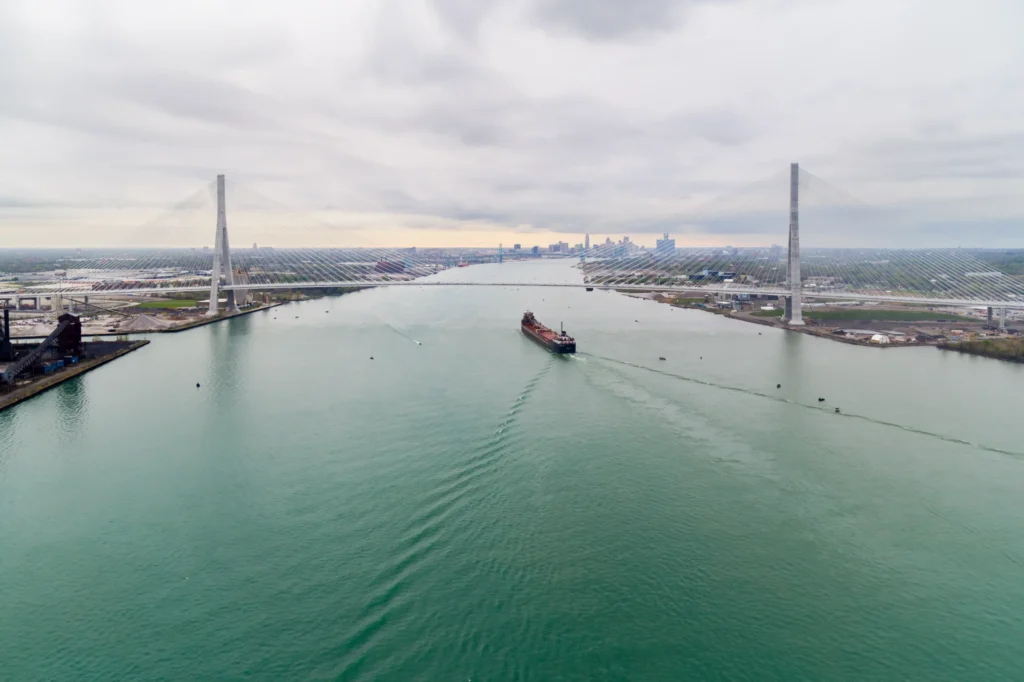
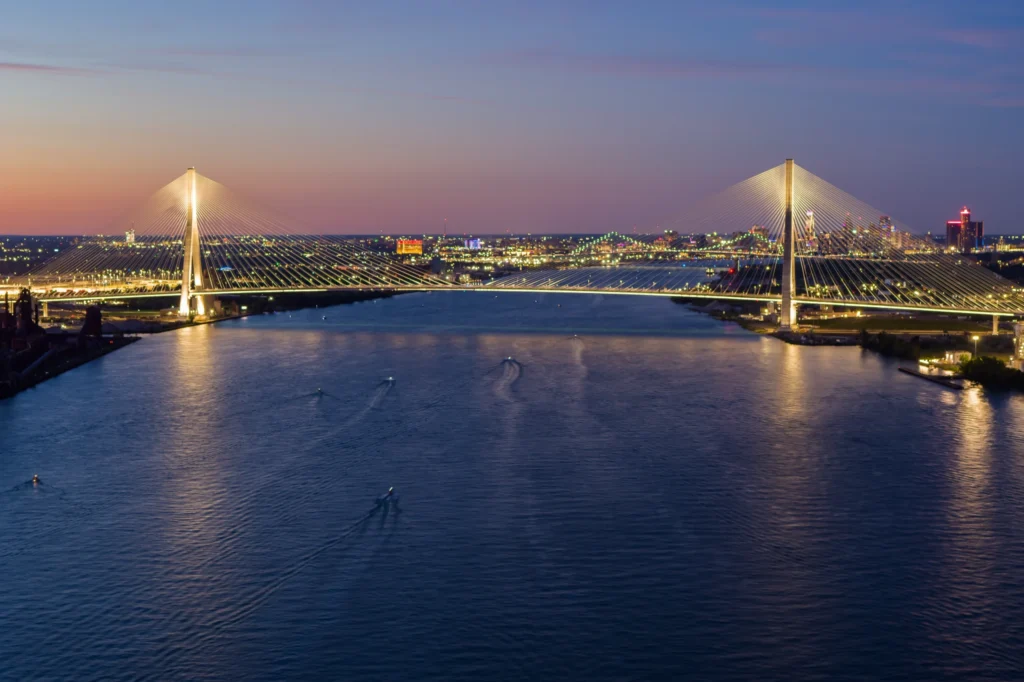
The bridge stretches roughly 2.5 kilometers, or 1.5 miles, across the river. Its main span measures 853 meters, making it the longest cable-stayed span in North America. A cable-stayed structure hangs the road deck from steel cables that run down from tall towers, removing the need for support columns underneath the roadway.
A Direct Freeway Link Bypasses an Aging Crossing
The bridge connects Interstate 75 in Michigan directly to Ontario Highway 401 through a dedicated freeway link. Drivers and truckers gain a faster route than the nearby Ambassador Bridge, a century-old crossing that has carried much of the region’s commercial traffic until now. The Detroit-Windsor corridor already handles roughly a quarter of all truck trade between the United States and Canada, and the new route adds capacity directly into that flow.
Auto parts frequently cross the border several times before reaching a final assembly line, so delays at the crossing ripple through supply chains on both sides. Planners expect the new bridge to shorten wait times for that traffic and reduce bottlenecks during peak shipping hours.
A Ceremony Split Between Two Countries
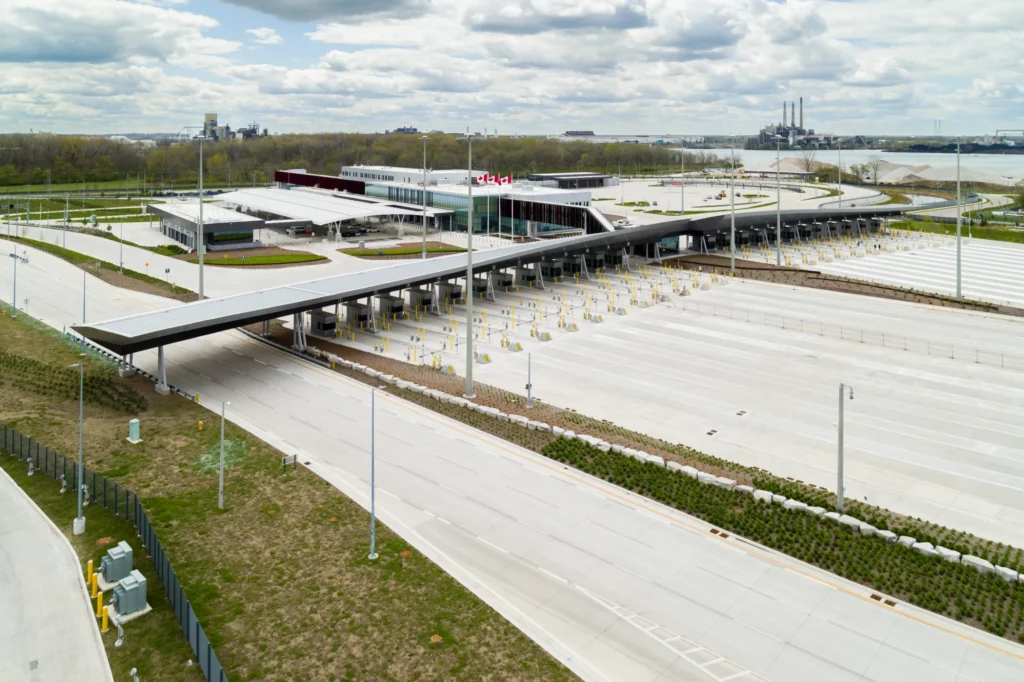
Construction began in 2018 under a public-private consortium, following decades of planning and negotiation between the two governments. The project’s total value reached about CA$6.4 billion, or US$4.7 billion, once the budget included customs facilities and connecting road infrastructure.
The opening arrived amid strained relations between the two countries. Disputes over tariffs and revenue-sharing delayed the inauguration earlier this year, and officials abandoned a planned joint ribbon-cutting ceremony. Canadian officials held their own opening event in Windsor, while U.S. officials did not attend, reflecting the wider trade tensions between the two governments.
During the Windsor ceremony, Canadian leaders framed the bridge as a long-term investment despite the political friction. Ontario Premier Doug Ford described the crossing as an investment in future trade and regional prosperity. Members of Gordie Howe’s family took part in the first ceremonial crossing, honoring the athlete whose name the bridge carries.
Lower Tolls and a New Path for Pedestrians
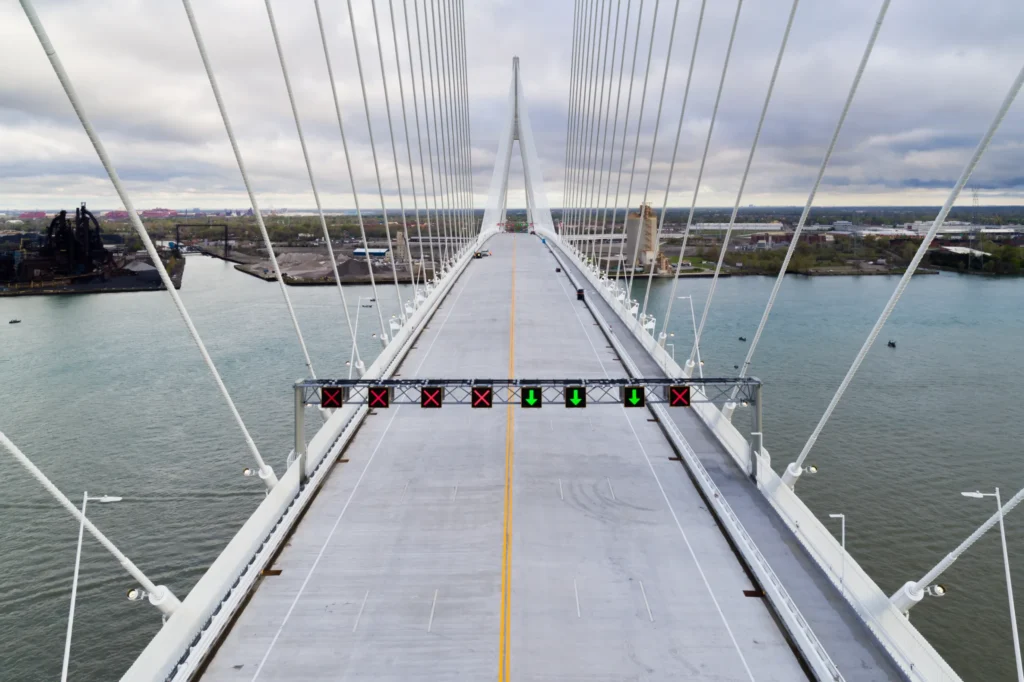
The bridge charges lower tolls than nearby alternatives. Passenger vehicles pay US$5.75, or CA$8, per trip, and commercial vehicles pay US$8.75, or CA$12, per axle. Drivers using electronic passes receive a 25 percent discount on those rates.
A shared pedestrian and cycling path opened shortly after vehicle traffic began, giving people a car-free way to cross the river for the first time at this location. Border agencies reported smooth operations on opening day and reminded travelers to carry the correct documents.
Structural Logic and Regional Circulation
A cable-stayed span works well for a river crossing of this scale. Cables carry the deck’s weight to tall towers, keeping the main channel clear for shipping while avoiding the cost of a longer suspension structure. Placing the new crossing away from the existing bridge also lets the region separate through-traffic from local streets, a distinction the older crossing never achieved because it feeds directly into dense city blocks on both sides. The harder question is timing. The team built this freight corridor primarily to serve automotive supply chains, and it opens into a period of tariff disputes and shifting trade rules. Its economic return now depends on political conditions that infrastructure alone cannot control.
✦ ArchUp Editorial Insight
The bridge solves a real capacity problem: one aging crossing never had room for a quarter of North America’s truck trade, and a second cable-stayed span gives that traffic space to move without rerouting it through city streets. As a piece of construction, the project stays straightforward — a bigger deck, direct highway links, dedicated customs lanes. But the split ceremony tells a different story. Officials sold the bridge as economic cooperation, then opened it without a joint ribbon-cutting, because tariff and revenue disputes proved harder to resolve than the engineering. Concrete and cable move goods across a border; they do not settle what each government charges to cross it, and that gap will outlast opening-day headlines about improved cities and trade.
Project Team: The Bridging North America consortium led construction, and the Windsor-Detroit Bridge Authority operates the crossing. Location: Detroit, Michigan, United States, and Windsor, Ontario, Canada, across the Detroit River.
Project Notes: The bridge opened to vehicle traffic on July 27, 2026, after construction began in 2018. The Government of Canada funded the project, valued at approximately CA$6.4 billion (US$4.7 billion) including customs facilities and connecting roads. Officials named the crossing after hockey player Gordie Howe.