Self-Healing Engineering: How Do Lamellar Materials Protect Architectural Envelopes from Structural Failure?

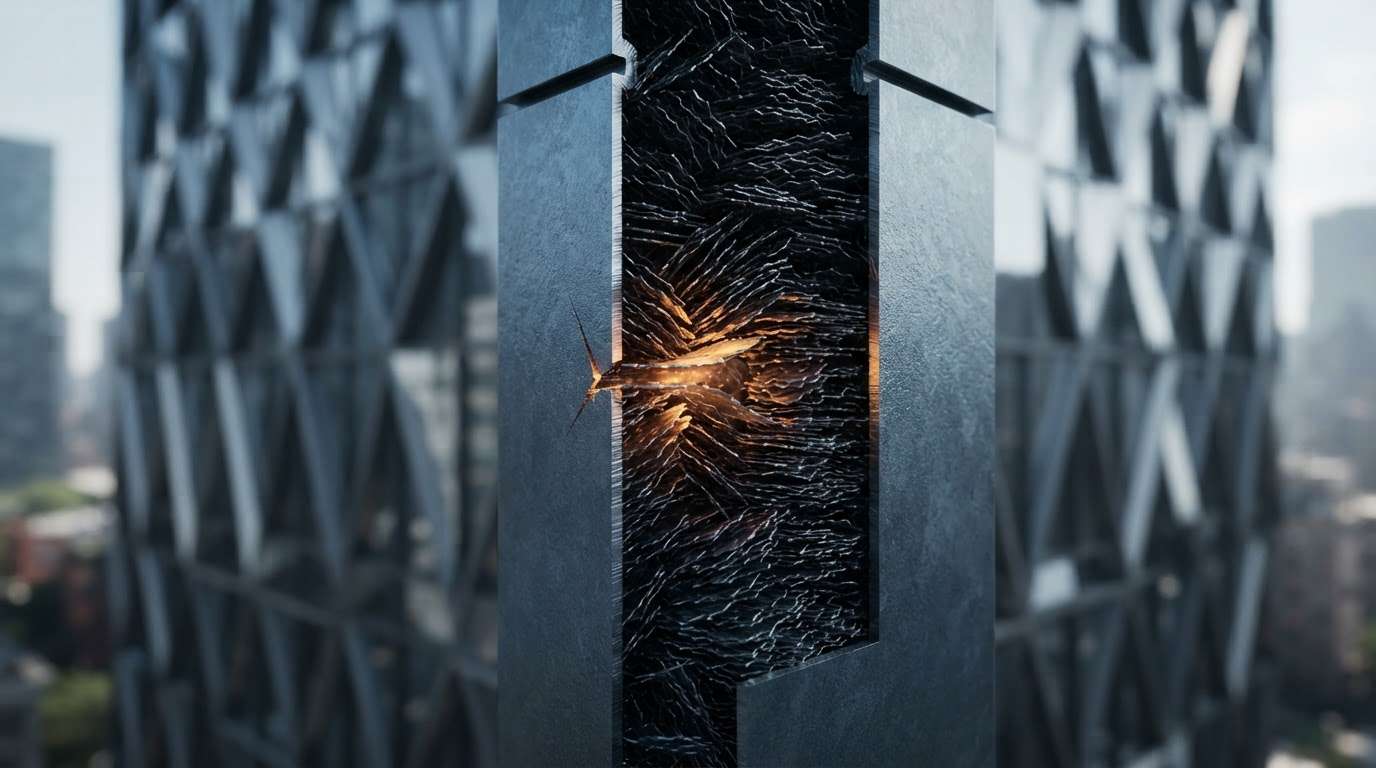
A Quantitative and Technical Analysis of the Shift from Conventional Protection to Environmentally Responsive Multifunctional Layers
To exist in exposure to complex weathering environments means architecture engages in a continuous struggle against structural corrosion. Conventional organic coatings remain the most ubiquitous solution for protecting architectural metals and structures, yet they suffer from a decisive vulnerability: microscopic fissures, scratches induced by mechanical stress, and service-generated cracks. Through these minute gaps, water molecules, oxygen, and chloride ions infiltrate structural metal surfaces, initiating a hidden cycle of localized corrosion that threatens both the structural integrity and aesthetic longevity of buildings. As environmental and human safety regulations globally restrict the use of trivalent and hexavalent chromium compounds—which historically supplied an enduring rust-inhibiting seal—the architectural envelope and advanced materials sectors have shifted toward developing smart coatings that combine passive barrier protection with active, self-directed damage repair triggered at the moment of failure.
In this context, materials with two-dimensional lamellar structures emerge as an engineered solution. This growing focus stems from their high-aspect-ratio spatial geometry, which delivers an extended suite of physical and chemical capabilities: functioning as an impermeable physical shield, generating intricate tortuous pathways known as the “labyrinth effect” to delay oxidant ingress, offering an immense specific surface area capable of hosting inhibitor reservoirs, converting energy to activate remote healing mechanisms, and reinforcing the mechanical rigidity of soft polymer matrices. Scientifically, the strength of this concept becomes evident given that the van der Waals radius of carbon atoms within a graphene layer measures a mere 0.11 nm—sufficient to block the smallest corrosive molecules and supply contemporary architecture with a microscopic shield that alters the parameters of facade and metallic structure durability.
The Nano-Labyrinth: Mechanical Philosophy of Lamellar Layers in Built Space
The success of lamellar coatings in urban environments depends not merely on intercepting harmful penetrants, but on integrating physical barriers with releasable agent reservoirs or re-bondable polymer networks. Rigorous academic research indicates that losing the uniform dispersion of these sheets or allowing them to aggregate into nanoclusters yields counterproductive results, creating micro-passages that shortcut oxidant routes or establishing electrically conductive networks that accelerate galvanic corrosion of the metal substrate.
This duality manifests clearly across graphene-family applications. In an advanced study led by researcher Y. Ye and colleagues, a graphene nanosheet was coated with a porous polyhedral oligomeric silsesquioxane (POSS) framework and loaded with a benzotriazole (BTA) inhibitor. This system achieved a specific surface area of 215.8 m²/g, a pore volume of 0.92 cm³/g, and an inhibitor loading capacity of 18.6 wt%. Dispersed within an epoxy resin used for carbon steel coating, the composite maintained a low-frequency electrical impedance exceeding 109 Ω·cm² over 90 days of complete immersion in a saline environment. Conversely, the resistance of neat epoxy degraded from 3.61×10⁹ to 1.05×10⁸ Ω·cm².
The results extended beyond physical insulation: water uptake dropped to 2.87%, compared to 3.89% for neat epoxy and 6.51% for unfilled graphene. The released BTA converted thermodynamically unstable, brittle akaganeite (β-FeOOH) rust products into stable goethite (α-FeOOH) phases, actively passivating and chemically rebuilding the exterior surface during service.
The Graphene Duality: Between Superior Insulation and Galvanic Corrosion Risks in Facades
According to a comprehensive review authored by G. Cui and colleagues on self-healing polymer/graphene coatings, graphene operates within the architectural matrix through one of two mechanisms: either as an energy-conversion center and heat-transfer medium in intrinsically self-healing matrices, or as a lamellar nanocontainer storing organic inhibitors via π–π stacking interactions and metal cations. In polymer networks driven by dynamic Diels–Alder reactions, the photothermal conductivity of graphene yielded scratch-healing efficiencies of 90% via direct heat, 106% under infrared exposure, and 133% under microwave irradiation within 5 seconds under infrared light.
The same review demonstrated that integrating graphene into Pickering-emulsion microcapsules in waterborne polyurethane completely shielded metallic surfaces from corrosion products after 43 hours of salt-spray testing and resisted underfilm corrosion through 355 hours of immersion. In reduced graphene oxide microcomposites, the electrical impedance modulus reached 108 Ω·cm² after 15 days—four orders of magnitude higher than neat polyurethane.
However, these findings establish a clear engineering boundary for material designers and building practitioners: the high electrical conductivity of graphene can convert it into an accelerator for galvanic corrosion if sheets directly contact the metallic substrate and form a conductive pathway. Consequently, insulating surface modifications—such as POSS grafting or repairing defects in reduced graphene oxide—remain a mandatory requirement to transform graphene from a mechanical risk into a smart protective barrier.
MXenes and Layered Double Hydroxides: Engineered Solutions for Lightweight Alloys
This design rationale extends to the MXene family and layered double hydroxides (LDHs), which offer strategic protection for magnesium and aluminum alloys widely specified in modern building facades and lightweight structural assemblies. In this domain, Z. Wang and team developed a hybrid structure combining titanium carbide (Ti3C2Tx) with MgAl-LDH sheets intercalated with eco-friendly L-cysteine as a corrosion inhibitor, dispersed in a waterborne epoxy coating for architectural magnesium alloys.
This composite coating recorded a corrosion current density of 1.4×10⁻⁹ A/cm²—four orders of magnitude lower than the bare magnesium substrate. The initial impedance modulus reached 1.66×10⁷ Ω·cm², water absorption decreased to 2.81% (compared to 6.67% for neat epoxy), and self-healing efficiency at scratched defects reached 56.17%. This performance stems from a dual mechanism: the negatively charged surface of Ti3C2Tx sheets repels chloride anions, while the LDH layers capture chloride ions via ion exchange and release the cysteine inhibitor, which chemically adsorbs onto the corroding magnesium surface and prevents sheet restacking that degrades individual components.
In a separate MXene system engineered by X. Ma and colleagues, an ultrathin (~21.6 µm) electrodeposited coating of calcium myristate and MXene carrying tannic acid as a green inhibitor was applied to architectural aluminum alloys. This coating reduced corrosion current density by a factor of 650 to 7.03×10⁻⁹ A/cm², maintained stable protection over 31 days, and recorded a self-healing efficiency of 99.53% within 8 days of scratching. Protection occurred through the controlled release of tannic acid, whose catechol and pyrogallol groups chelate Al3+ ions and consume dissolved oxygen, achieving rapid processing (<30 minutes) and energy efficiency without requiring high-temperature curing.
Photothermal Healing: Shape-Memory Networks Restoring Surface Scratches in Seconds
Intrinsic self-healing systems depend fundamentally on restoring the mechanical integrity of a coating without depleting an external chemical reservoir. Photothermal nanofillers embedded in polymer matrices provide a high-performance benchmark for structures exposed to direct friction and mechanical wear.
In a study conducted by T. Wang and co-workers, polydimethylsiloxane (PDMS) was modified with Cu2O@Ag nanofillers to establish dynamic metal-coordination bonds with nitrogen atoms along the polymer backbone. This system achieved a photothermal self-healing efficiency of 94.9% within 2 minutes and 97.8% within 10 minutes under an 808 nm laser. The coating survived seven consecutive scratch-and-heal cycles at the onset of immersion and six additional cycles after 80 days of immersion in a 3.5 wt% NaCl solution, maintaining an electrical impedance above 107 Ω·cm² while elevating tensile strength from 0.24 to 0.29 MPa.
Similarly, Y. Huang and team developed a shape-memory epoxy network containing microcapsules loaded with 13.2 wt% benzotriazole inhibitor. Near-infrared irradiation for 15 seconds raised the surface temperature above the glass transition point, narrowing a 30 µm scratch to under 10 µm, while acidification at the corroding site triggered inhibitor delivery. At an optimal loading of 1 wt%, the coating maintained an impedance modulus of 5.7×10⁵ Ω·cm² after 72 hours, compared to 1.4×10⁴ Ω·cm² for scratched blank epoxy.
In a parallel approach, J. Wang and colleagues demonstrated that hollow Fe3O4 magnetic nanoparticles carrying 9.69 wt% 2-mercaptobenzothiazole (MBT) inside shape-memory epoxy narrowed an 80 µm scratch to approximately 5 µm within 30 seconds of near-infrared exposure. The system preserved an impedance modulus exceeding 109 Ω·cm² across 240 hours of immersion—five times higher than neat epoxy (1.3×10⁹ versus 2.7×10⁸ Ω·cm²).
Bio-Sustainability and Regenerative Metals: A New Horizon for Advanced Building Materials
These engineering concepts extend beyond organic polymer matrices toward regenerative metallic and ceramic protective systems. T. H. Tran and colleagues engineered a regenerative nano-hybrid coating comprising a 10 µm electrodeposited zinc layer embedded with pH-responsive nanocapsules containing a chemical catalyst, topped by a polymer layer carrying dicyclopentadiene (DCPD) capsules.
Upon corrosion initiation, localized alkalinity at the delamination front ruptured the capsules, initiating localized ring-opening metathesis polymerization that formed a protective 100–200 nm poly(DCPD) film over the corrosion layer. This reaction reduced the cathodic delamination rate by a factor of 100 (from ~1000 µm/h to <10 µm/h) and restored the corrosion potential of zinc from an active -760 mV to a passive -450 mV, as the zinc barrier matrix protected the catalyst from degradation over months.
In high-performance ceramic coatings for facades and industrial structures, a review by A. Stankiewicz and colleagues notes that TiC/Al2O3 and Ti2AlC MAX-phase ceramic layers achieve self-healing at elevated temperatures through oxidation of structural components, where growing titanium and aluminum oxides fill physical cracks automatically.
Bio-derived solutions further broaden this sustainable scope. Y. Deng and team demonstrated that stabilizing graphene in water using a lignin tripolymer and blending it into natural lacquer produced a volatile organic compound (VOC)-free coating. Incorporating just 0.3 wt% graphene yielded a corrosion current density of 4.15×10⁻¹⁰ A/cm², a polarization resistance of 1.9×10⁹ Ω, an exceptionally low corrosion rate of 4.36×10⁻⁶ mm/year, and a protection efficiency of 99.99%.
Quantitative benchmarks across these studies highlight essential rules for architectural applications:
- Passive barrier performance scales directly with uniform exfoliation and dispersion; optimal dispersion reduces oxygen permeability from 1.88×10⁻¹² to 1.1×10⁻¹³ cm³·cm/cm²·s·Pa.
- Each filler system exhibits a precise optimal loading threshold (1 wt% for rGO microcapsules, 3 wt% for Fe3O4 nanoparticles, 0.3 wt% for graphene in natural lacquer), above which agglomeration creates interface defects, and below which inhibitor concentrations remain insufficient.
- Robust protection relies on combining dual healing pathways: shape-memory or photothermal closure coupled with pH- or ion-triggered inhibitor release.
- Quantitative metrics (self-healing efficiency derived from impedance recovery, cyclic mechanical healing, and delamination rate reductions) provide standardized design benchmarks ranging from 56% for MXene/epoxy to 97.8% for coordination siloxanes and 99.5% for tannic-acid/MXene systems.
Lamellar self-healing materials are transitioning from laboratory hypotheses into integrated, smart protective layers. Driven by global architectural priorities to reduce operational maintenance, extend infrastructure longevity, and eliminate toxic chemistries, these materials provide a framework that unites two-dimensional impermeability, responsive reservoirs, and dynamic bonding to ensure the long-term sustainability of structural envelopes.
✦ ArchUp Editorial Insight
The adoption of self-healing lamellar coatings on building envelopes is not merely a material innovation; it is a structural response to tightening environmental mandates and escalating operational expenditures. Global regulatory bans on toxic chromate-based passivators—historically the backbone of corrosion control—have collided with soaring urban labor costs and aggressive atmospheric weathering, rendering traditional manual facade maintenance financially unviable. In response, risk-averse procurement systems are shifting maintenance obligations from human labor to embedded material chemistry. By integrating self-healing nanostructures like graphene and MXenes into protective layers, institutional developers mitigate long-term structural liabilities while enabling lighter, thinner metallic facade geometries that would otherwise deteriorate prematurely. The resulting architectural outcome—resilient, low-maintenance urban envelopes—is ultimately the physical crystallization of regulatory compliance, life-cycle risk management, and the financial imperative to minimize long-term operational costs.
References
- Ye, Y.; Chen, H.; Zou, Y.; Ye, Y.; Zhao, H. “Corrosion Protective Mechanism of Smart Graphene-Based Self-Healing Coating on Carbon Steel.” Corrosion Science, 2020.
- Cui, G.; Zhang, C.; Wang, A.; Zhou, X.; Xing, X.; Liu, J.; Li, Z.; Chen, Q.; Lu, Q. “Research Progress on Self-Healing Polymer/Graphene Anticorrosion Coatings.” Progress in Organic Coatings, 2021.
- Wang, T.; Wang, W.; Feng, H.; Sun, T.; Ma, C.; Cao, L.; Qin, X.; Lei, Y.; Piao, J.; Feng, C.; Cheng, Q.; Chen, S. “Photothermal Nanofiller-Based Polydimethylsiloxane Anticorrosion Coating with Multiple Cyclic Self-Healing and Long-Term Self-Healing Performance.” Chemical Engineering Journal, 2022.
- Tran, T. H.; Vimalanandan, A.; Genchev, G.; Fickert, J.; Landfester, K.; Crespy, D.; Rohwerder, M. “Regenerative Nano-Hybrid Coating Tailored for Autonomous Corrosion Protection.” Advanced Materials, 2015.
- Huang, Y.; Wang, P.; Tan, W.; Hao, W.; Ma, L.; Wang, J.; Liu, T.; Zhang, F.; Ren, C.; Liu, W.; Zhang, D. “Photothermal and pH Dual-Responsive Self-Healing Coating for Smart Corrosion Protection.” Journal of Materials Science & Technology, 2022.
- Stankiewicz, A.; Szczygieł, I.; Szczygieł, B. “Self-Healing Coatings in Anti-Corrosion Applications.” Journal of Materials Science, 2013.
- Wang, J.; Wu, S.; Ma, L.; Zhao, B.; Xu, H.; Ding, X.; Zhang, D. “Corrosion Resistant Coating with Passive Protection and Self-Healing Property Based on Fe₃O₄-MBT Nanoparticles.” Corrosion Communications, 2022.
- Wang, Z.; Fang, L.; Wu, F.; Ruan, H.; Tang, Y.; Hu, J.; Zeng, X.; Zhang, S.; Luo, H. “Anti-Corrosion, Self-Healing and Environmental-Friendly Ti₃C₂Tₓ/MgAl-LDH @epoxy Composite Organic Coating for Mg Alloy Protection.” Journal of Materials Science, 2023.
- Ma, X.; Wang, T.; Gong, B.; Hou, J.; Ji, S.; Cao, H. “Enhanced Corrosion Resistance of an Eco-Friendly MXene Composite Coating with Self-Healing Performance.” Green Chemistry, 2025.
- Deng, Y.; Bai, W.; Chen, J.; Zhang, X.; Wang, S.; Lin, J.; Xu, Y. “Bio-Inspired Electrochemical Corrosion Coatings Derived from Graphene/Natural Lacquer Composites.” RSC Advances, 2017.