La Défense: Twenty Years Later

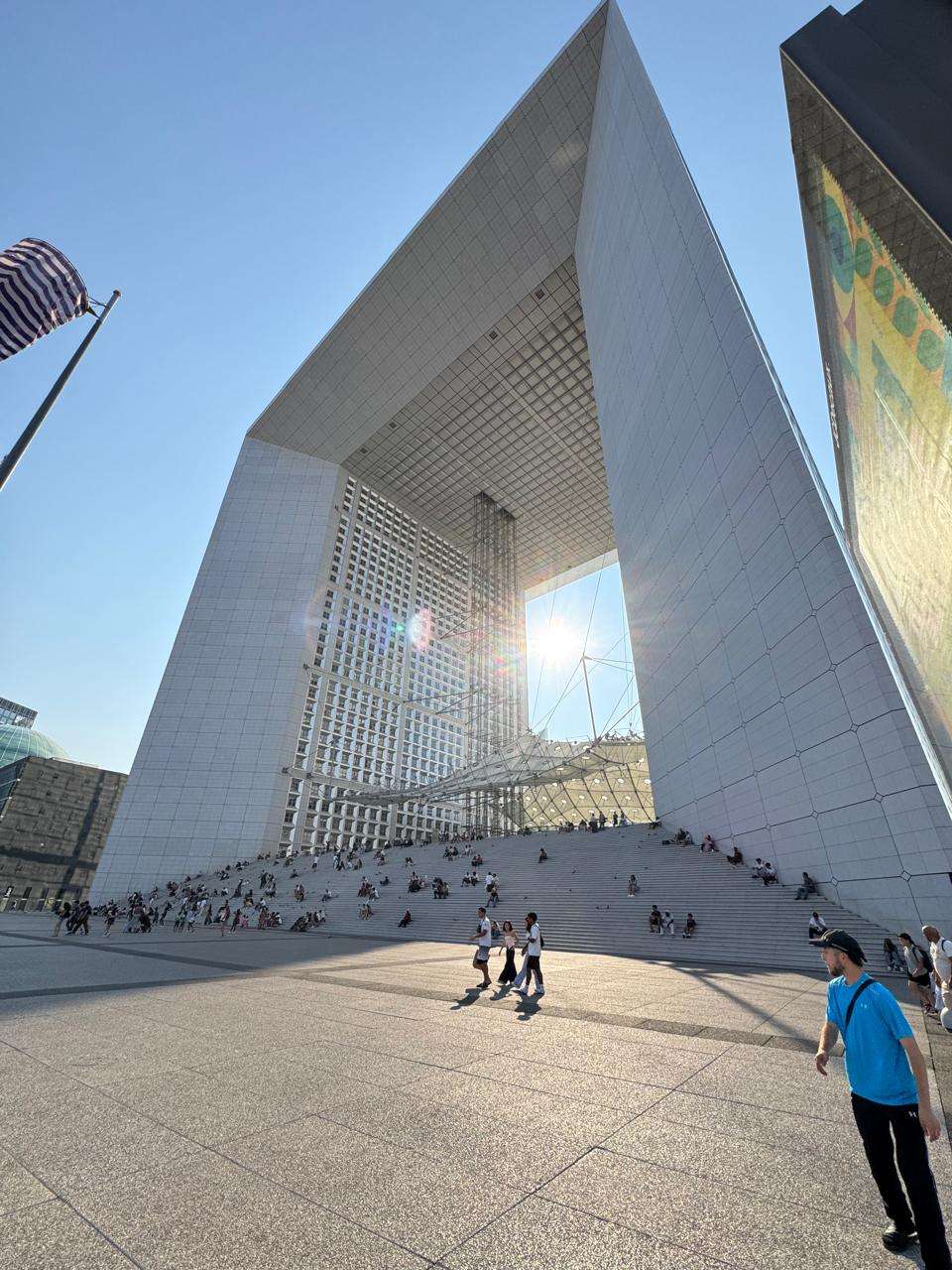
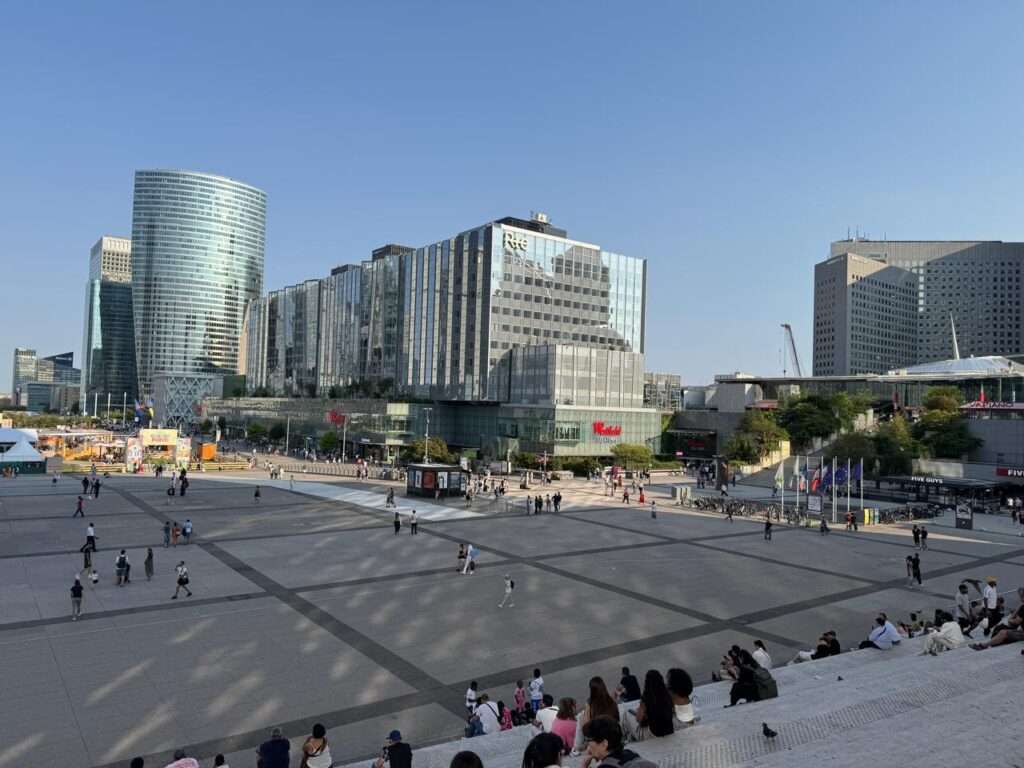
An architectural return to the La Défense district in Paris reveals the physical and social shifts occurring over twenty years. Comparing original photographs with contemporary views shows that while the skyline has grown with new towers, the pedestrian deck and public infrastructure remain largely unchanged since 2006.
The analysis highlights a disconnect between private vertical investment and the aging civic ground. Although the district has transitioned from a strict office monoculture to a more social, retail-oriented space, the shared environment shows signs of neglect. This raises questions about the distinction between preserving heritage and deferring maintenance.
The summer I finished architecture school, in 2006, I gave myself a reward that had nothing to do with rest. A small bag, a camera, and a ticket to France. I was not looking for the shops, or the Eiffel Tower, or the cafés everyone photographs. I was looking for buildings. By then architecture had stopped being a subject I studied and become the lens I saw cities through, a daily preoccupation I could not switch off, so I carried the camera from the second week after graduation and photographed everything I could reach. I did not know, standing on a concrete deck west of Paris with a modest camera, that those images would become, twenty years later, an architectural document rather than a personal album. A photograph taken without a thesis often makes the best evidence, because it recorded exactly what the eye was too excited to notice.
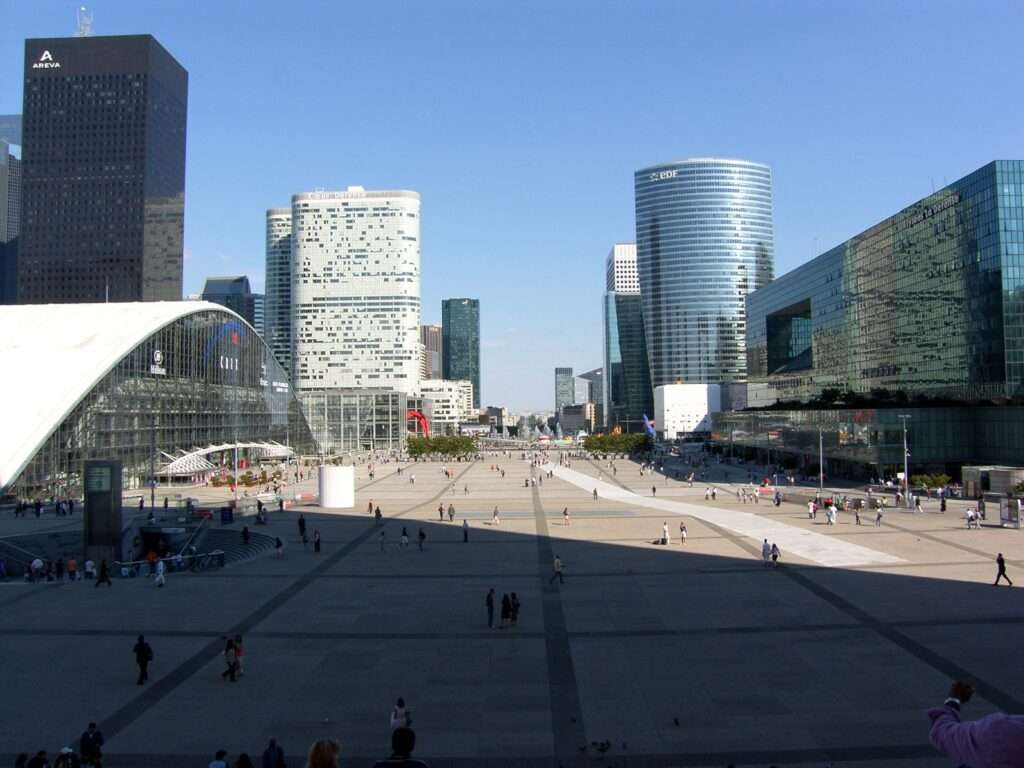
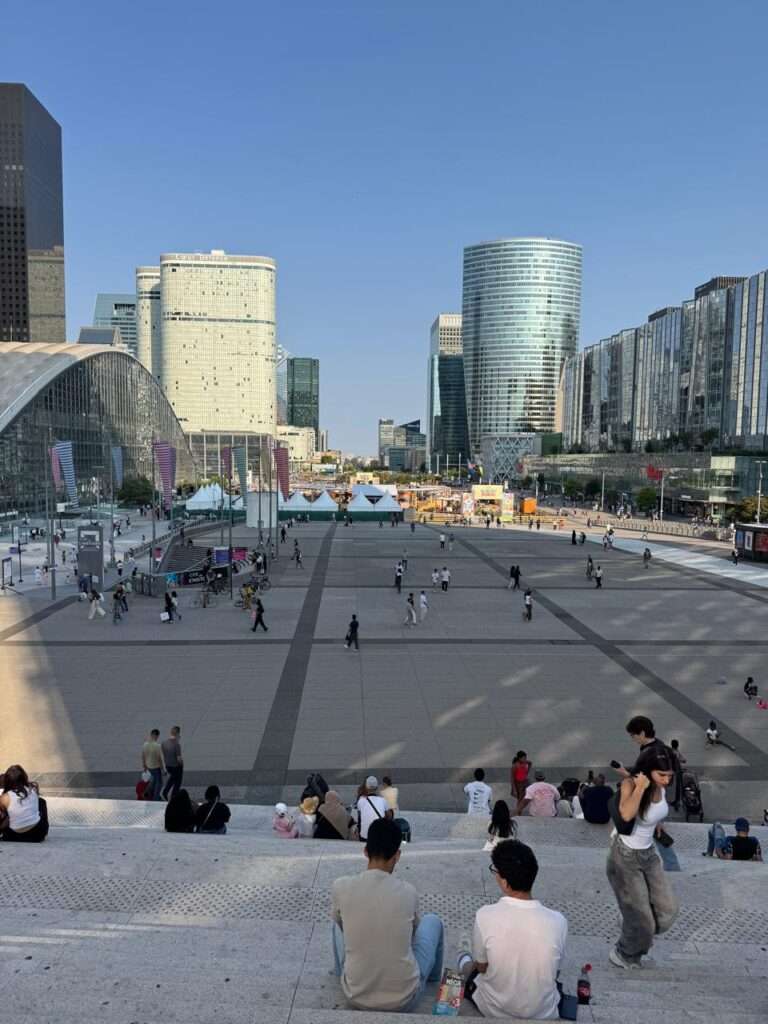
In the summer of 2026 I went back to Paris. Not to repeat the trip. To test time.
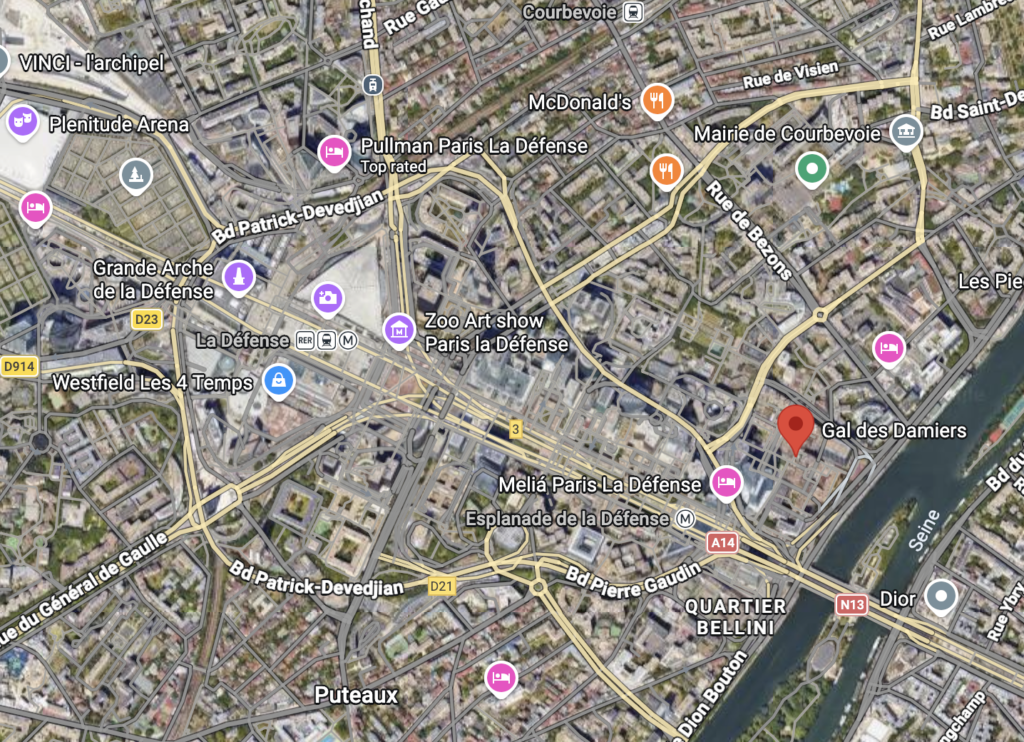
Looking at La Défense from above, the plan reads with an organic logic that no street-level experience fully prepares you for. The central esplanade tapers and widens along its axis in a way that recalls, with some anatomical honesty, the cross-section of a pear — broad at the base, narrowing toward the Grande Arche, then releasing again into the surrounding fabric. Whether this was a deliberate planning intention or simply the residue of successive decisions made at ground level by people who never looked at the plan from altitude, I cannot confirm. But the shape is there, and once seen it is difficult to unsee: a district that from the air has the quiet coherence of something grown rather than something drawn.
I stood in the same places. I searched for the same angles. I held the old prints in one hand while the buildings stood in front of me almost exactly as I had left them. And the first thing I understood had nothing to do with the buildings. I was no longer the same person holding the camera. The structures had barely moved. The architect looking at them had changed completely. In 2006 I saw mass. In 2026 I saw the city. I had once photographed a tower. I now read an economy, a demographic, a maintenance budget, a pattern of footfall, and everything half a century of concrete quietly conceals. The archive had not aged. My reading of it had, and that gap between the two photographs, the one on paper and the one in my head, is the real subject of this piece.
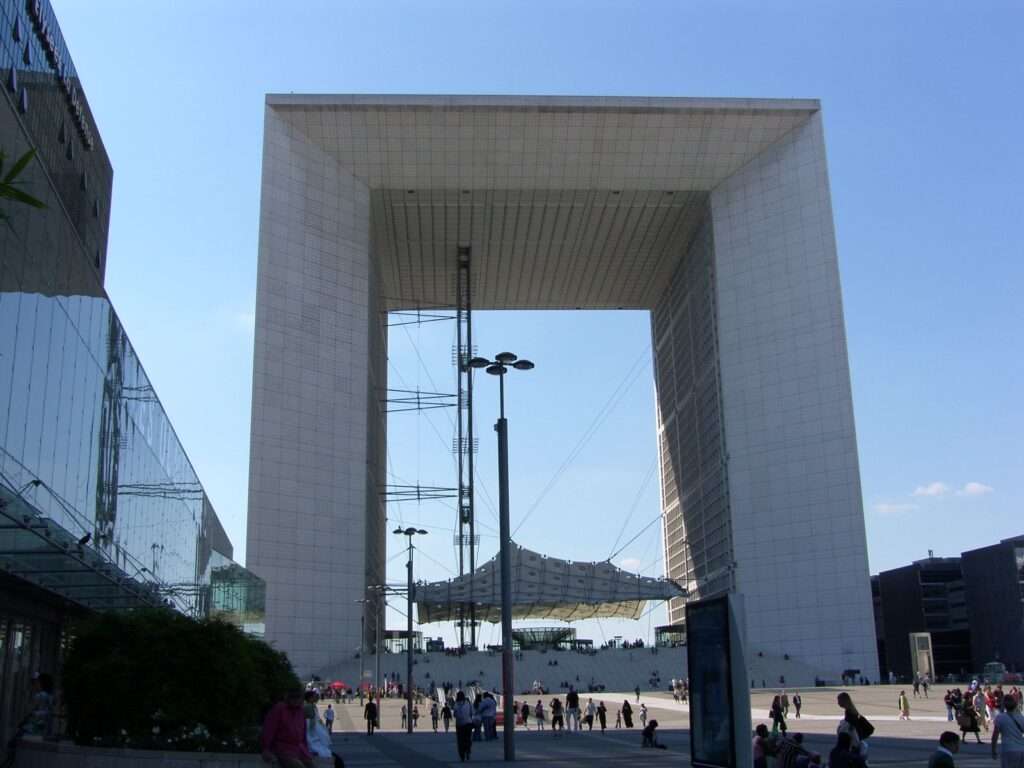
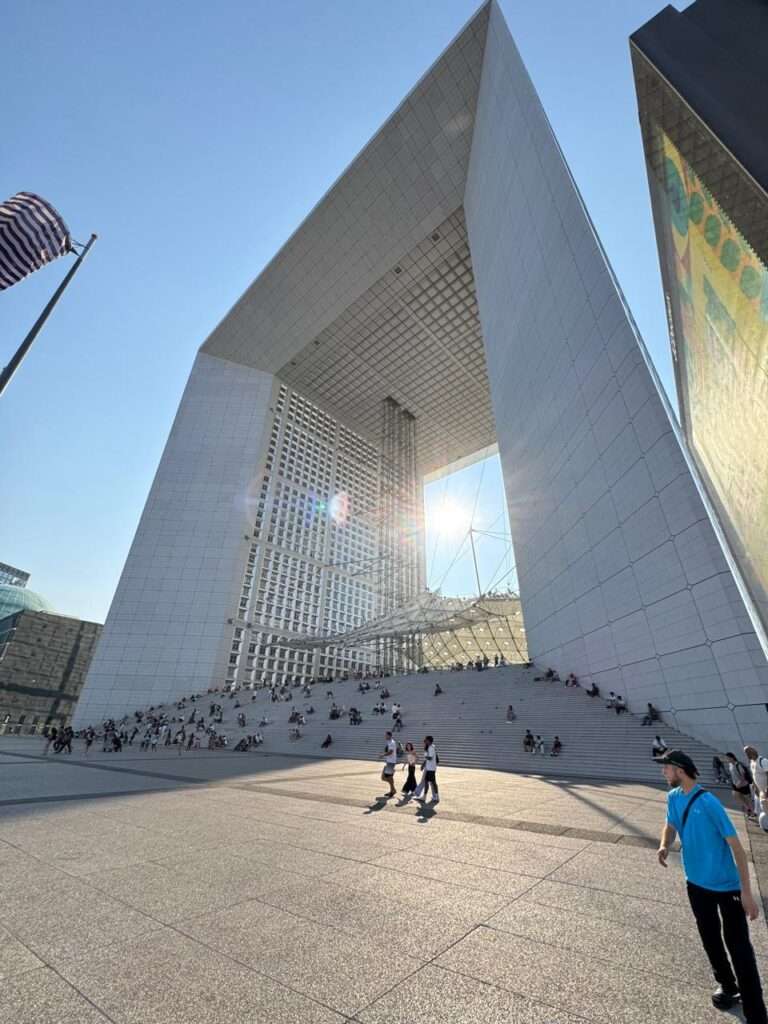
There is a quiet discipline in returning to a photograph and standing exactly where you once stood. The camera remembers with a precision the mind refuses, and holding the two views together, the paper one and the living one, turns nostalgia into measurement. Memory would have told me the place had transformed, because I had transformed, and memory always credits its own changes to the world. The prints corrected me. They insisted, against my expectation, that the deck under my feet was the same deck, the same joints, the same stains spreading a little further, and that whatever had moved had moved in me or in the sky, not in the ground. This is why an old photograph is a more honest witness than a returning visitor. It has no ego invested in the story of progress, and it does not flatter the years it survived.
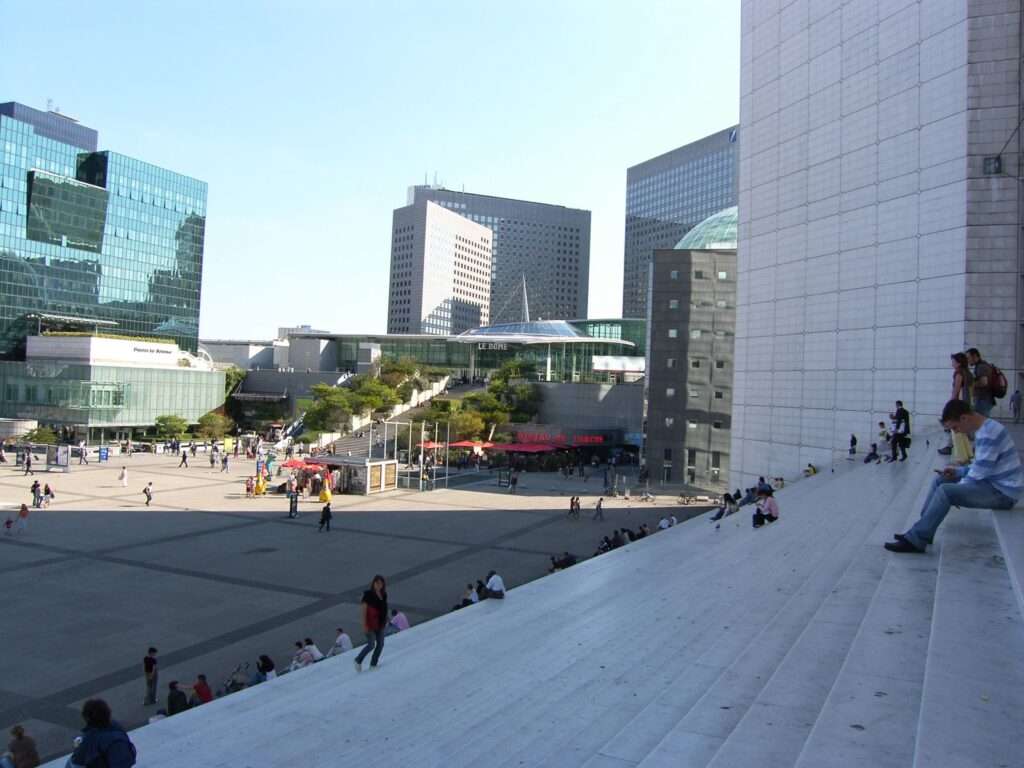
Strangely, the first image the place summoned was not from Paris at all. It came from childhood, from an animated series I watched when I was young, Future Boy Conan, Mirai Shōnen Conan, the 1978 production that was Hayao Miyazaki’s first work as a director. Its world was built of concrete and enormous structures, artificial islands, cities that had outlived a third world war, a landscape of ruin that somehow refused to fall. I cannot fully explain the association, but from the moment I left Charles de Gaulle and rode toward La Défense, I felt I was moving through that same scene. Not because the architecture is literally similar, but because French concrete carries a genetic signature of its own, a language you can identify before you read the street name. The mass, the color, the texture, the willingness to be severe rather than pleasant. I have done no formal study of this and I do not know whether anyone has named it before me, but the impression arrived instantly and has never left. French concrete announces its nationality the way a face announces a family.
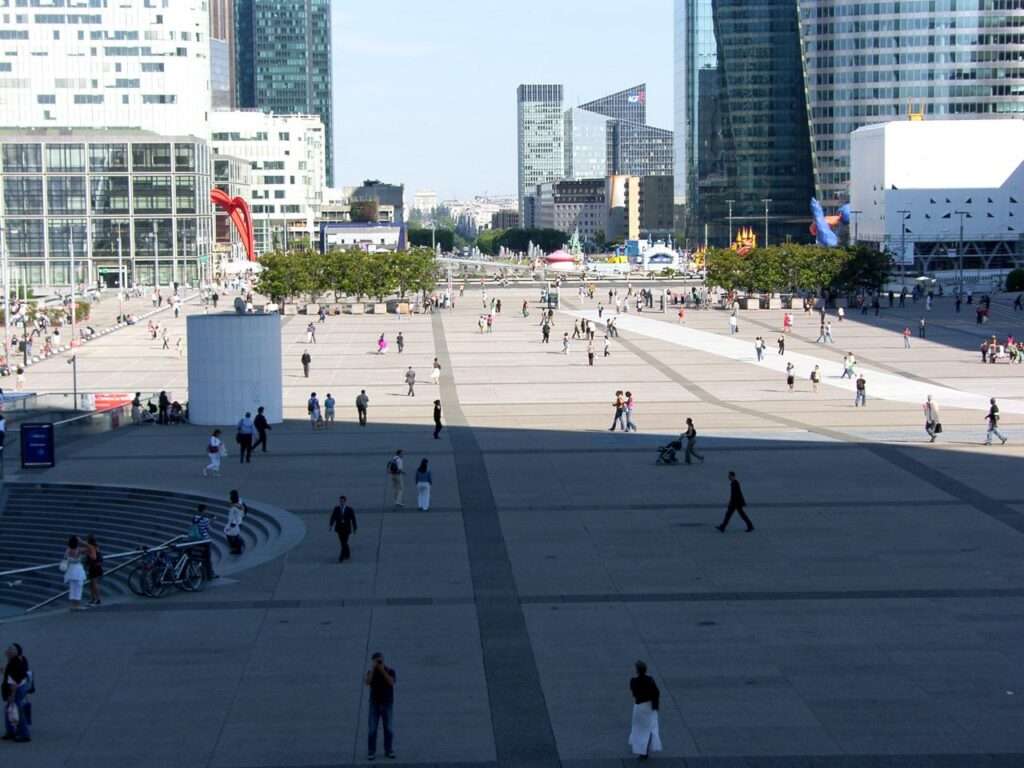

Then I began to compare, print against building, 2006 against 2026, and the first finding almost embarrassed me. The trees had grown. That was the most honest change my eye could confirm at ground level. The deck, the esplanade, the ramps, the concrete, the general sensation of the place, all of it seemed to carry the same age it had worn two decades earlier. And yet this is exactly where a photograph can deceive you by telling the truth, because while my old angles insisted that nothing had moved, the skyline behind them had in fact been substantially rebuilt. La Défense added towers across those twenty years, and not timid ones. The Saint-Gobain tower rose in 2019, Alto and Trinity around 2020, the prismatic Hekla reached 220 meters soon after, and in 2025 a new tower called The Link passed the heightened Tour First to become the tallest building in France. After the British referendum of 2016, the district openly advertised itself to the bankers who might abandon London, and a whole program of construction was announced to receive them. So the place did not stand still. It grew upward. What had frozen was something else entirely, and locating it precisely is the whole argument.
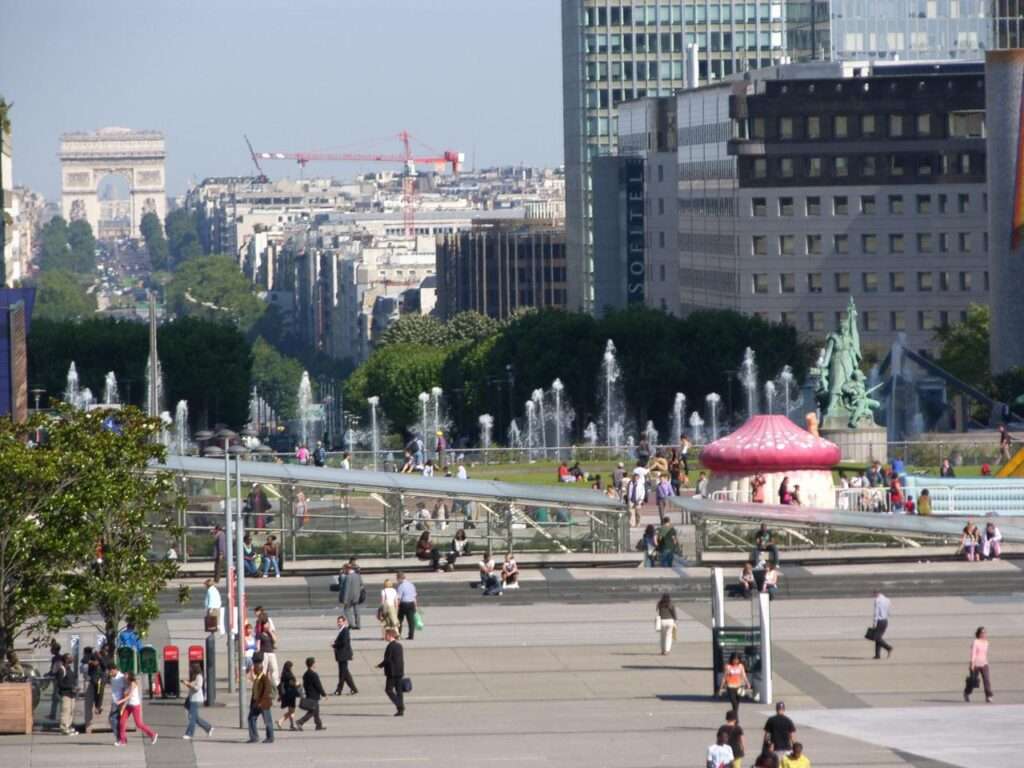
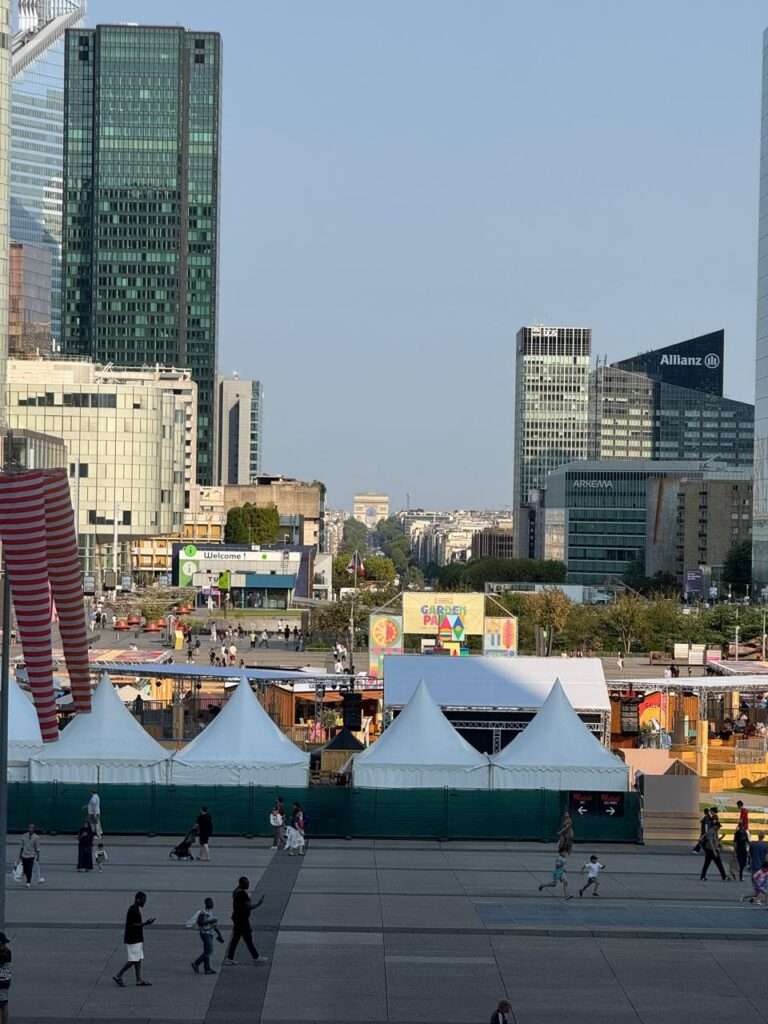
What froze was the ground. The public level, the pedestrian deck, the civic experience of walking through the place, remained almost exactly as it had been in 2006, while private capital churned busily in the air above it. New towers rose, the mall was renamed, the tenants rotated, and the design of the human level, the part that belongs to everyone rather than to a single landlord, was left essentially untouched. La Défense renewed its silhouette and neglected its street. It changed its makeup and kept its body. This is not a small distinction. A city that reinvests only at the altitude of its rents, and lets the shared ground age in place, is quietly telling you exactly who it is building for, and it is not the person standing on the deck.
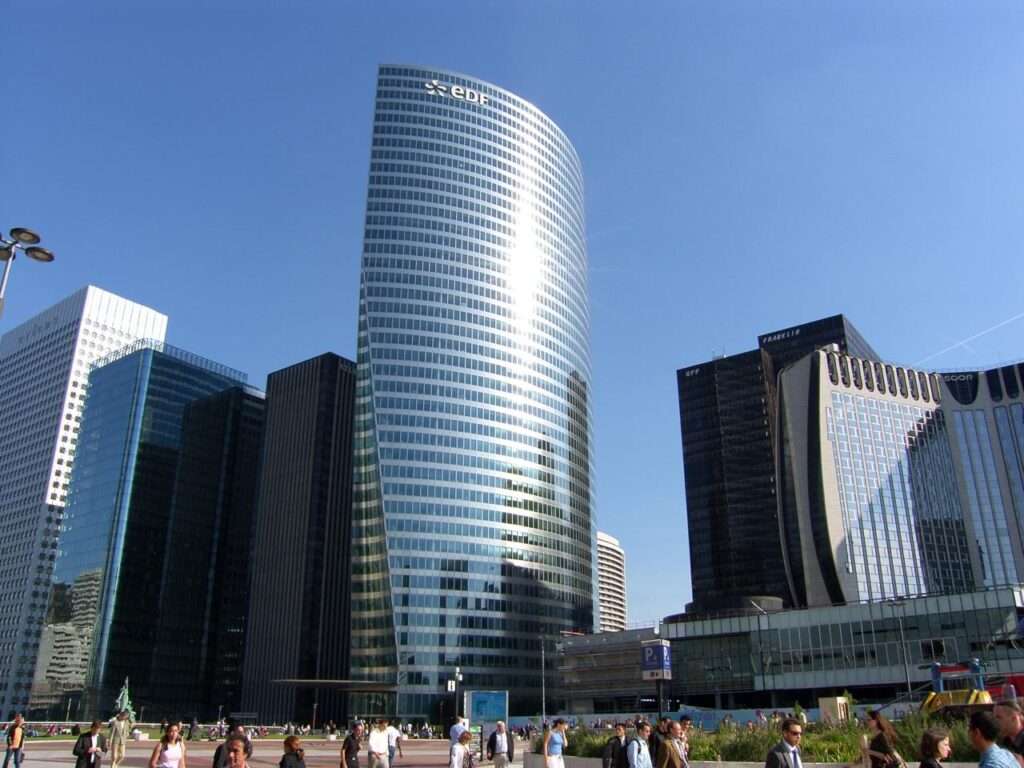
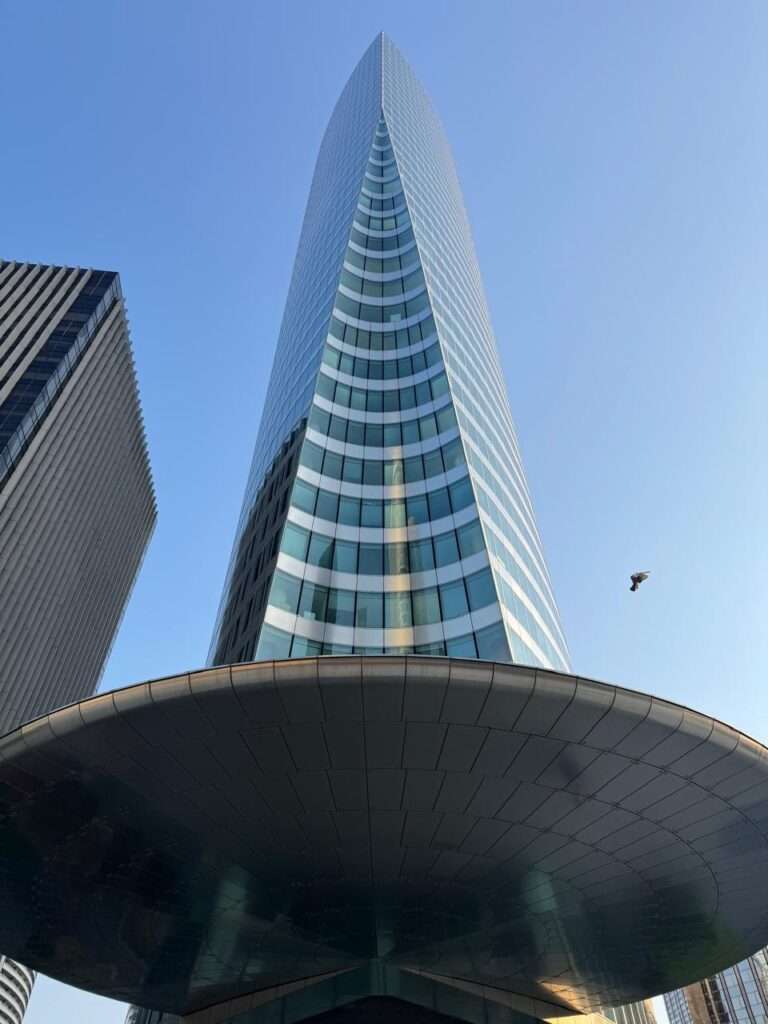
Which raised the question I suspect will irritate some readers. Does Paris preserve its heritage, or does it defer its maintenance? Across the district I saw the marks of time everywhere. Not collapse, but age, and the difference between those two words is the difference between a building that is dying and a building that is merely growing older while nobody decides what that should mean. Part of this may be honest philosophy. Brutalism was born from béton brut, raw concrete, a material chosen precisely to weather and stain and show its years rather than conceal them, so a portion of what reads as neglect is the material behaving exactly as its architects intended. But another portion is economics, because sustainability in a district like this is settled less by intention than by accounting, by who pays for the deck when the towers pay only for themselves. A patina that is chosen is heritage. A patina that is simply too expensive to remove is deferral wearing the costume of heritage, and from a photograph alone you cannot always tell which of the two is standing in front of you. That uncertainty, more than any crack, is what unsettled me.
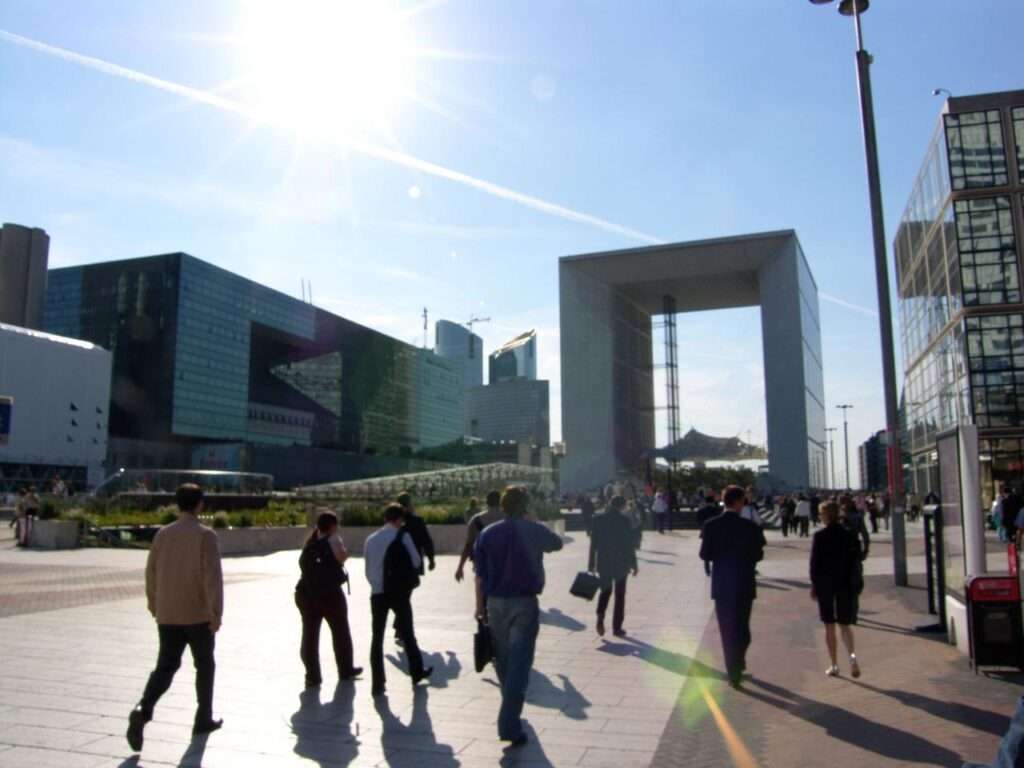
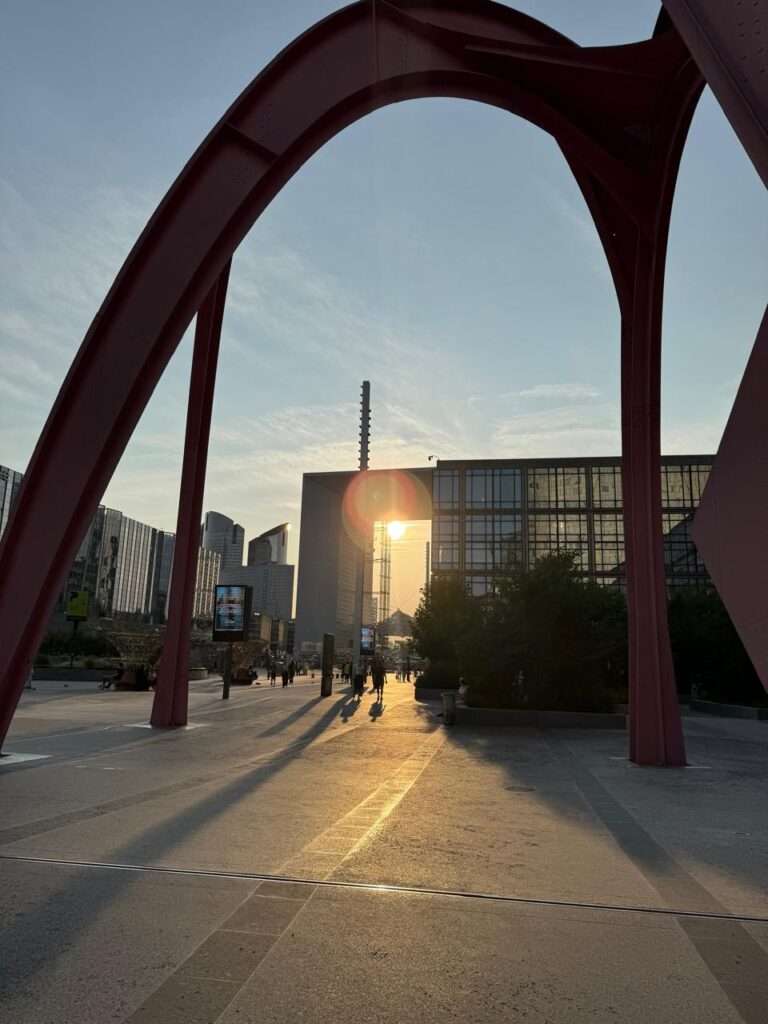
But the deepest change was never in the concrete. It was in the people. On my first visit, La Défense read as a city of offices, a city of employees, a city of suits that emptied the instant the working day ended. The men and women in business dress pouring out at six in the evening were the dominant population of the place, and once they left it went silent, a downtown with no evening. Twenty years later that population had thinned and something warmer had moved into the vacuum. More shops. More restaurants. Families occupying the squares. People with no relation to any office at all, using the deck as a place to remain rather than a place to leave. The reason is not sentimental, it is structural, because the pure office district is the urban form most exposed to the collapse of the daily commute, and every central business quarter on earth has spent recent years discovering that a monoculture of desks is a fragile thing to build a place upon. La Défense did not change its buildings. It was forced to widen their social function, and the clearest emblem of that shift is commercial. The mall at its heart, opened in 1981 as Les Quatre Temps, now carries the name Westfield, an internationally recognized shopping brand stitched onto the historic French one in 2019, when its owner rebranded its flagship centers to sound less local and more global. Walk inside and the tenants confirm the translation. An Apple store, an American grammar of retail poured into a French shell. The projects that renewed La Défense most tangibly for the ordinary visitor were not the towers at all. They were the acts of consumption installed quietly at their base.
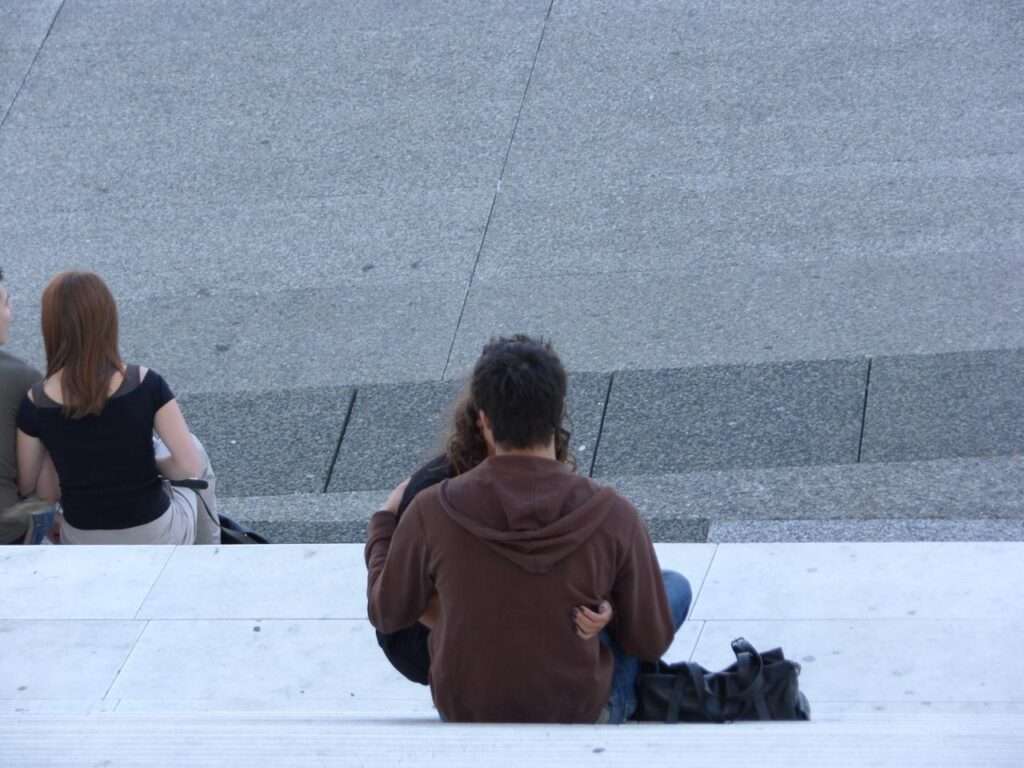
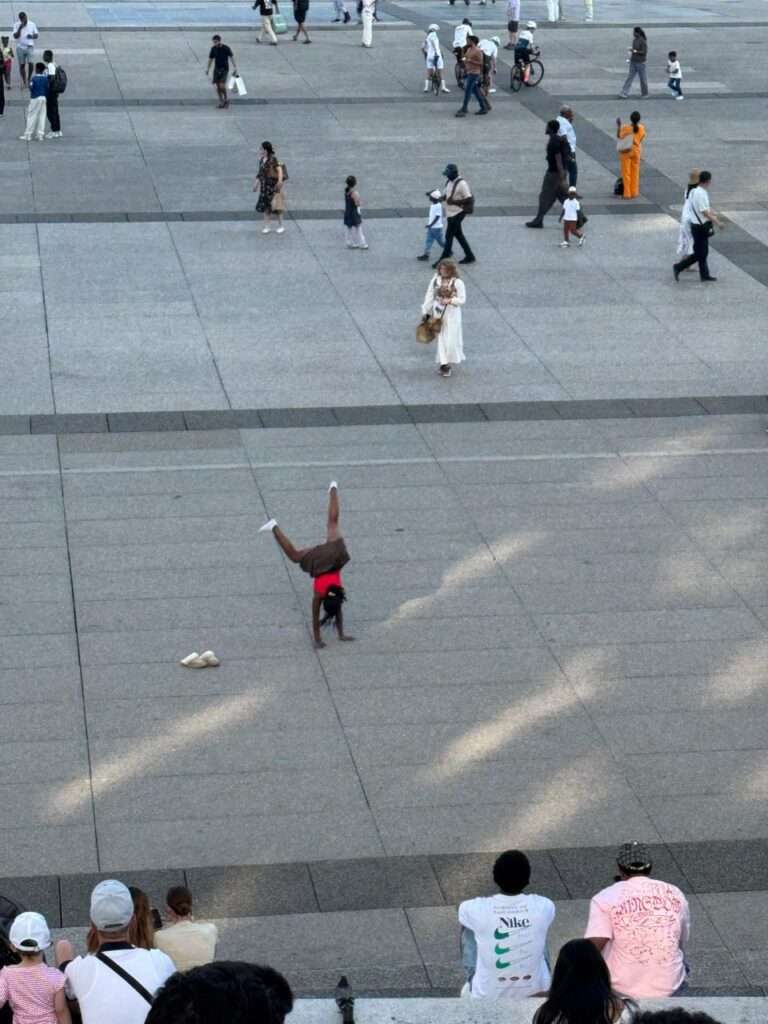
Reviewing my old prints, I found a coincidence that made me laugh aloud. In a photograph from 2006, near the great steps beneath the Grande Arche, a young man and woman were kissing in full view of everyone on the esplanade, entirely unbothered. In 2026, in almost precisely the same spot, I watched a girl balancing on her hands, performing acrobatics while a small crowd gathered around her. I smiled to myself and thought, perhaps she is their daughter, twenty years on. The city had held its position exactly. The scene had rotated its entire cast. The stage was identical and the play had advanced a full generation, which is either reassuring or disquieting depending on whether you believe a place should preserve its moments or keep producing new ones. I have never fully decided, and standing there with two decades in my hand I decided even less.
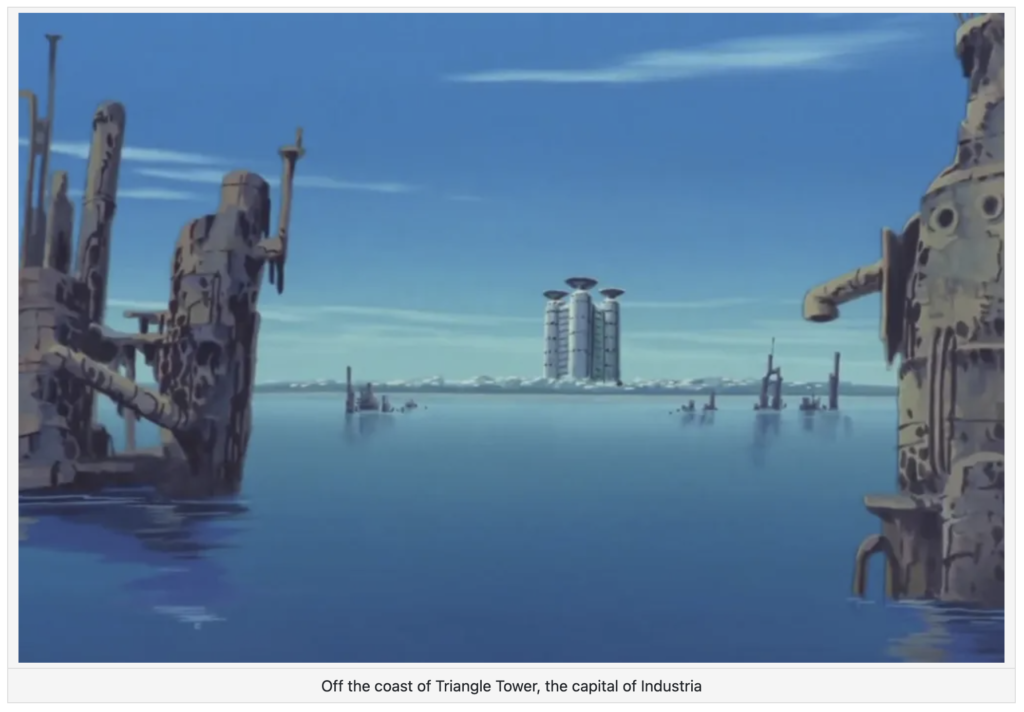
The association arrived before I could name it. Standing on the concrete deck for the first time in 2006, something in the mass and color and severity of the place pulled me back to a childhood television screen and a specific kind of imagined future. The series was Mirai Shōnen Conan, Future Boy Conan, the 1978 production that was Hayao Miyazaki’s directorial debut. Its world was built from concrete megastructures, artificial islands, and cities that had outlived catastrophe — a post-collapse landscape of enormous forms that refused to fall. La Défense is not that world in any literal sense, but French concrete carries a genetic signature that the mind recognizes before the eye has finished reading the street. The mass, the color, the willingness to be severe rather than decorative: all of it placed me, without asking permission, inside that same scene. Whether Miyazaki’s animators were drawing from the central business districts of late-industrial Europe or simply from the collective architectural imagination of 1970s modernism, the visual grammar is close enough to be unsettling. Industria, the technologically advanced city-state in the series, was built as an island of brutal efficiency surrounded by a recovering natural world — a place that had mastered the vertical while neglecting everything at ground level. Standing on the esplanade twenty years later, the comparison felt less like nostalgia and more like a diagnosis I had been carrying since childhood without knowing what it described. The world Miyazaki built was fiction. The concrete under my feet was not.
Some cities grow with time. Some age. La Défense has become something more particular than either. A young old woman. She still wears the same clothes. She still carries the strong concrete body that made her formidable in the first place. But time has settled into the details of her face, and no quantity of new towers on the horizon quite disguises it, because the towers are jewelry and the face is the deck you actually stand on. She has not been renewed. She has been accessorized. There is a real difference between the two, and it is precisely the difference between a place that has a future and a place that has only a maintenance schedule and a good silhouette.
This is the question I carried home, sharper than any comparison of facades. Not what changed in La Défense, but what did La Défense gain from twenty entire years. The news will always cover the new tower, the ribbon, the record height surpassed, because a skyline photographs beautifully and a deck does not. The competitions that shape districts like this still reward the object that rises rather than the ground that holds it, and a young architect will always win more attention for a silhouette than for a repaired public floor. Meanwhile the architectural research that would matter most here, the patient study of how a public realm ages, who is responsible for maintaining it, and what a city owes the level where its citizens physically walk, remains marginal beside the glamour of verticality. The cities built on the logic of the tower keep discovering, always a little too late, that the tower was never the part that decided whether the place felt alive.
So the truth I brought back from twenty years is not really about France, and not even about concrete. It is that a city, like a person, must never mistake standing for living. La Défense is still standing, still severe, still unmistakably itself, and that steadiness is a genuine achievement in an age that demolishes so casually and calls the rubble progress. But steadiness is not growth, and a place that reinvests only in its silhouette while its shared ground quietly ages has not been preserving itself at all. It has been waiting. The question was never whether La Défense would survive its twenty years, because concrete of that mass survives almost anything we do to it or fail to do for it. The question is whether it used them, and the answer is written across the deck in a patina my old photographs can prove, in the trees that grew while the ground did not.
✦ ArchUp Editorial Insight
The twenty-year gap that this article measures through paired photographs is not primarily an architectural document — it is a governance audit, and its most structurally precise finding is the one the article articulates without fully naming: that La Défense renewed its skyline exclusively through private capital and allowed its civic ground to age through the absence of a public entity willing or able to finance its maintenance, producing a district that is simultaneously more valuable by every financial metric and less inhabitable at the level where bodies actually experience it. The vertical investment in Tour Hekla, Alto, Trinity, and The Link represents private risk capital seeking return through lease rates, and that capital has no structural obligation to the horizontal surface below it; the deck belongs to a different governance category entirely, one that has neither a landlord with a direct financial stake in its condition nor a municipal authority with a budget sufficient to treat its maintenance as a priority rather than a deferral. The Westfield rebranding and the Apple store are not incidental commercial decisions; they are the market’s solution to a monoculture of desks made structurally fragile by remote work — a pattern this archive identified in Cuckoo City Urbanism as the inevitable consequence of single-function districts, and one that Les Damiers examined in its own adjacent residential fabric — where the population that actually inhabits the ground level of La Défense has never been the population that the district’s private investment model was designed to serve, and the patina accumulating on the deck is simply the material record of that distinction, written in concrete and deferred maintenance budgets across two decades that the skyline’s new towers have no obligation to read.


![Bathroom Bundle Kit [Flat End] – Walnut / Walnut / Steel Ring & Screws](https://archup.net/wp-content/uploads/2021/12/13200-bathroom-bundle-kit-flat-end-walnut-walnut-steel-ring-screws-scaled.jpg)