Behind Closed Doors: The Gendered Toll of Spatial Injustice During the Pandemic

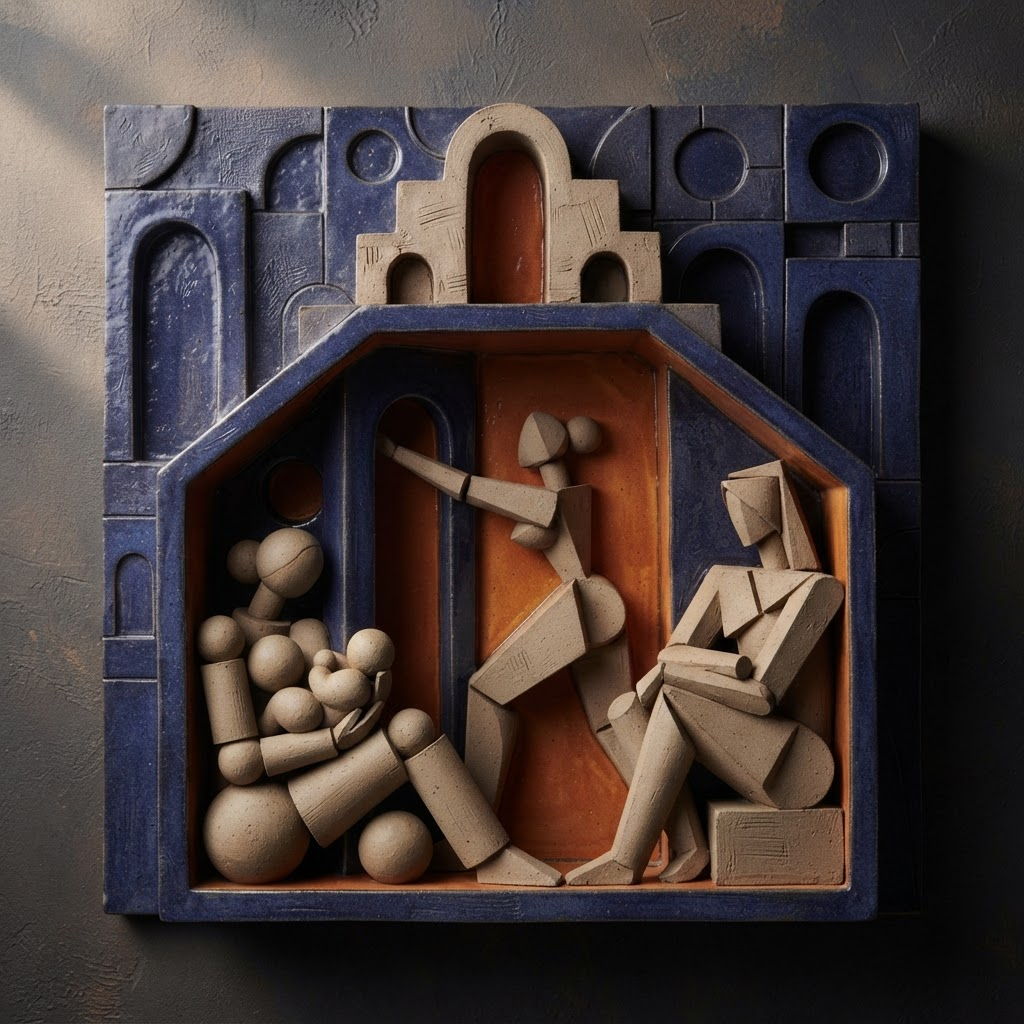
In March 2020 the world was enrolled, without consent, in an experiment no ethics board would ever have approved: millions of people confined to their homes at once. From that day the house became simultaneously the workplace, the children’s school, the clinic, the retreat and the stage of every domestic conflict, all within the same four walls. The crisis exposed a truth that residential architecture and interior design had long ignored: the home is not neutral space but a complete social structure that applies its rules on the bodies inside it, and when the world shrinks to an apartment, those rules appear in their harshest form.
The qualitative studies that tracked those months converge on one conclusion: the pandemic did not invent spatial injustice, it exposed and amplified it. Women on the socioeconomic margins – migrants, refugees, domestic workers, the homeless – paid the highest price, because for them spatial contraction was not an inconvenience but a complete redefinition of what home means.
Spatial contraction: what it means when the world shrinks to a room
Spatial contraction, as the literature frames it, is not merely a lockdown. It is a radical shift in the relationship between body and space: every strategy a person used to manage their life, from temporary escape to the plurality of places, collapsed at once. The migrant mother in Berlin who balanced language courses, childcare and job-seeking found herself sealed inside a small apartment with children whose schools had closed, moving between three roles in a single space that allowed no symbolic separation between them. Susanne Willers’ study of transnational migrant families in Berlin documented how care responsibilities shifted from public institutions to private households, and how migrant mothers abandoned language courses, professional training and job-seeking to absorb full-time childcare. The pandemic did not invent gendered care work, but it set it back by years within months.
In India the picture was harsher. Shubhda Arora and Mrinmoy Majumder showed that migrant women workers from Delhi and the National Capital Region, who had built a fragile but real autonomy through waged work in the city, experienced the lockdown as a violent regress. Losing work meant more than losing income: it was the collapse of the social architecture of independence – the ability to move, to decide on spending, to distribute housework, to escape the surveillance of the extended family in the village. One participant distilled the equation: earning money gives me confidence, I get respect from my husband and in-laws because I bring food, and the pandemic took that away from me. The village was never home for these women; it was the place where patriarchal expectations congealed most tightly around their bodies.
When there is no home to shrink into
The cruellest irony is that spatial contraction assumed a home existed in the first place. Women experiencing homelessness in Sweden, as documented by Mattsson and colleagues, faced an inverted equation: the lockdown did not confine them indoors but stripped the public space itself of its social possibility. Shelters, drop-in centres and gathering places where they had maintained minimal networks of solidarity closed, so sleeping rough around the clock meant staying awake for days at a time to avoid assault, which deepened reliance on amphetamines, while the pandemic disrupted drug supply routes and produced dangerous withdrawal scenarios. One participant described her state with devastating economy: you have become even more lonely in loneliness. Following distancing guidelines was structurally impossible for someone who owns no room to distance within – and yet the women tried, and the trying was itself a claim to belonging.
For South Asian domestic workers in the Gulf states, the kafala system turned spatial contraction into a form of legal detention. Rahman and Tiwari’s study traced how live-in workers could not leave their employers’ premises, while those who lost their jobs were effectively thrown out of the homes where they had lived and worked, with nowhere to go and borders closed. Survival strategies were reduced to silence: enduring abuse because reporting was impossible, deportation risked everything, and the alternative was homelessness in a foreign country with no safety net.
Essential and expendable workers
In New York and Los Angeles, Pandey, Parreñas and Sabio documented the birth of a category they called expendable essential workers. Filipina domestic workers were officially classified as essential, and the classification functioned as a control device extracting unpaid labour: employers coerced live-out workers into live-in arrangements, with working days stretching to fifteen hours, seven days a week, with no overtime pay. The choice on offer was stark – relocate with the family to the Hamptons and be worked to exhaustion, or stay in the city and face unemployment and homelessness. Through employer power, spatial contraction redefined domestic work as limitless obligation, wrapped in the language of gratitude and heroism that accompanies the word essential.
Compulsory voluntarism: when helping becomes a condition of survival
Before the pandemic, volunteering for asylum seekers in Britain, as Helen Smith’s study showed, was the most meaningful occupational choice available to people denied work and education. Doing for others – in refugee agencies, community gardens, mentoring – provided structure, purpose and what Smith called occupational constancy: a thread linking past professional identities to the present. The pandemic inverted this value. With migration services, status determination procedures, legal aid and NGO operations suspended, as Martuscelli documented among refugees in Brazil, community mutual aid became the only remaining safety net. Volunteering was no longer a choice but a condition of survival, for oneself and one’s community – the essence of what can be called compulsory voluntarism.
The concept completes itself in Ballantine’s study of women of refugee background in Ireland, who built a collective identity of the resilient survivor: self-sufficient, uncomplaining, always positive, never asking for help. The pandemic intensified the pressure of this performance: expected to move on from violence, to suck it in, to become a new person – emotional labour volunteered for the sake of collective harmony.
Schmid’s study of refugee support volunteering in Germany reveals the gendered core: women were 76% of volunteers in 2015 and 70% in 2016, and understood their work as political struggle against racism, so the burden of anti-racist activism itself fell on unpaid female labour from which the state retreated.
The clearest case comes from Camit’s study in Sydney: a bilingual community educator who began as a volunteer at a COVID-19 information hub found herself running a group of hundreds of members, fielding calls around the clock about domestic violence, mental health crises and suicide attempts, without funding, training or institutional support. Her work was voluntary and compulsory at once: if she stopped, no state infrastructure existed to replace her.
Refugee women: vulnerabilities that intersect and multiply
The difference between refugee women and marginalised native women is one of kind, not degree. Acu’s study of Syrian refugee women in Jordan’s Azraq and Zaatari camps documented the impossibility of self-isolation itself: densely packed shelters where distance was unattainable, understaffed health services, and camp exits suspended, eliminating even the possibility of working outside. The camps already sat in remote desert areas far from economic activity; when internal movement froze, women lost both work and their fragile social networks. The lockdown amplified domestic violence: unemployed husbands grew more aggressive, and women could not report it because of economic dependence on their husbands’ income, fear of divorce and homelessness, and lack of faith in the justice system. Outside the camps, unregistered Syrian women were barred from public health services altogether by documentation requirements.
Legal precarity is the axis around which the other vulnerabilities revolve. The Congolese refugee in Brazil who avoided the hospital because a doctor had once told her she had Ebola when she had a cold represents a whole pattern: state systems are a source of threat rather than protection, carrying the risk of detention, deportation and legal entanglement. Researchers add that refugee women lived the pandemic twice at once – worrying about their own health in the host country and about their families in a war-torn country with no health infrastructure. This transnational dimension, care owed across closed borders, is something a poor native woman does not experience, and it is what makes refugee survival tactics qualitatively distinct: circulating care across borders, managing a narrative that shows enough vulnerability to qualify for protection and enough resilience to prove deservingness, and turning marginalisation itself into a platform for community leadership.
What this means for residential architecture
This literature, though written from sociology and public health, is at its core an indictment of design. A home that allows no separation between sleeping, working and studying is not neutral space but a machine for producing accumulated exhaustion, and minimum-space standards justified economically collapsed ethically within weeks of lockdown.
The overcrowded, poorly ventilated apartment is the same setting that indoor heat research identifies as the highest-risk health environment. Design that assumes a harmonious model household ignores that for many women the home is a theatre of violence, and that multiple entrances, exits and in-between spaces can be the difference in safety.
Above all: when spatial deprivation intersects with legal deprivation, as in refugee camps and informal settlements, improving the building becomes an intervention in social justice, not a technical upgrade. In this sense the pandemic was the largest usability test ever conducted against contemporary residential architecture, and the announced result deserves to be read by every future architect before they draw a single apartment.
✦ ArchUp Editorial Insight
What this collection of studies offers the architecture reader is a complete methodological shift in the concept of the user. For decades we designed the dwelling around a relatively affluent model household that enjoys freedom of movement, plurality of places and a social safety net beyond its walls. The pandemic dropped those assumptions at once and showed that the home, in the moment of crisis, is all a person has – and that the quality of its design distributes itself exactly as wealth distributes: space, ventilation and multi-functional rooms for those who can pay; crowding, confinement and surveillance for those who cannot. Domestic workers sealed inside employers’ homes, refugee women in camp shelters, and homeless women who lost the public space itself together form a complete map of dwelling types that never entered our classifications.
The deepest design lesson lies in compulsory voluntarism itself: when the state withdraws, the gap is filled by a woman’s body inside a space designed to hide her. This means any serious discussion of crisis-resilient design must move beyond technique into politics: minimum-space standards revised by the logic of lockdown rather than the logic of the market; in-between spaces that allow isolation and encounter at once; ventilation and shading standards with the same rigour as heating standards; and communal facilities in our cities that redistribute the burden of care the pandemic dropped onto women’s shoulders. The researchers called what happened a forced experiment in domestic containment. Professional integrity demands we read its results the way any test results are read: in full seriousness, with a review structure, and with a list of corrections.
References
- Willers S. Navigating the COVID-19 crisis: exploring care arrangements and gendered inequalities for migrant women in transnational families in Berlin. Ethnic and Racial Studies. 2024;47(14):3041-3063. doi:10.1080/01419870.2024.2351630
- Arora S, Majumder M. Where Is My Home?: Gendered Precarity and the Experience of COVID-19 among Women Migrant Workers from Delhi and National Capital Region, India. Gender, Work & Organization. 2021;28(S2):307-320. doi:10.1111/gwao.12700
- Mattsson E, et al. Voices of Women in Homelessness during the Outbreak of the COVID-19 Pandemic: A Co-Created Qualitative Study. BMC Women’s Health. 2023;23(1). doi:10.1186/s12905-023-02157-x
- Rahman A, Tiwari N. Gender Dynamics during COVID-19 and Its Impact on South Asian Women Migrants in GCC Countries. South Asian Diaspora. 2024:1-18. doi:10.1080/19438192.2024.2401721
- Pandey K, et al. Essential and Expendable: Migrant Domestic Workers and the COVID-19 Pandemic. American Behavioral Scientist. 2021;65(10):1287-1301. doi:10.1177/00027642211000396
- Smith HC. Finding Purpose through Altruism: The Potential of ‘Doing for Others’ during Asylum. Journal of Occupational Science. 2017;25(1):87-99. doi:10.1080/14427591.2017.1371633
- Martuscelli PN. How Are Forcibly Displaced People Affected by the COVID-19 Pandemic Outbreak? Evidence From Brazil. American Behavioral Scientist. 2021;65(10):1342-1364. doi:10.1177/00027642211000402
- Ballantine C. ‘Resilient Survivors’: Narratives of Violence against Women of Refugee Background. Journal of Ethnic and Migration Studies. 2024;51(19):5117-5135. doi:10.1080/1369183x.2024.2418482
- Schmid S. The Anti-Racist Potential of Care – Political Dimensions of Women’s Engagement in Voluntary Refugee Support Work in Germany. Journal of Gender Studies. 2019;29(2):174-186. doi:10.1080/09589236.2019.1629886
- Camit M. More Than Altruism: Migrant and Refugee Civic Participation in South Western Sydney During the COVID-19 Pandemic. Journal of Intercultural Studies. 2024;46(2):255-273. doi:10.1080/07256868.2024.2407353
- Acu C. A Double Crisis: The Gendered Impacts of COVID-19 on Syrian Refugee Women in Jordan. Third World Quarterly. 2023;44(6):1101-1118. doi:10.1080/01436597.2023.2175657
Brought to you by the ArchUp Editorial Team
Inspiration starts here. Dive deeper into Architecture, Interior Design, Research, Cities, Design, and cutting-edge Projects on ArchUp.