
Earth-Integrated Museum Design

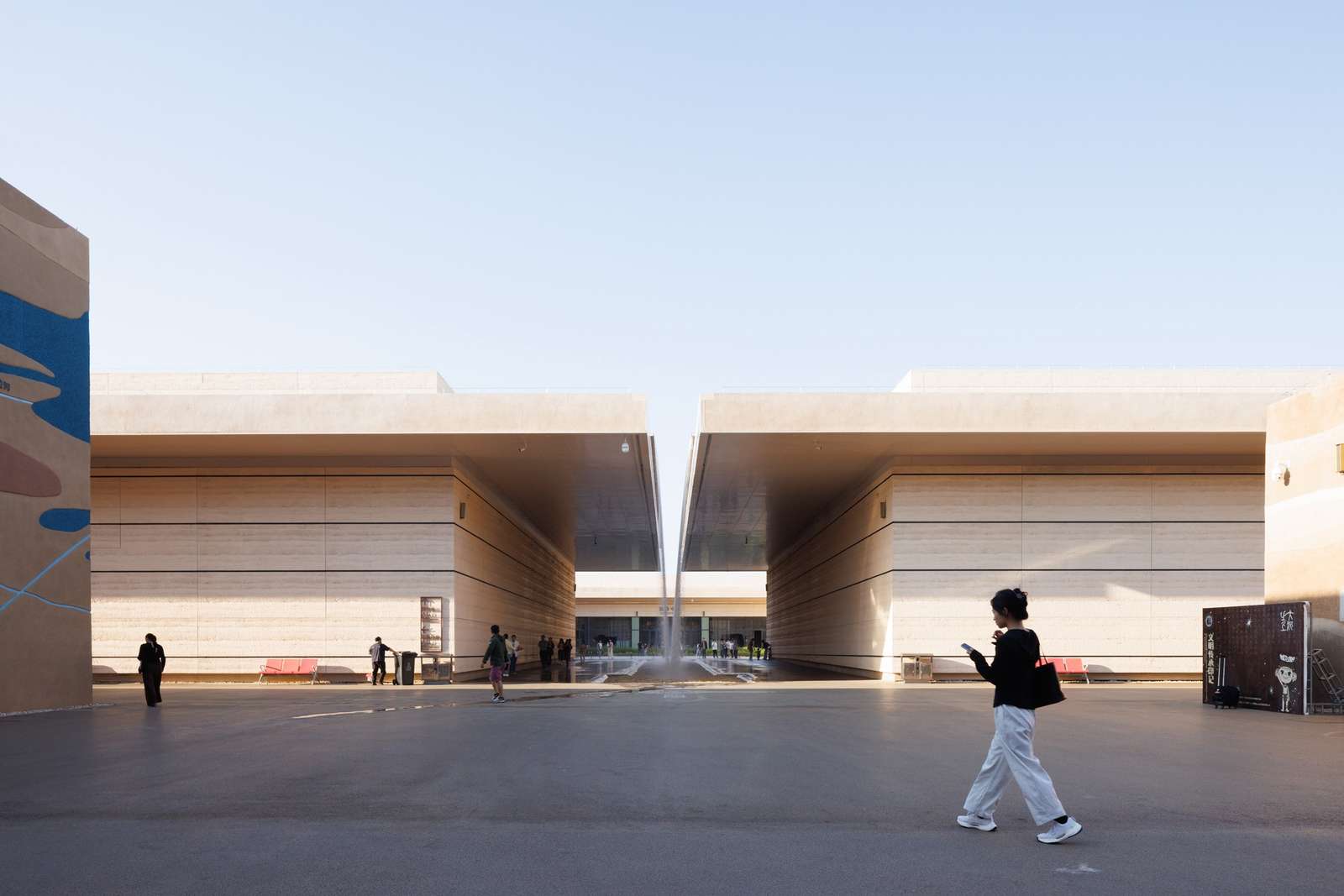
Mass Recession and Integration into the Ground
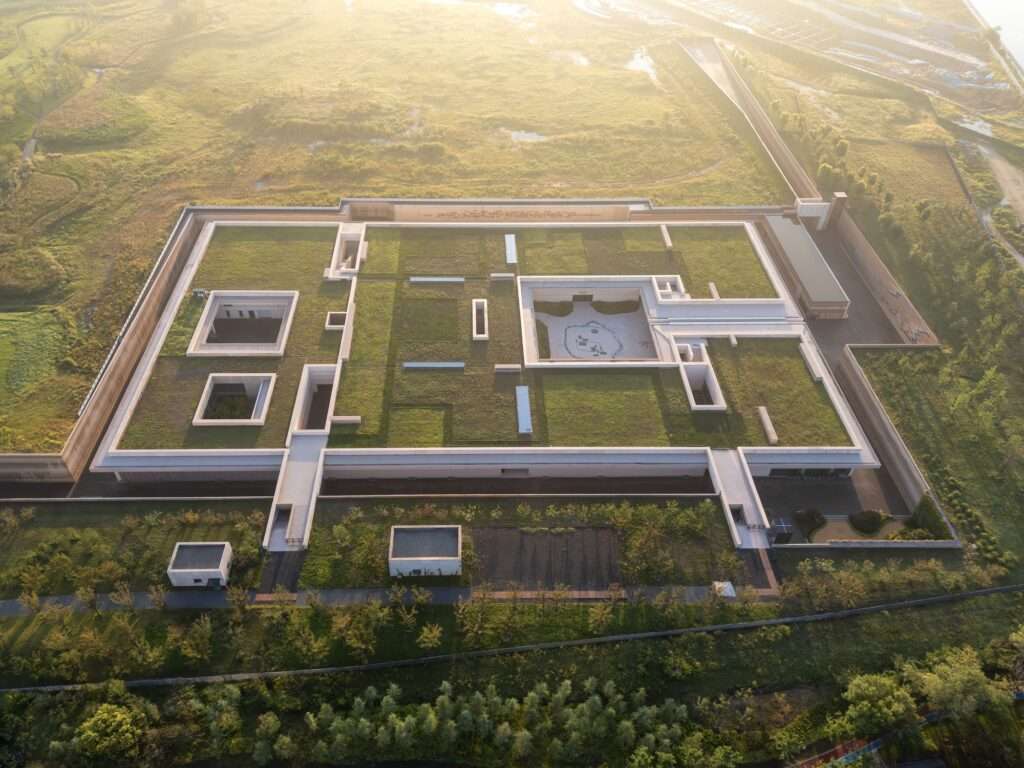
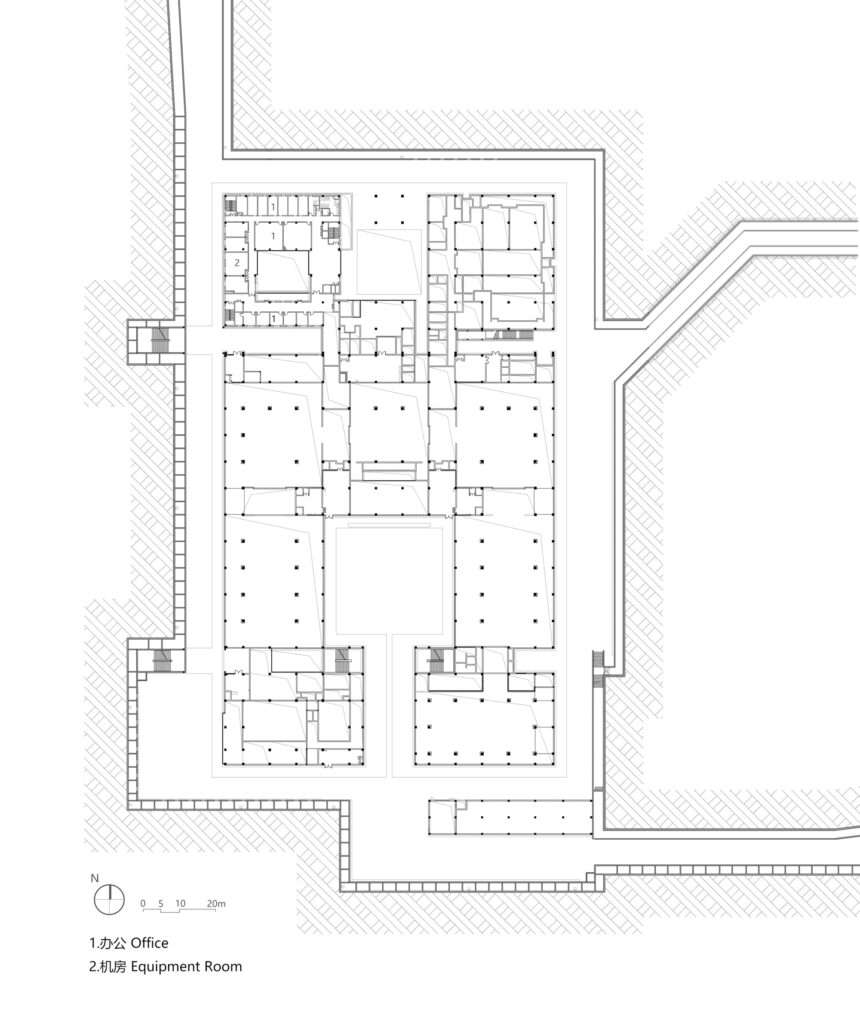
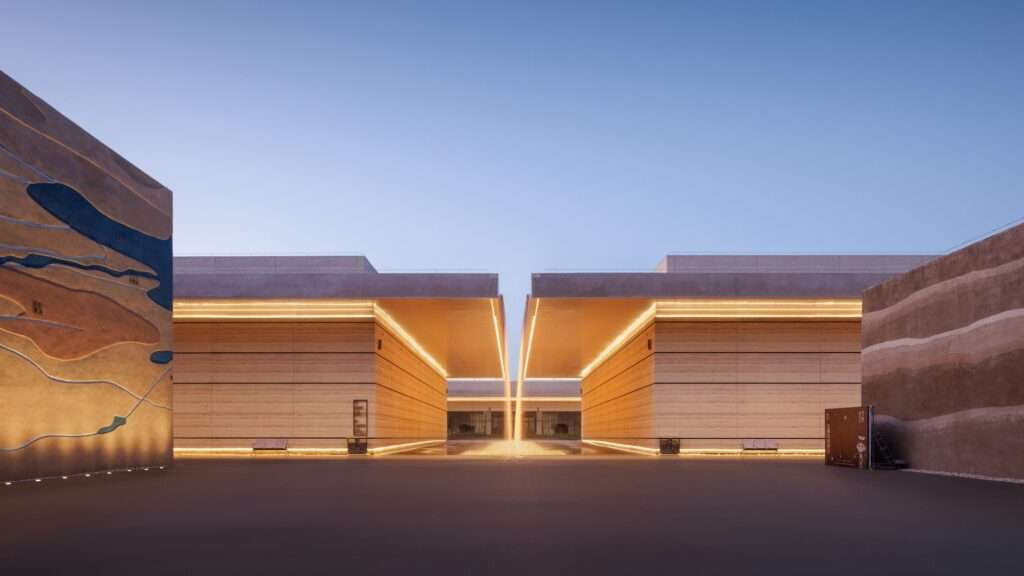
The museum’s architectural design moves beyond the conventional concept of an above-ground building defined by a visible mass, adopting instead a strategy of immersion within the historic site by concealing a substantial portion of the structure beneath the earth. This approach harmonizes with the surrounding topography while reducing the visual impact of the built form.
This treatment emerges as a direct response to the sensitivity of the soil and the deep archaeological deposits, which necessitate minimizing structural interventions above ground level. Within this composition, excavation becomes an integral component of the design language, as the terrain is reshaped to achieve a balance between preserving the site and enabling its architectural use. This approach also enhances the site’s environmental performance by improving stormwater drainage and supporting the restoration of the surrounding natural landscape.
Spatial Scenography and Human Experience
The visitor experience begins with a gradual transition from the open surface into submerged spaces, where a descending pathway guides users toward deeper levels that are visually and emotionally connected to the historical layers of the site.
Concrete volumes interact with the movement of the sun to create shifting patterns of light and shadow throughout the day, reinforcing a sense of depth and drama within the interior spaces. Sunken courtyards facilitate natural airflow, contributing to user comfort, while the raw material palette provides a direct tactile connection to the nature of archaeological excavation. As a result, movement through the building evolves from a simple transitional function into a comprehensive perceptual experience.
| Field | Details |
|---|---|
| Architects | China Architecture Design & Research Group |
| Area | 19,977 m² |
| Year | 2025 |
| Photographs | Xiang Li, Haoquan Wang |
| Lead Architects | Chen Tongbin, Jing Quan, Xu Yuanqing |
| Category | Museums & Exhibit |
| Architecture Design Team | Liu Chang, Zhang Jie, Geng Bihui, Yan Dong, Zhai Yuhang, Wu Nanwei, Li Bizhou |
| Heritage Conservation | Wang Linfeng, Ren Jie, Han Boya, Wang Yafen, Yang Keke, Zhu Yifu, Wang Xu |
| Landscape | Wang Hongtao, Sun Hao, Mu Ze, Qi Shimingyue |
| Site Planning | Gao Zhi, Dong Yikun |
| Interior Design | Zhang Zhejing, Wang Qiang, Xing Lu |
| Structural Engineering | Ren Qingying, Liu Wenting, Liu Shuai |
| Plumbing | Liu Hai, Liu Yang |
| HVAC | Hu Jianli, Shi Kai, Chang Chenchen |
| Electrical Engineering | Chang Liqiang, Song Haiwei |
| Intelligent Systems | Pei Yuanjie |
| Green Building Consulting | Yi Wenting, Lin Bo |
| Consultants | China Construction First Building (Group) Co., Ltd. |
| Lighting Design | Tongyuan (Beijing) Lighting Design Co., Ltd. |
| Clients | Dahecun National Archaeological Site Park & Zhengzhou New Development Real Estate Co., Ltd. |
| City | Zhengzhou |
| Country | China |
Environmental Efficiency and Passive Climate Simulation
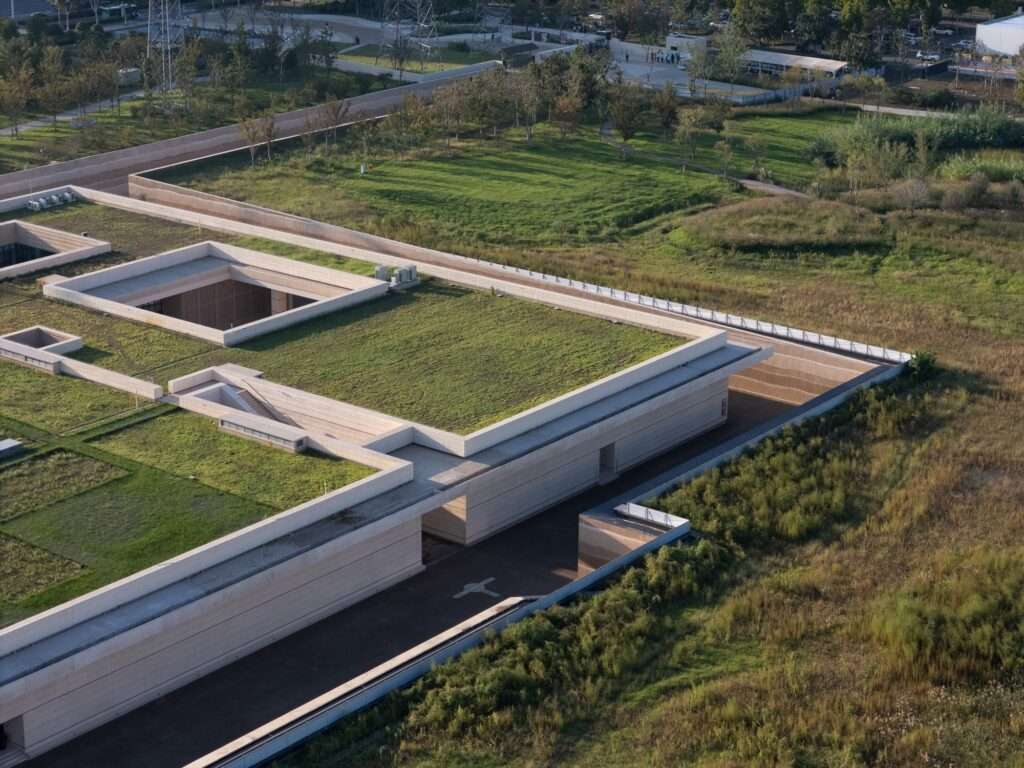
The project is founded on the integration of passive environmental strategies with site-specific conditions to create a stable indoor environment without relying entirely on mechanical cooling systems. The incorporation of sunken courtyards, a green roof, and adjacent wetland surfaces contributes to microclimatic improvement and reduces thermal fluctuations.
The building masses and façade configurations were also developed in response to wind-flow and thermal-performance simulations, helping to reduce wind speeds at pedestrian level while enhancing natural ventilation within the spaces. This integrated system mitigates condensation and humidity issues while providing a carefully engineered drainage strategy to prevent water accumulation.
Topographic Integration and Ecological Restoration
The design minimizes the visible building mass by embedding the structure within the site’s terrain and achieving a precise balance between excavation and earth-shaping operations. The sunken spaces were designed to align with the treatment of unsuitable soil conditions, reducing the need for additional backfilling and minimizing the overall construction impact.
The green roof integrates seamlessly with the surrounding landscape, creating a visual extension of the natural environment and reconnecting the site with its original character. This approach supports the restoration of local ecosystems, including native vegetation and wildlife habitats, while enhancing carefully controlled natural daylighting throughout the site.
Material Expression of Earth and Technological Façade Integration
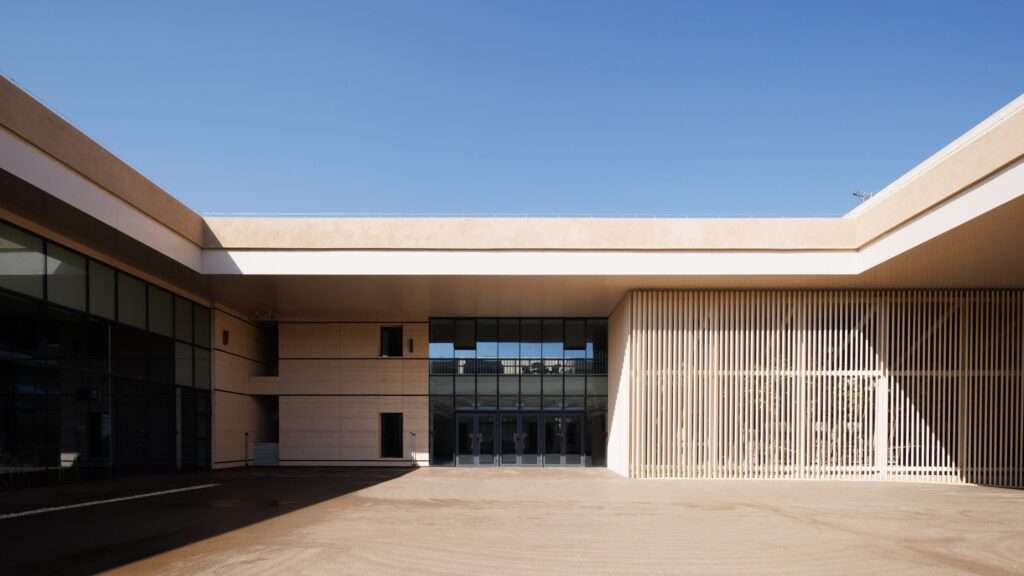
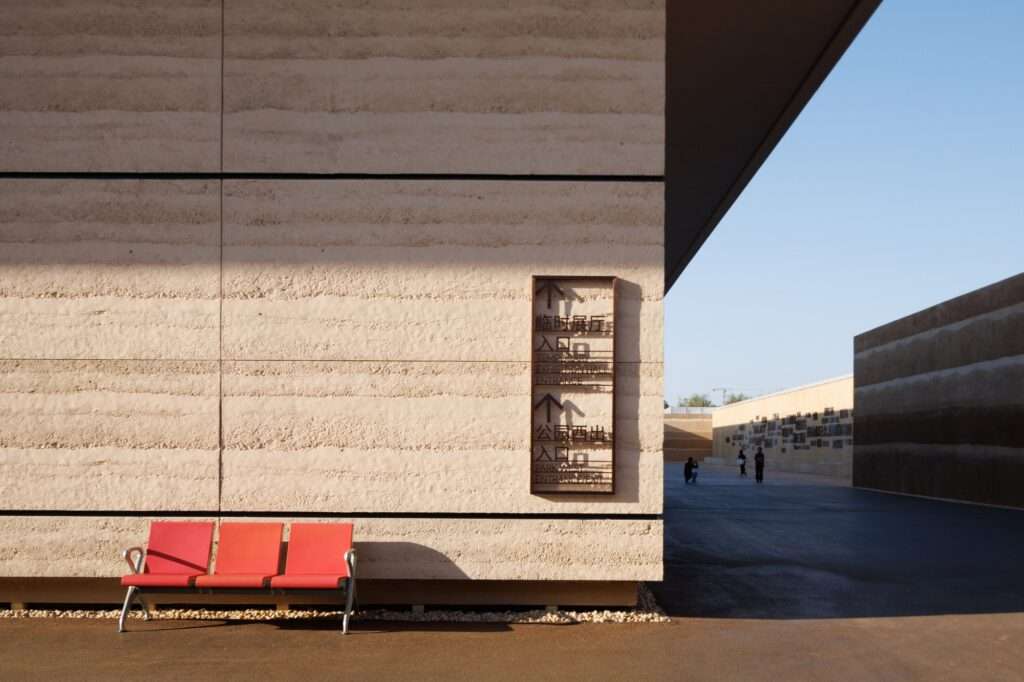
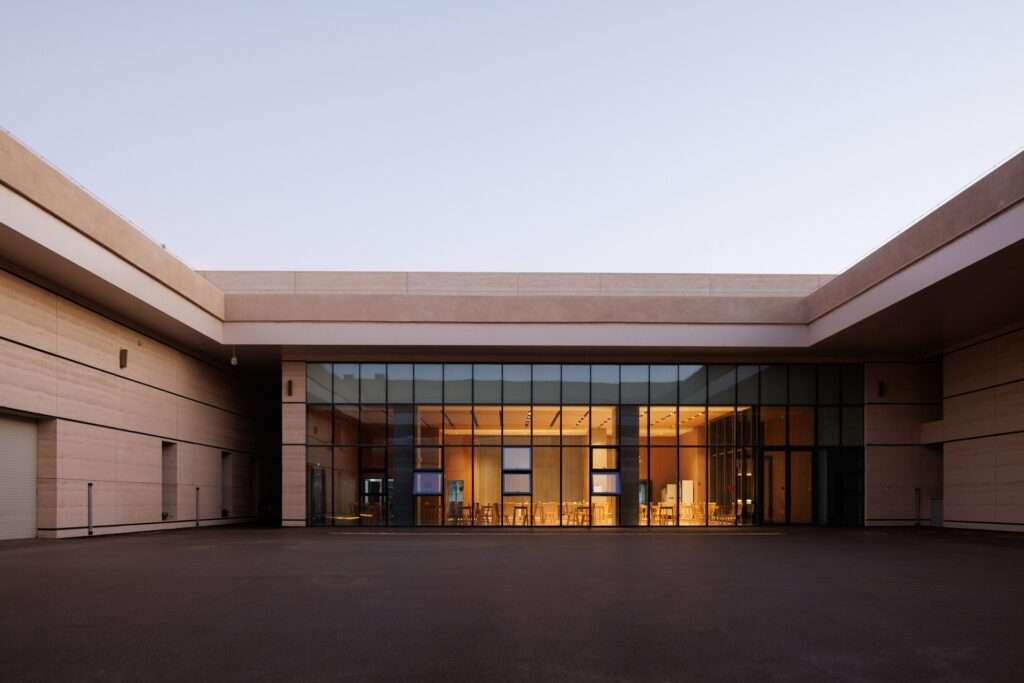
The building envelope is based on a façade system that reinterprets the texture of rammed earth through a contemporary architectural language, establishing a direct relationship between the architecture and the geological context of the site.
The façade panels were developed at relatively large dimensions (4.2 m × 2.1 m) to minimize visual joints, improve thermal performance and airtightness, and accelerate on-site construction processes. This system strengthens the clarity and cohesion of the architectural mass while generating a continuous interplay of light and shadow across the textured surfaces, enriching the visual experience of users through innovative building-material applications.
Spatial Narrative and a Journey Toward Archaeological Origins
The museum experience reaches its culmination as visitors move through immersive exhibition halls that detach them from the contemporary context and reconnect them with deeper historical layers.
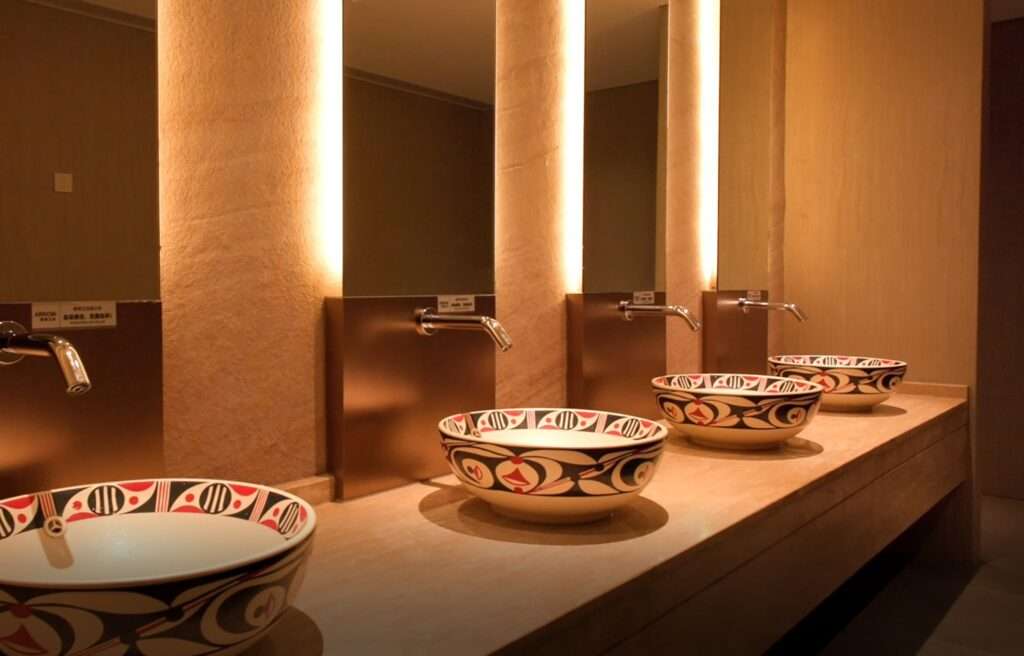
The experience extends beyond the displayed content to encompass the perception of space itself. Air circulates beneath architectural elements, while light interacts with surfaces and voids to create a fully integrated sensory environment. The return of natural elements to the site further reinforces this atmosphere, as visitor movement intertwines with the presence of local wildlife, transforming the building into a mediator between humanity, nature, and history simultaneously.
✦ ArchUp Editorial Insight
The project redefines the museum as an artifact embedded within the earth, where the architectural mass is immersed within archaeological strata to reduce its visual presence and transform excavation into a tool for spatial production. Through sunken courtyards, green roofs, and earth-inspired façade systems, topography becomes an organizational framework that performs both environmental and spatial functions, integrating climatic performance with a site-specific sensory experience. Similar approaches can be found in numerous contemporary projects that explore the relationship between architecture and landscape.
Nevertheless, this approach may embody a degree of romanticization toward subterranean architecture, overlooking the complexities associated with waterproofing, long-term maintenance, and the technical systems required to regulate humidity and lighting. Furthermore, the proclaimed environmental benefits may be offset by significant operational and construction demands within the broader framework of architectural financial management, in addition to a strong reliance on advanced building-material technologies to ensure long-term performance and durability. These challenges continue to be explored through ongoing research in sustainable and subterranean architecture.




⚠️ Editorial Notice: Where is the Featured Image?
The article is missing its featured image. Every publication must include a proper featured image before it can be approved. Please add the featured image and verify that it is correctly assigned before publishing.
Thank you for the Notice.