
Tianlai Art Museum: Exposed Concrete Transforms a Rural Farmhouse Into a Public Art Space in Taiwan

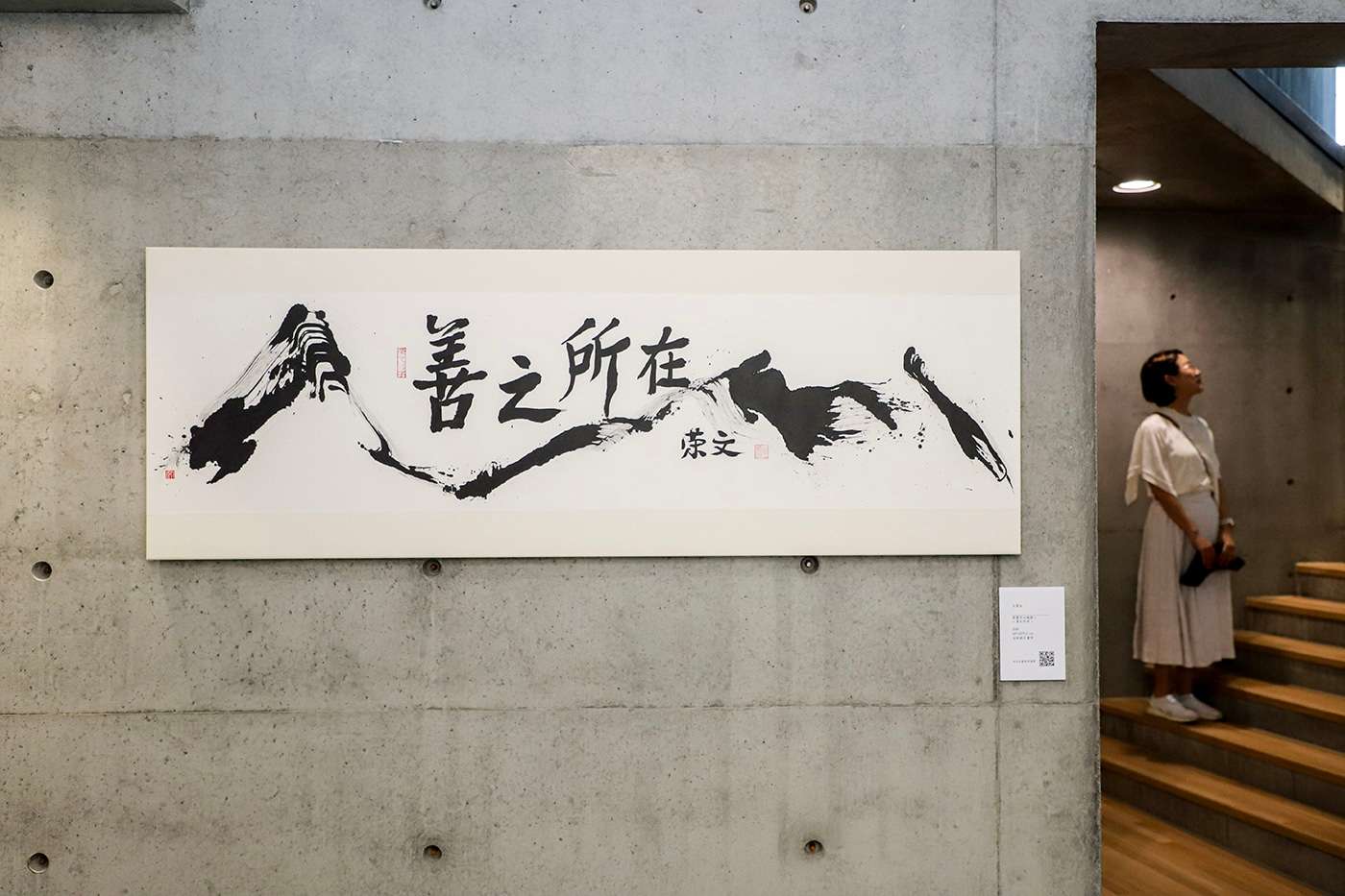
A new art museum opens in Yizhu Township, Chiayi County, Taiwan. The Tianlai Art Museum converts an old family farmhouse into a public cultural venue. The project uses exposed concrete to merge contemporary architecture with the surrounding rural landscape.
From Family Home to Rural Art Destination
The project transforms what once served as a kitchen, cattle barn, and grain storage into a two-story museum. The construction process did not happen overnight. One wing first became a community table tennis hall. Therefore, the conversion followed a phased approach, gradually reshaping domestic spaces into public galleries. This incremental strategy respects the site’s history while giving it new programmatic life.
However, the adaptive reuse raises a critical question. Can a small-scale rural conversion sustain long-term cultural programming? The museum operates only Thursday through Sunday, which limits accessibility. Moreover, rural buildings repurposed as cultural venues often struggle with visitor volume beyond their opening season.
Exposed Concrete Meets Agricultural Imagery
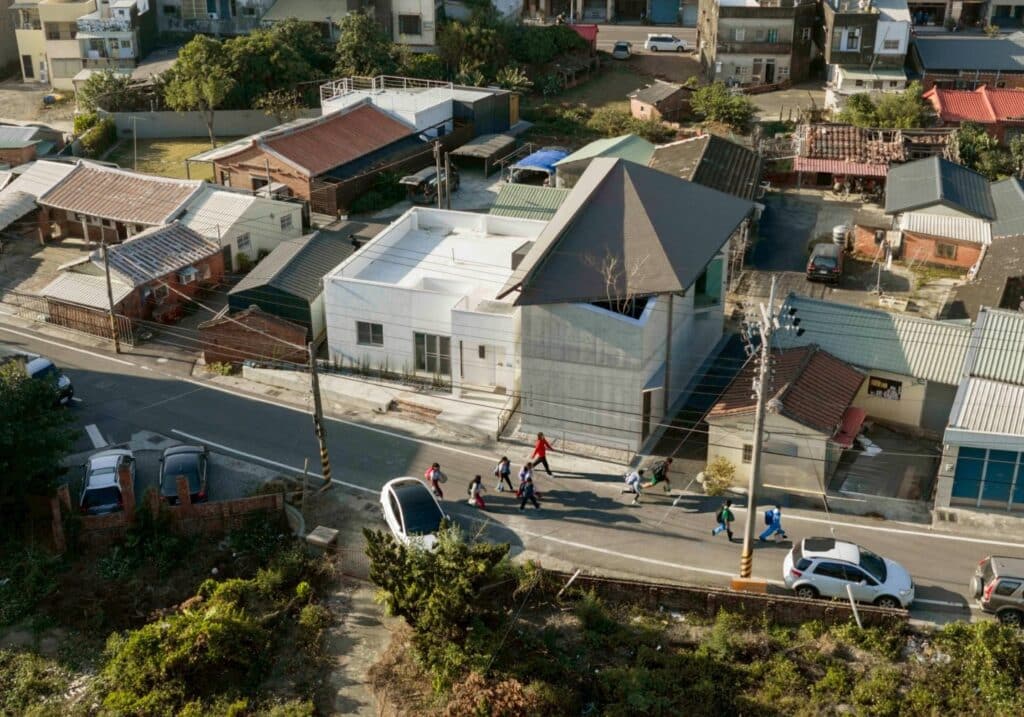
The exterior features exposed concrete walls topped with copper-plated panels. The roof takes an irregular form that evokes a traditional straw hat silhouette. This design decision anchors the architecture visually within the farmland context. Meanwhile, nine characters inscribed on the side wall reference the family’s history and provide a subtle identity marker.
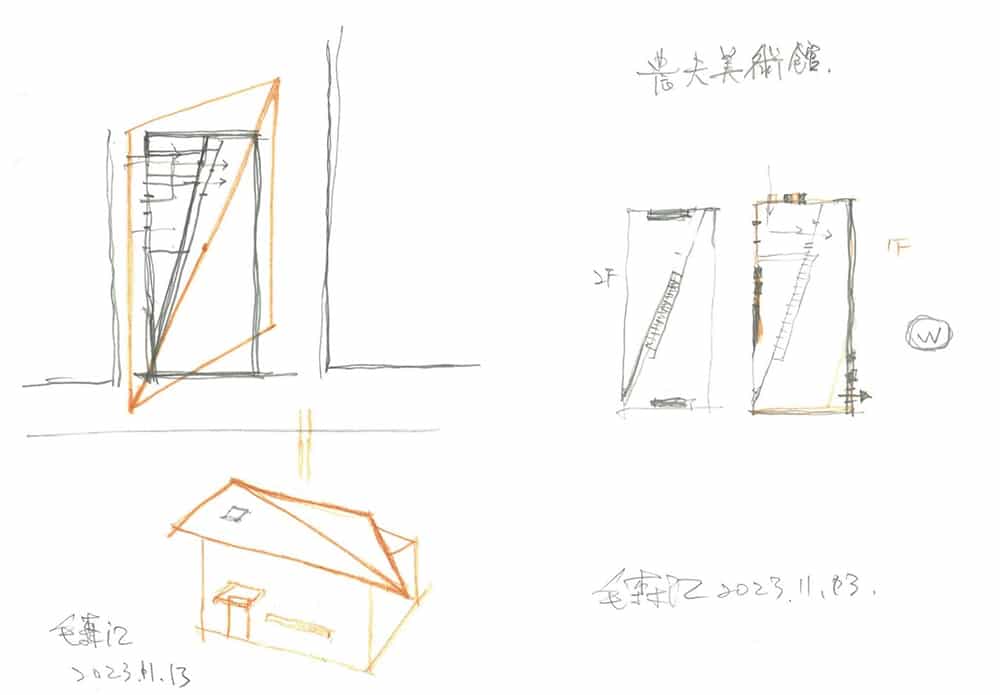
The entrance deserves particular attention. A narrow 60-centimeter passageway forces visitors to slow down before entering. Its floor uses rice straw ash mixed into the paving, replicating the texture of muddy paths along paddy fields. This building materials choice turns agricultural byproducts into a spatial experience. However, such a tight entry corridor could present practical challenges for accessibility and crowd flow.
Interior Design and Spatial Flow Under Scrutiny
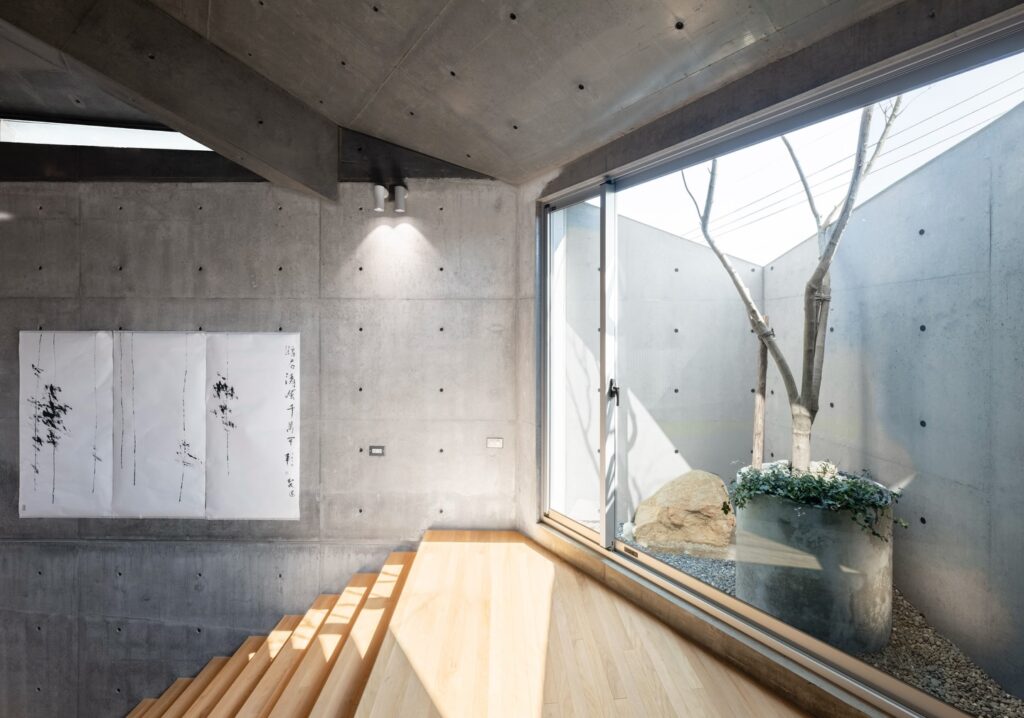
Inside, the interior design opens into a surprisingly vertical gallery space. The original compact farmhouse footprint transforms into a transparent, flowing layout. Staircases lead to a second-floor platform and a triangular walkway. Natural light shifts across grey concrete walls throughout the day, creating dynamic display conditions for the ink paintings on show.
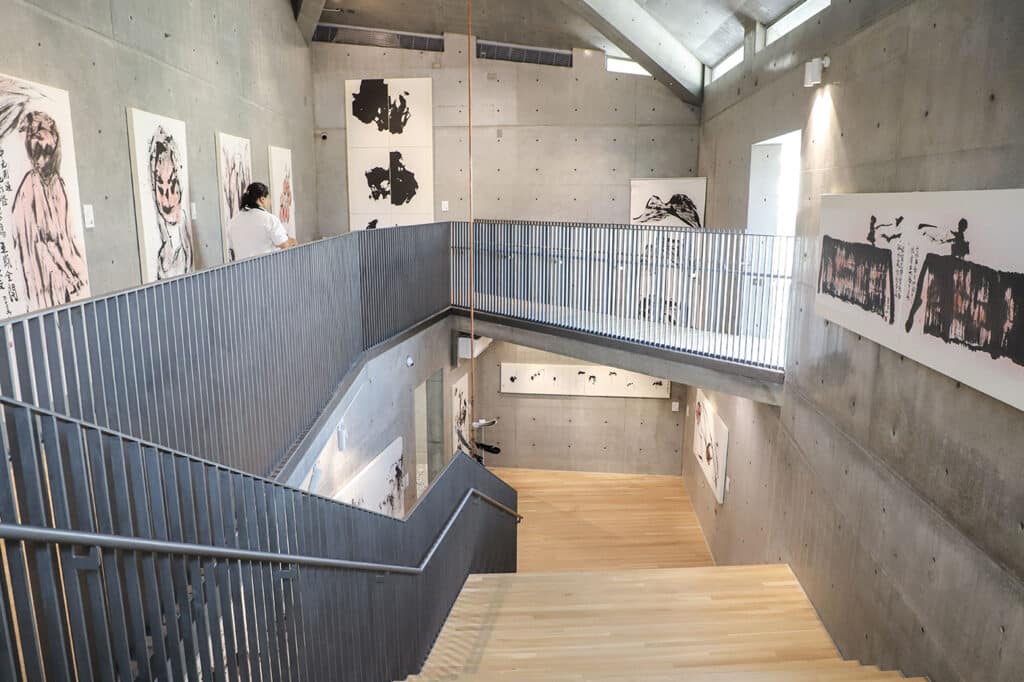
The design clearly draws from the exposed concrete vocabulary associated with minimalist Japanese architecture. The geometric window openings and controlled material palette confirm this influence. Therefore, critics may question whether this aesthetic truly responds to its rural Taiwanese context or simply imports an established visual language. The straw-ash flooring and hat-shaped roof gesture toward locality. Yet the dominant concrete expression risks feeling detached from the red-brick and low-rise village fabric visible in aerial photographs.
Art Programming and Community Relevance
The inaugural exhibition pairs over twenty large-scale ink paintings inside the concrete galleries. The news around the opening highlights the museum’s motto of making art accessible beyond cities and elite circles. Meanwhile, the exhibition runs from April 2 through July 19, 2026. Whether the venue can maintain rotating programs and attract repeat visitors to this quiet agricultural town remains an open question for rural sustainability.
A Quick Architectural Snapshot
The Tianlai Art Museum sits where a farmhouse once stood, now clad in exposed concrete under a copper hat-shaped roof. It channels agricultural memory through straw-ash floors and narrow passageways, testing whether minimalist gallery architecture can genuinely root itself in rural soil.
✦ ArchUp Editorial Insight
The Tianlai Art Museum emerges from a familiar pattern in East Asian rural revitalization strategies. Local governments and private landowners increasingly turn to cultural programming as a response to agricultural decline and youth migration toward cities. The decision to limit operating hours to four days weekly reveals the economic reality beneath the architectural ambition. Visitor traffic in remote townships cannot sustain full-time staffing or maintenance costs. The choice of exposed concrete over local materials reflects available construction expertise and the global circulation of minimalist gallery aesthetics through architecture media. Meanwhile, the phased conversion from table tennis hall to museum demonstrates how cultural projects in these contexts often require intermediate community functions to justify initial investment. This project is the logical outcome of rural depopulation pressures, limited municipal cultural budgets, and the proven template of repurposed agricultural buildings as regional tourism anchors.

★ ArchUp Technical Analysis
Technical and Documentary Analysis of the Tianlai Art Museum – Yizhu Township, Chiayi County, Taiwan:
This article presents an architectural analysis of the Tianlai Art Museum as a case study in the adaptive reuse of rural houses as public cultural spaces. To enhance its archival value, we would like to present the following key technical and design data.
The project transforms an old family house, which originally contained a kitchen, a cattle shed, and a grain storage, into a two-story museum, after one of the wings was first converted into a table tennis hall to serve the local community. The exterior features exposed concrete walls topped with copper-painted panels, while the roof takes on an irregular shape evoking the image of a traditional straw hat.
The entrance passage is only 60 centimeters wide, with flooring that uses rice husk ash mixed with paving materials to simulate the texture of dirt paths along the rice paddies. Inside, the design opens into a vertical exhibition space, with stairs leading to a platform on the second floor and a triangular walkway, where natural light shifts across the gray concrete walls throughout the day.
The inaugural exhibition features over twenty large-scale ink paintings and runs from April 2 to July 19, 2026, with the museum open only from Thursday to Sunday.
Related Insight: Please refer to this article to understand the context of modern architectural preservation:
Adaptive Reuse of Rural Buildings: Strategies for Conversion into Cultural Spaces.




✅ Official ArchUp Technical Review completed for this article.