Ruby Tiny Home: The Evolution of an Adaptive Residential Plan

Design Background and Model Evolution
The “Ruby” is presented as one of the residential plans developed within the portfolio of Teacup Tiny Homes in Alberta, a company operating in the tiny home sector since 2016. This model initially began as a custom-designed project for a family of five relocating to the Vancouver area before later evolving into a core plan within a series of ongoing Architecture developments.
Model Expansion and Transformation into a Case Study
Over time, “Ruby” did not remain a standalone project but became one of the most widely used plans within the company’s portfolio, leading to the emergence of multiple variations and modifications. The model has been deployed across various Cities throughout Canada, from New Brunswick to the Crowsnest Pass region, making it an example of how residential layouts can evolve from a custom-built solution into a repeatable and adaptable housing typology.
Dimensions and Interior Space
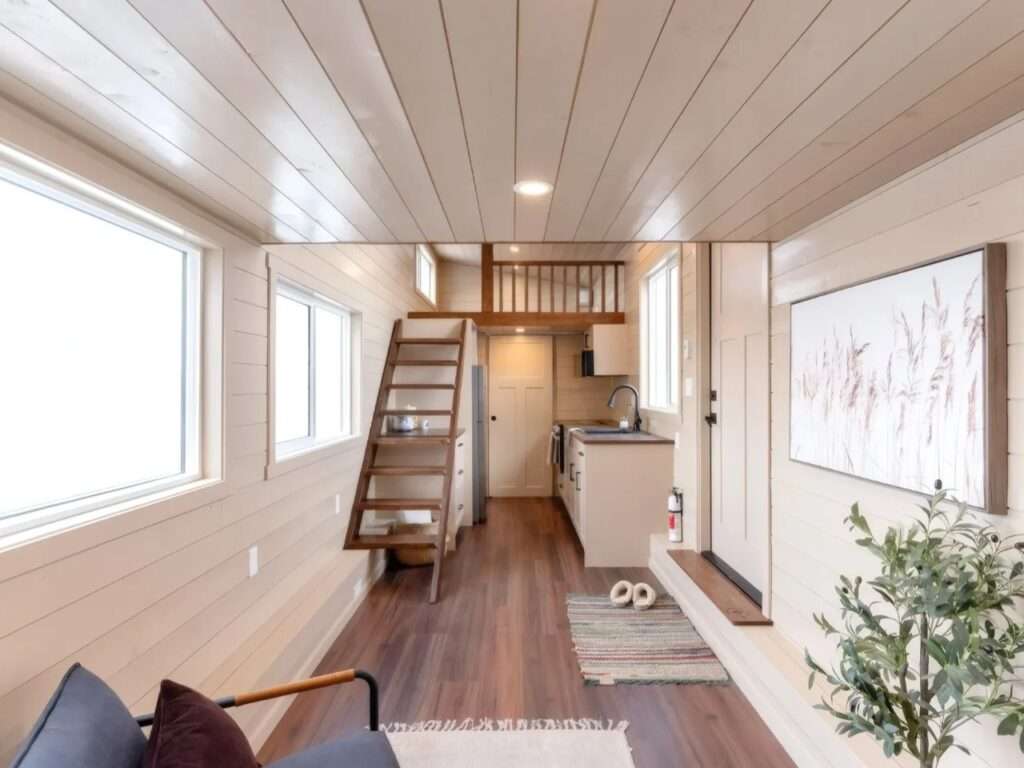
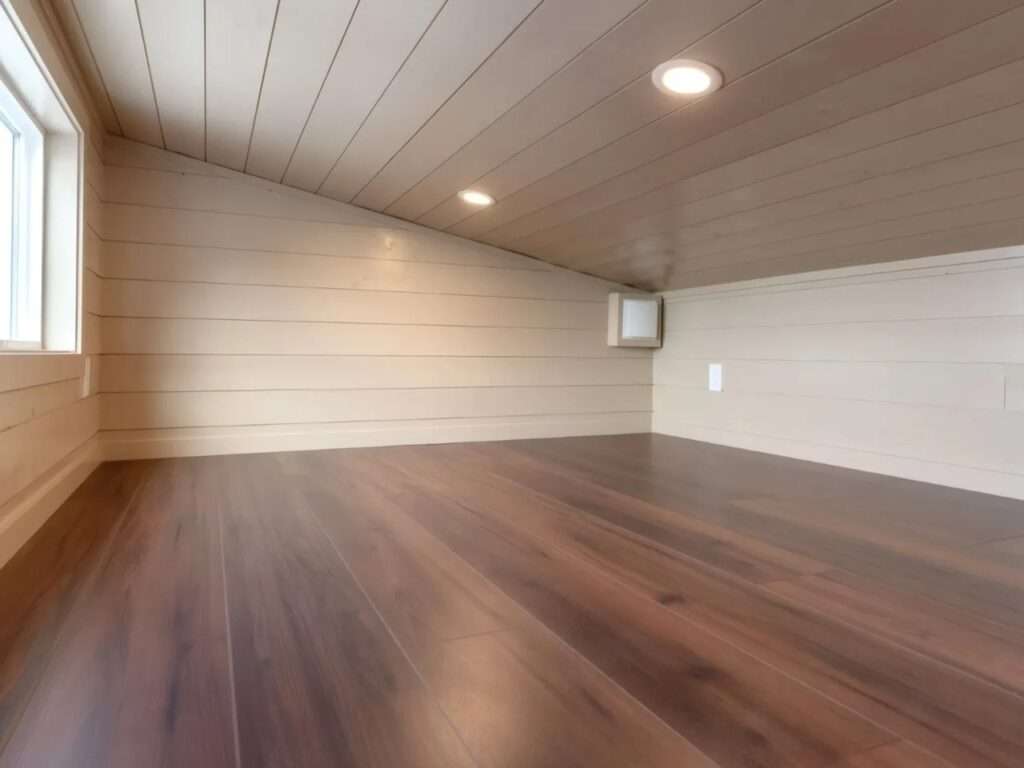
“Ruby” measures 30 feet in length and 8.5 feet in width, providing a total area of approximately 380 square feet, including two upper-level bedrooms. However, these figures alone do not fully represent the visual perception of the interior space due to the arrangement of Design elements and lighting strategies.
Interior Organization and Functional Layout
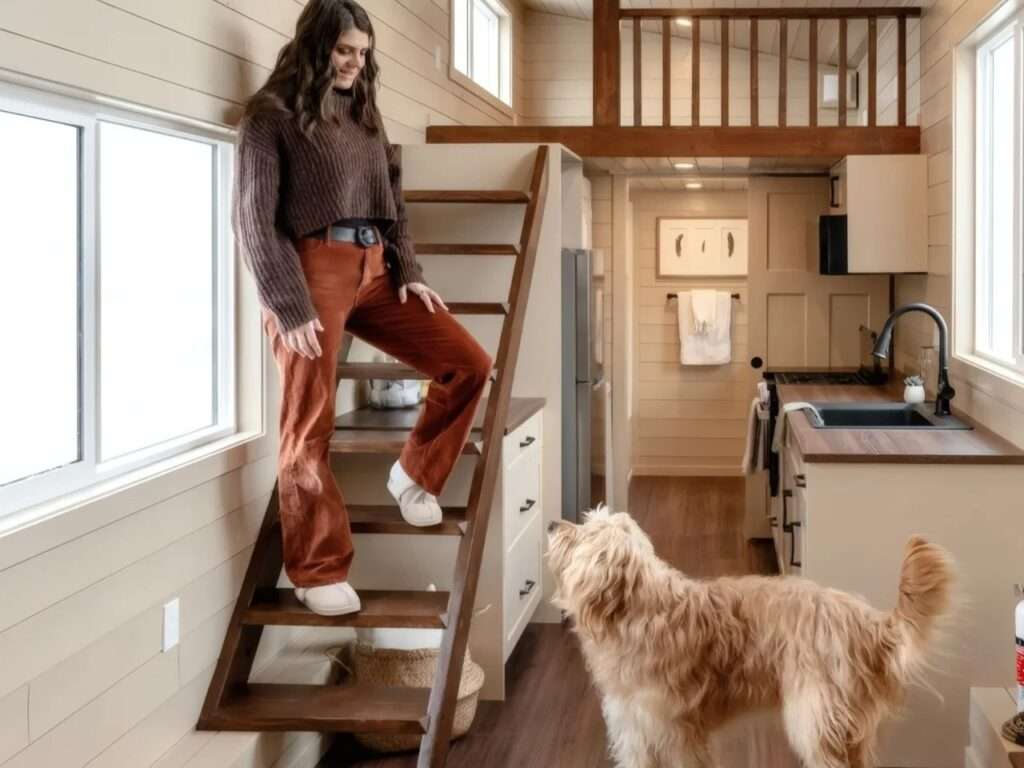
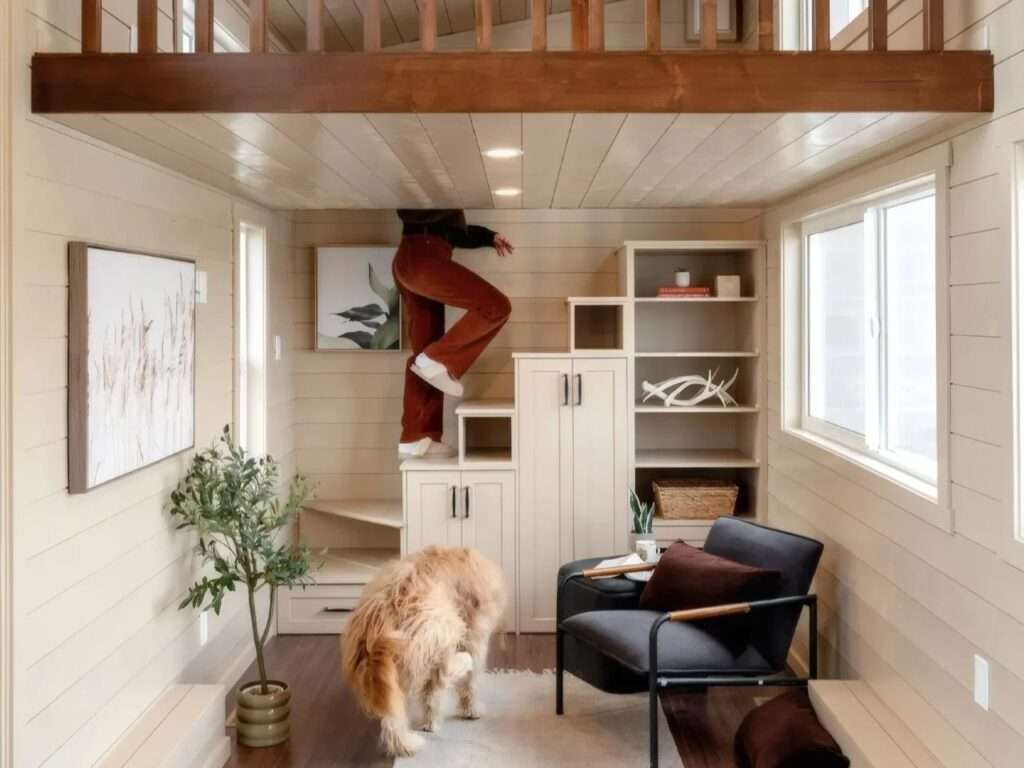
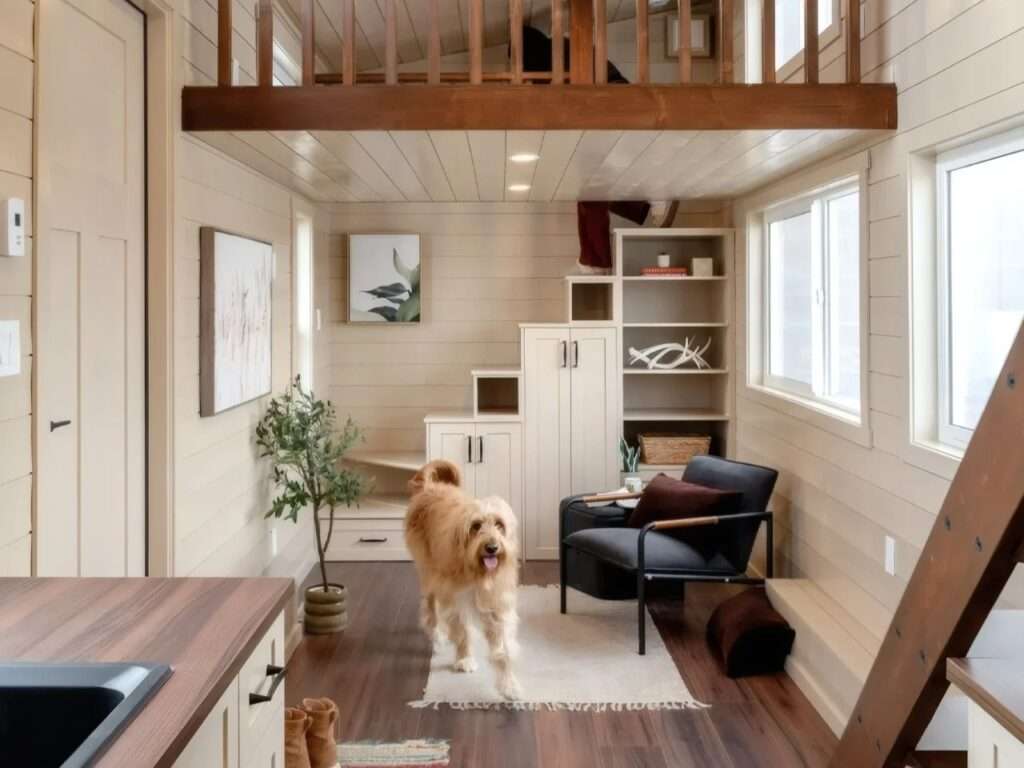
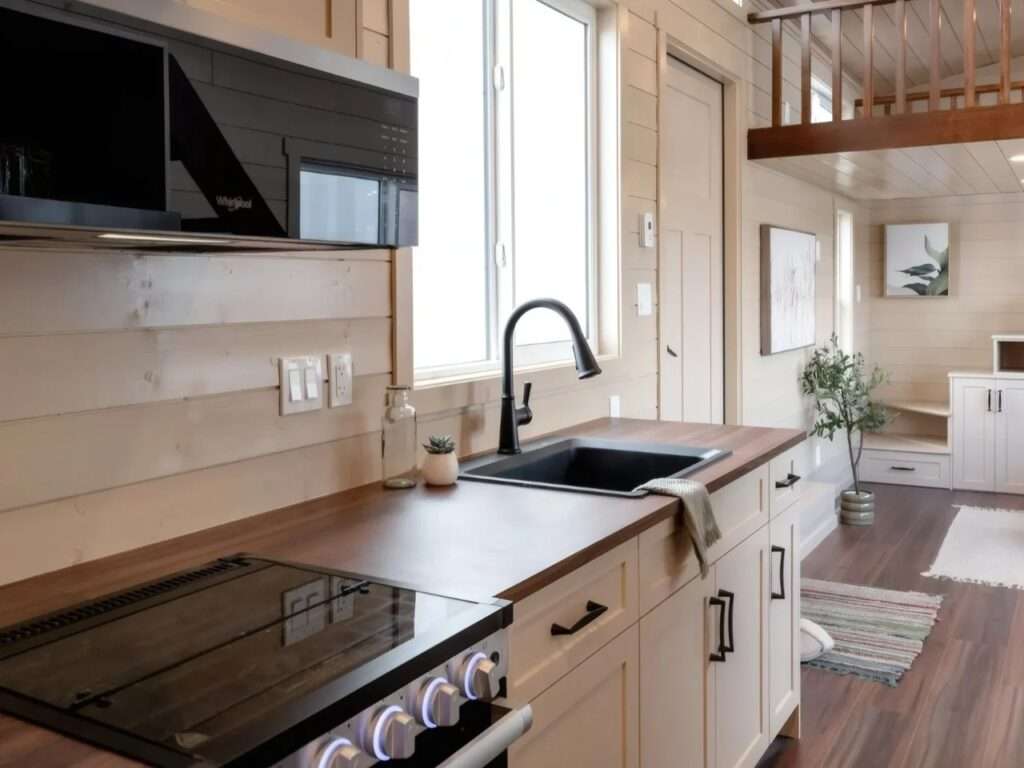
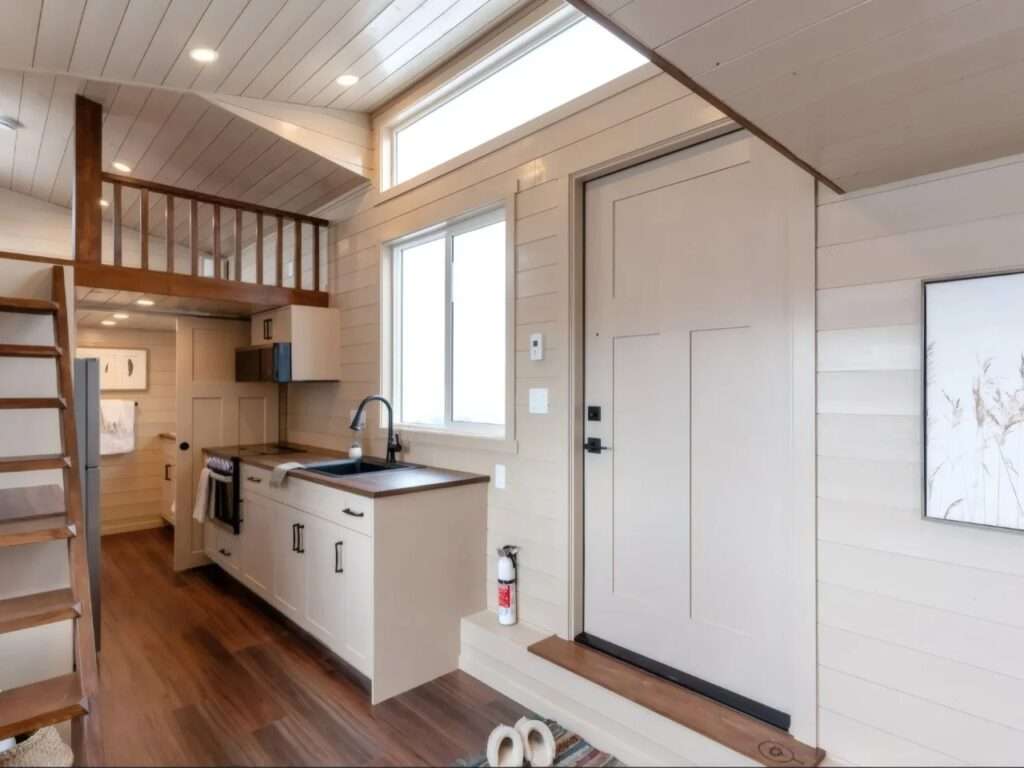
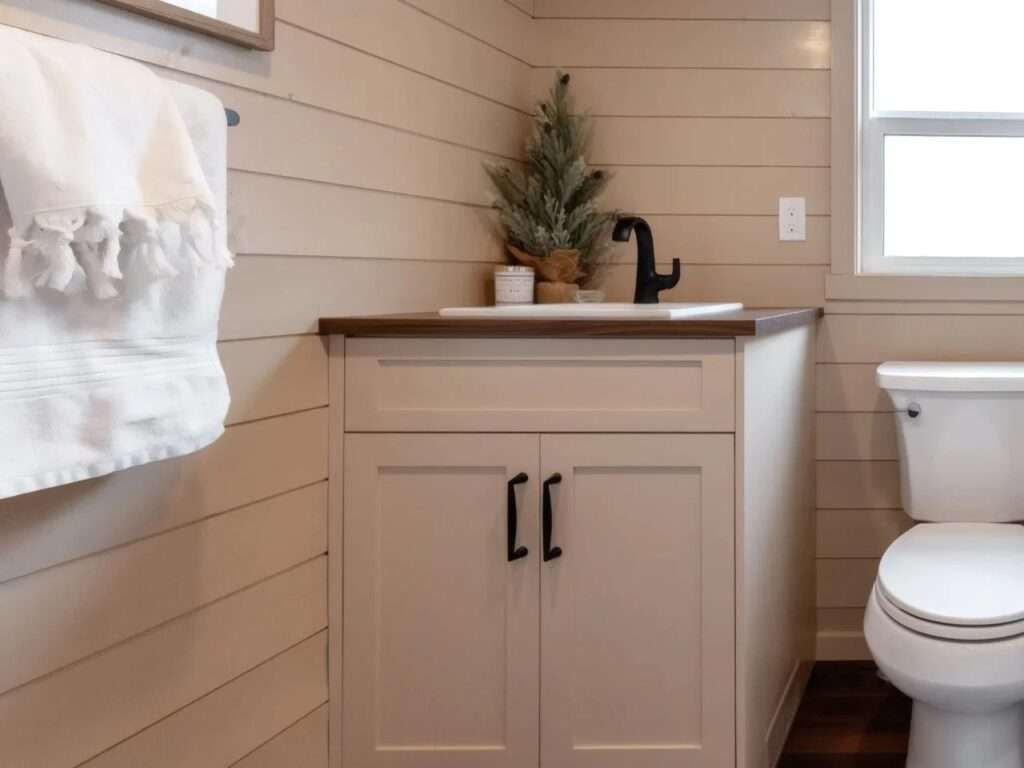
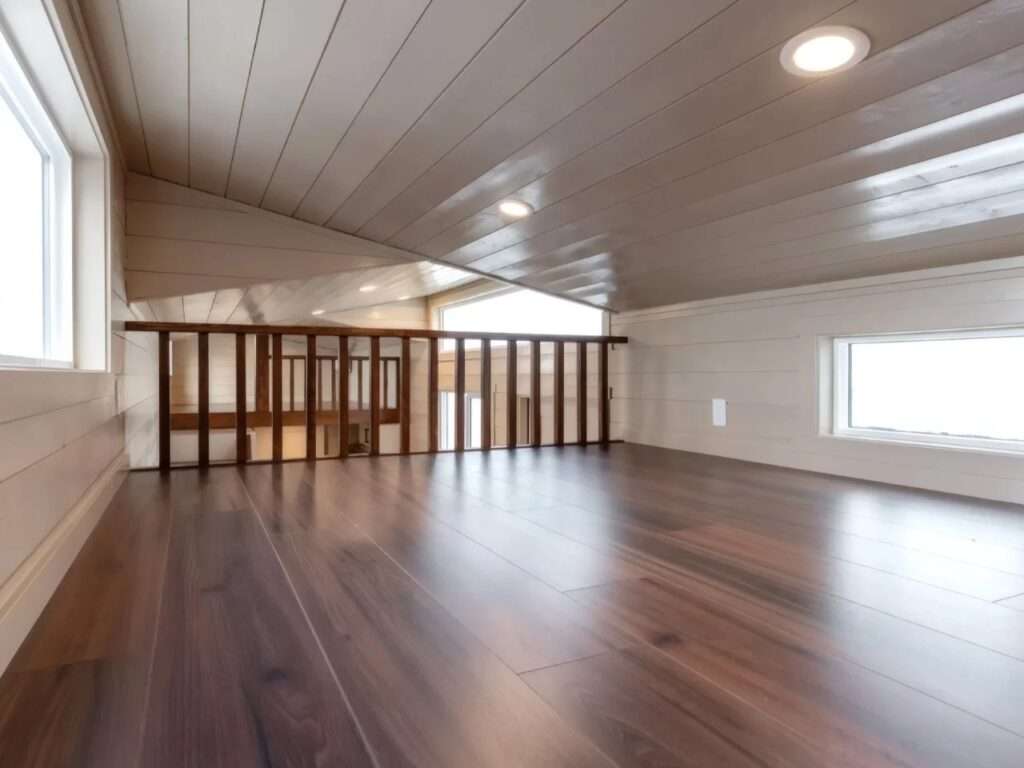
Wood paneling extends throughout the interior space, while expansive windows contribute to maximizing natural light. The Interior Design includes a dining area, a fully equipped kitchen, and a living area featuring a sofa that can optionally convert into a bed, increasing sleeping capacity to six occupants. The primary bedroom is positioned at the rear upper level and is accessible via a staircase, while the second bedroom is arranged in an overlapping configuration on the upper floor.
2026 Version Modifications
In the 2026 version, known as “Bar Harbor Ruby,” the spatial configuration was modified through the introduction of a triple-pitched roof, resulting in an enhanced perception of interior height and a broader visual understanding of the volume. The previous single staircase was also replaced with two full staircases, reorganizing internal circulation and significantly altering the perception of spatial openness, a common theme in many Projects today.
Thermal Performance, Technical Specifications, and Pricing
The model features thermal insulation rated at R24 within the walls and R35 in both the roof and flooring systems, utilizing advanced Building Materials to ensure efficiency. It includes the option of adding a full-size bathtub alongside bay windows and a fireplace. Pricing for the 2026 version begins at approximately US$127,000, excluding GST. This pricing is presented within the context of a custom-built and towable structure, positioning it within the category of highly equipped tiny homes in terms of Construction quality and functional integration. For technical specifications, detailed Material Datasheets are available.
Applications and Design Adaptation Patterns
The layout is intended to accommodate a range of user groups, including couples, small families, short-term rental operators, and first-time tiny home users. The design allows for this diversity without altering the fundamental internal organization. Several versions appear as different functional adaptations, including “Gaia Ruby,” characterized by a warmer atmosphere; “S+N Ruby,” emphasizing openness and natural light; and “Stella Ruby,” specifically tailored for hospitality and tourism purposes. These variations demonstrate the plan’s ability to adapt to multiple operational scenarios within the same architectural framework, reminiscent of flexible Buildings designed for various uses.
✦ ArchUp Editorial Insight
The “Ruby” model operates as a standardized residential asset within the tiny home market, shaped by affordability pressures, demand for short-term rental accommodations, and building regulations governing towable units. Regulatory constraints associated with transportation requirements, thermal insulation standards, and occupant safety measures have compressed the architectural program into repeatable spatial templates such as integrated loft arrangements and restricted vertical circulation systems. The model’s different variations reflect a production distribution strategy more than genuine Architecture Competitions differentiation, where the same structural framework is reformulated to serve multiple occupancy patterns while balancing lower implementation costs with improved return efficiency. Within this context, the architect appears less as the primary agent and more as a participant operating under the influence of production systems and regulatory structures that ultimately shape the final architectural outcome. For further reading on industry trends, visit the Archive or check the latest Top News.