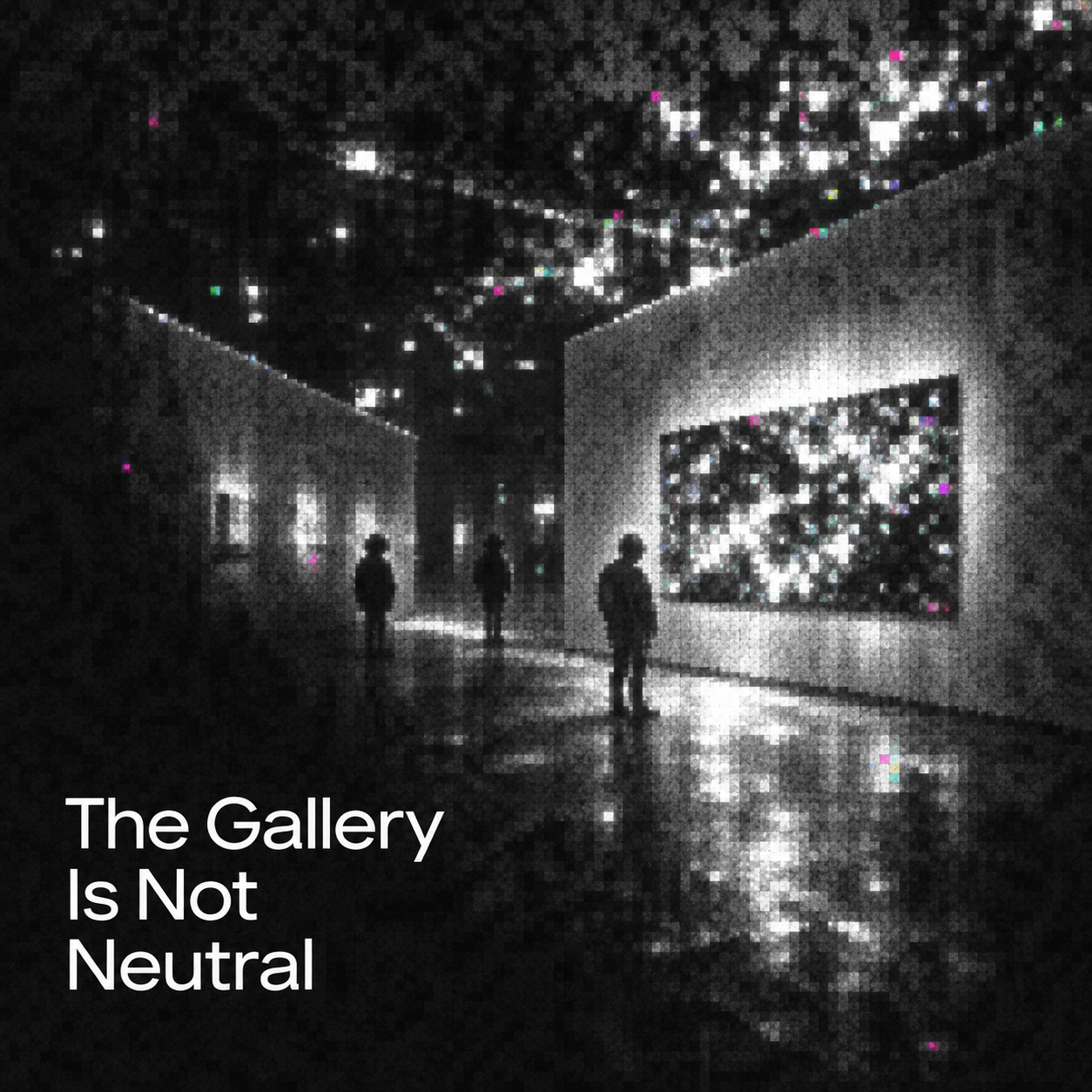
The Gallery Is Not Neutral: How Space Shapes Art’s Value and the Power of Looking

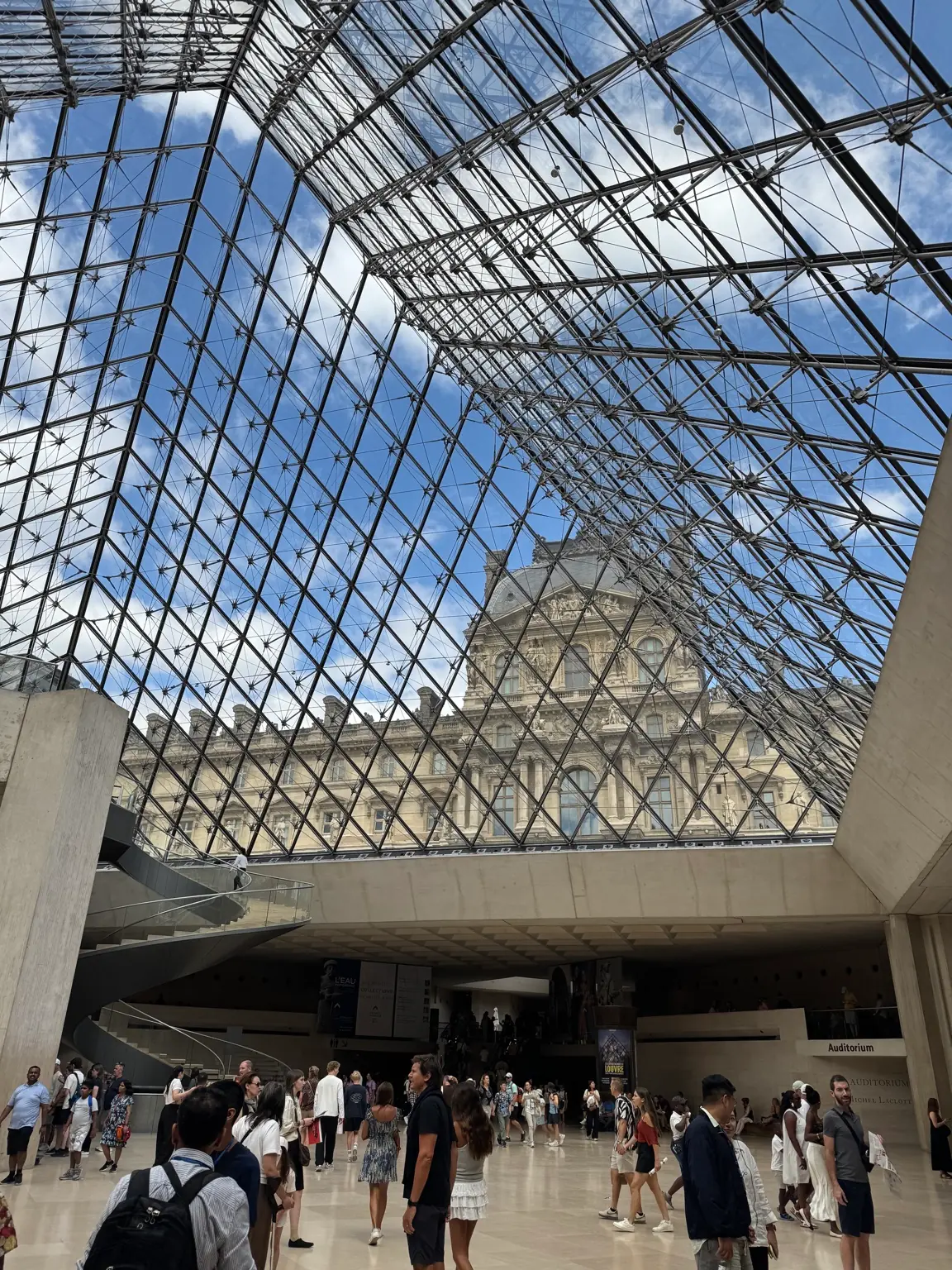
Beneath the glass structure of the Louvre Pyramid, visitors occupy different distances from stairs, entrances and one another. The photograph records an arrival space, not an artwork being sold. Yet it supplies a useful starting point: before a visitor encounters a collection, architecture has already arranged movement, visibility and access. The gallery continues that arrangement at a smaller scale. A wall, a light, a seat and a camera establish conditions under which something is noticed and someone is allowed to respond.
To say that the gallery is not neutral is not to accuse every institution of manipulation. It is to recognize that exhibition design makes choices with consequences. Some objects become destinations; others become background. Some visitors can linger; others must keep moving. Some participants control their visibility; others discover that their presence has become part of an image. These differences belong within the design brief, alongside conservation, security and visual coherence.
The room gives attention a structure
Imagine the same small drawing installed in three ways. In one arrangement it occupies a wall alone, with a focused light and generous viewing distance. In another it sits among many comparable works. In a third it appears in a study room beside preparatory material. This is a hypothetical comparison, not a measured experiment. Its purpose is to reveal how presentation proposes different readings: singular achievement, membership of a series, or evidence of a process.
None of these arrangements fixes the work's market price. Price also depends on provenance, reputation, scarcity, demand and contractual circumstances. But the display provides conditions for interpretation. Isolation can invite concentrated looking; comparison can reveal repetition or development; contextual material can complicate a story that an isolated masterpiece appears to tell. Designers participate in the production of attention even when they do not participate in a sale.
The practical task is to make the intended relationship explicit. Is the visitor supposed to compare, contemplate, question or participate? A lighting layout cannot answer that question by itself. Nor should the most expensive object automatically receive the most dominant position unless the exhibition intends to make financial hierarchy part of its argument.
When the body interrupts the object
The artist's account supplied for this discussion describes a performance in 2019 in which dealers and curators were invited to value drawings. The artist then disclosed that the red material was blood and asked whether the disclosure changed their valuations. The account provides the sequence, but not independently established prices or audience responses. It therefore supports analysis of the question posed, not a claim that the performance increased value or exposed a particular person's motives.
Its design relevance lies in the change of information. The drawing remains in place while its interpretation may change. A visitor who initially considered color and composition must now consider bodily material, labor, authenticity and discomfort. The work makes the act of valuation visible by placing it inside an encounter.
A designer translating such a proposition into an exhibition would need to ask where information appears and when. Is disclosure printed at the entrance, delivered during the event, or encountered afterward? Can a visitor decide not to participate before becoming the focus of attention? These are questions of sequence and agency. They cannot be resolved simply by choosing a dramatic wall color.
A chair can organize an institution's attention
MoMA's account of Marina Abramović's The Artist Is Present, performed in 2010, describes visitors taking turns in a chair opposite the artist and meeting her gaze. The museum records her surprise at the public's willingness to sit and engage. Its concise phrase, “the chair was always occupied,” captures how an ordinary furnishing became the center of a durational encounter. [1]
The architectural lesson is an interpretation of that documented arrangement. The participant occupies one position, while those waiting or watching occupy others. A chair establishes an invitation and a limit: an encounter becomes available to one person at a time. The surrounding space must accommodate people who are present without yet participating.
This invites a distinction between access to a room and access to an experience. A person may enter the museum but be unable to stand in a long queue. Another may wish to watch without being watched. An exhibition that depends on duration should consider seating, resting places, legible expectations and the ability to leave. These provisions do not necessarily dilute the artwork. They shape who can encounter it.
Intimacy has a plan and a section
The supplied account describes a second performance, in 2020, in which the artist lay on a mattress in a posture suggesting approaching death. Artists and curators gathered nearby in a German art institution. No institution name, full event record or audience response is established here. The spatial proposition is nevertheless distinct: the work changes a conventional viewing relationship into an encounter with a vulnerable horizontal body.
A mattress lowers the performer relative to standing visitors. Gathering around it can resemble care, inspection, witnessing or surveillance. Which reading dominates cannot be inferred from furniture alone. Distance, posture, instructions, sound, lighting and the possibility of moving away all matter. The scene should not be treated as evidence that participants felt a particular emotion.
For a designer, intimacy is therefore more than reduced room size. A narrow route may force proximity without creating trust. A darkened enclosure may support concentration while making an exit difficult to find. A circle may appear egalitarian while leaving someone exposed at its center. Design must examine relationships between bodies rather than relying on a visual vocabulary of intimacy.
Cultural interpretation can become a market filter
Leili Sreberny-Mohammadi's study of Iranian art at Christie's Dubai examines auction catalogs, live auctions and interviews. It identifies how artists are narrated as interpreters between local and global aesthetic registers. One interviewed employee describes the task through the phrase “we have to think with the other eye.” The study also records disagreement about the market's effects, including opportunities for artists as well as concerns about classification and taste. [2]
The relevance to exhibition design is an inference, not a finding that all galleries behave like auction houses. A label, a room title or a sequence of objects can make a culture legible through a narrow set of signs. If every work is introduced primarily through national crisis, dress or political conflict, individual formal and intellectual differences may become harder to see.
An alternative does not require erasing cultural specificity. It requires allowing several kinds of information to coexist: the artist's own account, material decisions, historical circumstances, formal experimentation and the exhibition's curatorial argument. The graphic hierarchy of labels matters. A contextual heading that dominates the wall can quietly predetermine the interpretation of every object beneath it.
The camera creates another exhibition
The live event and its later image are different encounters. A photograph selects a position and a moment. It may exclude the queue, staff, interpreter, resting area or person who declined participation. A room designed primarily for a single compelling photograph can make these necessary parts of the experience appear accidental or undesirable.
Consider a hypothetical performance with a central participant and surrounding spectators. A camera placed behind the participant may turn spectators into the principal visible subjects. An overhead camera may emphasize collective geometry while concealing individual expressions. A close framing may make an interaction appear private even when it occurred before a crowd. These are representational choices, not neutral transfers of reality.
The design team should therefore include documentation in the spatial brief. Identify filming areas, explain their extent before entry and provide a practical route for those who want to observe without appearing in the intended recording. Consent is not only a form at reception. Its practical meaning depends on whether an alternative is visible, usable and socially tolerable.
This is a design principle rather than a claim about a universal legal requirement. Applicable permissions and rights need their own professional review. The spatial question remains clear: can someone decline without becoming the conspicuous person interrupting the event?
Displaying critique does not settle accountability
An institution can host work that questions institutions. That may create valuable space for disagreement, but the exhibition alone does not demonstrate that financial arrangements or decision making have changed. A critical performance can coexist with unequal fees, uncertain ownership of documentation or an inaccessible visitor experience.
For designers, accountability can begin with ordinary project questions. Who is paid for rehearsals? Which spaces support performers between appearances? Where do attendants take breaks? Who has authority to stop an encounter if its agreed conditions change? These issues affect the physical program even when they are negotiated by curators and producers.
The service plan and the visitor plan should therefore be read together. A beautifully proportioned performance room may depend on unseen labor conducted in inadequate conditions. Treating backstage accommodation, storage and staff access as expendable can reproduce the very hierarchy the exhibition's public language criticizes.
A design review that tests choices
A useful review starts by drawing three journeys: the person who wants to participate, the person who wants only to observe, and the person who wants to leave. Check whether all three can understand the space and act without unnecessary embarrassment or obstruction. Repeat the exercise from seated eye level and with different mobility and sensory needs.
Then map attention. Identify the first object visible from the entrance, the brightest area, the places where people stop and the points where stopping blocks movement. These are design hypotheses to test with mock-ups and observation. A circulation arrow on a plan should not be mistaken for evidence that visitors will follow it.
Next, map information. Determine which decisions visitors are asked to make before they know what participation involves. Place essential information where it can influence that decision, not after the decisive threshold. Distinguish information required for consent from interpretation that may legitimately remain open or ambiguous.
Finally, map documentation and labor. Draw camera coverage, staff positions, performer routes and places for rest. Review whether the final publication will accurately describe the event or privilege a misleading fragment. This exercise makes institutional commitments inspectable as relationships between rooms, people and procedures.
Value is shaped, not mechanically manufactured
Exhibition design cannot guarantee that an artwork becomes valuable, that a participant feels empathy or that a critical gesture changes an institution. These outcomes are contingent. What design can do is establish the conditions under which attention, interpretation and participation occur, and expose the choices that otherwise pass as natural features of the room.
The two supplied performance accounts make different aspects of this problem visible. One introduces bodily material into valuation; the other places bodily presence at the center of a professional gathering. The documented museum example shows how minimal furniture can support a complex public encounter. The auction study shows that recognition also depends on the narratives through which works are made legible.
The gallery is consequently part of the argument. Its ethical strength does not come from pretending to have no influence. It comes from making that influence deliberate and answerable: giving visitors meaningful choices, preserving room for artists to exceed familiar categories, and recognizing the labor and infrastructure that allow an encounter to exist. A successful exhibition does more than make art visible. It makes the conditions of looking available for discussion.
Sources
- Museum of Modern Art. Marina Abramović: The Artist Is Present, 2010. MoMA Learning, institutional account of the performance.
- Sreberny-Mohammadi L. The Emergence of an Auction Category: Iranian Art at Christie's Dubai, 2006–2016. Arts. 2021;10(2):35. DOI: 10.3390/arts10020035.
- Artist's supplied account of two performances dated 2019 and 2020. Used for the described sequences only; no audience results or artist identity are inferred.
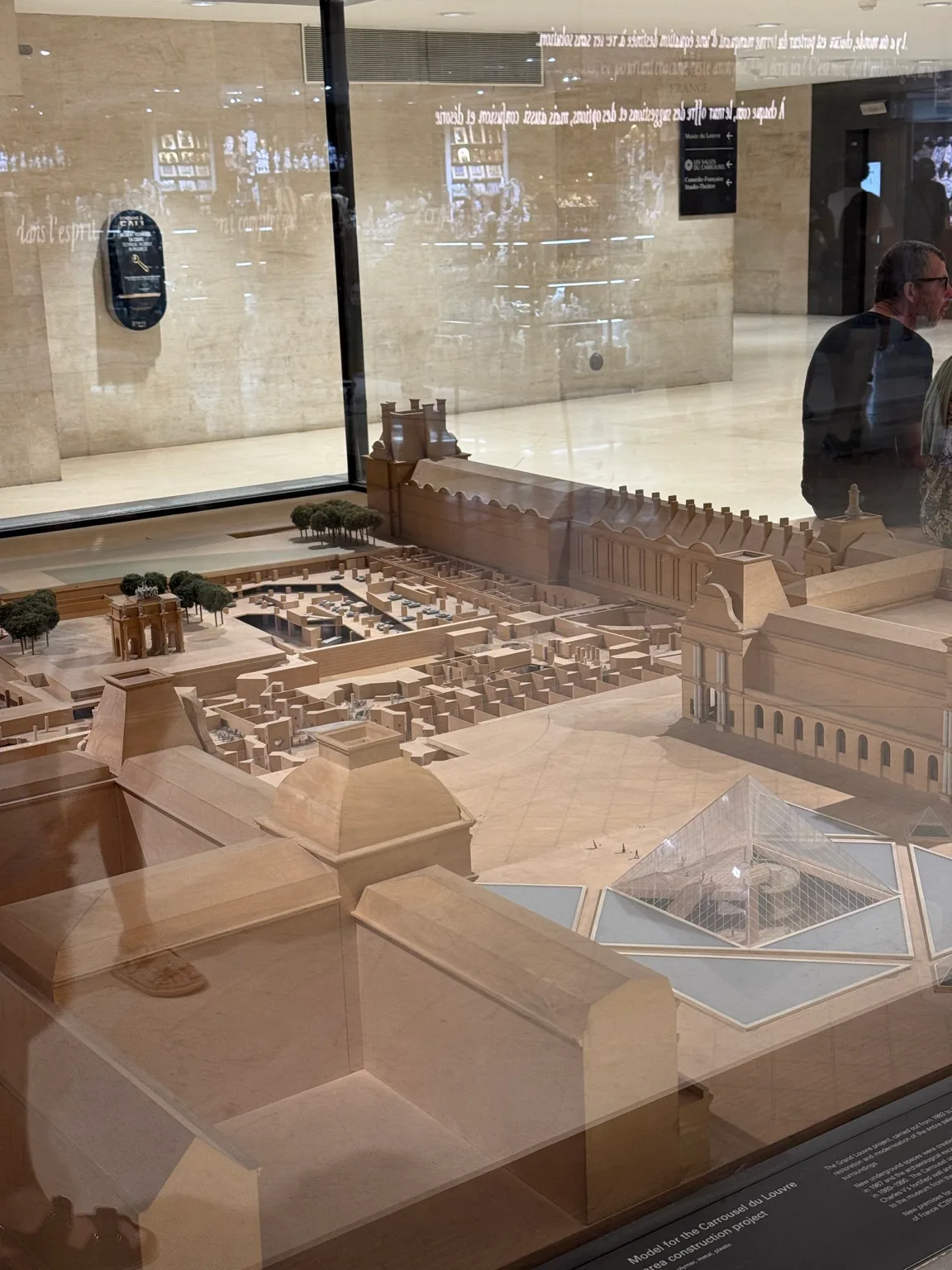
Photographs: Ibrahim Joharji / ArchUp archive, Louvre Museum, Paris. They illustrate museum space and do not document the performances discussed.