Who Captures the Value in a Chair


Follow a single chair from the forest to the living room and a quiet injustice reveals itself at every handover. The wood is cut, the parts are machined, the frame is assembled, the piece is finished, shipped, warehoused, displayed, explained and sold, and at each of these steps someone takes a share of the final price. The surprising and repeatedly documented fact, the one that should reorganize how anyone in this business thinks, is that the people who physically make the chair capture the smallest share of what it finally sells for, and the people who never touch it, the brand and above all the retailer, capture the largest. Furniture is what economists call a buyer driven chain, value is created in the factory but captured downstream by those who control design, price, channel and delivery. For manufacturers deciding where to compete, for suppliers deciding what to supply, for buyers deciding what to pay, and for the architects and interior designers who specify these objects by the thousand, understanding exactly where the value goes is not an academic matter. It is the whole economics of the design they draw and the rooms they furnish.
The price, divided
Start with the arithmetic, because it dissolves most of the confusion. The retail price of a piece of furniture is the sum of a short list of parts, the materials, the production wages, the factory margin, the logistics, the brand and design rents, the retailer’s operating cost and margin, and the taxes. The question of who prospers in this industry is simply the question of which of these blocks is largest and who controls it. The documented answer is stark. In one mid price shipment, a container worth twenty thousand dollars at wholesale sold for fifty thousand at retail, so that the retail leg alone roughly matched everything that came before it combined. A synthesis of the available data places materials at thirty five to forty five percent of the final price, factory labor anywhere from three to twenty five percent depending on the country, factory overhead and margin at fifteen to twenty five percent, freight and logistics at five to ten percent, brand and design at five to fifteen percent, and the retail operating cost and margin at twenty five to thirty five percent. The single most robust finding across every study is that the retail block is the largest and most defensible, and the assembly block the smallest. The chair is made in one place and monetized in another, and the distance between the two is where the money lives.
The most arresting number in the whole literature makes this concrete. In China around 2008, labor was between one and one and a half percent of the total cost of a piece of furniture. In Europe and the United States the same labor was fifteen to twenty percent, and in higher wage wood furniture it could reach forty percent. This asymmetry explains the entire geography of the industry, both why production fled west to east and why that flight later slowed. When labor is one percent of cost, moving a factory to cut wages buys almost nothing, and the advantage shifts back toward proximity, speed and design.
The great migration, and what it cost
The largest redistribution of income in the industry’s history happened between the mid nineteen nineties and roughly 2010, when production migrated from North America and Western Europe to China, Vietnam, Poland and Turkey. The engine was not productivity but the wage gap, and the gap was enormous. In the mid 2000s Chinese furniture wages ran between fifty and seventy five cents an hour against more than thirteen dollars in the United States, and under a euro an hour in China against nearly eighteen in Italy. By 2007 furniture labor in Western Europe cost around twenty two thousand euros per worker per year against five thousand one hundred in Eastern Europe. Capital followed the gap. Chinese furniture exports rose from three and a half billion dollars in 1999 to over sixteen billion in 2005, overtaking Italy to become the world’s largest exporter, and the advanced economies’ share of world exports fell from seventy percent to fifty three percent in six years.
The human cost sat at the origin. United States furniture employment fell from six hundred forty one thousand in 2000 to five hundred thirty six thousand in 2005, a sixteen percent loss in a period when housing permits actually rose, and the American South alone shed more than fifty three thousand net furniture jobs. Western Europe lost twelve percent of its furniture employment while Eastern Europe gained fifteen, and the eastward shift accounted for only about forty percent of the jobs destroyed in the west, which means relocation created fewer jobs than it erased, a net loss of industrial employment in the cities and regions that had built the trade. This is the backdrop against which every current decision about furniture projects is still being made, a chain whose map was redrawn in fifteen years and whose social consequences have not been undone.
The Italian exception
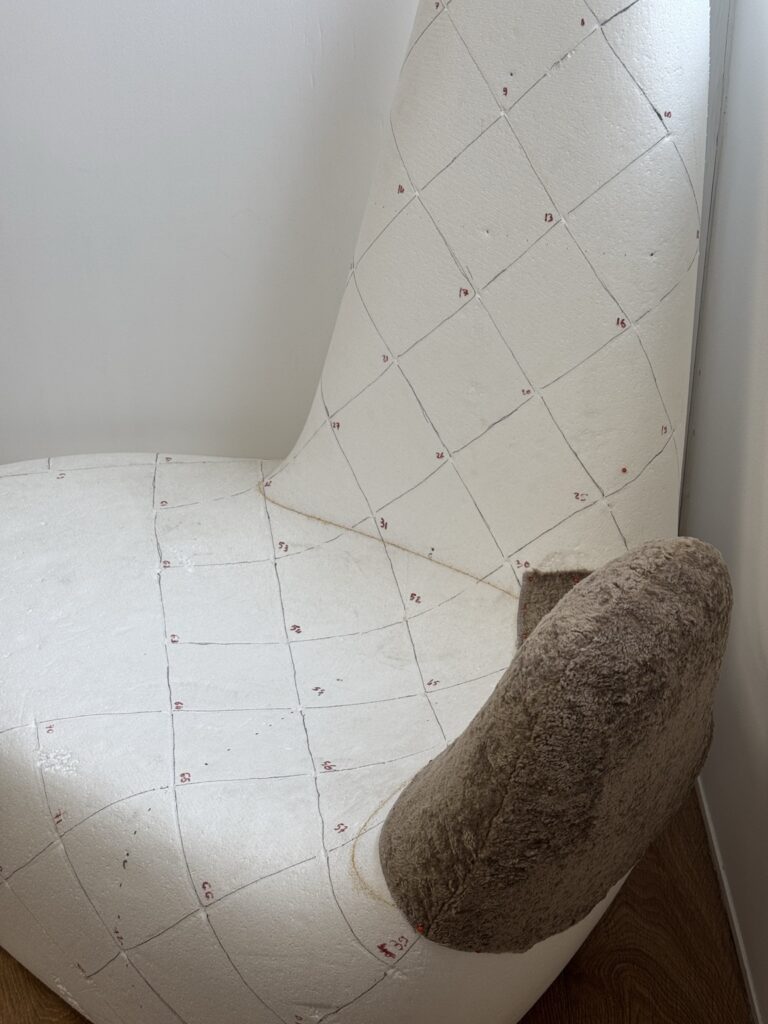
One country refused the pattern, and it is the most instructive case in the entire record. Italy lost only about one percent of its furniture employment across the same years that cost Western Europe twelve, and it did so not by being cheaper but by being different. Its industry is organized into districts of small firms, the famous chair district concentrating more than twelve hundred firms and ten thousand workers producing forty four million chairs a year, roughly a third of world chair output. These firms averaged under fifty employees yet produced more turnover per worker than the far larger German plants, and they survived the migration because they specialized in exactly what cannot be easily offshored, customized, short lead time, design intensive goods made close to the market. The decisive lesson is explicit in the data, that segment position and not technology decided location. The high end and the niche stayed home while the low price segments left, which tells every manufacturer and every designer where the defensible ground lies. The firm that controls design and keeps production close becomes what the research calls an innovative maker and holds its margin, while the firm that fully outsources becomes a mere furniture merchant competing only on logistics, which is the thinnest competition there is.
Even Italy shows the ceiling of the model, however, and honesty requires naming it. Its districts shrank after 2008, firm numbers fell, and many once independent makers now assemble as contract producers for the global flat pack giant. A district that stops importing new knowledge from universities and specialized services eventually locks into its own past, which is a warning that design leadership is not a permanent possession but a thing that must be continuously renewed through construction skill and fresh technique.
The three regimes, and where the craftsperson stands
It helps to see the industry as three distinct economies rather than one. There is the handmade workshop, where price is cost plus on labor hours, skill is high and capital low, and the maker holds the highest share of value added yet earns the lowest absolute wage, sitting, in the words of one study, at the bottom of the industry chain. There is mass production, where the price is a global cost floor plus a retail markup of roughly two and a half times wholesale, where labor has fallen to that astonishing one percent and automation keeps cutting it, and where margin per unit is thin and entirely dependent on volume. And there is the luxury or design branded regime, where the price is built from brand and design rents and positioning, where high skill artisans are retained for finishing while low skill work is outsourced, and where the margin is highest but devoured by marketing and retail experience.
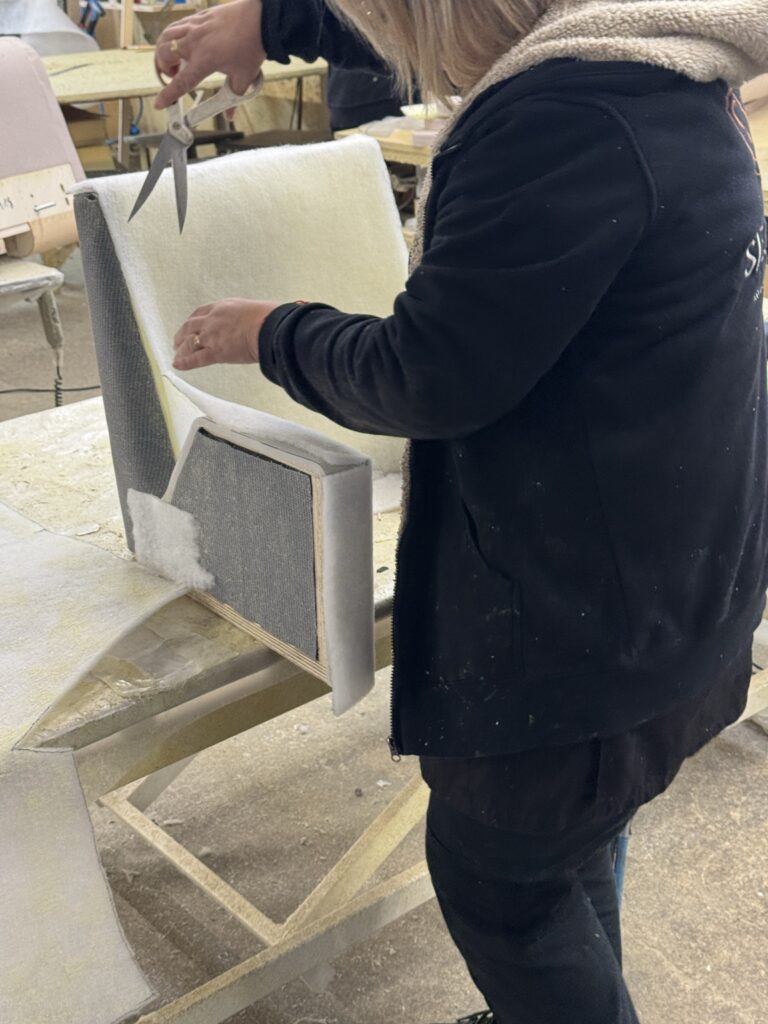
The position of the craftsperson in all this is the moral center of the subject, and the evidence is unsentimental. In the Indonesian rattan cluster, craftsmen take a buyer’s rough sketch and turn it into a finished prototype good enough to satisfy international buyers, genuine creative work, and they are paid roughly twice the unit price of the final product for that prototype, cannot speak to the buyers directly, and receive no design rights whatsoever. Researchers describe their acceptance of these terms as driven by powerlessness and the need for work rather than by any fair division of the value they create. This is the central fact the glossy language of heritage craft tends to obscure, that craft labor is systematically underpaid relative to the creative work it actually performs, because the craftsperson holds neither the brand nor the channel nor the intellectual property, and in this chain those three things are where value is captured.
What this means for architects and interior designers
For the specifier the implications are sharp and usable, because the architect and the interior designer sit at a rare point of leverage in the chain, the point where design intent meets purchasing decision. The first implication is that design is a genuine value driver but is captured by whoever controls the brand and the channel, which means a designer who specifies generic product hands the value to the retailer, while one who commissions directly from makers can redirect it. The second is that the custom and architectural segment is the safest ground in the entire industry. In the United States, the segments dominated by small firms making kitchen cabinets, custom millwork and architectural joinery lost far fewer jobs through the whole offshoring wave, because their import penetration sat below six percent, since bespoke work made to a specific room cannot be mass produced in a distant factory and shipped. Architectural millwork is, economically, the most defensible furniture there is, and the designer who specifies it is choosing the part of the chain that stayed human, which is one reason architecture has quietly become the last reliable patron of the furniture craftsperson.
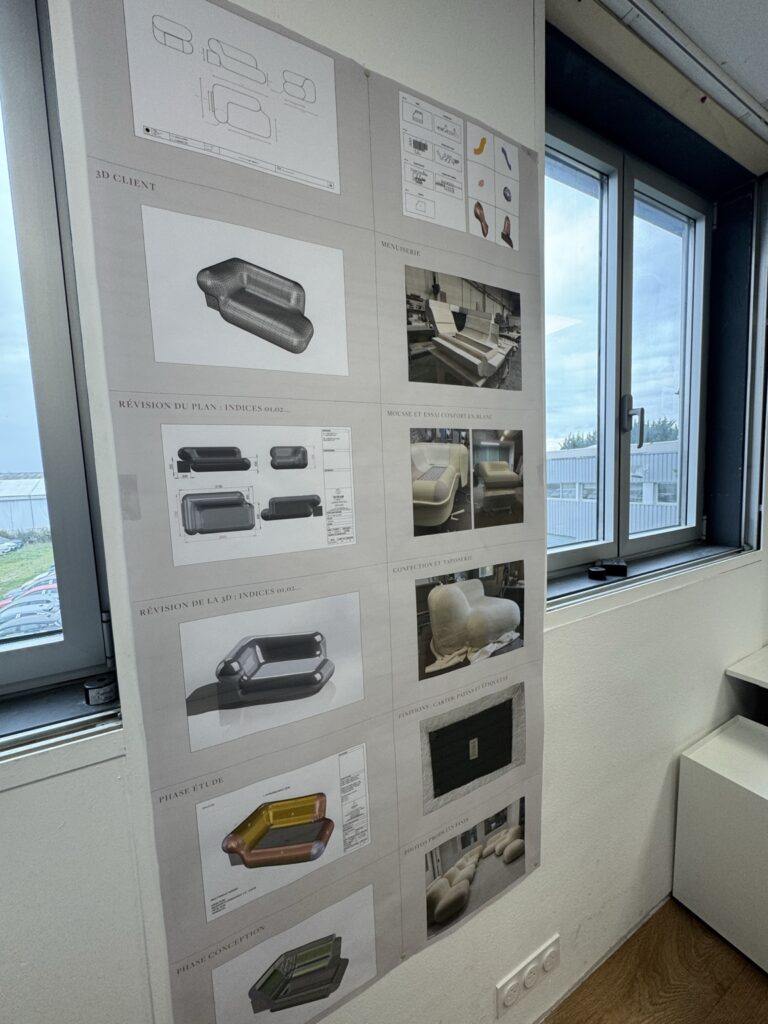
The third implication concerns the coming technology, and it cuts against the fear. Artificial intelligence has entered furniture as a design front end, with text to image tools generating concepts in about thirty seconds, but those outputs are not manufacturing ready and require a trained designer to remodel them into something a machine can actually cut. The effect is therefore to compress the ideation phase and push value toward design interpretation and engineering, not away from it, so the designer becomes the bottleneck and the margin holder while routine drafting and rendering are most exposed. On the factory floor, robots are real but uneven, concentrated in the repetitive and hazardous tasks of handling and sanding and spray painting and assembly, and in one survey only about thirty percent of furniture firms had adopted collaborative robots or AI at all, with the binding constraint being not the cost of the machines but the shortage of people skilled enough to run them. The most serious architectural research into digital fabrication points the same way, toward a new class of digital artisans who combine aesthetic judgment with parametric skill, people for whom the old monopoly of the craftsman, mastery of complex geometry, is reopened by machines whose cost no longer rises with complexity.
The outlook, honestly bounded
Looking toward the next decade, the evidence supports a few disciplined expectations rather than confident predictions, and the honest caveats matter as much as the forecasts. Design labor will gain relative to execution labor, because generative tools compress ideation while still demanding expert reworking. Wages in the producer countries will converge upward in relative terms, as already visible in Vietnam, eroding the old arbitrage that drove the migration in the first place. The missing middle will keep hollowing, with craft surviving at one end on provenance and repairability and luxury surviving at the other on brand, while mid market batch producers face the sharpest squeeze between low wage newcomers and design strong incumbents. And skill formation, not capital, will be the decisive lever, since the shortage of specialized people is the repeated constraint on every path forward.
The caveats are substantial and must be stated plainly, because a reference that hides its own limits misleads. Much of the wage data is stale, with the most cited comparisons dating from 2000 to 2008 and the harmonized European series ending in 2007. There is no published value added decomposition isolating furniture specifically, so the ladder of shares above is an explicitly labeled synthesis and not an official statistic. Craft remuneration is essentially unmeasured beyond single cluster observations, robot density in furniture is statistically invisible because the data do not separate it from wood products generally, and the productivity claims made for AI design tools remain unvalidated by any controlled study. Anyone using these numbers should use them as the best available shape of the truth, not as its final measurement.
What does not require more data is the structural conclusion, and it is the one worth carrying out of all of this. The value in furniture is captured by control, control of design, of brand, of the channel to the buyer, and it flows away from whoever merely executes. The design news will keep celebrating the launch of the season and the trade competitions will keep rewarding the most striking new piece, while the quieter economics underneath stays the same, that the maker at the bench earns least and the retailer who explains the piece earns most. For the manufacturer the lesson is to climb toward design and channel or be ground down in assembly. For the supplier it is that bargaining power, not efficiency alone, decides the share. For the buyer it is that most of the price pays for everything except the making. And for the architect and the interior designer it is that the act of specifying is also an act of distribution, a decision about who in this long chain will be paid, and that choosing the bespoke, the local, the directly commissioned is not only a choice about quality but a choice about justice. The genuine sustainability of furniture making as a human craft depends less on any machine than on whether the people who still know how to shape wood can be paid what their skill is worth, and that, more than any robot, is the decision the next decade will actually turn on.
ArchUp Research Lab — ArchUp
Sources
- Buciuni G, Corò G, Micelli S. Rethinking the role of manufacturing in global value chains: an international comparative study in the furniture industry. Industrial and Corporate Change, 2013.
- Kaplinsky R, Memedovic O, Morris ML, Readman J. The Global Wood Furniture Value Chain: What Prospects for Upgrading by Developing Countries. SSRN, 2003.
- Walcott SM. The Furniture Foothills and the Spatial Fix: Globalization in the Furniture Industry. Southeastern Geographer, 2011.
- Pham HST, Petersen B. The bargaining power, value capture, and export performance of Vietnamese manufacturers in global value chains. International Business Review, 2021.
- Drayse MH. Globalization and Regional Change in the U.S. Furniture Industry. Growth and Change, 2008.
- Osses T, Kies U, Schulte A. Regional shifts of employment growth in the European wood based panel and furniture industries. International Forestry Review, 2013.
- Nassimbeni G, Sartor M. The internationalization of local manufacturing systems: evidence from the Italian chair district. Production Planning and Control, 2005.
- Brunello A, Fabris G, Gasparetto A, Montanari A, Saccomanno N, Scalera L. A survey on recent trends in robotics and artificial intelligence in the furniture industry. Robotics and Computer Integrated Manufacturing, 2025.
- Fewella LN. A developed framework for utilizing holograms and artificial intelligence in customized furniture design. Ain Shams Engineering Journal, 2025.
- Dyba W, Stryjakiewicz T, De Marchi V. Knowledge sourcing and cluster life cycle: a comparative study of furniture clusters in Italy and Poland. European Planning Studies, 2019.
- Florio M, Peracchi F, Sckokai P. Market Organization and Propagation of Shocks: The Furniture Industry in Germany and Italy. Small Business Economics, 1998.
- Polyanskaya O, Shaitarova O, Tereshenko S, Tambi A, Vasilyeva L. Problems and prospects for the development of the furniture industry in Vietnam. IOP Conference Series: Earth and Environmental Science, 2020.
- Nemli G, Hızıroglu S, Serin H, Akyüz KC, Akyüz I, Toksoy D. A perspective from furniture and cabinet manufacturers in Turkey. Building and Environment, 2007.
- Robb DJ, Xie B, Arthanari T. Supply chain and operations practice and performance in Chinese furniture manufacturing. International Journal of Production Economics, 2008.
- Nguyen MPT, Nguyen DX, Tran VT. Labour share and international trade in the Vietnamese manufacturing industries. Post Communist Economies, 2025.
- Sumarno, Guntur, Sunarmi. Design redistribution: the role and involvement of craftsmen in the embodiment of design in the Indonesian rattan furniture industry. CoDesign, 2024.
- Eriksson D, Hilletofth P, Hilmola O. Creating value through wholesaler and retailer interface. Industrial Management and Data Systems, 2013.
- Leslie D, Reimer S. Fashioning furniture: restructuring the furniture commodity chain. Area, 2003.
- Aiello G, Donvito R, Grazzini L, et al. An international comparison of Made in Italy in the fashion, furniture and food sectors. Journal of Global Fashion Marketing, 2015.
- Chen Y, Siu KWM, Fois L, Li X. Design intervention strategies for revitalizing the traditional craft industry through distributed manufacturing. The Design Journal, 2024.
- Cresti L, Dosi G, Fagiolo G. Technological interdependencies and employment changes in European industries. Structural Change and Economic Dynamics, 2023.
- Rautray P, Eisenbart B. Additive Manufacturing: Enabling Digital Artisans. Proceedings of the Design Society, 2021.
- Bayar G. Turkey’s sectoral exports: A competitiveness approach. International Journal of Finance and Economics, 2020.