
Hayy Jameel, A Little Too Reserved


Ibrahim Fawakherji — ArchUp
I did not visit Hayy Jameel to test how quickly I could walk. I went to see art. There is a difference, and I want to hold on to it before anything else, because the problem I eventually ran into was not a problem of the art. I entered the building in Jeddah and went through the usual procedures. Admission was free, although I was asked to register my name, email address, and some basic personal information before entering. I have no particular objection to this; many cultural institutions follow the same procedure. But the small contradiction stayed with me. Even when we do not pay for a ticket, we still leave something of ourselves at the entrance.
Then I walked in. On the ground floor, an exhibition explored maps, navigation, borders, and movement. Upstairs, another addressed the Red Sea, migration, memory, trade, and pilgrimage. Two substantial subjects, very substantial in fact. Yet by the time I finished, I was facing a problem I had not anticipated. The ground floor could be crossed in roughly three minutes, and the upper floor in another two, provided one moved briskly without stopping to read the accompanying texts. Five minutes. This does not mean five minutes are enough to understand the works; some deserve far more, perhaps a second visit. What interested me was the discrepancy between the intellectual scale of the exhibitions and the speed with which one could physically pass through them. I left searching for a description that would neither diminish the art nor flatter the institution hosting it, and I eventually settled on two words. A beautiful exhibition, but one that seemed almost reluctant to make its presence felt.
The World Is Larger Than the Gallery
The first exhibition, Global Positioning System, is curated by Indranjan Banerjee and Lucas Morin. It opened on May 20, 2026, and runs until October 26, forming part of a larger project presented across Art Jameel’s centres in Jeddah and Dubai with more than forty artists across the two locations. This distinction matters before any judgment is made. I was not seeing forty artists assembled inside one building; I was seeing the Jeddah chapter of a geography that extends beyond it. The second exhibition, Red Wind, Coral Worlds, curated by Huda Tayob and Miriam Hillawi Abraham, reads the Red Sea through trade, migration, pilgrimage, memory, and the connections running between its shores.
What binds the two is not the shared address. Both are concerned with movement. The first asks how we know where we are. The second asks what remains of us when we leave a place. For me this is a promising beginning, because an exhibition does not need a beautiful subject so much as a question capable of staying with the visitor after they leave. But possessing a question is one thing, and turning it into an experience is another, and the distance between those two things is exactly what this review is about.
When the Map Becomes an Instrument of Power
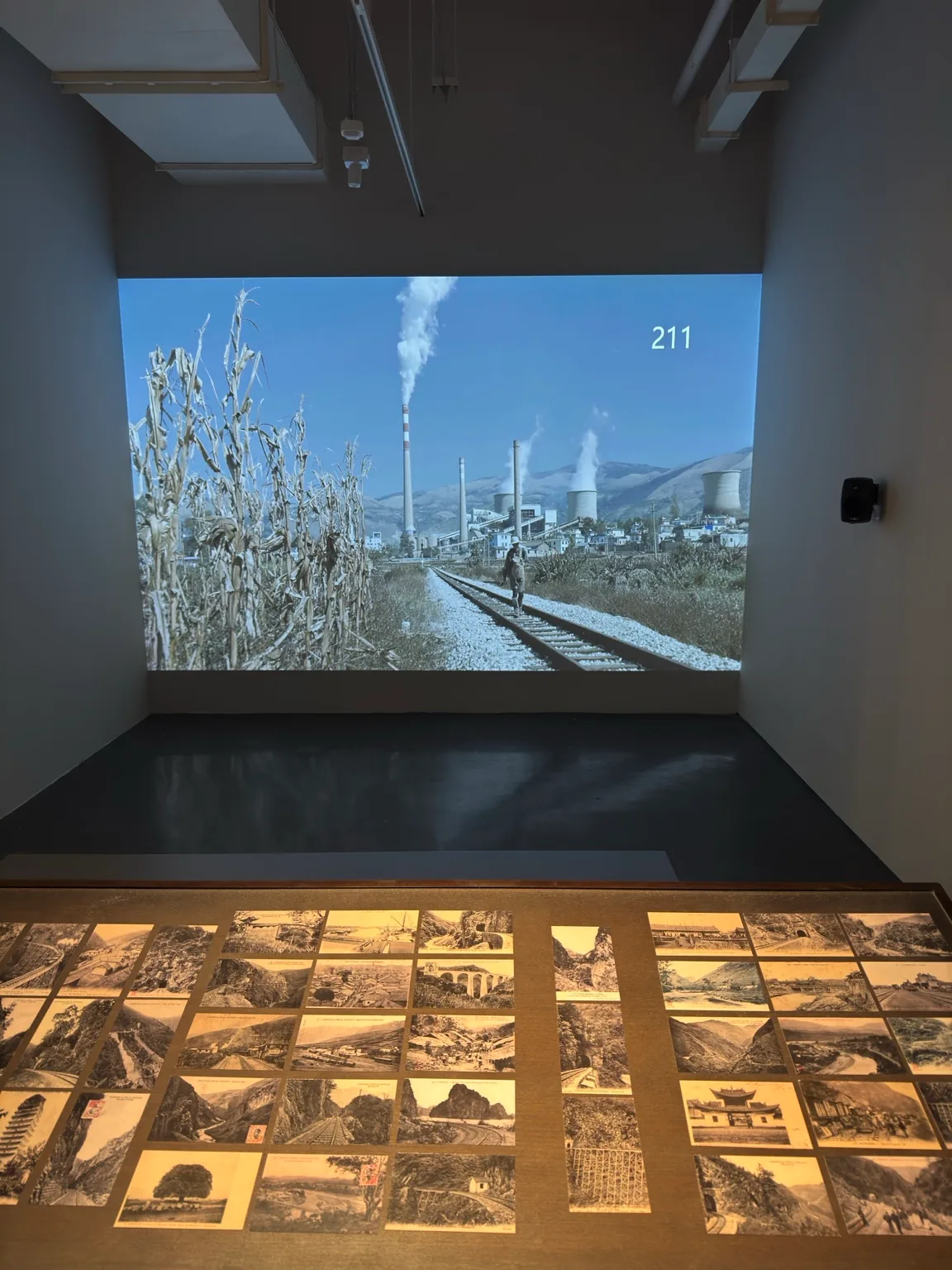
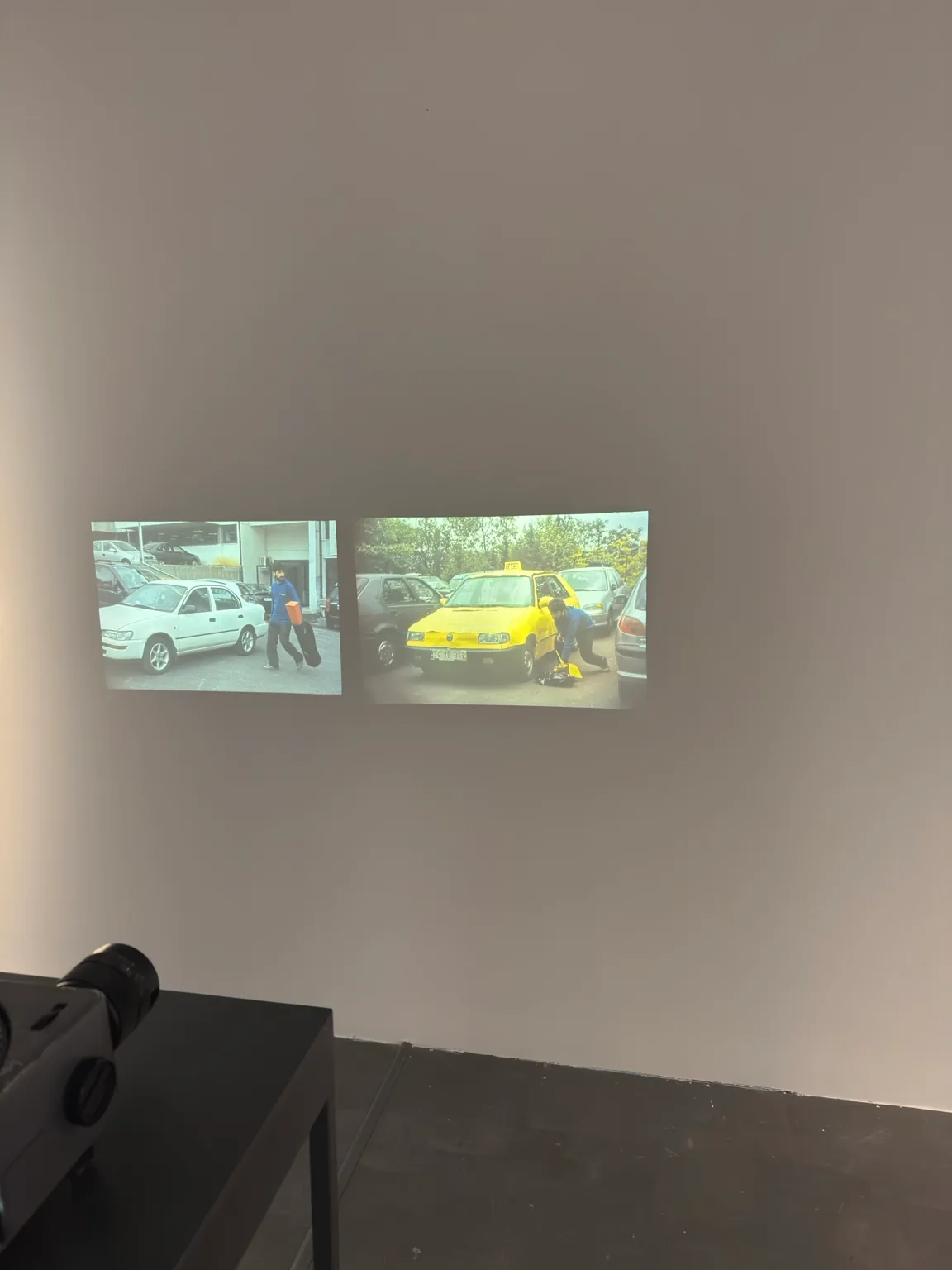
At the entrance to Global Positioning System, the introductory texts and graphics establish a strong presence through maps, dotted lines, names, and routes, with explanations moving between Arabic and English around a single proposition: the map is not an innocent instrument. We use maps to find our way and forget that somebody decided what should appear on them. Borders are not nature, roads are not geography alone, and the distance suggested by a navigation application is not necessarily the distance understood by someone who actually lives in that place.
This interests me as an architect, because urban planning itself depends on turning land into lines. One line establishes ownership, another defines a street, another separates a neighbourhood from its neighbour, and a further one decides whether a person is permitted to cross a particular space at all. The map does not merely describe the city; sometimes it sets the conditions under which life in that city becomes possible. Yet I wanted the exhibition to do more than convince me of this through writing. I wanted to see how the proposition could become an experience unavailable through simply reading an article on political geography. That was when I began looking more closely at the works themselves.
Bani Abidi: The Barrier That Temporarily Lost Its Authority
One of the works that held me was Bani Abidi’s Security Barriers (Z–M), 2019, a series of fourteen inkjet prints mounted on aluminium composite panels, drawing on the security barriers found throughout Karachi. These are the objects placed outside embassies, institutions, intersections, and protected buildings, reorganising movement according to considerations that pedestrians rarely have any authority to question. In the street, a barrier is not an artistic subject. It is an instruction: stop, do not cross, turn right.
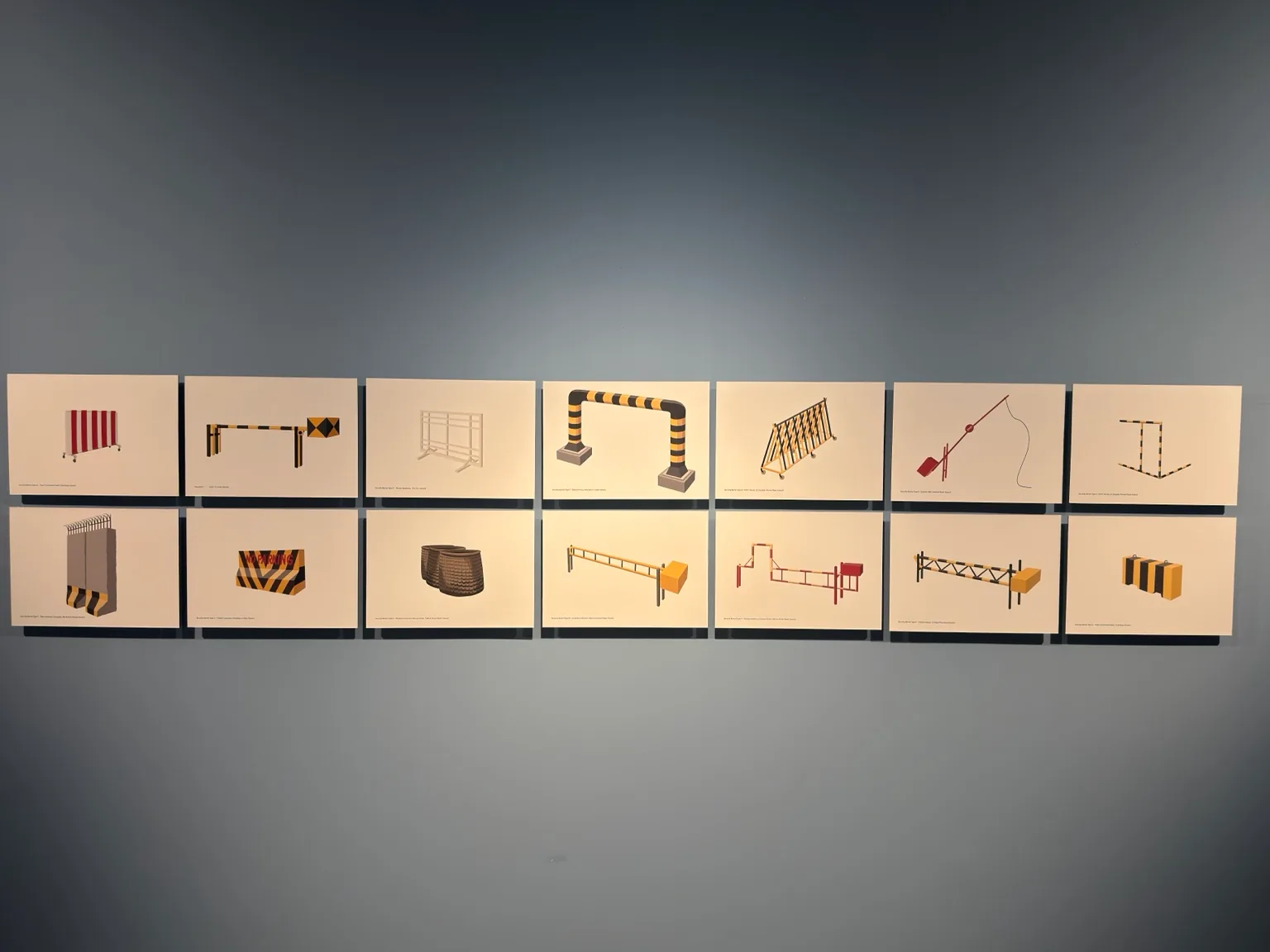
Abidi lifts these objects out of their surroundings and presents them against clean backgrounds, letting each barrier exist as an independent form, and something quietly reverses. An object designed to prevent people from approaching becomes something we are invited to approach. The work does not strip the authority from the real barrier, but it removes that authority from its image. I value this kind of art because it turns an ordinary urban element into a question about power without needing an enormous monument to carry the argument. More than that, it reminds us that some of the most influential objects in our cities are not the buildings we enjoy photographing. They are the smaller things that decide where we are allowed to walk.
The Road That Lost Its Direction
Another work is Tiger Tateishi’s Milano, Torino Super way, 1974, a silkscreen print of a highway whose straight lines and perspective should carry the eye toward a distant point. But the artist interferes with that expectation, setting two competing horizons and a sky that seems to belong to another world, so that the landscape grows less stable the longer the eye tries to organise it. The road is among the elements of modern infrastructure in which we place the most confidence; we enter it assuming it will deliver us somewhere specific. Tateishi treats it instead as an unreliable visual promise.
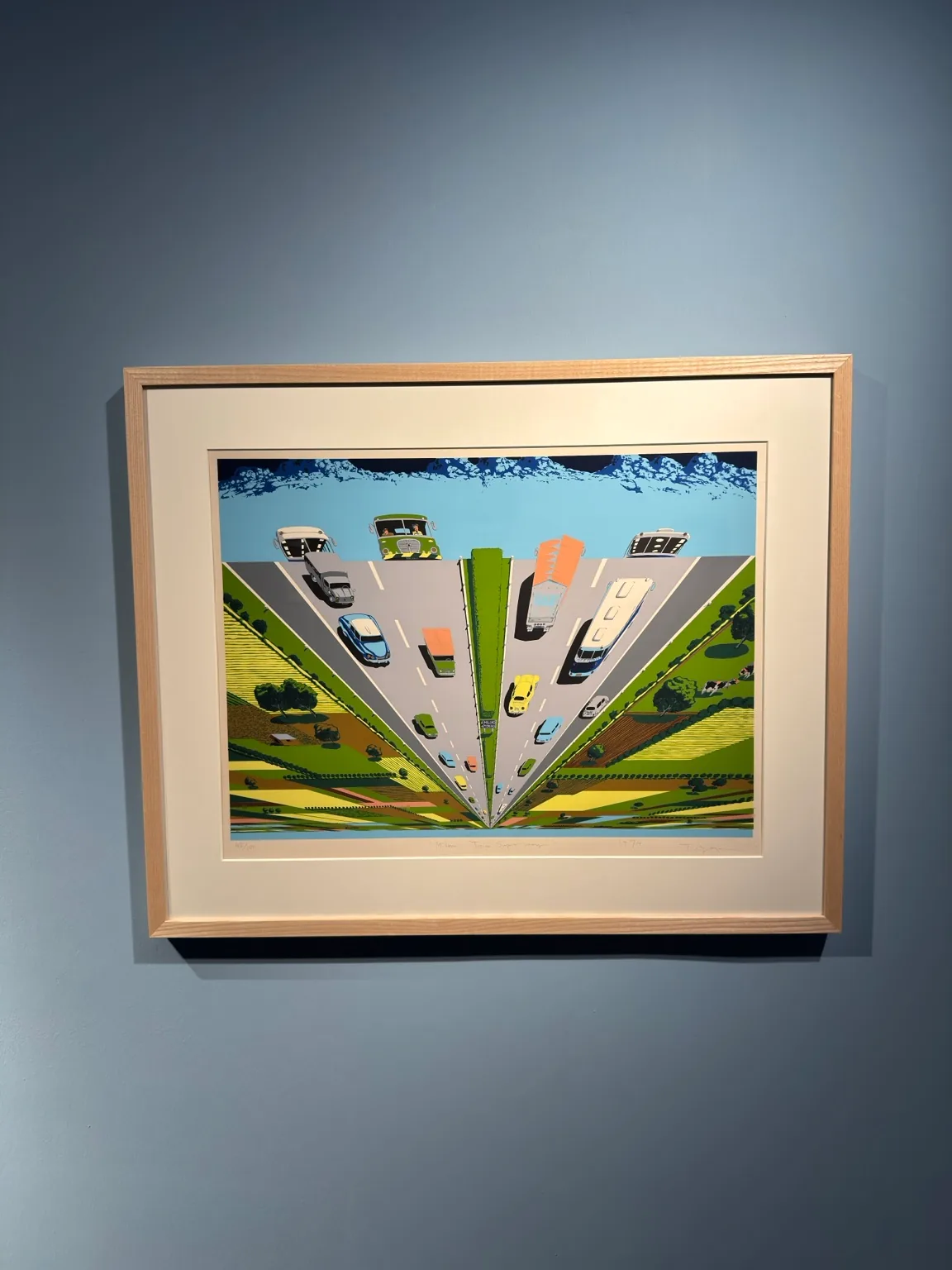
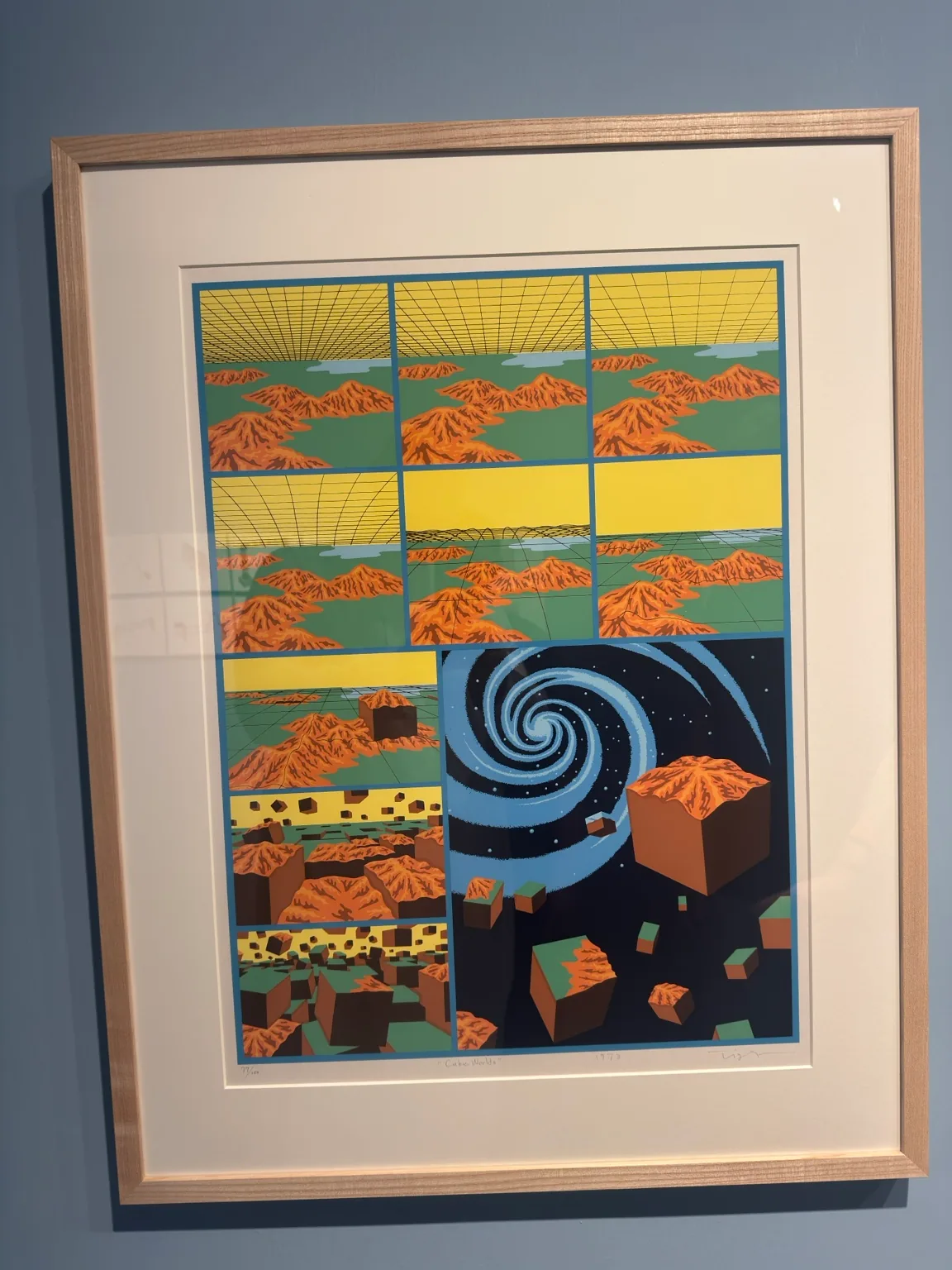
The work dates from 1974, long before people carried phones telling them when to turn and where to stop, yet its question feels entirely contemporary. We have become considerably better at reaching destinations. It is far less certain that we have become better at understanding the places we travel through. This is not simply a problem of GPS. It is a problem in our relationship with the city, dating back to the moment we began reducing it to routes.
Zarina: Nine Homes and Nine Lines of Memory
Then came the work closest to my own experience, Zarina’s Homes I Made / A Life in Nine Lines, 1997, a portfolio of nine etchings recalling the floor plans of homes the artist inhabited across her life, from Bangkok and Bonn to Paris, Tokyo, and New York. Several homes, one life. But Zarina does not reconstruct the rooms as they might have appeared in photographs. No furniture, no colour, no façades, only boundaries, thresholds, and lines. What was once an entire home becomes a plan reduced almost to a trace.
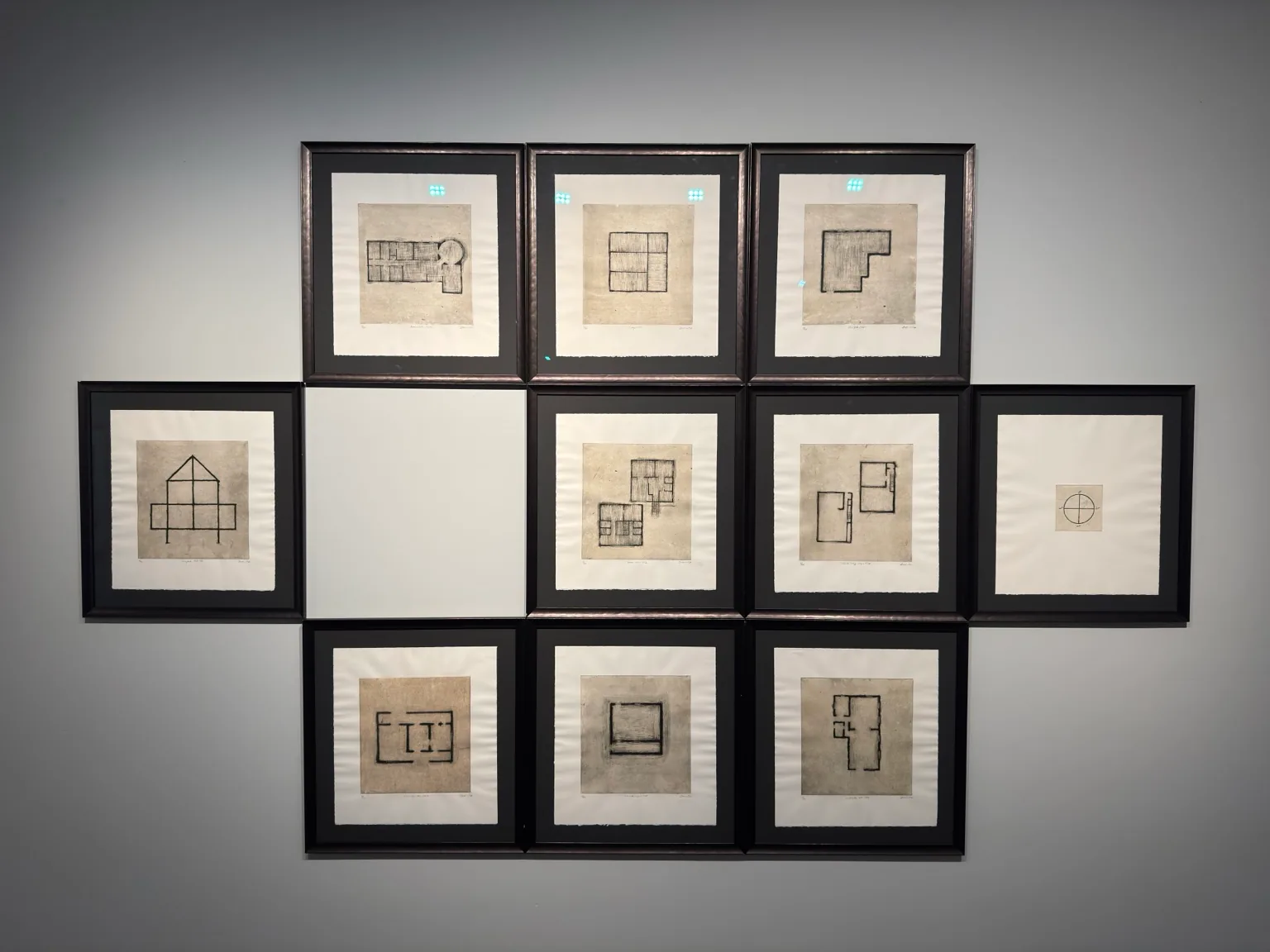
I stopped here because the idea was familiar. Earlier this year I returned to my archive of photographs taken in London and Paris in 2006, to compare those cities with their appearance twenty years later, believing at first that I was recovering buildings, then realising I was recovering the person who had once stood behind the camera. Zarina performs something similar through a far greater degree of abstraction. She does not reconstruct the home in order to return to it; she reconstructs its geometry because the home is no longer available in the way she once inhabited it. The work deepens when read alongside her biography, shaped by the Partition of India in 1947 and the movements that followed. In architecture we draw a plan because we intend to build. Here the plan is drawn because the act of inhabiting has already ended. The house is no longer a proposal for the future. It has become evidence of the past, and for me that was among the strongest ideas in either show.
Ana Amorim: When a Person Becomes Their Own Map
In Ana Amorim’s 2022 work documenting thirty-two days of embroidered mental maps, we move from the memory of domestic space to the recording of everyday movement, a routine spanning Italy, Spain, and Mexico from November 20 to December 21, hand-embroidered in mercerised cotton thread on cloth. Its significance runs past the embroidery itself. Since 1989 Amorim has been developing personal systems for recording time and movement, counting, recording, organising, and turning the passage of time into data and then into an artwork.


Standing before it, I thought about the technological distance we have travelled. In the late 1980s, recording the details of human movement could be an artistic project in its own right. Today a smartphone documents our journeys, routes, and stopping points the moment the tracking services are enabled, and the machine now performs part of what the artist once did by hand. But there is an essential difference. The artist decides what she wishes to preserve, while navigation systems collect information in order to function, with further uses depending on how each system is designed and what permissions have been granted. The first is an attempt to understand oneself. The second makes movement computationally legible. That is why a small piece of embroidery can raise a question larger than the device in my pocket. Does documenting my life help me understand it, or does it only make my life easier to measure?
Heba Y. Amin: When the Image Decides to Hide
In Heba Y. Amin’s Encaustic Drawings, 2025, maps, photographs, and surveillance imagery sit beneath layers of pigment and heated wax, translucent surfaces that conceal as much as they reveal, recalling the history of military camouflage in Egypt during the Second World War and the visual experiments meant to deceive aerial surveillance. Here the function of mapping reverses once more. In the earlier works the map tried to understand movement; here the image becomes an instrument for obstructing understanding, confusing the eye, preventing visibility from turning automatically into knowledge.
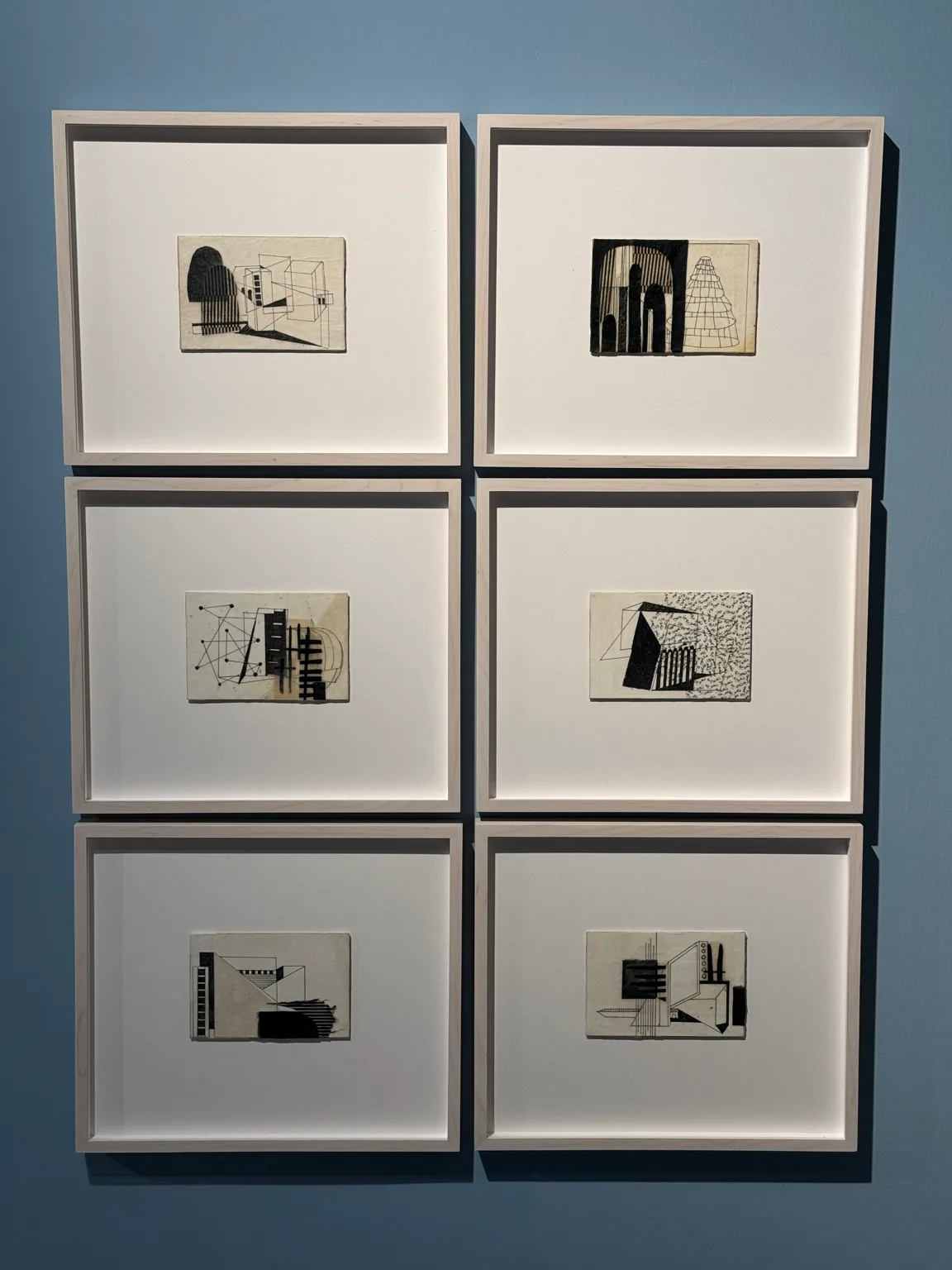
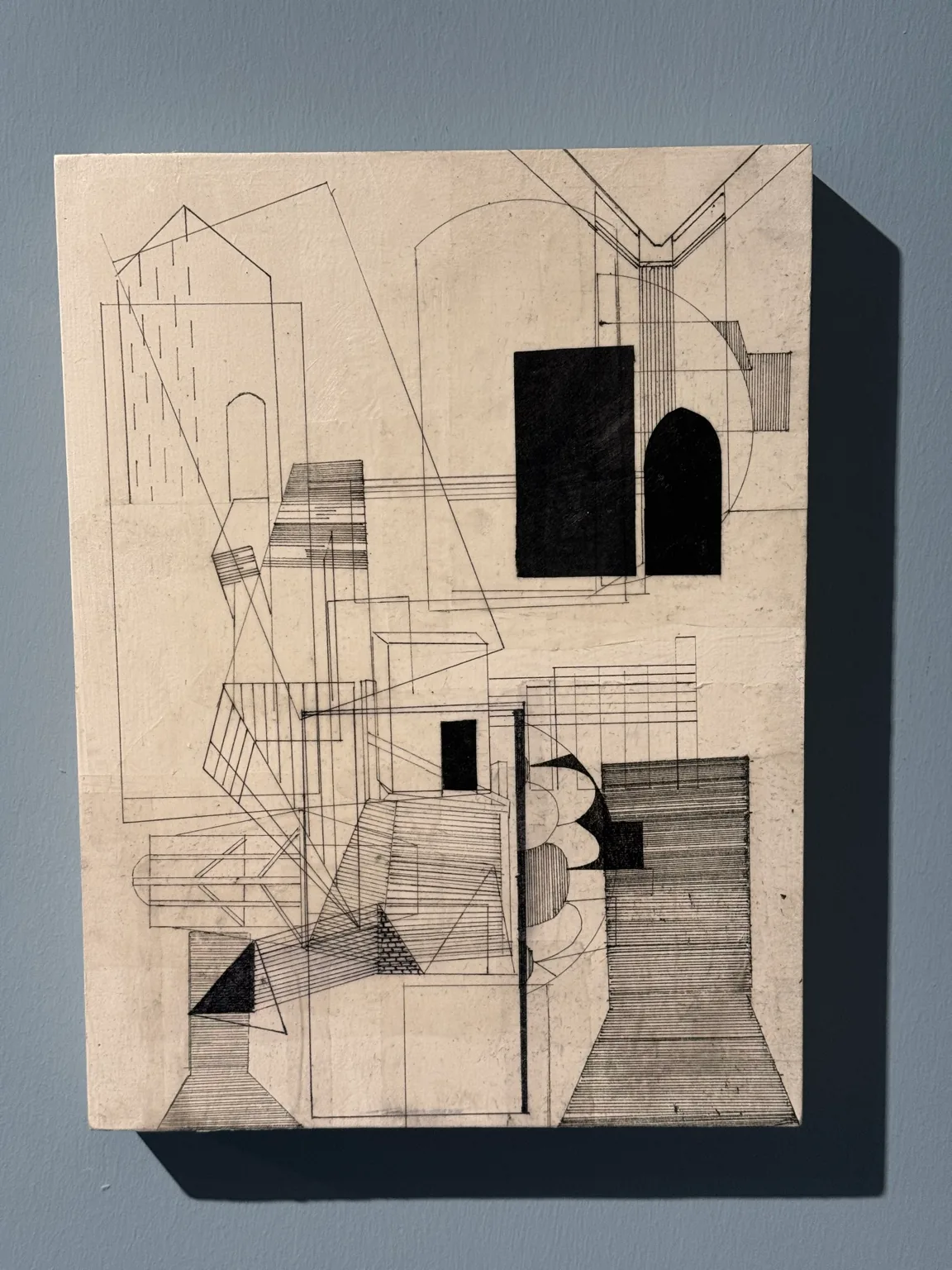
This interests me architecturally, because we live in an era when documenting space has become extraordinarily easy, through satellite images, cameras, drones, digital models, and surveillance systems. But the ease of looking does not necessarily grant the right to know everything. Transparency is not always an absolute virtue, and concealment is sometimes a form of protection. It is a complicated proposition, and Amin gives it an artistic form worth sitting with.
Then I Went Upstairs to the Red Sea
On the upper floor the subject changes, from positioning systems to the Red Sea, from overland routes to maritime connections, from technology to memories extending across centuries. Red Wind, Coral Worlds presents the Red Sea not as a body of water separating landmasses but as a network connecting people, through trade, pilgrimage, migration, displacement, coastal cities, and the objects travellers carried with them or left behind. For a city such as Jeddah this is an especially fitting subject, since the city did not develop independently of the sea.
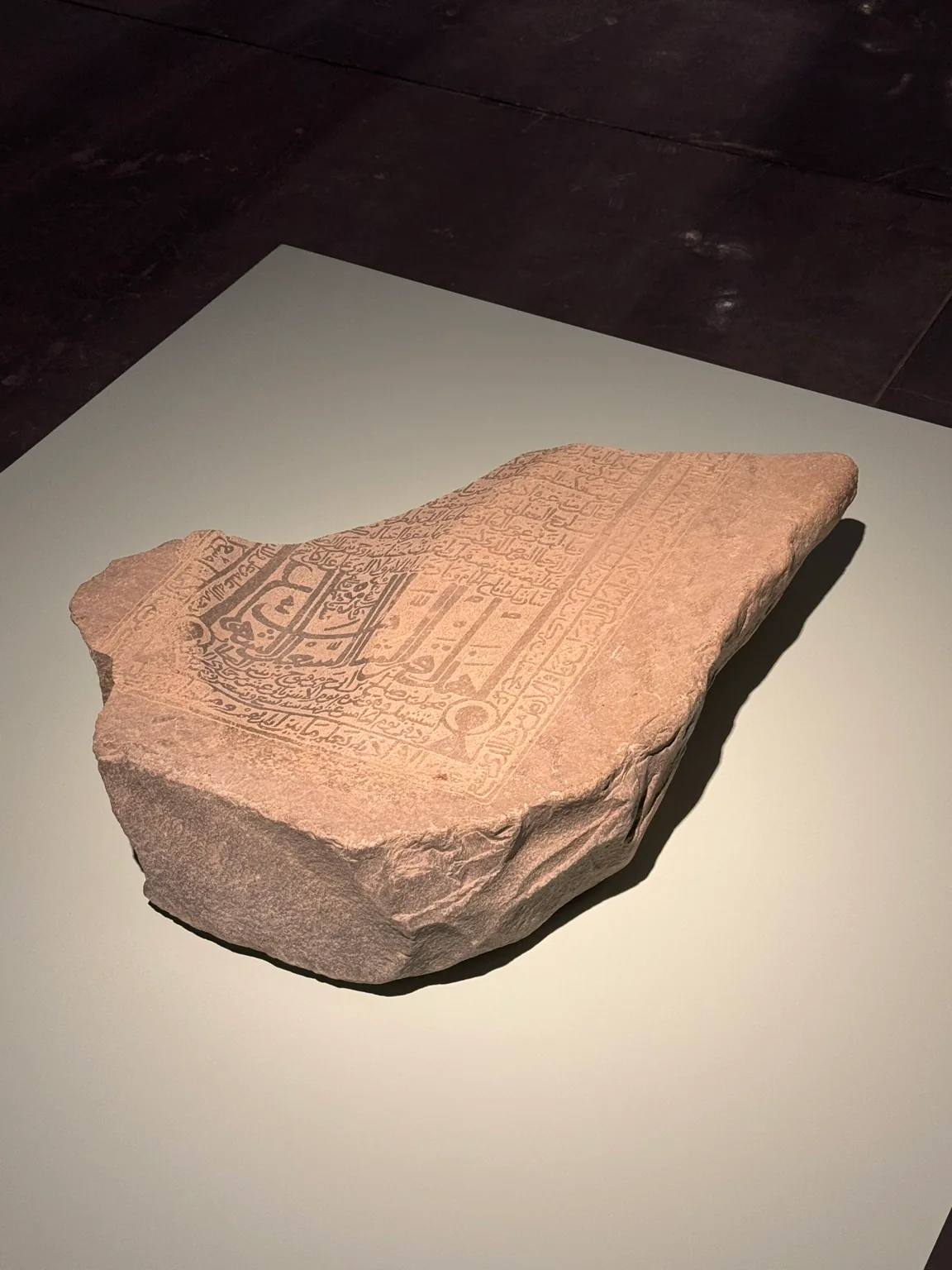
What interested me most here was the presence of historical artefacts alongside the contemporary work. Among them was a pale basalt tombstone carrying thirteen lines of raised Thuluth script, placed by its label within a broad period between the fifth and ninth centuries AH, roughly the eleventh through late fifteenth centuries CE, and attributed to Muhammad bin Salih bin Abi Harami Futuh of the Bani al-Attar tribe. A small object, yet one carrying material, language, a name, death, and several centuries at once. This is different from a map. A map tells you where you might go; a tombstone tells you that somebody was once here, lived, died, and left a name. At that moment geography becomes less abstract. A city is not made of roads and coastlines alone. It is also made of people who lived there, died there, and left behind something that lets us read a fragment of their existence.
The Kaaba on a Rosewater Sprinkler
Another object I photographed was a silver rosewater sprinkler bearing an image of the Kaaba, dated to somewhere between the 1950s and the 1970s. It is small, easy to pass over among larger exhibits, but it holds an interesting relationship with the exhibition’s central subject: the image of a fixed place carried by a movable object. The Kaaba does not travel, yet its image has travelled through the things people used, preserved, exchanged, and carried with them.

Sometimes these smaller objects interest me more than monumental artefacts, because history does not reside only in great buildings. It also resides in what we carry, in a rosewater sprinkler, a piece of silver, a box, a document, or a stone bearing someone’s name. Inside an exhibition about movement across the Red Sea, such objects become material evidence that distance transports more than human bodies. It also transports images, symbols, and memories.
Where Does the Criticism Begin?
At this point a fair reader could stop me. If the works carry so many ideas, why describe the exhibition as reserved, almost hesitant? The answer has little to do with the artists’ merit, the importance of the subject, or even the number of works. What troubled me was the difference between the scale of the curatorial proposition and the scale of the spatial experience. The two shows address continents, history, borders, and oceans, yet during my visit the distance between those ideas and their physical presentation felt wider than I had hoped. I read texts holding expansive propositions, I met works worthy of attention, but I did not often feel that their arrangement, or the space itself, built an experience that developed with the same intensity as the writing. In other words, at times the text felt fuller than the room. This is a question of exhibition-making, not a verdict against the artists.
I should be clear about what I am not saying. I do not believe the best exhibition is the one that demands two hours, nor that a show you can cross in five minutes is necessarily worth less than one that takes a day. A single object can justify a visit, and one may stand longer before a small work than before an installation filling a gallery. But there is a difference between stopping because a work compels you and persuading yourself to stay in order to read its background. Conceptual art needs texts; sometimes a work cannot be read without its political or historical context. Yet the text should open the work, not turn the work into an appendix to the text. This may be among the hardest responsibilities a curator carries. How do you make knowledge available without turning the visit into a reading examination? A visitor should not be required to have read every reference before entering, and an exhibition should not punish them for arriving without that preparation.
We Do Not Need Another Louvre
I do not want this read as a demand that Hayy Jameel become a museum the size of the Louvre; that would be an unfair criticism. Institutions differ in budget, collection, and the function of their spaces, and Hayy Jameel is not two galleries but a cultural complex holding other activities. What I am reviewing is specifically my experience of the two exhibitions at Hayy Arts on this visit. I have no information about their budgets, visitor figures, or production costs, so I will not invent a judgment about their institutional success. But there is something I can evaluate, which is what happened to me as a visitor. I entered two exhibitions dealing with serious subjects, works from diverse backgrounds, and artists from different regions, and I found material worth reading. I also found the physical experience lighter than I expected.
The presentation does not need to become louder in order to become stronger. Perhaps the works need a clearer relationship with one another. Perhaps the space could take a more active part in the argument. Perhaps certain works need greater presence, so they guide the experience rather than remain individual stops along a route. This is not a call for more visual effects, or for filling every wall, or for turning an exhibition into entertainment. It is a wish that the exhibition itself carry the strength of the ideas it presents.
Admission Was Free. Attention Was Not.
And so I return to the entrance. Admission was free, which matters, because removing the financial barrier lets someone meet art without first calculating the price of a ticket. But there is another resource, no less valuable, which is attention. I gave the exhibition part of my day, read some of its texts, photographed works and labels, then returned to those photographs to reconsider what I had seen. That alone shows the experience was not without value, and certain ideas stayed with me after I left, particularly those of Zarina, Bani Abidi, and Heba Y. Amin. The paradox is that a large portion of my real engagement with the exhibition happened after I had left it, when I began reading the photographs and labels again. Is that the exhibition’s strength, or did it fail to give me, inside its galleries, the time and visual sequence those ideas needed to develop before I departed? Both explanations may hold some truth, but the distance between them deserves examination.
I do not want to end with a harsh verdict, because that would be easier than the reading I have tried to make here. There is clear effort in the choice of subjects, there are works worthy of attention, and the meeting of contemporary artists with historical material opens worthwhile room for interpretation. But I do not believe an exhibition earns immunity from criticism simply because it belongs to a serious cultural programme. The seriousness of an institution does not mean every exhibition it stages reaches the same level, and criticism is not the opposite of appreciation. An institution with cultural space, an artistic programme, and both local and international audiences should be able to accept a simple question. Did the exhibition give its ideas the space they deserved? During my visit, I was not entirely convinced, and that is why I left with the impression of something beautiful but held back, not because the art was weak, but because its presentation sometimes seemed reluctant to occupy the space with the same confidence as the ideas it carried.
Before visiting, I expected to encounter works about maps, the sea, and memory, and I did. But I left thinking about something else, about the amount of time an exhibition can persuade a visitor to surrender. At the Louvre, the density of the works sometimes left me searching for somewhere to rest my eyes. At Hayy Jameel the opposite happened, and I found myself searching for another reason to stay. That is not a wish for more works to raise the count. It is a wish for a stronger relationship between the work, the space, and time. Because an exhibition, like a building, is not measured only by what it contains. It is measured by what it makes you do while you are inside it. I left Hayy Jameel carrying photographs, names, and worthwhile ideas, but without the feeling that only an experience that takes more of your day than you intended to give it can leave behind. Perhaps that is my central observation. The exhibition had a great deal to say about movement, yet it never quite managed to slow mine down. And that, to me, is what it means for an exhibition to be beautiful, yet a little too reserved.
Ibrahim Fawakherji — ArchUp


