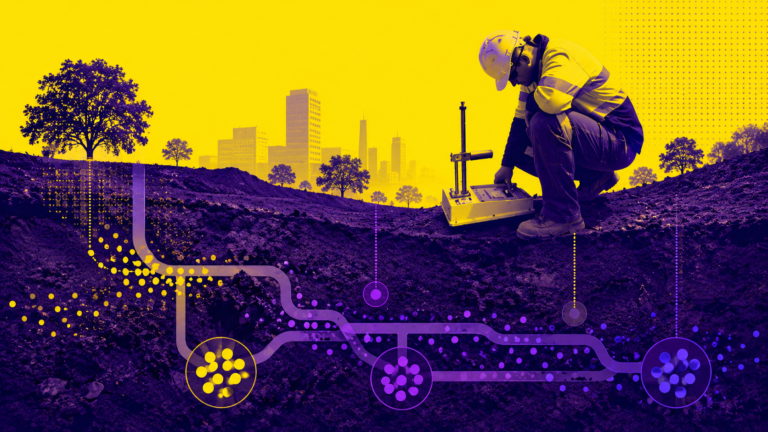
The City Beneath the City


How PET Bottle Collection Exposes the Failures of Urban Planning
On an ordinary morning in Zagreb, an elderly woman approaches a waste bin beside the municipal stadium. She is not searching for food, nor does she reach for anything discarded at random. She reaches only for the clear plastic bottles — water and juice containers left behind by spectators. She places them in a clean bag, counts them silently, and moves on. She does not eat from the trash; she works within it. The bin, in this moment, becomes an informal space. The distance between those two descriptions is narrower than most planners care to admit.
What research emerging from Europe, Africa, Asia, and Latin America has revealed in recent years is that the practice of collecting PET bottles from waste streams — and the income derived from recycling them — is no longer confined to any single socioeconomic group. It has quietly extended into both the middle and lower classes simultaneously, becoming a complex socioeconomic phenomenon that intersects with everything urban planning believes about itself — and exposes what it does not.
The Space Nobody Designed
Urban planning operates from a foundational assumption: that the city is a formal entity with predictable, governable functions. Retail at ground level, offices in central zones, industry at the periphery, housing in designated neighborhoods. What disappears from this picture is a parallel city, operating within the very same spaces the planner has drawn for entirely different purposes — the sidewalk in front of a building, the corner behind the market, the residual space beneath a bridge.
These spaces were not neglected by accident; they were born neglected, because conventional planning tools carry no classification for them. They are not parks, not roads, not functional units. Yet by necessity, they have become the stage on which an entire invisible economy performs. When recent research demonstrates that the necessity-driven circular economy — a concept developed by Korsunova and colleagues in a 2022 study published in Global Environmental Change — extends well beyond the poor to reach middle-income households under mounting economic pressure, the question directed at architects and planners shifts entirely. It is no longer about who collects the bottles. It is about where they collect them, and what the absence of infrastructure designed to receive that activity actually means.
Cities That Built Their Economies on Neglect
No academic report is required to observe this phenomenon. Standing at a busy intersection in Cairo, Karachi, or Lagos is sufficient — the cracked sidewalks and rear facades of tower blocks contain entire systems of storage, sorting, sale, and negotiation, all organized around materials the formal city classifies as waste.
What Iyer and Kashyap documented in a study published in the Journal of Consumer Behaviour on the relationship between social class and recycling behavior reveals a deep paradox: lower-income groups demonstrate significantly more favorable attitudes toward environmental action and recycling, and are more likely to act on those attitudes, than middle- or upper-income respondents. This dismantles the prevailing cultural assumption that environmental awareness is a luxury affordable only to the affluent. The reason is direct: when the incentive is explicitly economic — as in the bottle deposit-return systems operating in Croatia and elsewhere — class distinctions dissolve, and bottle collection becomes socially acceptable behavior across income brackets.
What has not dissolved is the spatial condition that receives this economy. It remains a void in the literal sense — no design, no lighting, no shelter, no institutional recognition
Why Urban Beautification Projects Fail
Across Arab and African capitals, municipal authorities and consulting firms regularly launch ambitious projects to improve the urban landscape. Walls are painted, trees planted, unlicensed kiosks removed, and street vendors cleared from sidewalks. Within months, everything returns to its prior state. Planners describe this as a cultural failure; others attribute it to a lack of public awareness. A more precise diagnosis is available.
What Thomas and Sharp documented in their comprehensive study of recycling normalization in the United Kingdom is that behavior does not change when people are offered only information and directives; it changes when the appropriate infrastructure is present to receive it. When kerbside sorting bins were introduced across the United Kingdom, household participation in paper recycling reached approximately 90 percent. The behavior was already latent; the intention existed; what was absent was the designed space to accommodate it. Once that space appeared, the behavior shifted within a few years from marginal to standard.
Urban beautification projects fail because they treat informal space as an intrusion to be eliminated rather than a genuine component of urban function to be absorbed and organized. They design the appearance without designing the system.
Toward an Infrastructure for the Informal Econom
If the problem of informal space is the absence of design, the answer is not eradication but recognition — acknowledging it as a permanent urban condition that warrants spaces designed specifically for it. This is what might be termed an infrastructure for the informal economy, and it is less a utopian proposition than a functional necessity.
At minimum, such infrastructure comprises designated collection points within residential neighborhoods — not unlike the recycling drop-off centers common across northern Europe — with adequate lighting and space for primary sorting operations, clear circulation routes for collection carts, and designated exchange and resale areas integrated into urban master plans rather than pushed behind building facades. This means, at its core, that every new planning project should carry a standard question: where will informal workers collect their materials, where will they sort them, and where will those materials go next?
Sonia Dias, whose 2025 paper in Nature Human Behaviour addresses the concealed role of waste pickers in climate resilience, estimates that forty million people work in this informal sector globally, collectively responsible for collecting 58 percent of all recycled plastic worldwide. These workers are not outside the system — they are the system. Their absence from urban planning maps is not a statistical oversight; it is a policy position that disregards the function they perform.
The Asian Model: When the System Enters the Built Fabric
Several countries have chosen to treat this equation with architectural seriousness. Japan and South Korea represent not merely a model of recycling performance but of integrating the recycling system into the built fabric of the city itself. In Tokyo and Seoul, waste is not placed arbitrarily; precisely designated areas in front of every building receive specific material types on specific collection days. Within residential towers, lower-floor spaces are commonly allocated for sorting operations — as though the elevator lobby requires a functional counterpart at the building’s service threshold.
More significant than the technical details is the reason this culture has held: it was not demanded of residents before it was built for them. Research by Yang and Chen, published in the IOP Conference Series on Materials Science and Engineering, examining how class identification and environmental values shape waste classification behavior in China, indicates that increases in service quality and public recognition directly raise the likelihood of sorting participation. Recognition before obligation — that is the spatial principle at work.
In the Arab context, early acknowledgment of this approach is detectable in some large-scale Gulf projects, but residential buildings across Cairo, Baghdad, Casablanca, and Amman continue to generate informal space at rates that exceed any capacity to absorb it. Informal settlements do not arise solely because their inhabitants are poor; they arise because planning has left no designed place for what those inhabitants actually do.
The Real City and the Drawn City
When research by Dagadu, Sagoe, and Oteng-Ababio, published in the Journal of Urban Affairs, reveals that middle-income communities in Accra, Ghana, practice waste segregation at higher rates than high-income communities — and that itinerant buyers form the economic link that completes the cycle — that finding should not be read as social data alone. It should be read as an urban diagnosis: the real city operates in ways that diverge fundamentally from the city drawn on planning maps.
The real city accommodates the informal economy because it has no alternative. The drawn city continues to ignore it because it lacks the tools to absorb it. The gap between the two is, in the end, an architectural void — undesigned, yet occupied every day.
The cities that function effectively in the twenty-first century will not necessarily be the most attractive or the most technologically instrumented. They will be the ones that stop designing facades over economies they cannot see, and begin with a more honest question: who actually lives in this city, what do they actually do in it, and where does the plan leave room for that?
✦ ArchUp Editorial Insight
The normalization of PET bottle collection across socioeconomic classes is not, at its structural core, a story about recycling behavior or environmental consciousness — it is a story about what urban planning has consistently refused to price. Every city produces informal space not through negligence but through a procurement logic that treats the informal economy as an externality rather than a constituent function: the planner who draws the zoning map exits the project before the waste picker arrives to work in its residual voids, and the resident who sorts materials in a stairwell absorbs a spatial cost that no development brief ever allocated a square meter to resolve. What the cross-national evidence assembled here reveals — from Zagreb’s deposit-return collectors to Accra’s itinerant buyers completing the segregation cycle that municipal infrastructure began — is that the informal waste economy does not occupy the gaps in the planned city by accident; it occupies precisely the spaces that formal planning designated as transition, threshold, or leftover, spaces whose function was never drawn because their users were never seated at the table where the drawing happened. This is the liability transfer pattern operating at urban scale: the developer who builds without sorting infrastructure exits at handover, the municipality that approves the master plan without informal circulation routes exits at ribbon-cutting, and the forty million waste pickers whom Dias identifies as responsible for 58 percent of globally recycled plastic absorb — in their bodies, their stigma, and their unlit working conditions — the compounded cost of every spatial decision that preceded their arrival. The Asian models described here succeeded not because their citizens are culturally predisposed to compliance, but because their procurement sequences reversed the standard order: infrastructure was built before behavior was demanded, which is precisely the inversion that most planning systems — operating under capital timelines that reward speed of approval over depth of program — are structurally incapable of executing, a condition this archive examined from a different angle in The Hidden Cost of Breathing, where the decision to minimize ventilation capital expenditure transferred its full consequence onto the lungs of occupants who had no voice in the specification meeting.
References
Korsunova, A., Halme, M., Kourula, A., Levänen, J., and Lima-Toivanen, M. “Necessity-Driven Circular Economy in Low-Income Contexts: How Informal Sector Practices Retain Value for Circularity.” Global Environmental Change, 2022.
Rosa, E., and Cirelli, C. “Scavenging: Between Precariousness, Marginality and Access to the City — The Case of Roma People in Turin and Marseille.” Environment and Planning A: Economy and Space, 2018.
Thomas, C., and Sharp, V. “Understanding the Normalisation of Recycling Behaviour and Its Implications for Other Pro-Environmental Behaviours: A Review of Social Norms and Recycling.” Resources, Conservation and Recycling, 2013.
Ehgartner, U., and Holmes, H. “Changing Understandings of Waste Reduction and Avoidance in Moralities of Thrift: A Comparison of Mass Observers’ Narratives Three Decades Apart.” Geoforum, 2022.
Iyer, E. S., and Kashyap, R. K. “Consumer Recycling: Role of Incentives, Information, and Social Class.” Journal of Consumer Behaviour, 2007.
Yang, H., and Chen, J. “The Influence Mechanism of Class Identification and Environmental Values on Garbage Classification Behavior.” IOP Conference Series: Materials Science and Engineering, 2019.
Shah, P., and Yang, J. Z. “When Virtue Is Its Own Reward: How Norms Influence Consumers’ Willingness to Recycle and Reuse.” Environmental Development, 2023.
Dagadu, P. K., Sagoe, G., and Oteng-Ababio, M. “Normative Influence on Intention to Segregate Household Waste: Reflections from a Low-Middle Income City in Urban Africa.” Journal of Urban Affairs, 2024.
Dias, S. M. “The Hidden Role of Waste Pickers in Climate Resilience.” Nature Human Behaviour, 2025.