Inverted pyramid design of mushrooms in Shenzhen

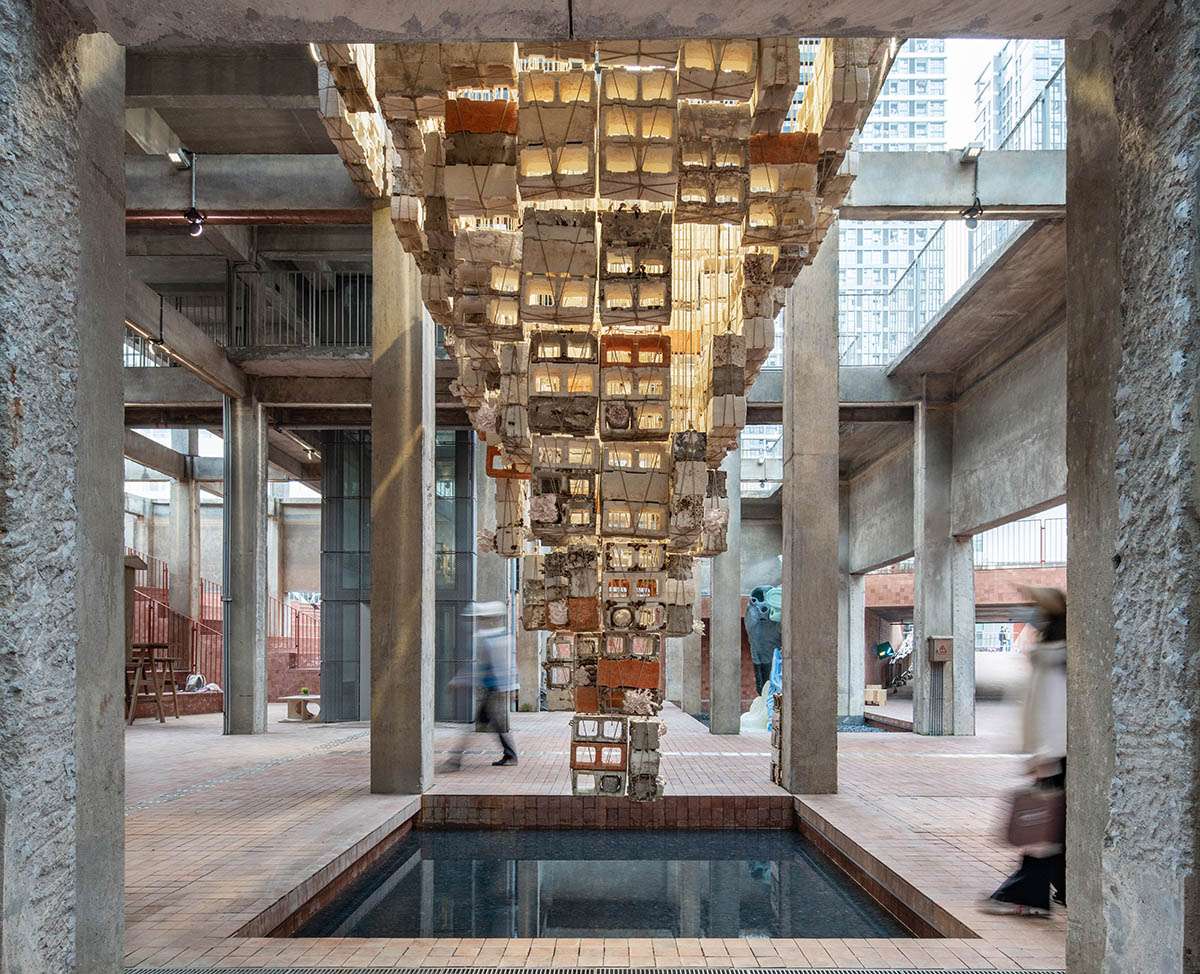
Inverted pyramid design of mushrooms in Shenzhen,
American architectural practice Studio Link-Arc created a mushroom installation to explore the relationship between organisms and architecture in Shenzhen.
The project, called Inverted Architecture, has been installed in the exhibition,
More than a Human Adventure, as part of the 2022 Shenzhen Biennial theme, titled Urban Cosmology.
And installed in Kingway’s old converted factory in Luohu District,
the inverted structure has been on display from December 10, 2022 to March 12, 2023.
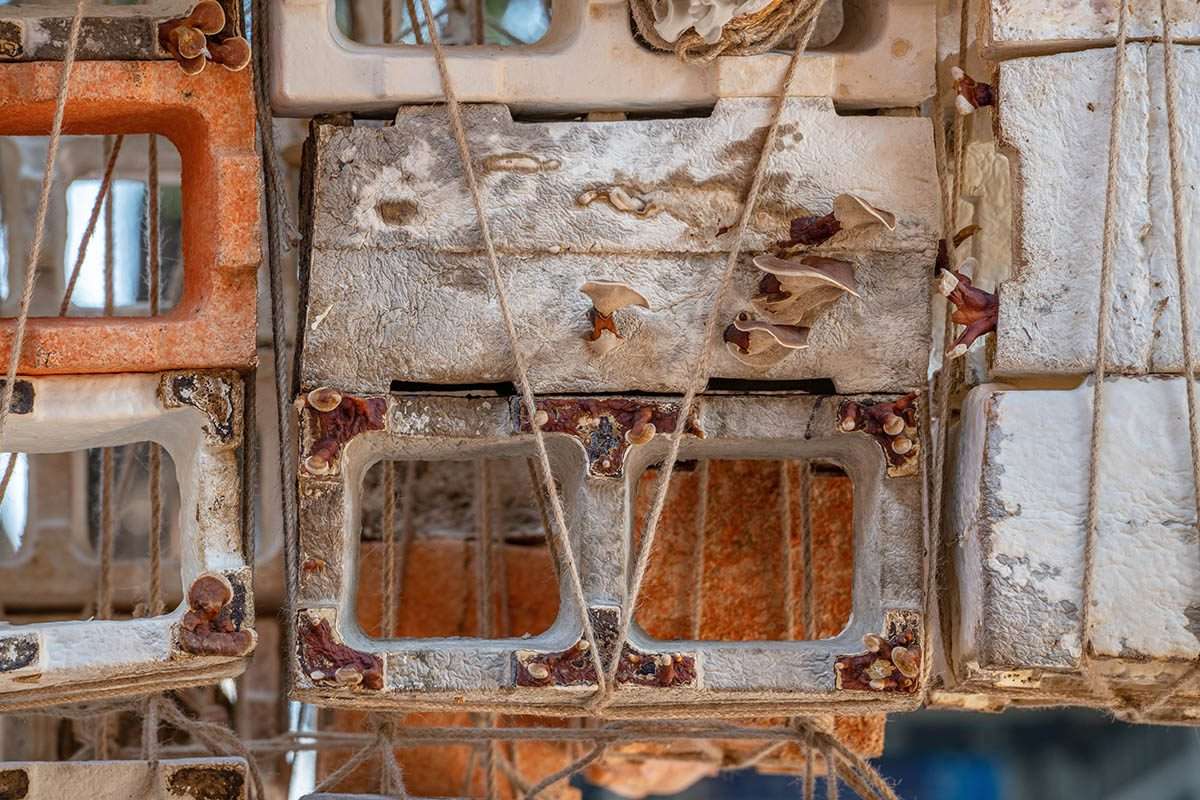
Not only with the inverted shape, but the materials it produces make it more interesting.
The upside-down installation is made from 400 suspended mushroom bricks,
a renewable and biodegradable material.
With this installation, Studio Link-Arc aims to explore the intersection between organisms
and architecture in response to the theme of the exhibition.
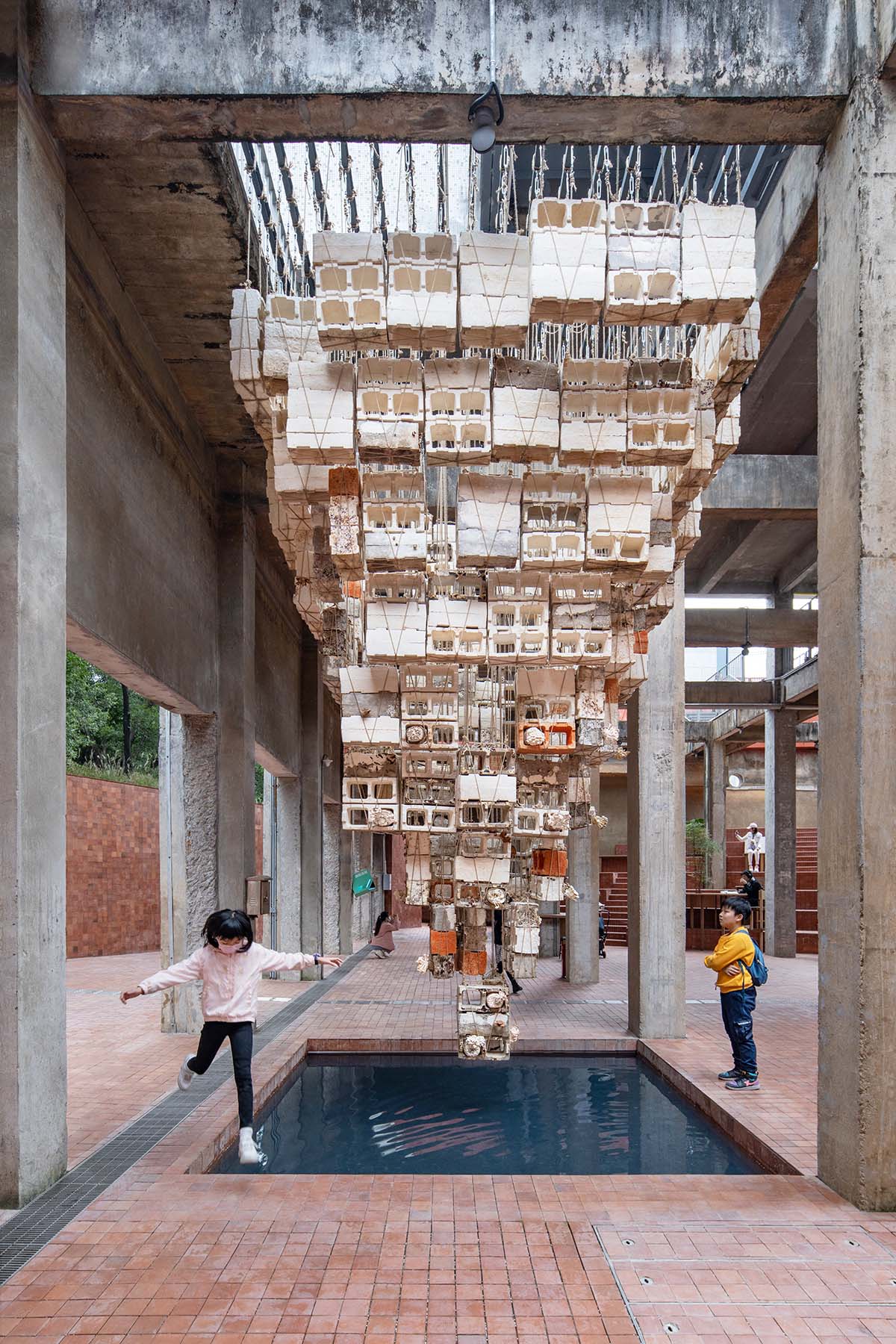
Explore the relationship between organisms and architecture
Mycelia or mycelium are living, root-like plant structures of mushrooms consisting of a mass of branching,
where they can sometimes cover thousands of acres.
It has tremendous capabilities to survive and adapt to various environments and their requirements.
In this installation, taking into account natural objects, the team aims to think,
imagine and learn from these objects to adapt the languages and techniques of architecture to the future.
In a simple way, the studio translated the materials into the new building language and,
according to the architects, “this installation explores the relationships between architecture and an often unknown ecosystem.”
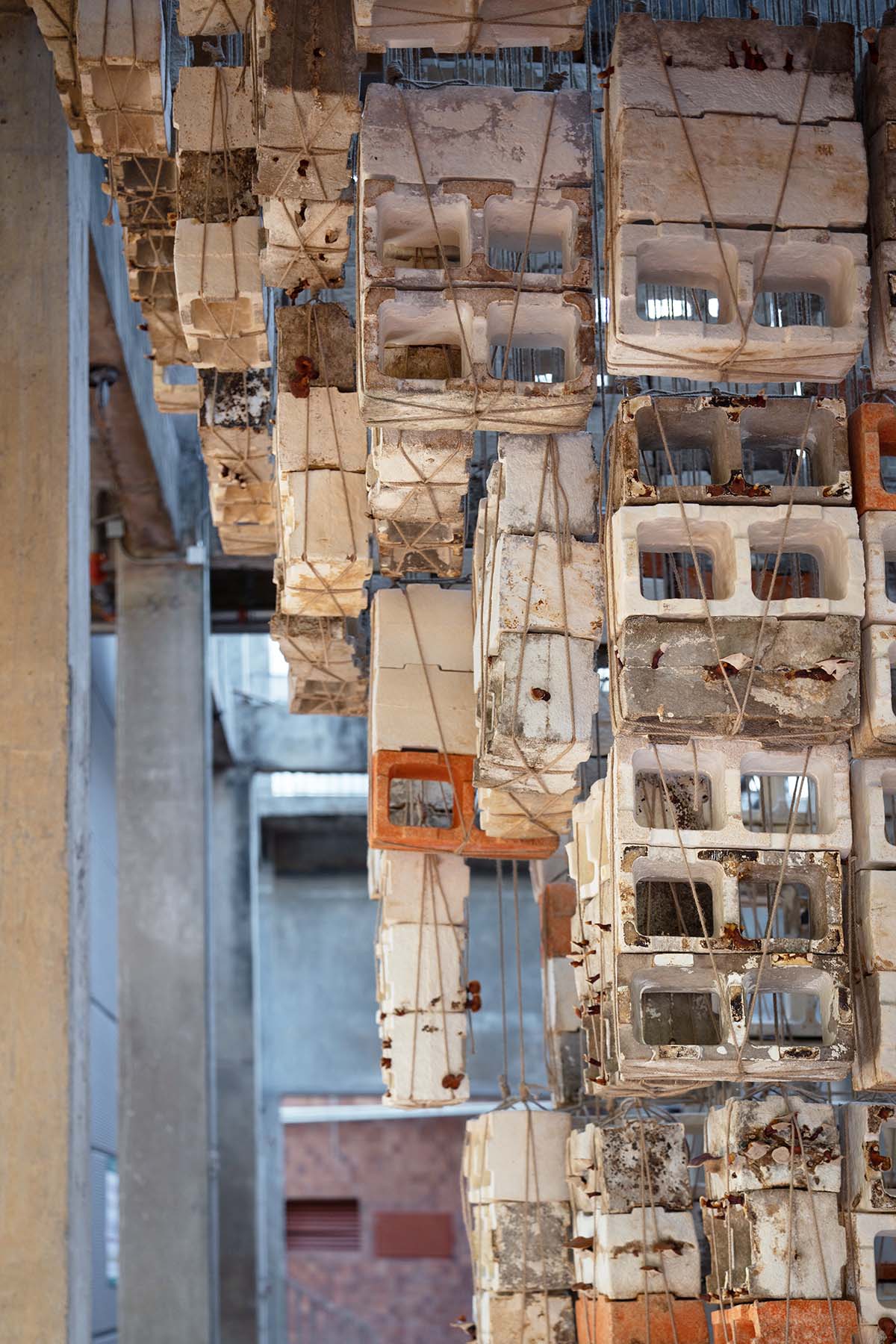
The goal was to remove borders and create symbiosis or cooperation between the two fields.
Designed in the form of an inverted pyramid, this approach turns traditional views on its head,
explaining the existence of second nature, dual function,
And refined purposes, man-made nature, present and future, and finally growth and decay.
The team grew the bricks by hand rather than producing, and by using agricultural waste straw,
bagasse and wheat bran as a substrate in each brick,
allowed fungal flora to grow naturally and harden the material over time.
The end result is a material with sufficient structural strength and plasticity
that it can be shaped into any shape under the right temperature and humidity.
Once it has finished its life as a building material,
several months in the soil will see the brick of the fungus fully deteriorate,
thus not being a burden to the environment.
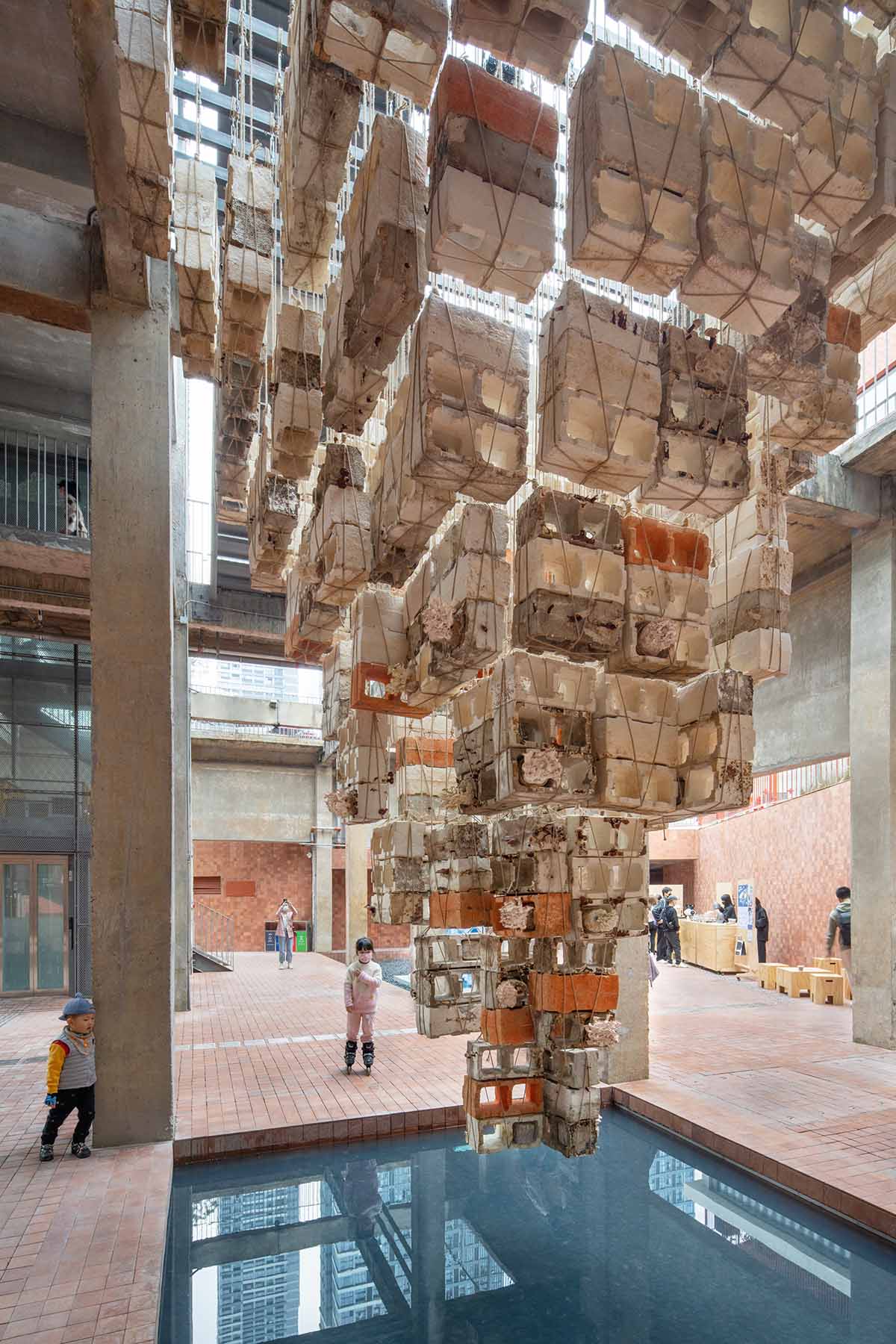
Inverted pyramid design of mushrooms in Shenzhen
While the gallery contains gallery spaces between continuous concrete frames,
through the interior and exterior spaces, it provides an ideal setting for the mushroom bricks to absorb moisture from the air.
In addition, a swimming pool is created under the installation to provide a humid microclimate.
Mycelia will be inactivated in the manufacturing process.
To compensate, the team picked some bricks to grow fresh mushrooms after collection.
The hope is to make this installation part of a sustainable ecological cycle,
a man-made device that grows and develops as a living organism.
For more architectural news
The design of the sushi restaurant in light orange colors and geometrics in Milan