Jisoo Yoo’s Dream House Explores Architectural Boundaries

Geometry of Transition: Deconstructing the Floating Mass
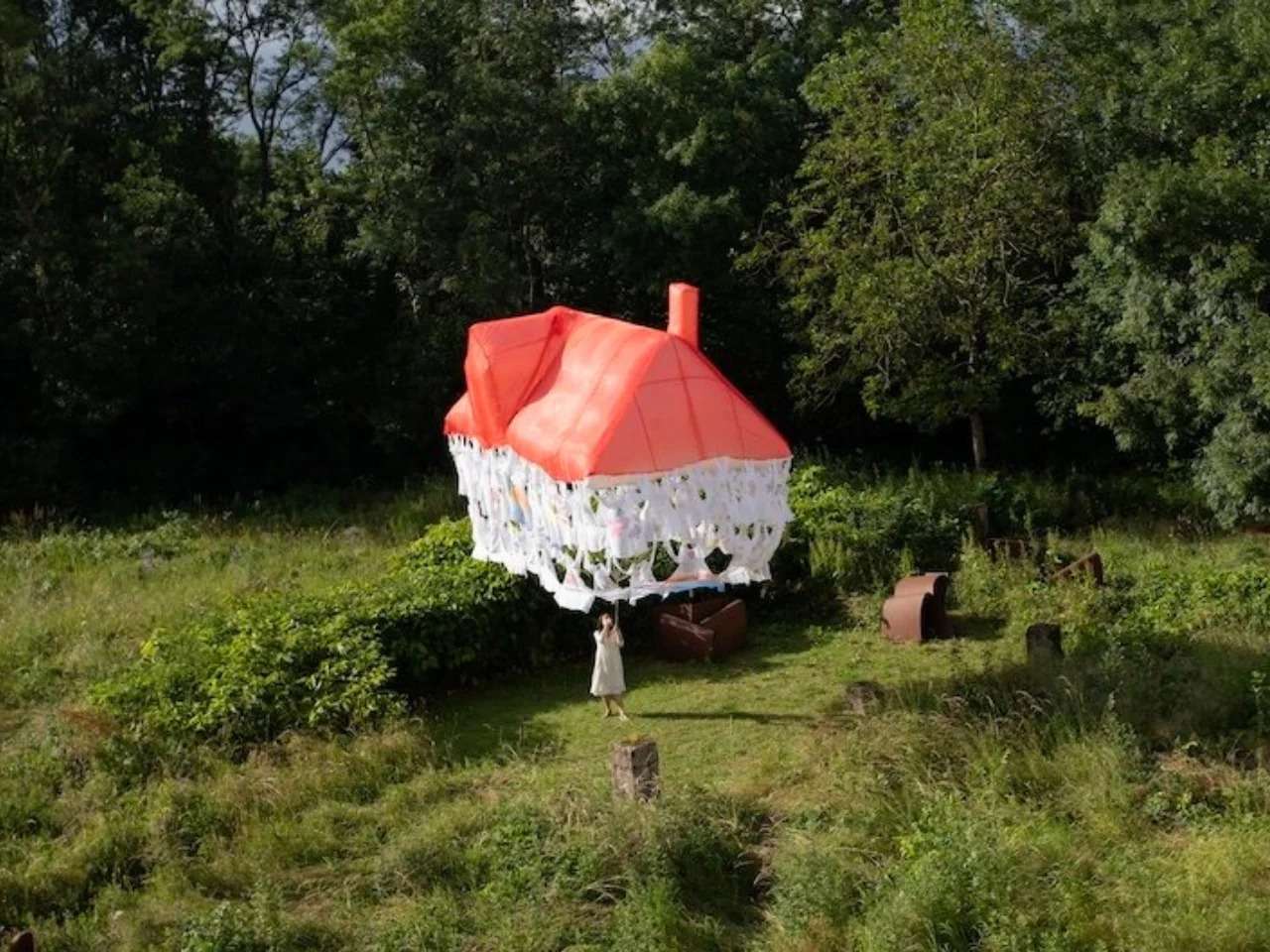
Jisoo Yoo’s Dream House emerges from a fundamental inquiry into the relationship between inner desires and the formation of architectural space, transforming the concept of the home from a conventional plan based on rigid boundaries into a floating composition that reconsiders the meaning of shelter. The work relies on discarded clothing as a sculptural medium carrying both material and symbolic presence, granting the structure a dynamic transparency that dismantles the conventional perception of architectural mass and transforms it into a temporary, semi-visible existence. In this way, the installation presents a visual experience that challenges the stability of traditional domestic spaces and reexamines the dividing relationship between interior and exterior, between permanence and transformation.
The Human Experience and the Scenographic Effect
The visitor’s experience within this installation is shaped through continuous interaction between movement, the body, and the surrounding material elements. As air currents move and light paths shift, the layers of clothing transform into a dynamic surface that generates changing shadows and reflections, placing the space in a constant state of formation. This interaction between the body and the flexible structure creates a sense of lightness and instability, transforming the work exhibited at the contemporary art center Les Tanneries as part of the (F)ESTIVALES event into an experience that explores the flexibility of architecture and its ability to express changing forms of spatial existence.
Material Formation: Clothing as an Archive of Memory
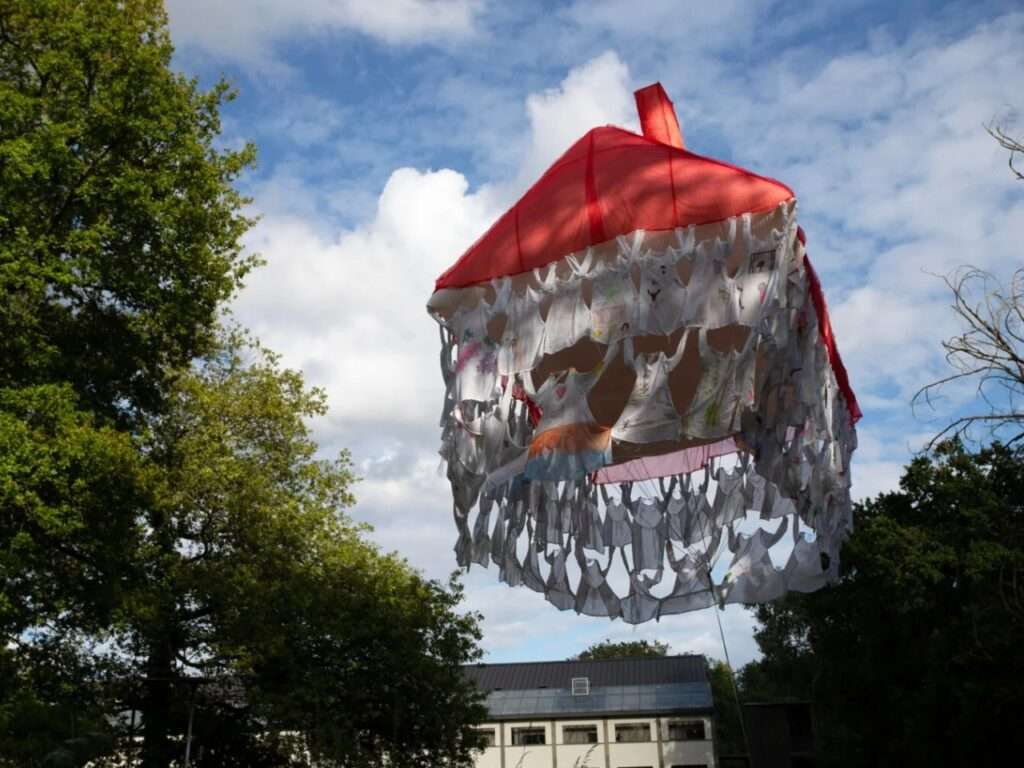
The work moves beyond reliance on traditional construction materials such as concrete and steel, proposing instead a formative system based on used clothing as material units carrying traces of their previous owners. Each garment becomes a vessel of personal memory, containing writings, drawings, and human marks, transforming the structure into a visual archive of individual stories. Through this approach, the value of the home shifts from dependence on material solidity toward its ability to contain accumulated human experiences, where memory becomes an integral part of spatial composition rather than merely an external element associated with it.
Spatial Dynamics: Between Material Weight and Human Desire
Dream House reconsiders the concept of the home beyond measurements of area or material value, presenting it instead as a space connected to imagination and personal experience. The movement of air and light interacts with the flexibility of clothing to produce a changing spatial condition, where the structure no longer remains merely a boundary enclosing space, but becomes a living element influenced by its surrounding conditions. This passage through the installation offers the visitor a sensory experience in which shadows and semi-transparent materials intersect with the desire to create a shelter that transcends the traditional form of the house.

The Fluidity of Architectural Projects and the Reimagining of Shelter
This composition transforms the concept of domestic space from a fixed domain into a space open to reinterpretation, where the home becomes a reflection of the relationships between memory, identity, and human transformations. The artist’s background, combining her upbringing in Seoul with her artistic practice in France, reflects a diverse cultural context evident in her exploration of the shifting boundaries between materiality and imagination. This approach is embodied in a visual language based on moving masses and temporary structures that appear and disappear, reshaping the familiar as an entity capable of transformation rather than a final, fixed form.
The Scenographic Phenomenon and the Temporary Effect
This installation does not present a conventional model of comfort and stability; rather, it invites visitors to perceive the temporary nature of the space surrounding them. The used garments carry both material and symbolic weight through the traces left by their owners, while simultaneously forming a structure capable of disappearance and transformation. The presence of the home becomes connected to the very moment of experience itself; it emerges as an artistic event based on the interweaving of material, light, and movement, rather than as a permanent architectural entity.

The Semiology of Fragility: Deconstructing the Inherited Image of Shelter
An analysis of this work reveals an underlying fragility within the traditional concept of the home, a fragility often concealed by solid walls and fixed structural systems. Through the use of a familiar and intimate material such as clothing, the design transforms the idea of shelter into a visible representation of temporality and transformation; the places we inhabit are constantly changing, as is our relationship with them over time. Rather than perceiving this fragility as a deficiency, the work reintroduces it as an aesthetic and intellectual value that reflects the dynamic nature of life.
The Material Effect and Collective Scenography
The materiality of used clothing grants the space a sensory dimension distinct from conventional architectural materials, introducing an organic texture and an emotional charge connected to previous human experiences. This texture interacts with light and air movement to produce shifting shadows that place the space in a state of continuous transformation. Here, the visitor does not encounter a solid building, but rather experiences a collective composition formed from the imaginations and memories of different individuals. In this way, the work emphasizes that the spaces we inhabit are not merely neutral containers, but entities shaped by accumulated desires, memories, and human relationships.

✦ ArchUp Editorial Insight
Jisoo Yoo’s Dream House redefines domestic architecture and interior design as a temporary membrane rather than a fixed boundary, using discarded clothing to reveal how memory, identity, and material value are redistributed within space. The work presents architecture as a transforming archive, where lightweight structures challenge the concept of permanence associated with traditional construction.
However, this approach may risk falling into the trap of glorifying fragility; the emotional power of reused clothing does not address the practical requirements of habitation, such as durability, maintenance, and resource efficiency. Contemporary housing systems still rely on robust material frameworks, and the image of fluid living may conceal the economic realities of accessing adaptable and sustainable environments within design. Therefore, the installation functions more effectively as a critique of how we perceive shelter rather than as a complete model for the future of housing.