RSHP Completes Giant Convention Centre and Exhibition Spine in Zhengzhou

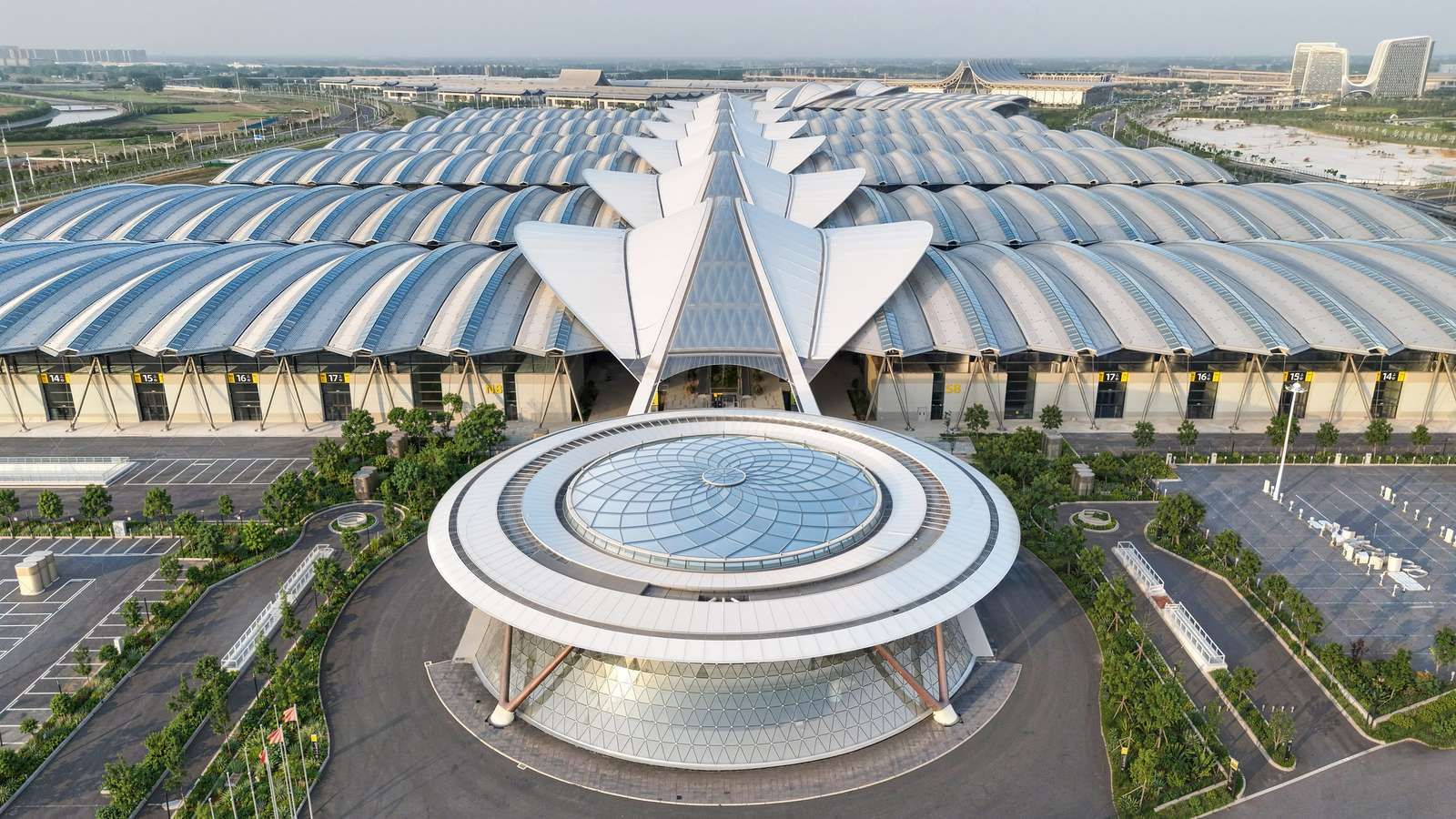
British architecture studio RSHP completed the Central China International Convention and Exhibition Centre in Zhengzhou, China, featuring sixteen exhibition halls linked by a mile-long elevated walkway. The project marks the conclusion of the second construction phase within the Zhengzhou Airport Economic Zone, joining an existing conference centre and hotel to form a large-scale regional urban hub. The 697,566-square-metre site utilizes a modular steel structural system to manage the immense scale of the development.
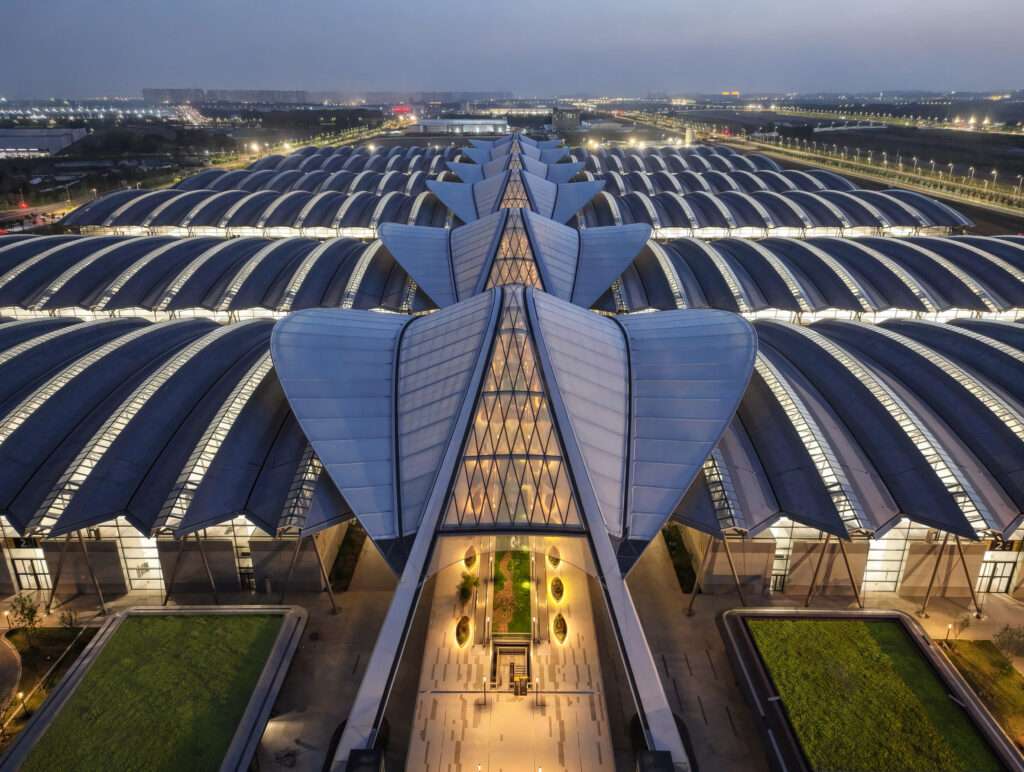
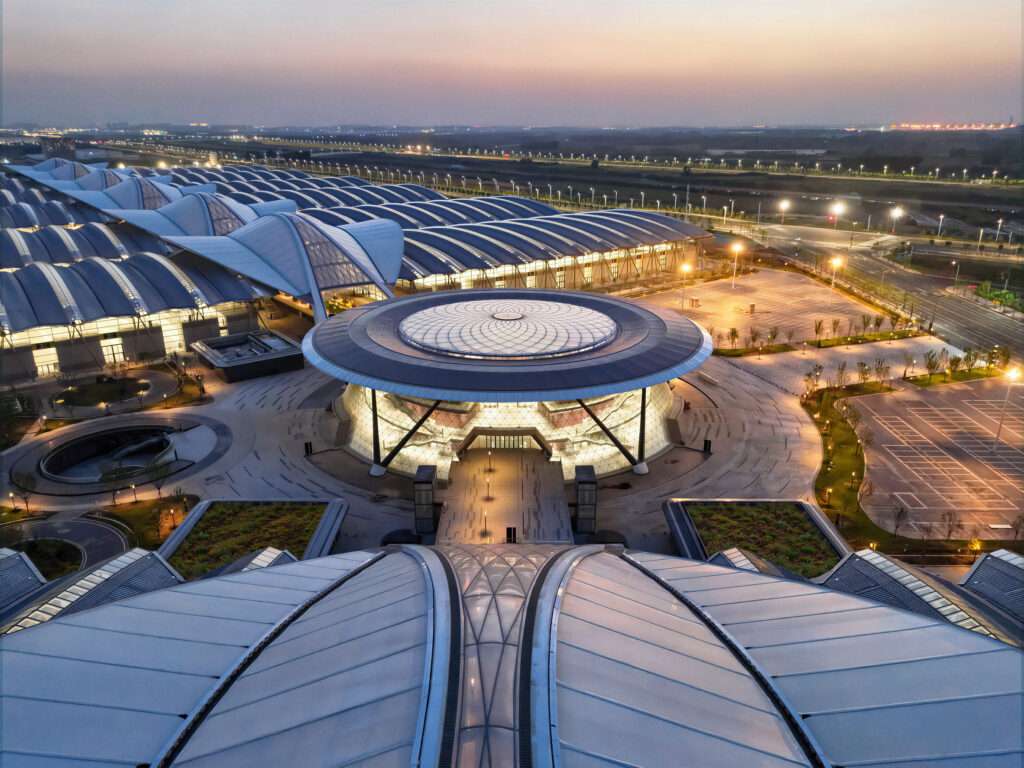
The design organizes the exhibition program along a 1.7-kilometre central spine. This elevated walkway operates on two levels to separate architecture and infrastructure, prioritizing pedestrian movement while facilitating high-capacity circulation. Three entrance pavilions provide the primary access points, funneling visitors toward the upper level of the walkway and connecting the main exhibition spaces with the adjacent conference centre.
A Modular Sequence of Exhibition Halls
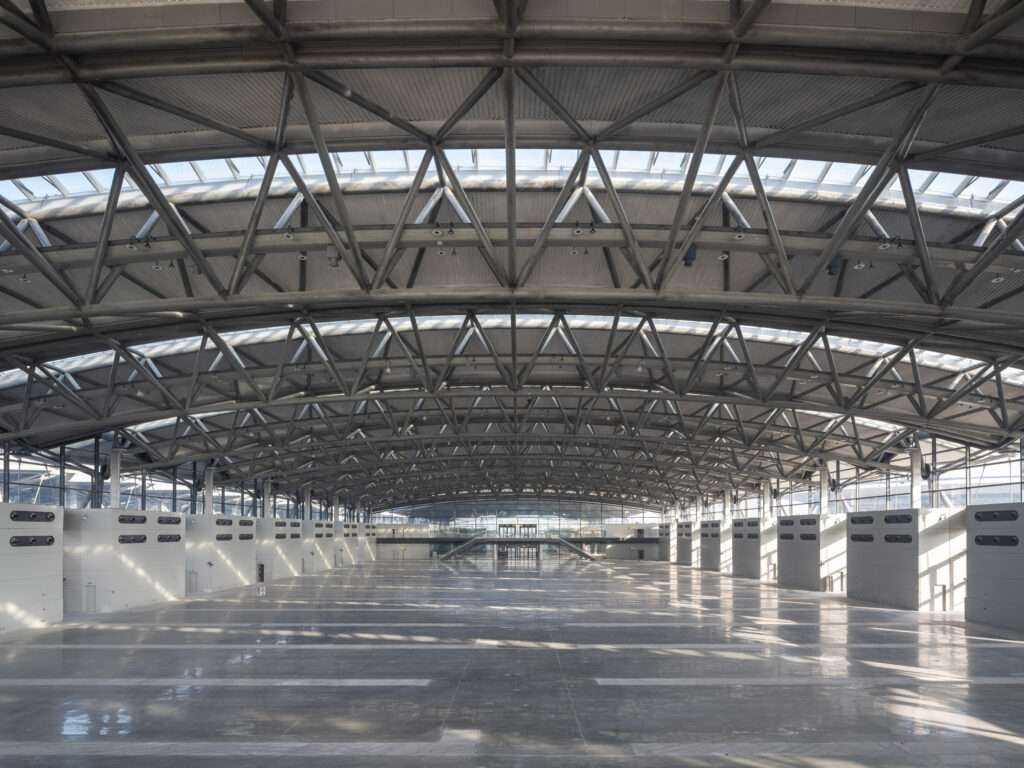
The construction team utilized standardized components to deliver thirteen standard halls and three multifunctional halls. Each standard hall covers 12,638.5 square metres, offering flexible layouts that allow operators to combine or divide spaces for simultaneous events. Visitors enter through a mezzanine level in each hall, which provides a vantage point to view the structural span before descending into the exhibition floor via escalators.
A series of sweeping canopy roofs provides a continuous shelter across the entire walkway. These undulating structures draw inspiration from local topographies, specifically the Song Mountain and the Yellow River. The geometry of the canopies allows natural light to penetrate the central spine, creating a brighter environment for the restaurants and public spaces located on the ground floor beneath the main circulation path.
Integration of Technical and Energy Systems
The east side of the site contains the conference centre, which features a cable-net facade and a curved roof that appears to float over the central hall. Beside it, the 275-room hotel displays a distinct zigzag roofscape. This portion of the campus includes a grand ballroom and private dining areas to support the operational needs of the international convention hub.
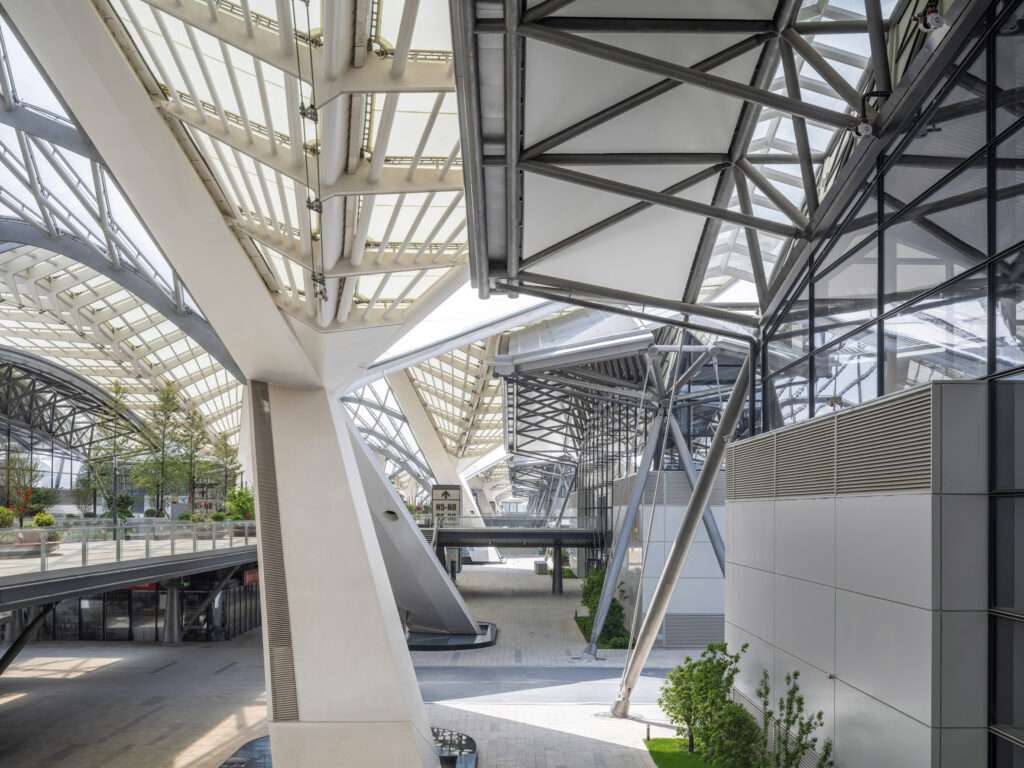
The project integrates several sustainability strategies to mitigate its environmental impact. Photovoltaic panels sit atop the central entrance pavilion to generate power for the complex. Additionally, a rainwater harvesting system collects runoff for landscape irrigation. These passive and active systems work together to manage the resource demands of the nearly 700,000-square-metre facility.
“The 1.7-kilometre concourse is shaped by a sweeping undulating arch structure that brings lightness and offers welcoming open spaces to enhance the visitor experience, with naturally lit spaces and intuitive routes organised around a central spine,” said RSHP director Richard Paul.
Project Team: RSHP, Tongji Architectural Design (Group) Co., Architectural Design & Research Institute of Tsinghua University Co., Henan Provincial Institute of Transportation Planning and Design Co. Location: Zhengzhou, China.
Project Notes: Phase 2 completed. Client: Henan Airport Construction & Development Co. General contractors include China First Metallurgical Group Co. and China Railway Construction Engineering Group Co.