Mass Formation and Spatial Dialogue

Mass Formation and Spatial Dialogue
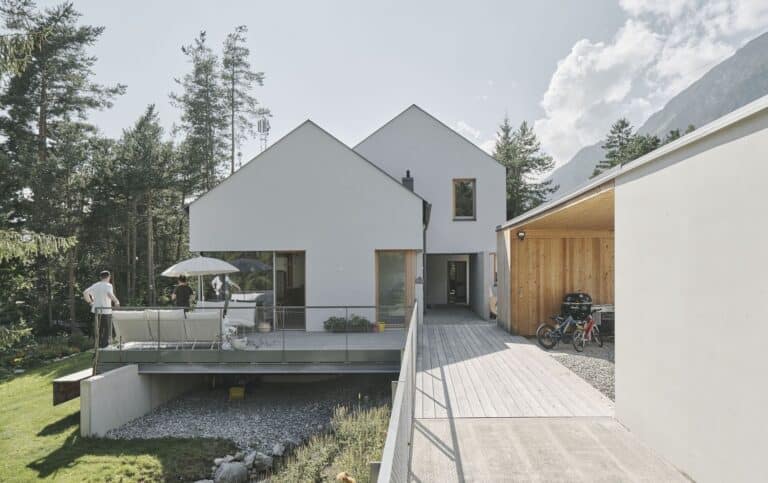
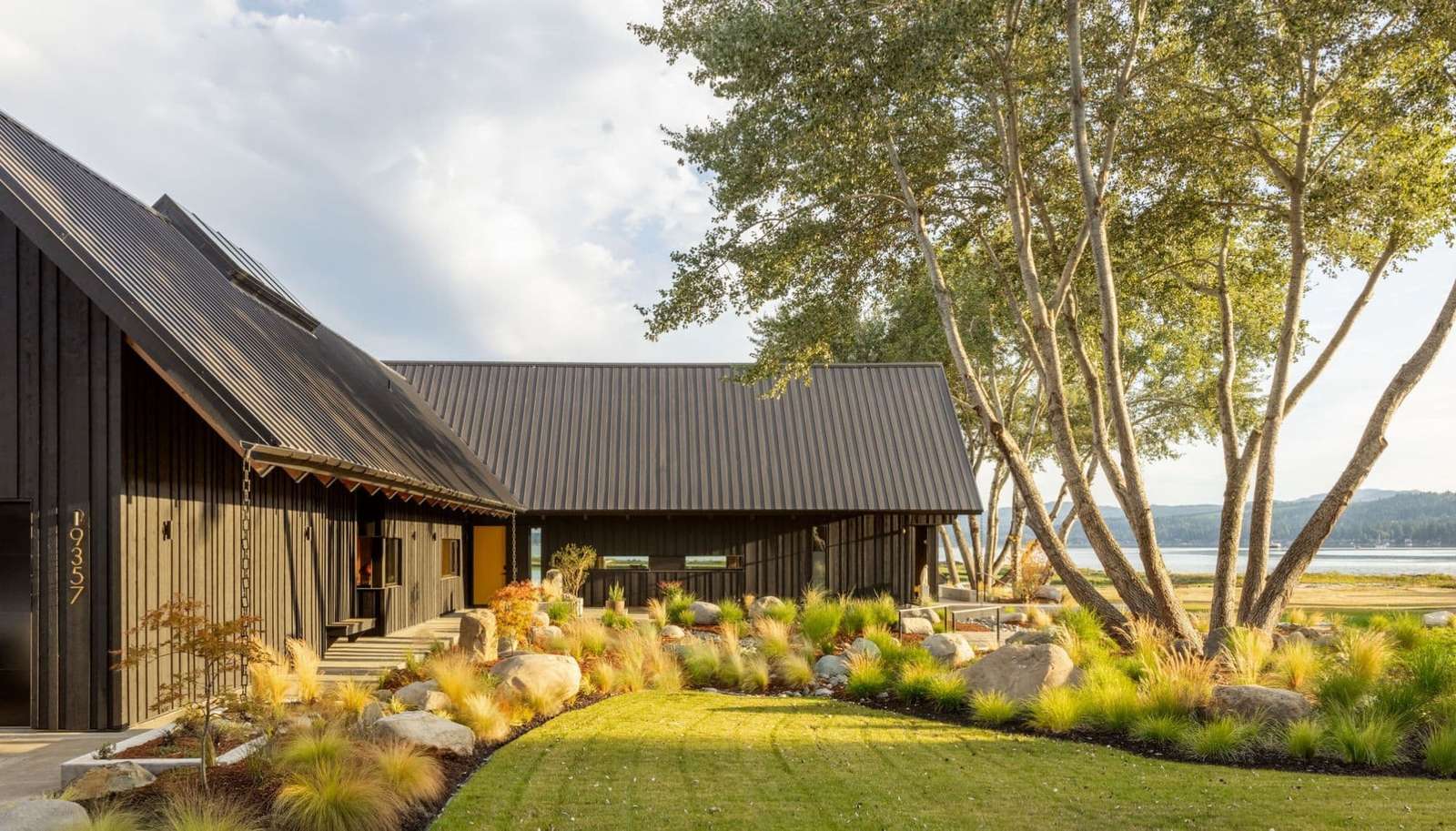
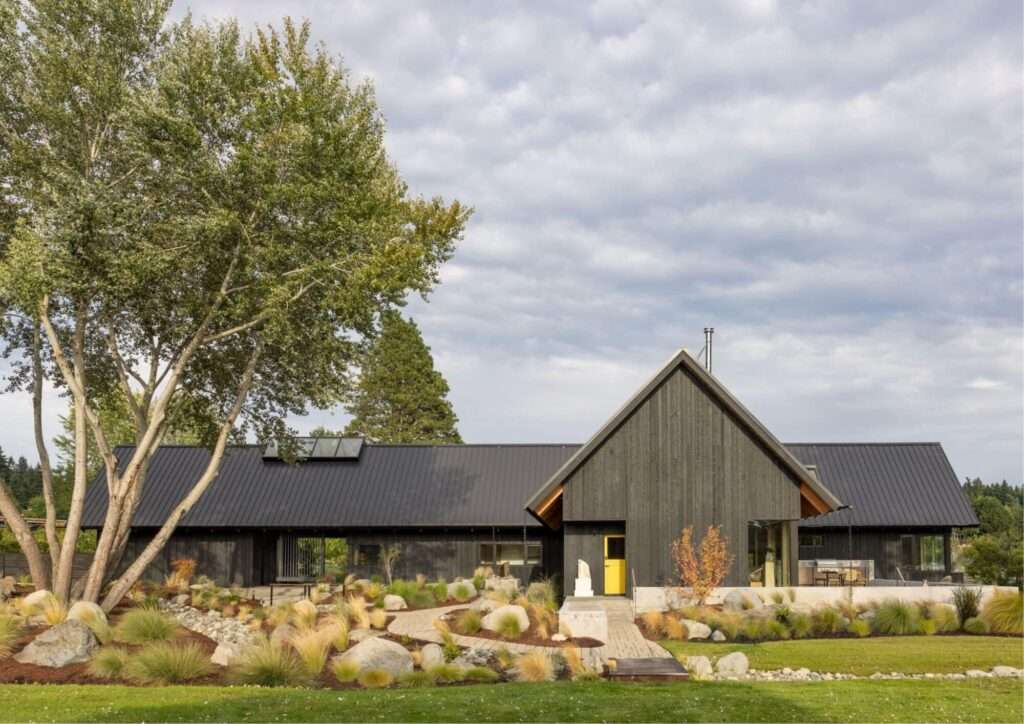
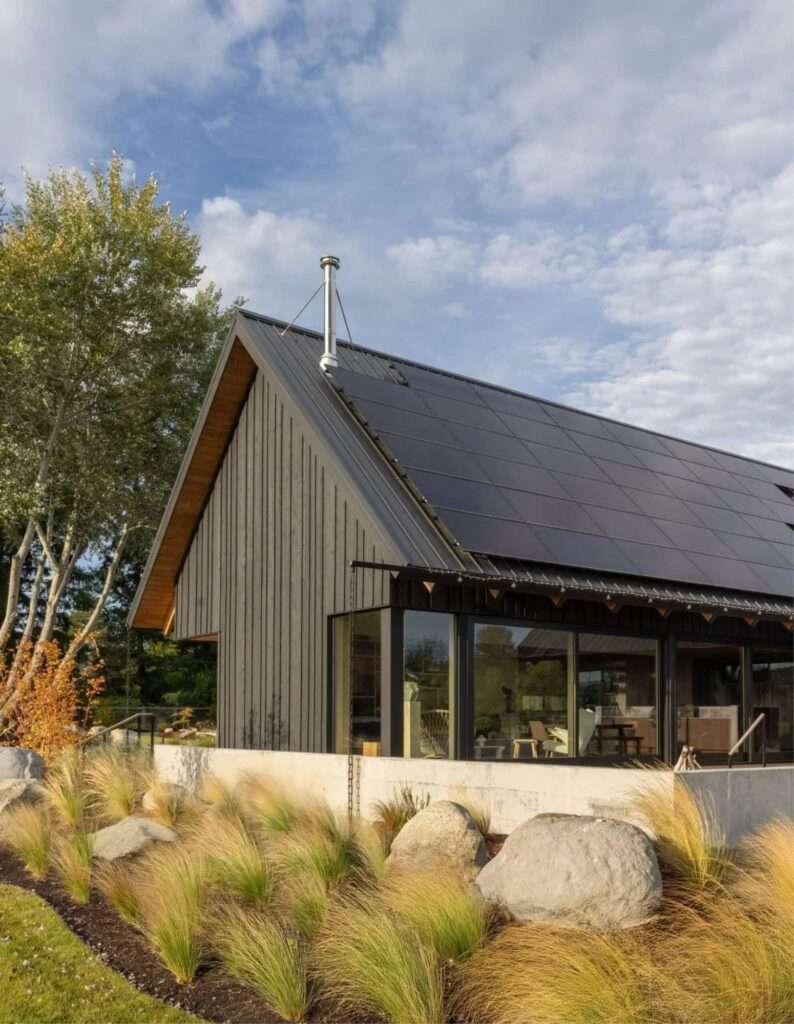
The house is composed of two intersecting volumes with gabled roofs, echoing the organization of traditional Scandinavian farm structures, resulting in a T-shaped plan that establishes a clear spatial and visual orientation. This volumetric intersection enables a precise functional separation; the east–west wing extends as a shared living space that captures direct waterfront views, while the north–south wing recedes to accommodate private zones. Here, architecture operates as the center of a renewed domestic landscape that goes beyond the idea of an isolated Buildings, entering into a continuous spatial dialogue with the adjacent guest house after its renovation. This creates an interconnected system that supports multigenerational living within the site while clearly defining boundaries between privacy and communal gathering.
Scenographic Experience and Environmental Performance
The Design language shapes a human experience that begins at the northern entrance courtyard and gradually unfolds toward the southern outdoor terrace oriented toward the bay. The material presence of the architecture is integrated with its coastal environment through the incorporation of high-performance strategies and Passive House principles, where triple-glazed windows and continuous thermal insulation regulate light and heat flow. This is complemented by a heat recovery ventilation system and a photovoltaic solar array. These technical systems contribute to a thermally balanced interior environment that dynamically responds to the sun path and coastal breezes, enhancing long-term spatial usability and supporting single-level living aligned with aging-in-place principles.
Spatial Contrast and Orientation Strategy
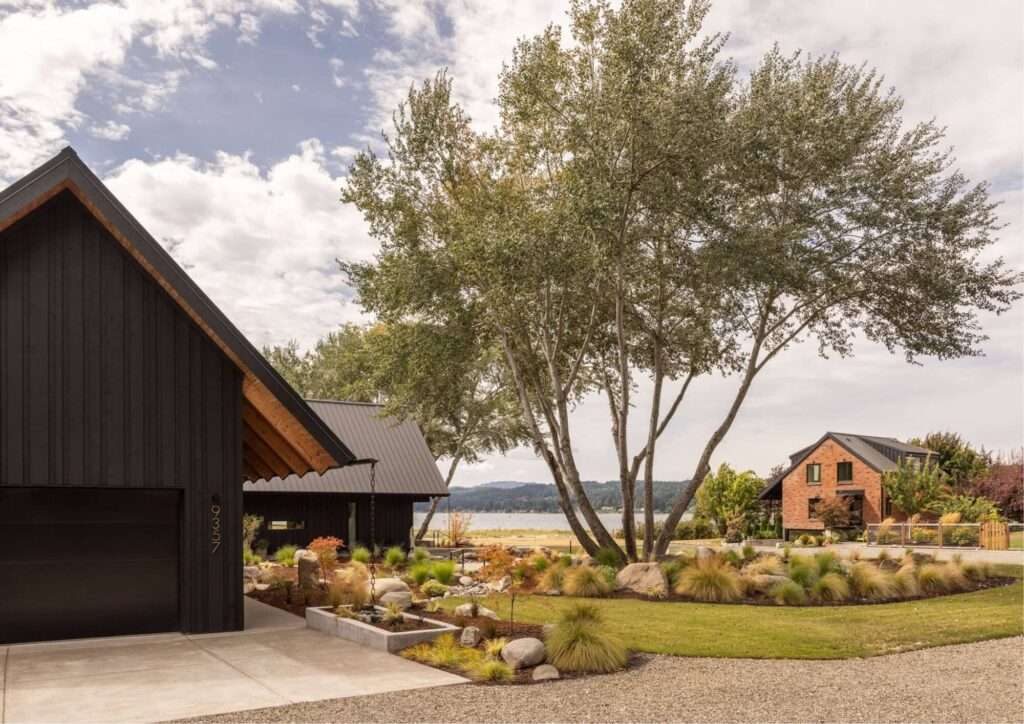
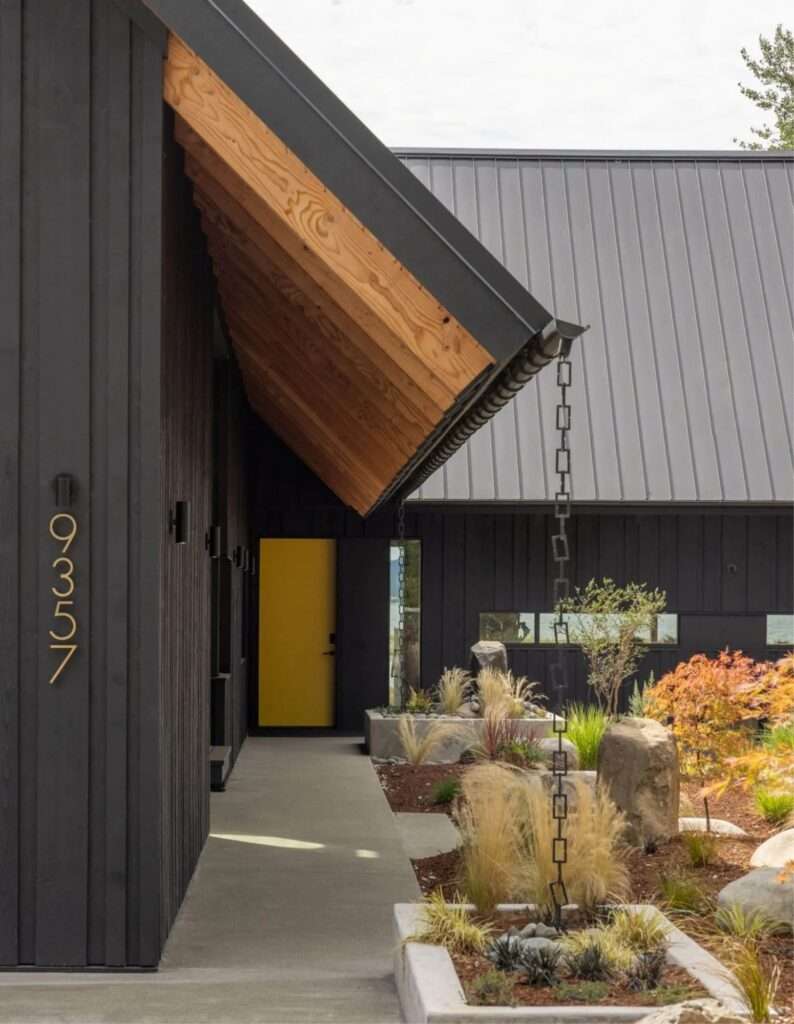
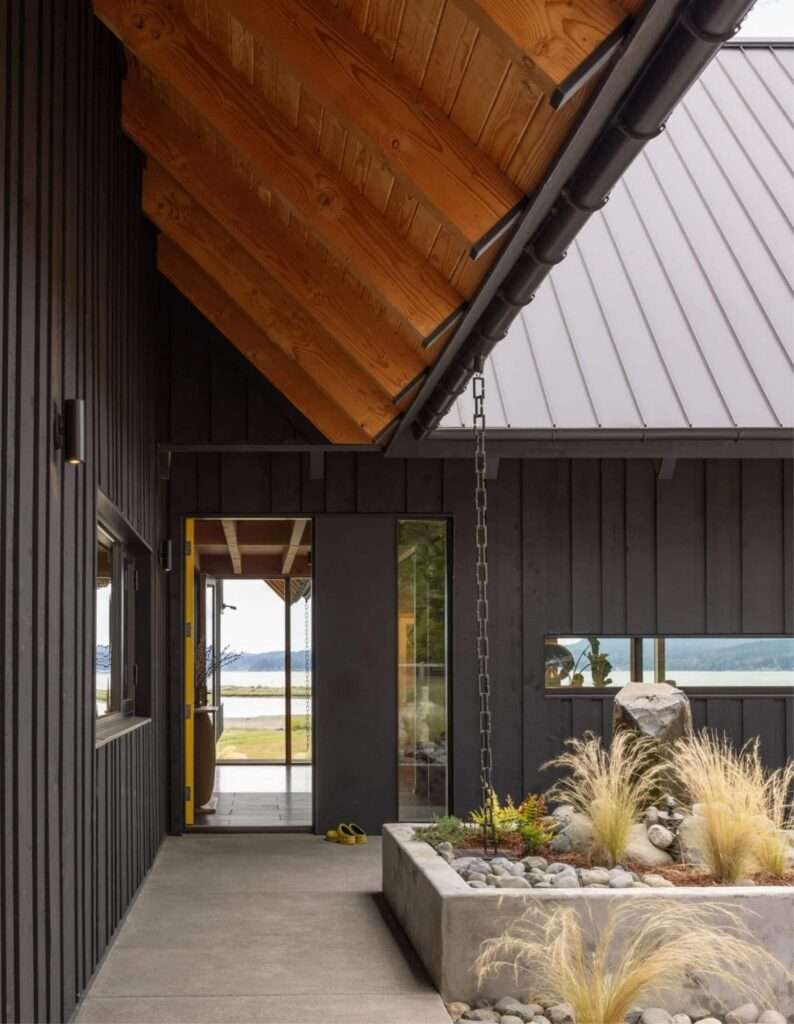
The architecture responds to two contrasting environmental conditions by establishing two distinct building presences. On the northern façade, the design employs landscaping and natural barriers as scenographic elements to reduce the impact of the surrounding urban context, generating a sheltered and calm arrival sequence. In contrast, the southern façade adopts a fully open orientation toward the coastline, where glazed living spaces and an extended terrace establish a direct visual and physical relationship with the bay. This produces a clear psychological and kinetic contrast for the user between entry, transition, and arrival toward the water.
Spatial Progression and Volumetric Decomposition
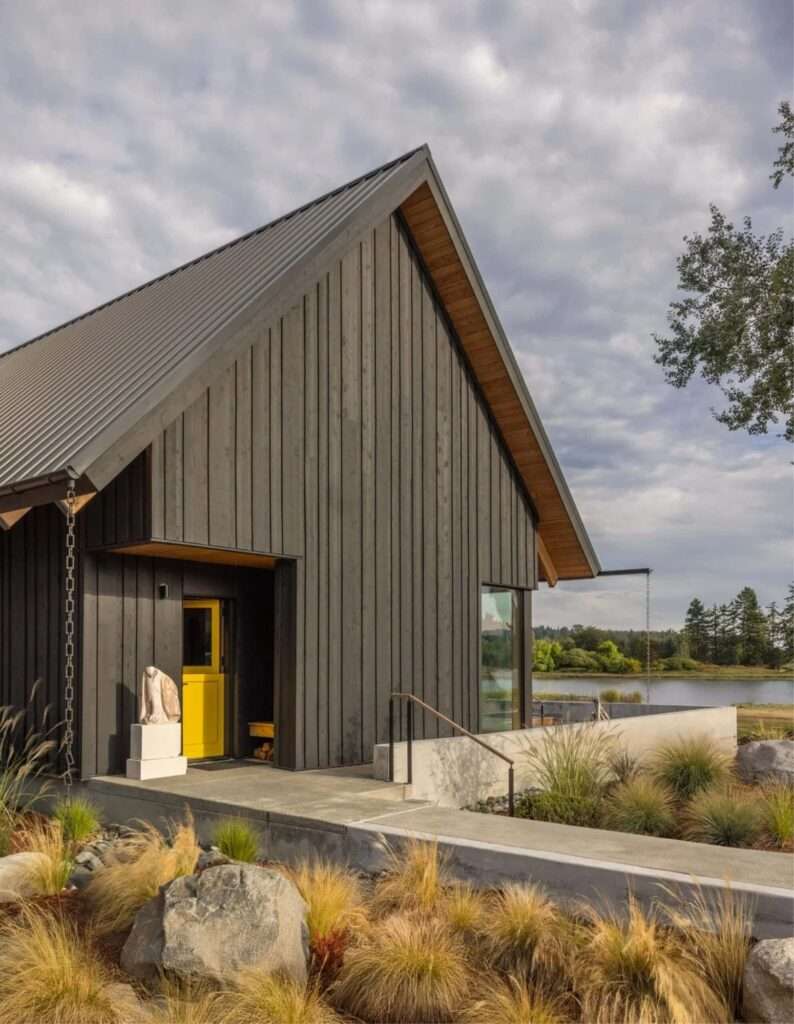
The spatial logic is based on the intersection of two volumes with gabled roofs inspired by traditional Swedish coastal farm complexes, where this intersection forms the main entry point and the experiential circulation axis of the house. From this node, movement is carefully orchestrated through a sequence of spaces that transition between lower, more enclosed zones and taller, vaulted conditions, generating a gradual spatial progression that balances privacy and openness. Each wing culminates in a double-height space that enhances the sense of expansiveness while reinforcing visual differentiation and spatial separation between family areas and guest zones. The design focuses on controlled spatial sequencing rather than static composition.
Functional Distribution and Spatial Transition
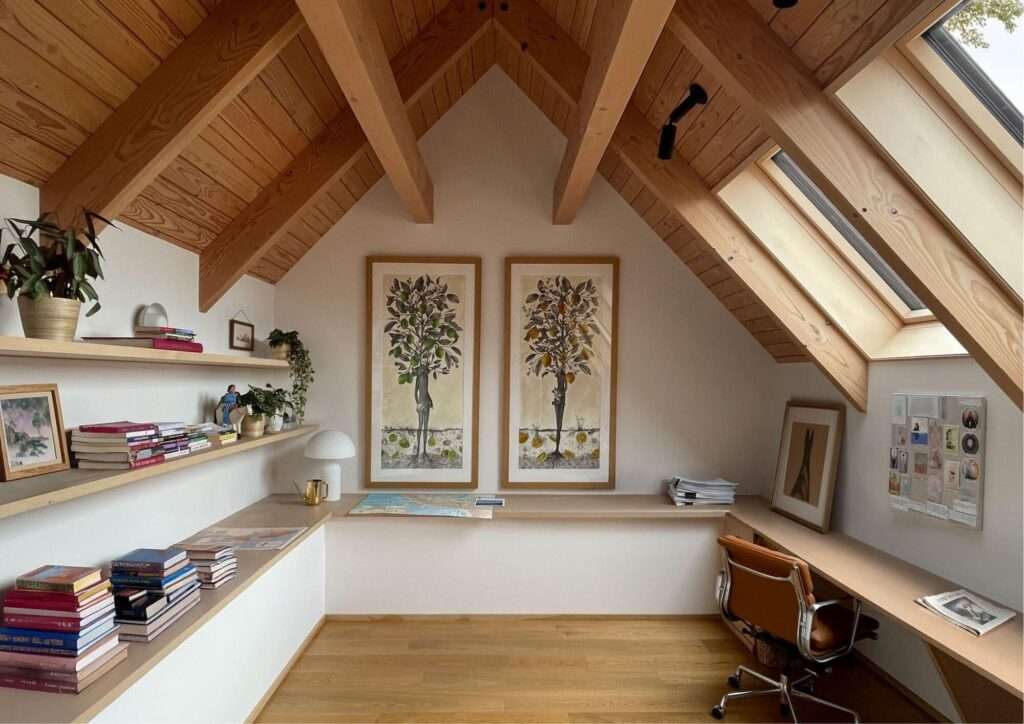
The orientation of the volumes defines the nature of the domestic experience within the house. The east–west wing operates as an open, dynamic space containing the living room, kitchen, and dining area, fully directed toward the coastal horizon and the outdoor terrace. In contrast, the north–south wing offers a quieter, more contained spatial experience, placing the primary suite at the more secluded southern end, while two guest rooms occupy the remaining portion with a shared bathroom. To enhance spatial efficiency without compromising the clarity of the single-level main floor organization, a raised loft above the entry hall is introduced as a flexible space for work and storage within the overall architecture.
Materiality and Visual Scenography
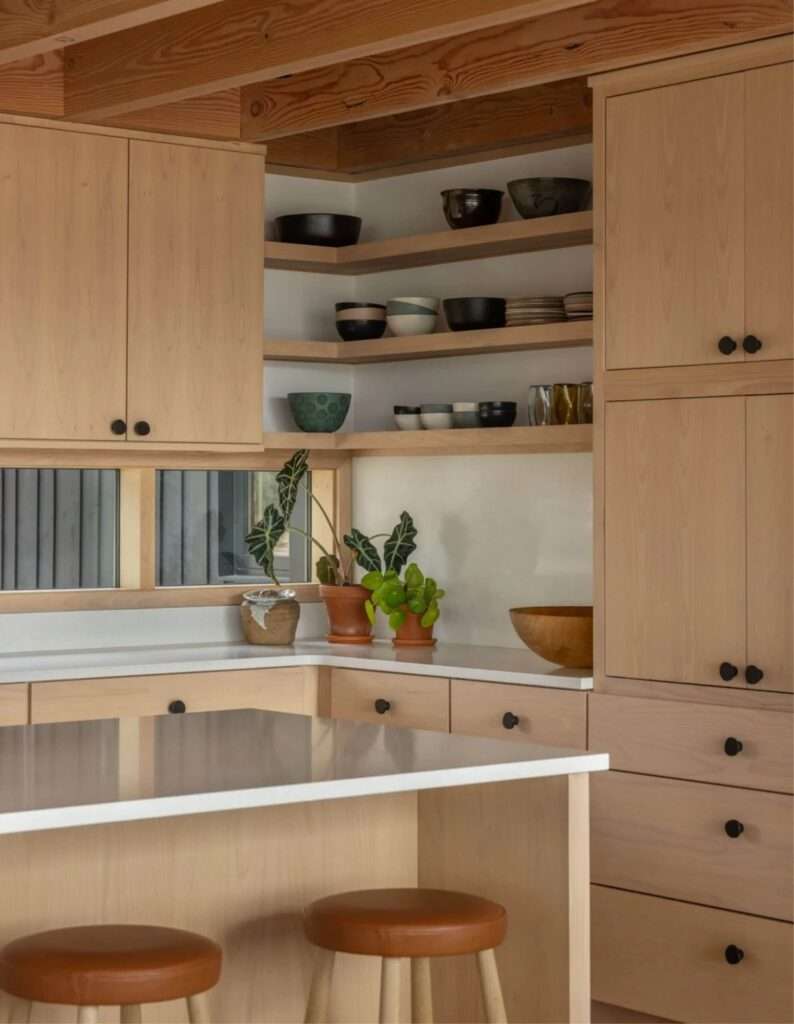
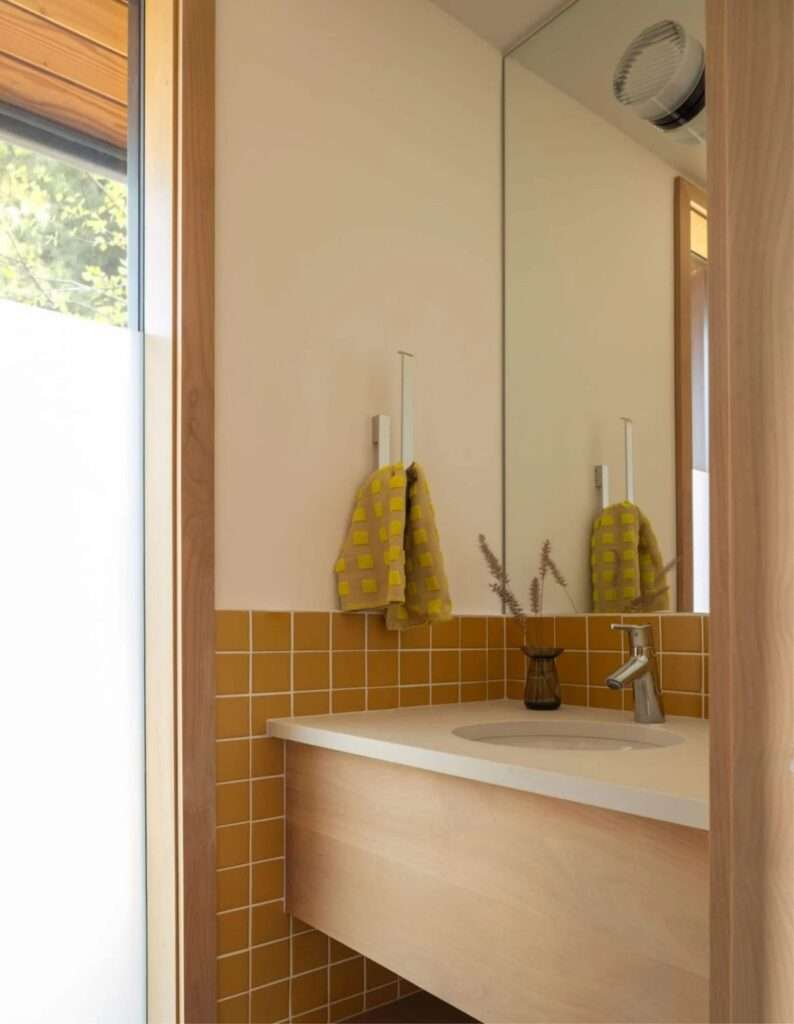
The material palette of the project is grounded in a balanced composition of timber, concrete, glass, and laminated alder wood, evoking an architectural identity associated with the Pacific Northwest and Alaska. These materials play a scenographic role in defining spatial transitions, where shifts in texture and surface quality articulate movement between lower and taller volumes. Rather than relying on decorative solutions, the design focuses on proportion, massing, and material tactility, utilizing expansive glazing to integrate the maritime horizon and making the shifting qualities of light and shadow a central element that enriches spatial warmth and continuity. This reinforces a coherent material-driven architecture.
Material Performance and Environmental Integration
Environmental performance is interwoven with the Architecture formation of the building, moving beyond dry technical definitions to become a scenographic element that actively shapes the continuity of human experience. The building envelope is designed according to Passive House principles, integrating high-performance triple-glazed windows and building assemblies for walls, roofs, and floors that exceed standard requirements, with continuous thermal insulation of 2 inches. This creates a sealed and thermally stable environment protected from external fluctuations. Indoor climatic balance is achieved through a fully integrated technical system that includes a balanced ventilation system with heat recovery, a ducted heat pump HVAC system, a heat pump water heater, and WaterSense-certified plumbing fixtures.
Dominant Sustainability and Energetic Infrastructure
The operational structure of the house functions as an invisible layer of sustainability that nevertheless directs the spatial logic toward long-term family use and aging-in-place adaptability. A 17.2 kW photovoltaic system operates as an energetic envelope, offsetting approximately 75% of annual energy consumption. This establishes an architectural logic that balances the material needs of occupants with a continuous and non-disruptive relationship between the residential mass and the surrounding coastal ecosystem, avoiding any form of rupture with its environmental context.
✦ ArchUp Editorial Insight
Daisy Inlet House deconstructs the traditional Scandinavian rural typology with precision to resolve the issue of spatial friction in multi-generational coastal living. By splitting private bedrooms and shared living spaces into two intersecting volumes forming a T-shaped configuration, the project employs a high-performance building envelope to anchor family life within a changing shoreline environment. In doing so, sustainable Architecture is elevated from a dry checklist of technical requirements into a sensorial framework that enables long-term spatial continuity.
However, this absolute reliance on highly insulated envelopes and complex mechanical systems reveals a limited, somewhat romanticized understanding of environmental integration. By sealing the interior environment to meet the strict demands of the Passive House standard, the design structurally distances its occupants from the very local climate it claims to engage with. As a result, the dwelling becomes an isolated, technologically optimized refuge that prioritizes resistance to climatic variation over a genuine, unmediated interaction with the coastal Design.