Corrugated Metal Synagogue Addition Unfurls Like Torah Scrolls in Kansas Prairie


A new synagogue addition in Overland Park, Kansas transforms corrugated metal panels into a sculptural worship space. The Congregation Beth Shalom expansion replaces a temporary sanctuary used for two decades with a purpose-built facility for 500 worshippers.
Agricultural Materials Meet Sacred Geometry
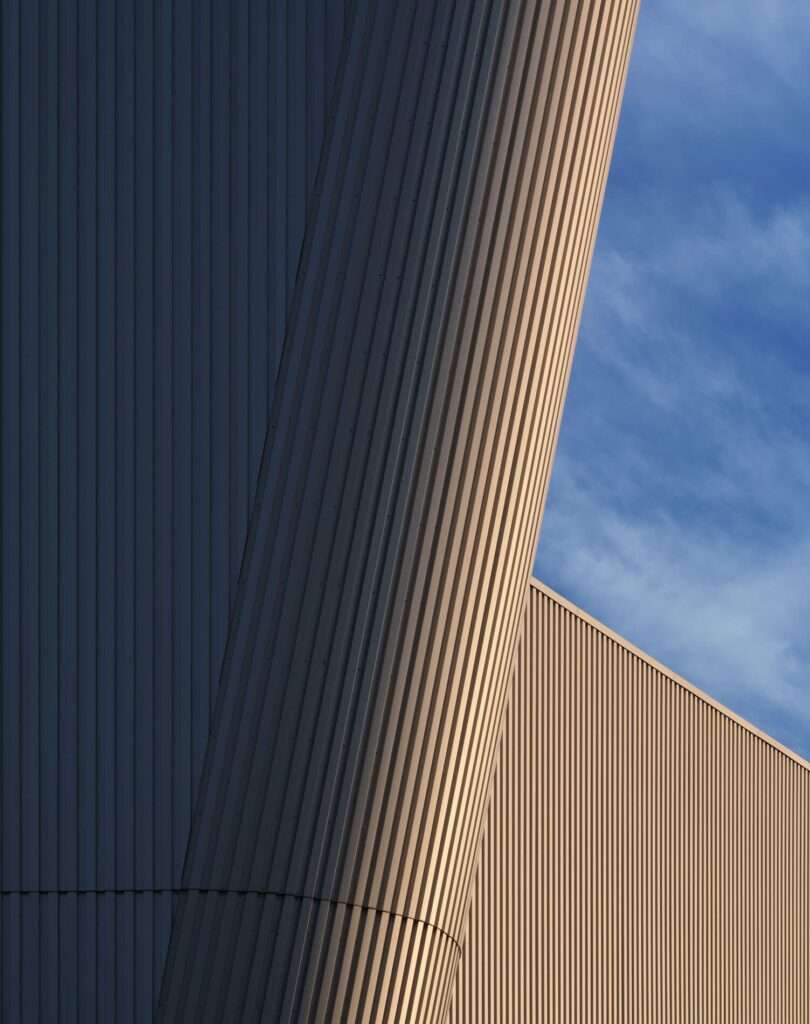
The expansion features two tilted cylindrical masses wrapped in corrugated Galvalume panels. This architecture draws direct inspiration from the unfurled scrolls of the Torah. The design team selected Galvalume for its durability, reflectivity, cost-effectiveness, and flexibility.
The material choice connects the synagogue to its surrounding agricultural landscape. Moreover, the protruding cylinders recall grain silos common throughout the Kansas prairie. Every corrugation was modeled in plan to maintain seamless patterns across the facade.
Parametric Design Drives Building Form
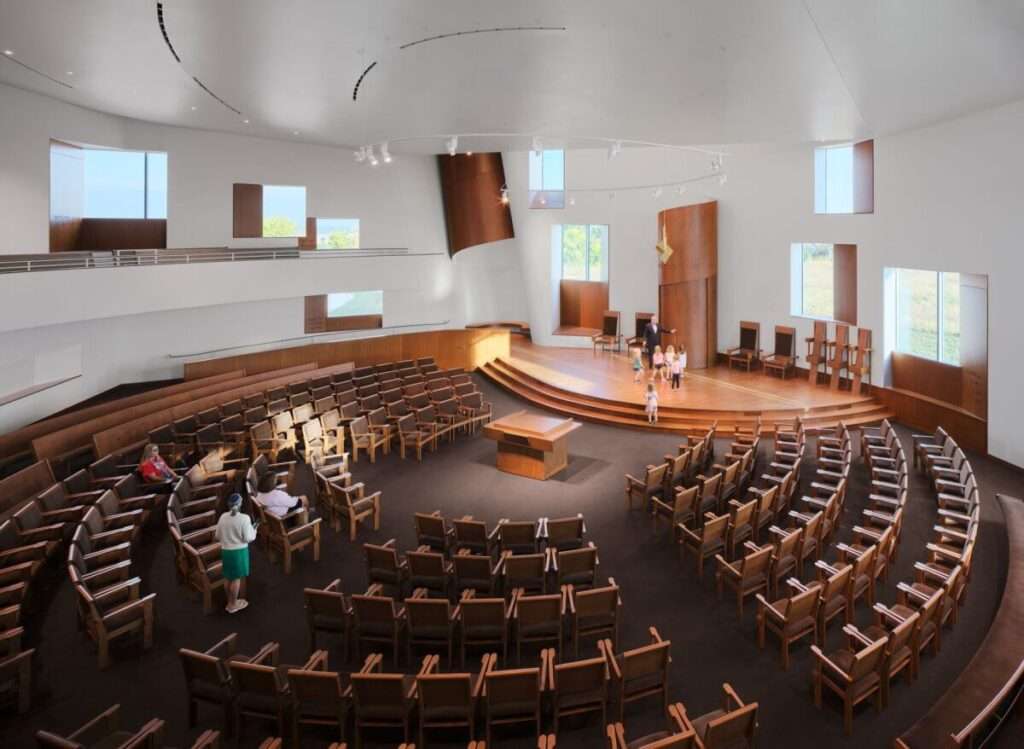
A custom Grasshopper script controlled every aspect of the construction process. The parametric tool adjusted MEP systems and envelope shape based on seating requirements. Therefore, the final form emerged directly from programmatic needs rather than arbitrary aesthetic decisions.
The twin sculptural cylinders serve distinct functions within the building. One houses a staircase for circulation. The other operates as a light cannon, bringing natural illumination into the sanctuary. Meanwhile, the design team created countless window placement mockups to prevent direct sunbeams from reaching worshippers.

Facade Details Eliminate Grid Patterns
The horizontal division lines across the building materials never form continuous bands. Each line terminates at either a window or vertical joint. This approach prevents the facade from appearing as a conventional grid system.
However, this design strategy eliminated adjustability in the construction process. The absence of a rainscreen system removed the typical substructure that allows tolerance. Consequently, precise digital modeling became essential for successful fabrication and installation.
Interior Purpose Shapes Exterior Expression
Client requirements prohibited exterior visibility into the lower congregation level. This restriction influenced window placement throughout the interior design. The design team avoided roller curtains while still controlling natural light.
The addition surrounds the previous worship site, which now functions as an educational facility. This news marks the completion of a project that finally provides the congregation with dedicated sacred space. The architecture serves both symbolic and practical purposes simultaneously.
A Quick Architectural Snapshot
This Kansas synagogue addition transforms industrial corrugated metal into sacred architecture. The facade connects agricultural context with religious symbolism. Parametric design tools shaped every element around congregation needs. The result demonstrates how buildings can emerge from program requirements rather than imposed forms.
✦ ArchUp Editorial Insight
Religious institutions face mounting pressure to justify capital expenditures to congregations. Two decades of temporary worship space indicates financial constraints delayed this project repeatedly. The parametric approach directly addressed budget concerns by optimizing every square meter against seating requirements.
Material selection reveals economic pragmatism over aesthetic ambition. Galvalume costs less than traditional cladding while offering agricultural context as narrative justification. The design transforms budgetary limitation into symbolic asset.
The absence of a rainscreen system eliminated construction tolerance. This decision shifted risk from the field to the digital model. Contractors bore less responsibility while architects assumed greater liability for precision.
Surrounding the existing educational facility rather than replacing it preserved prior investment. The congregation avoided demolition costs and maintained operational continuity during construction.
This project is the logical outcome of deferred religious infrastructure spending, agricultural land values enabling expansion, and parametric tools converting programmatic constraints into formal expression.