Michelin Factory Museum cultural project Clermont-Ferrand 2026

Michelin Factory Museum converts the former industrial site in Clermont-Ferrand, France, into a cultural destination. This change is part of the revitalization of Quartier des Pistes. The current Michelin Adventure Museum will move to a nearby industrial hangar, adapted for its new role while preserving the original industrial framework. Further details on the project appear on the architecture platform.

Structural Roof Renewal and Interior Framework
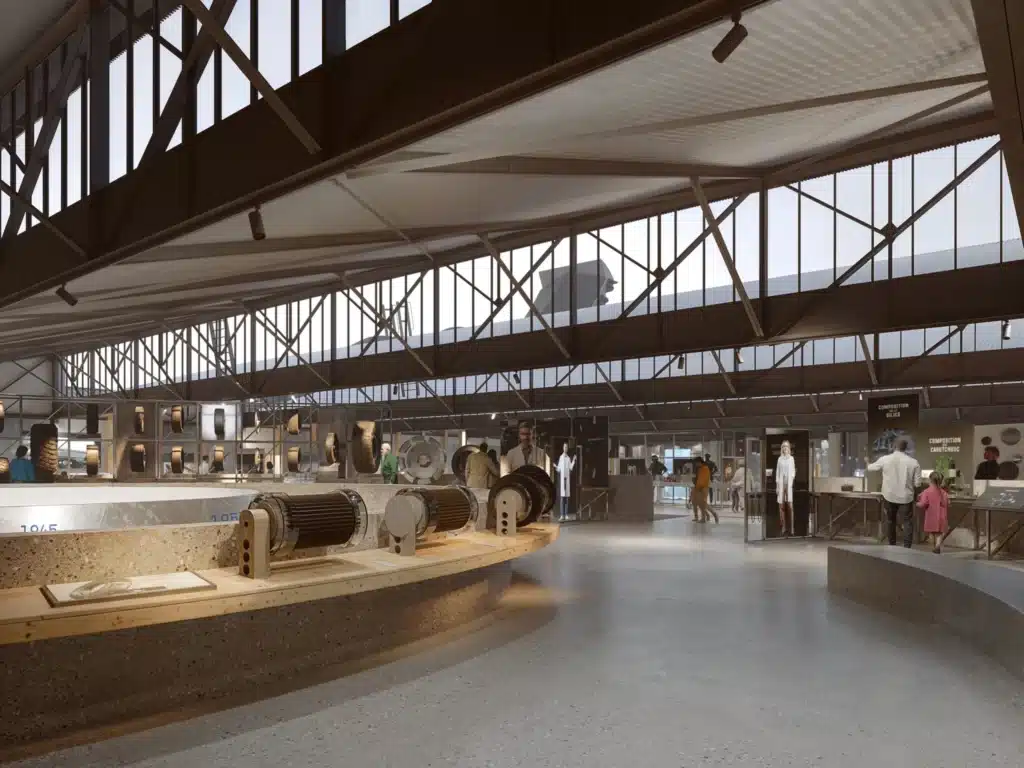
The renovation keeps the hangar’s sawtooth roof and its metal frame. A new timber structure preserves the 30 meter-long span. Designers integrate new elements within the existing framework, minimizing changes to construction and the main structure. The project demonstrates how buildings from the 1960s can adapt without losing their identity. Similar approaches are documented in the archive and architectural design studies.

Repetition and Spatial Logic
The design uses repeated small elements to shape spatial sequences throughout the hangar. Narrow roof openings bring daylight inside, and façade apertures align with the concrete frame. Visitors follow the original factory floor. They move through narrow passages between columns before entering wide exhibition halls. Exhibits stretch across the full width of spaces, showing the connection between interior design and building materials.
Materiality and Sensory Experience
The interior features tactile materials. Timber screens, ceilings, and railings show natural grain and precise joinery. Locally sourced bio-based panels contrast with exposed steel and concrete. These materials highlight sustainability and reinforce links to cities and urban context. The museum also hosts events and jobs, integrating functions without changing the structure.
Local Context and Industrial Memory
The renovation maintains a direct connection to Clermont Ferrand, where Michelin started its operations. Preserving industrial traces and using local materials strengthen the site’s historical identity. Similar projects appear in news and research. Through this project, Michelin Factory Museum transforms industrial heritage into an active cultural resource.
Architectural Snapshot
The former factory turns industrial memory into a functional cultural environment within the city

✦ ArchUp Editorial Insight
The relocation of the Michelin Factory Museum follows patterns of industrial mobility and heritage management. Institutional decisions to preserve the original framework while introducing timber elements reflect regulatory and operational priorities. Economic pressures favor minimizing structural modifications and maintaining the 30 meter span for cost efficiency. Human circulation follows the original floor layout, revealing an underlying assumption of sequential engagement in exhibition spaces. Technical choices, including the reuse of sawtooth roofs and selective openings, limit alternative layouts while ensuring daylight distribution. The repeated use of narrow passages and aligned columns demonstrates risk averse strategies favoring predictability and structural clarity. The project is the logical outcome of industrial preservation policies, operational constraints, and human movement patterns interacting with material and structural decisions. Architectural form appears as a direct symptom of layered non-architectural, economic, and procedural decisions, not as an independent intent.