Moooi’s Adaptive Interiors: Human–Technology Interaction

Temporal and Spatial Interaction in Interior Spaces
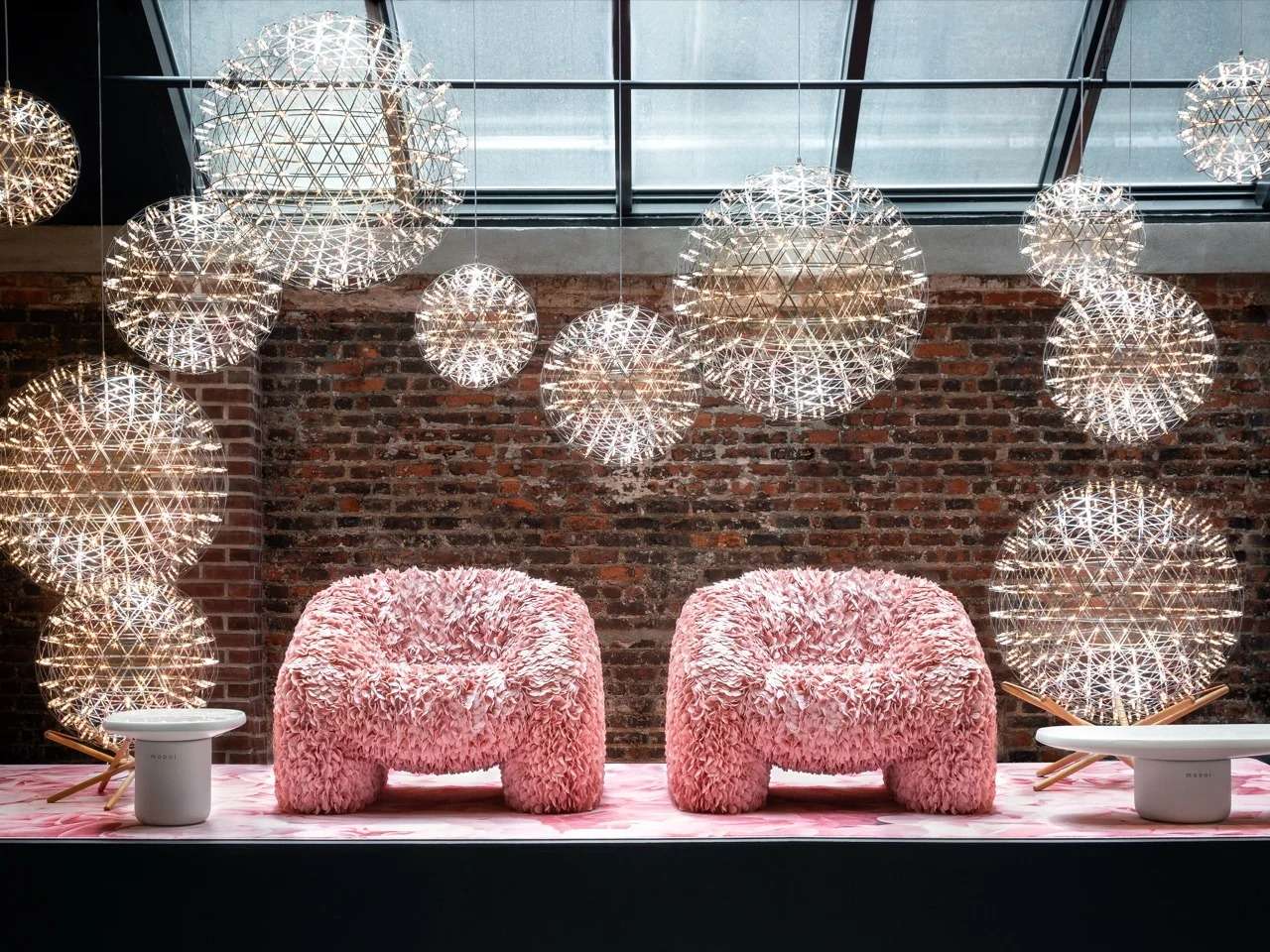
Interior spaces are typically characterized by stability once they have been fully furnished; however, the design vision adopted by Moooi seeks to transcend this conventional model by drawing inspiration from the ever-changing rhythm of nature. This approach is based on envisioning living spaces that respond to the passage of time, emotional states, and the patterns of their occupants’ daily lives, rather than remaining confined to a fixed arrangement from the moment of completion. In this way, the space transforms from a framework that merely accommodates furniture into an environment whose character gradually evolves, inspired by the movement of light and shadow among trees that never appear the same way twice, allowing time to become an active element in shaping the spatial experience.
The Scenographic Experience and Emotional Transformation
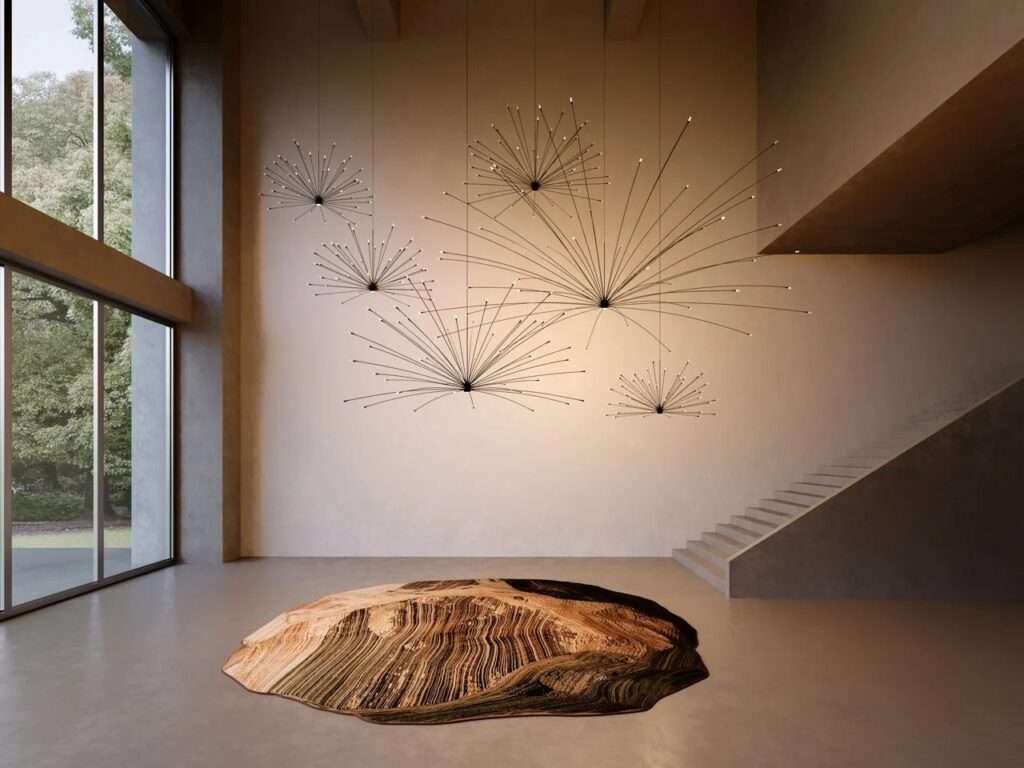
The spatial experience is built upon a sensory interaction that evolves with changing daily conditions, moving away from positioning automation or artificial intelligence as the central focus of the experience. Instead, attention is directed toward how the movement of light and the reconfiguration of spatial elements influence users’ perception of the environment and their interaction with it. As natural lighting conditions shift and patterns of use change, interior atmospheres gradually transform, reshaping the experience of movement and transition within the home while giving it a more dynamic character connected to the rhythms of the external environment.
Sensory Structure and the Reconfiguration of Spatial Experience
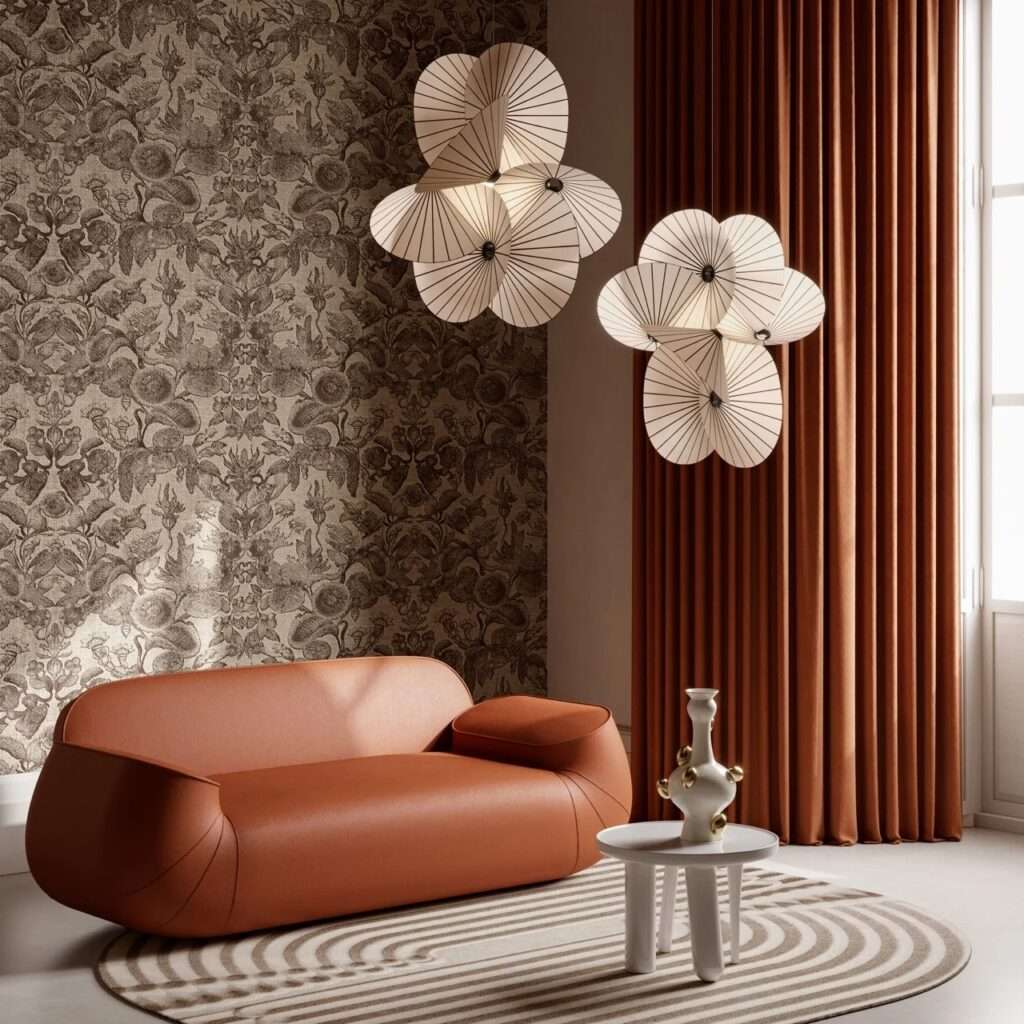
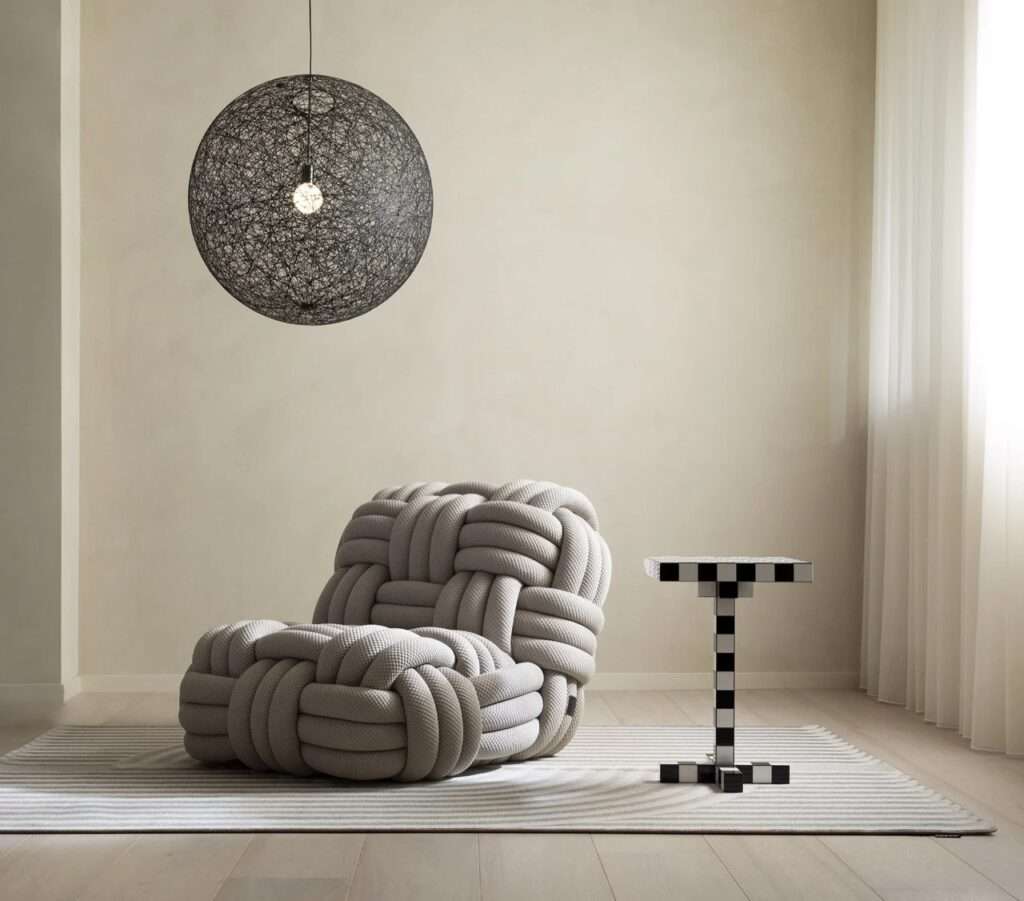
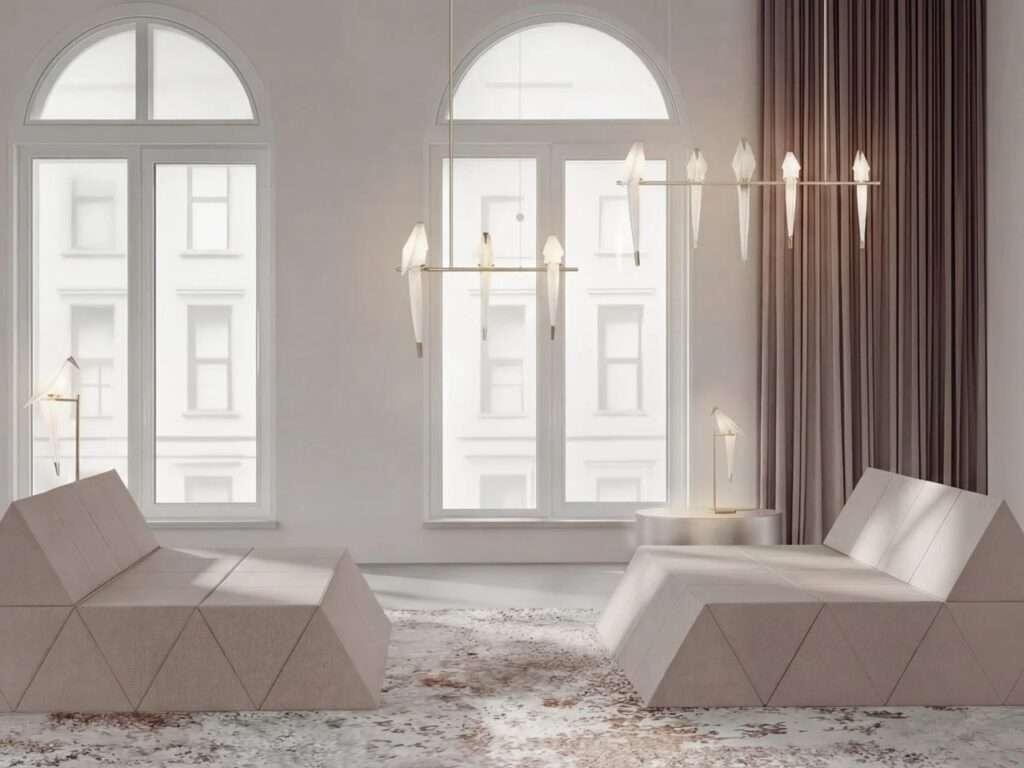
This approach extends beyond the concept of furnishing as an arrangement of separate elements, treating the interior design environment as an integrated sensory system. From the moment of entry, materials, textures, and physical details contribute to shaping the experience of the space, where wall coverings, carpets, and ceramic tiles perform a role that exceeds decoration, becoming essential components in constructing spatial identity. Thus, interior design elements become interconnected components that enhance the sense of depth and enclosure, providing users with a richer and more cohesive experience.
Sensory Scenography and Human-Centered Personalization
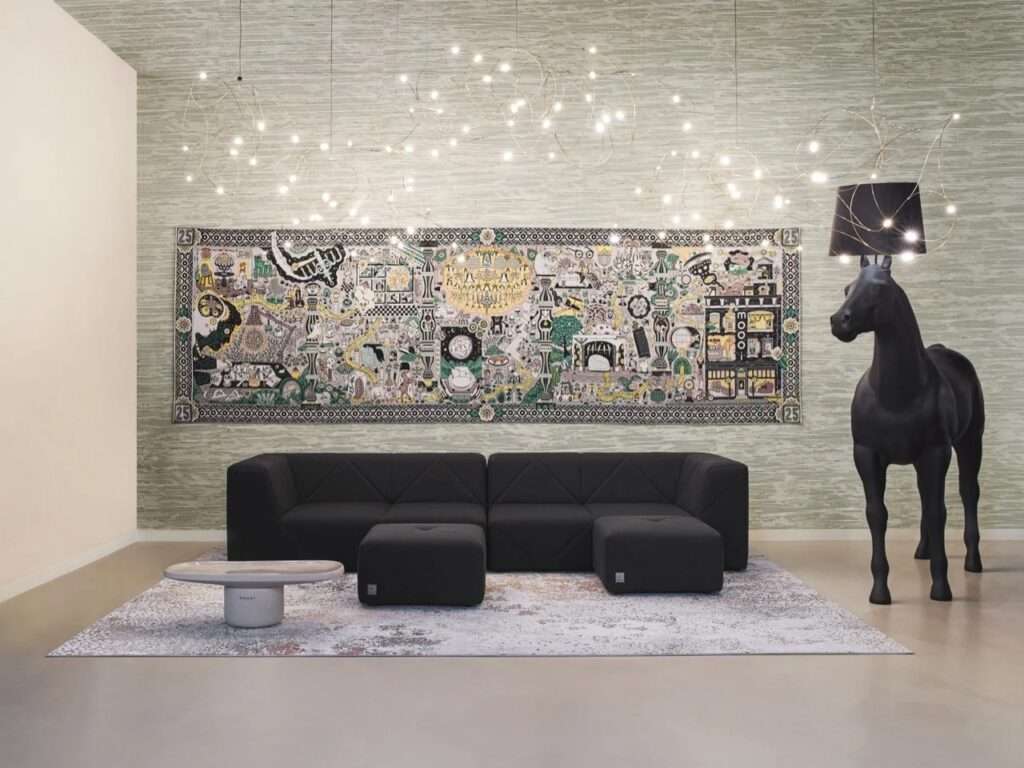
This vision extends toward considering scent and digital customization as design elements that contribute to shaping the identity of a space, alongside materials, lighting, and furniture. Through digital technologies, fragrances, printed carpets, and multilayered surfaces can be adapted to users’ preferences, enabling the creation of interiors that reflect their personalities rather than adhering to standardized templates. This approach gives occupants a more active role in shaping their living environments, allowing interior spaces to evolve alongside their changing needs and lifestyles.
Immersive Scenography and Breaking Spatial Stagnation
The design vision is embodied in the creation of immersive interior environments that stimulate multiple senses simultaneously through the integration of light, movement, and scent within a comprehensive spatial experience. These elements do not merely enrich the visual composition; they reshape users’ perception of space, transforming movement through the interior into an evolving sensory journey that interacts with time and patterns of use. In this way, the interior environment surpasses its traditional definition as a static space, becoming a more dynamic setting that reflects a design philosophy based on continuous renewal.
Human Interaction and Technology as a Creative Material
This approach redefines the role of technology within residential environments, treating it as a design element that enriches the spatial experience alongside light, materials, and craftsmanship, rather than as merely a system for control and automation. From this perspective, Moooi presents a different vision of the smart home concept, one that utilizes technology to support the relationship between people and spaces rather than replace it. The goal is not to create an environment that simply responds to commands, but to develop a space that interacts with changing natural light, the passage of time, and patterns of use, giving the residential experience a more flexible character that is closer to the natural rhythm of life.
✦ ArchUp Editorial Insight
Moooi’s vision redefines the interior space as a temporal instrument rather than a merely fixed composition, where light, scent, material textures, and digital personalization become factors that continuously recalibrate the residential experience. This direction reflects a broader shift in architecture and design toward adaptive environments in which atmospheres become active architectural resources rather than simple decorative layers. Here, the home is interpreted as an evolving interface between humans, technology, and natural rhythms.
However, this immersive model may overestimate the capacity of spaces to transform continuously, overlooking the material and economic limitations associated with constantly adapting interior environments. Responsive spaces require technological infrastructures, maintenance, and additional consumption that may conflict with sustainability objectives. Furthermore, an emphasis on sensory dynamism may obscure the importance of spatial stability, material longevity, and users’ everyday needs. Therefore, this vision requires an evaluation that moves beyond the appeal of the experience toward measuring its actual performance.