Mövenpick Budapest Centre — Tremend Architects

Between Preservation and Intervention: Tremend Architects at the Mövenpick Budapest Centre
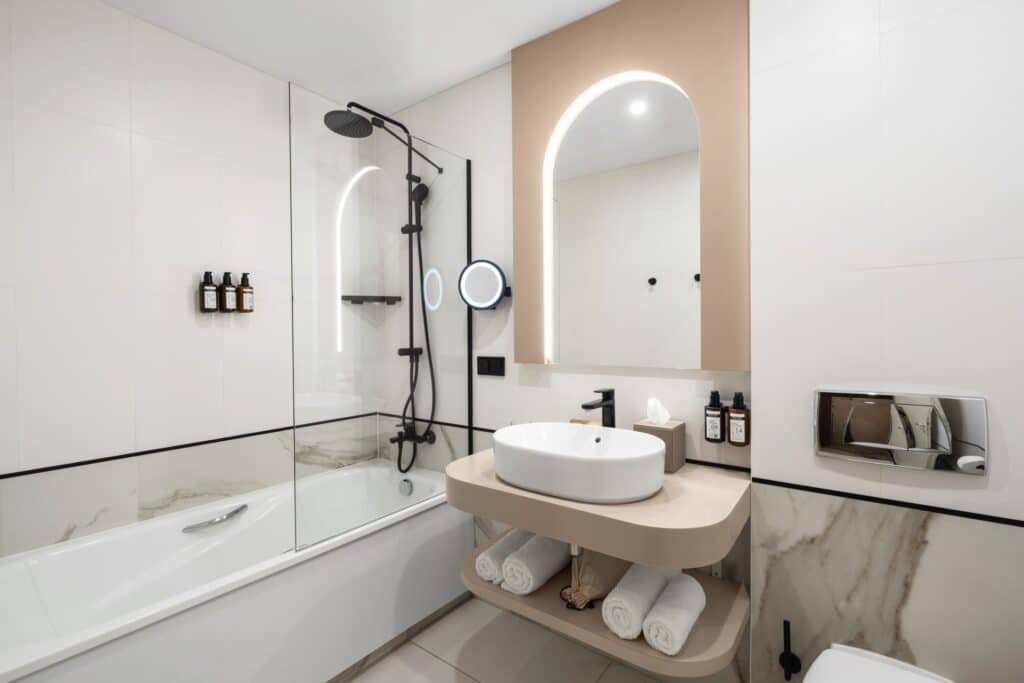
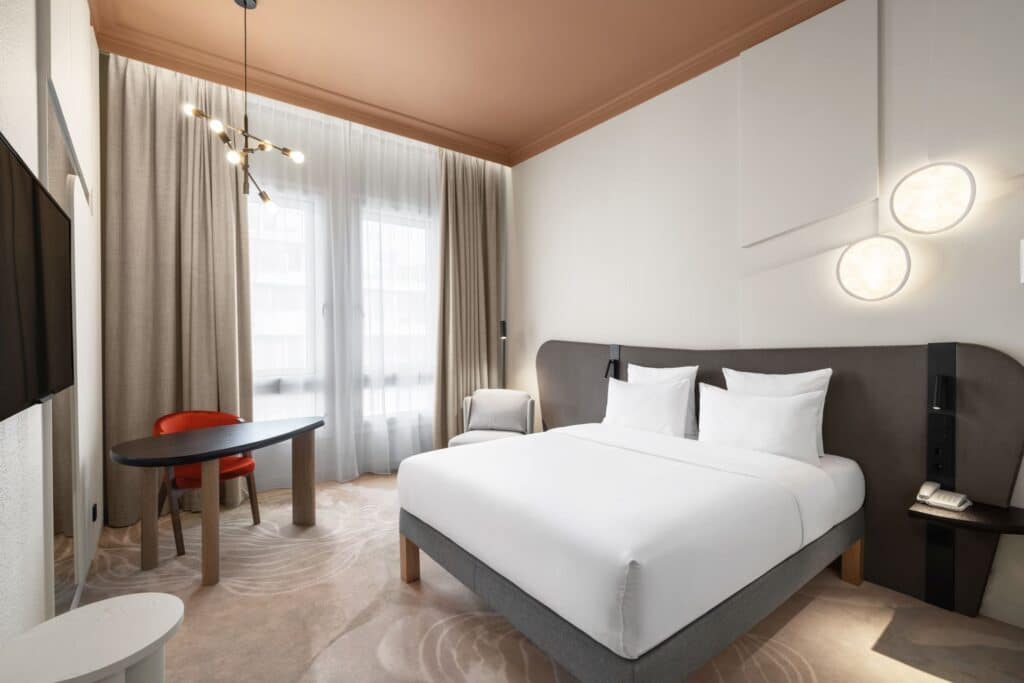
The renovation of a 1911 Art Nouveau building in central Budapest into the Mövenpick Budapest Centre presents the kind of brief that tests an interior architecture practice’s discipline as much as its creativity. Tremend architects, led by founder and creative director Magdalena Federowicz-Boule, were commissioned to design the entrance zone, lobby, bar area, and hotel rooms. The completed project, unveiled in 2025, offers a considered if occasionally overstated approach to the relationship between historic fabric and contemporary insertion.
The Site and Its Inherited Weight
The building occupies a significant urban position in Budapest, proximate to Keleti Railway Station, the Hungarian State Opera House, and the Great Market Hall. Its 1911 construction places it firmly within the architectural culture of Austro-Hungarian Art Nouveau, a period characterised by ornamental density, chromatic richness, and a close integration of structure and decoration. The stained glass, balustrades, ornamentation, and original lighting fixtures that survive into the current project are not decorative assets to be framed but the primary architectural substance of the building. Any interior intervention in this context is by definition an act of negotiation with an existing spatial argument.

The Design Concept: Spices as Spatial Logic
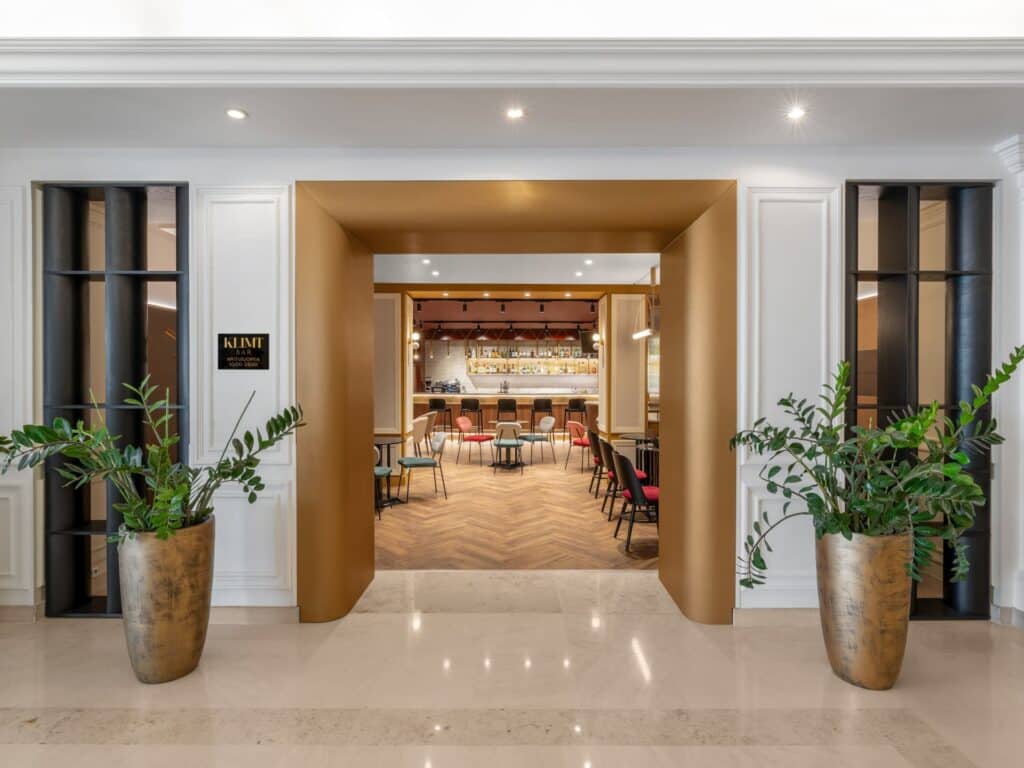
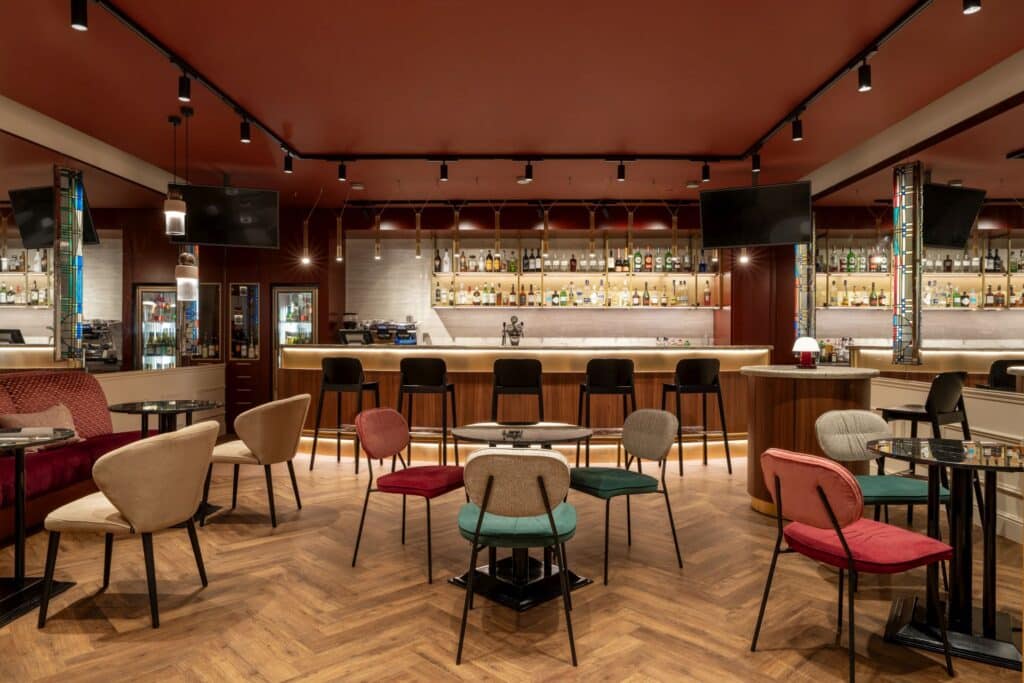
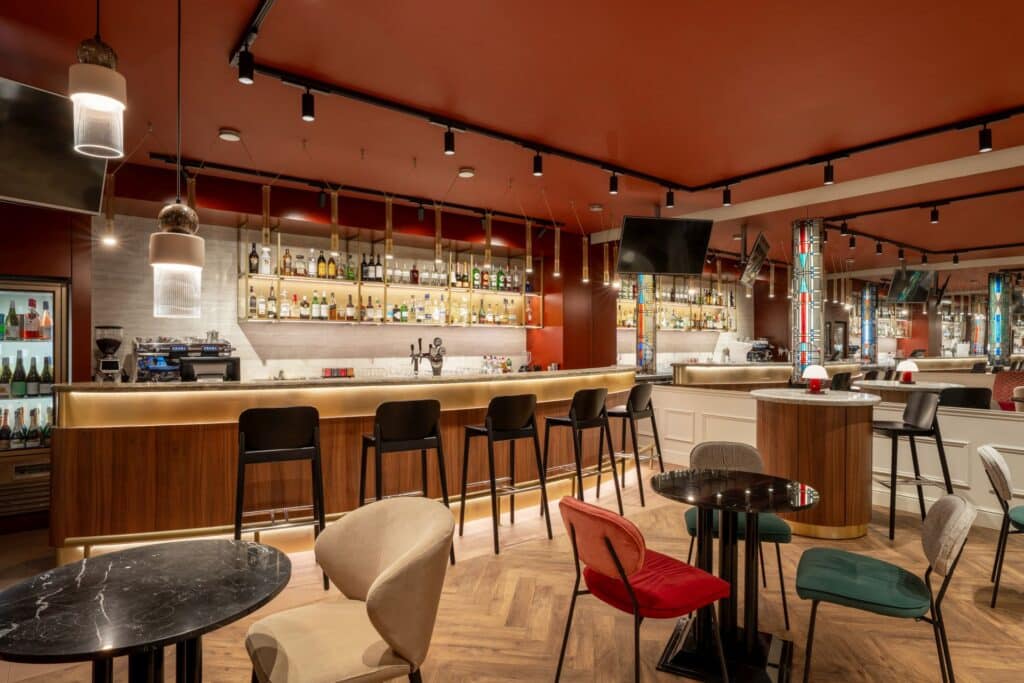
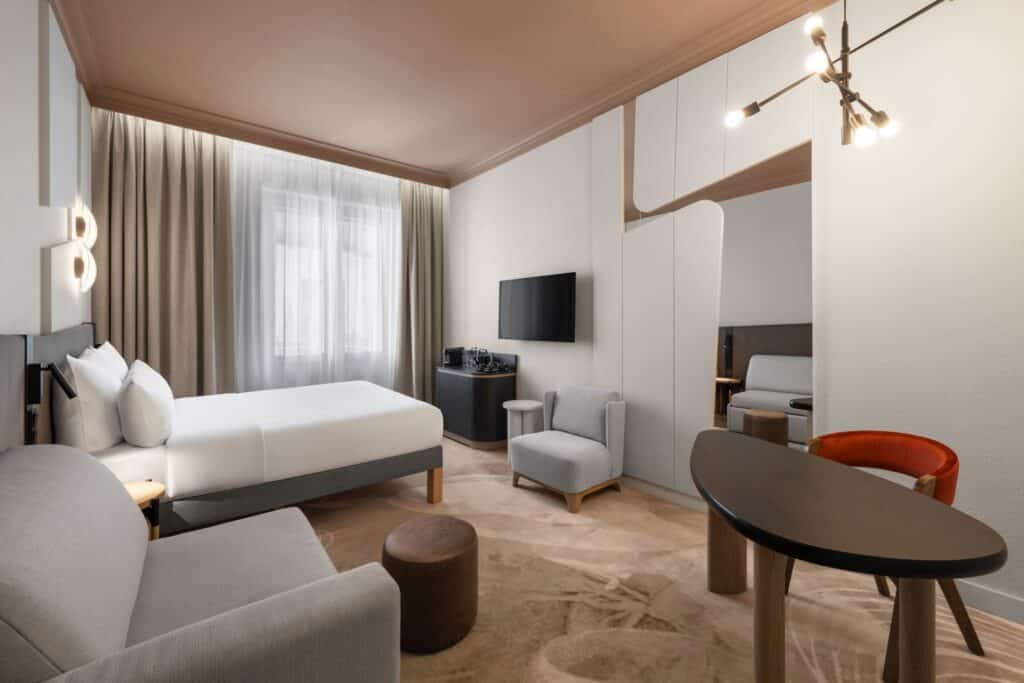
Tremend’s stated conceptual framework positions Hungarian spices as the organisational metaphor for the project: paprika, saffron, and herbs appear as chromatic accents within a palette that moves from sandy, light-reflective tones in the daytime public areas to deep chocolate browns in the more intimate nighttime spaces. The metaphor is genuinely thought through rather than decorative. Spices operate at the intersection of culture, landscape, memory, and sensory experience, which maps plausibly onto what a hotel lobby in a historic city centre is asked to do. The risk of such frameworks is always that the metaphor remains illustrative rather than generative, and the outcome depends entirely on whether the spatial decisions follow from the concept or merely borrow its vocabulary.
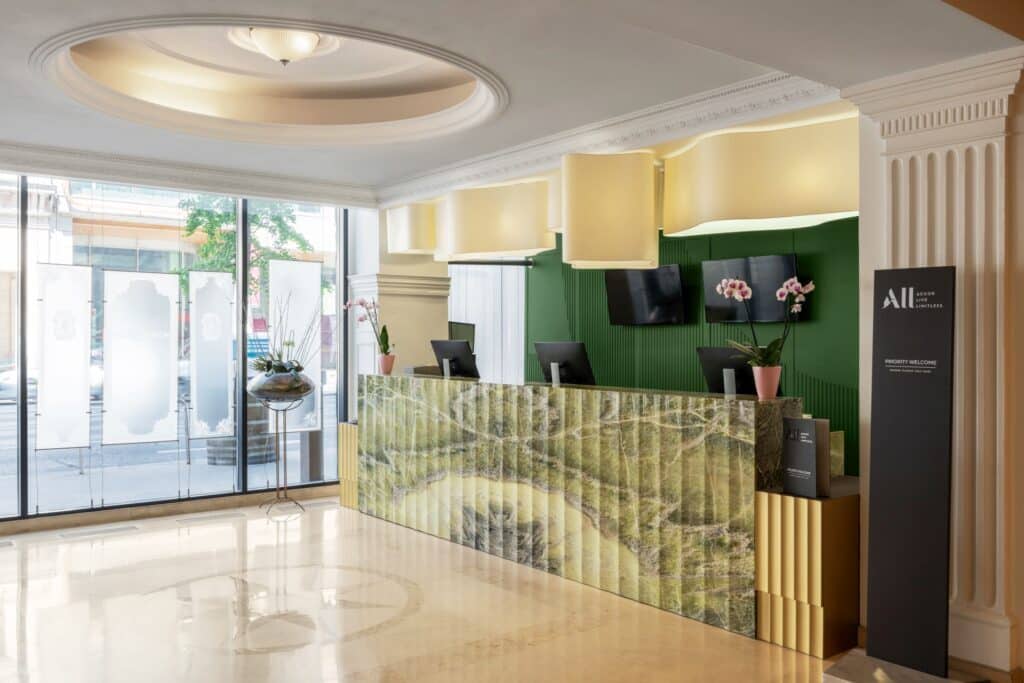
The colour transitions reported across different zones of the project suggest a coherent material strategy. The sandy tones of the public lobby work with the building’s historic glazing as a light-receiving surface, while the deeper tones of the intimate zones create the enclosure appropriate to private or semi-private use. The use of paprika and saffron accents as what the studio describes as appearing “like an aroma — unobtrusive yet memorable” is a reasonable calibration: strong enough to register, restrained enough not to compete with the architectural ornament they sit beside.
Fluid Transitions and the Question of Boundaries
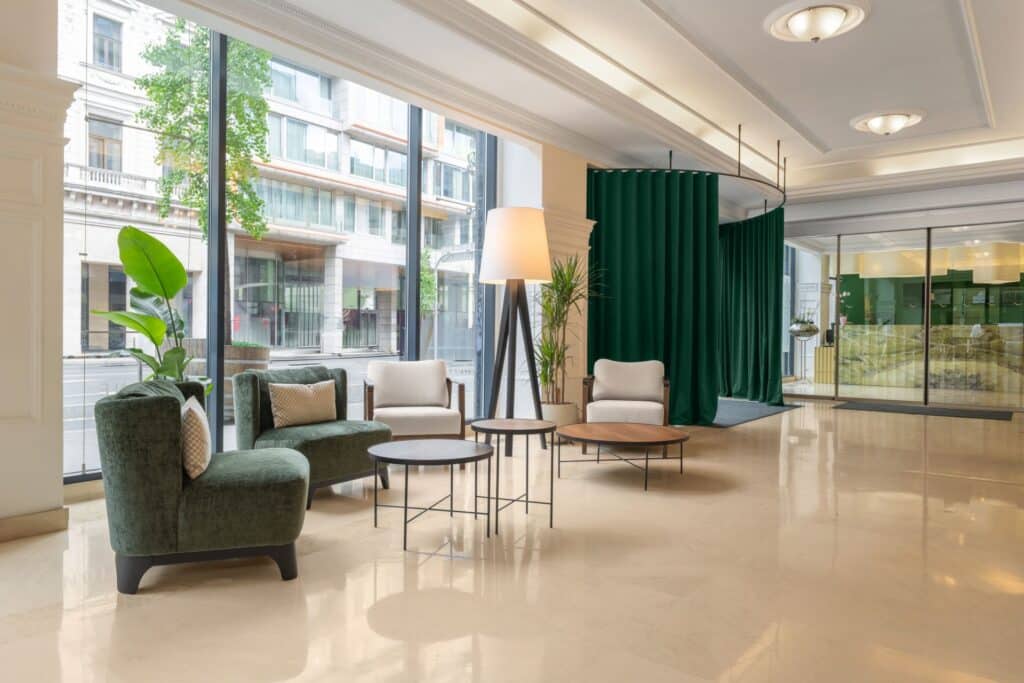
The design strategy of dissolving functional boundaries between check-in, lounge, coworking, and dining through modular furniture, light, and material differentiation reflects a hospitality design orthodoxy that has become near-universal since the mid-2010s. The open-plan lobby-as-living-room format is well-matched to the Mövenpick brand’s lifestyle positioning, and it makes spatial sense in a building whose historic public rooms are large enough to accommodate multiple simultaneous programmes without feeling fragmented.
What is less clear from the project documentation is how the contemporary modular furniture language relates to the scale and geometry of the historic interior. Art Nouveau spaces are not neutral containers: their proportions, ornamental rhythms, and material surfaces generate strong spatial pressure of their own. Contemporary furniture of the organic, soft-form variety that the project describes can either sit comfortably within that pressure or be overwhelmed by it. The reported layered lighting strategy that works to bring the interior down to a human scale suggests that the designers were aware of this tension, though resolving the verticality of a monumental historic space through lighting alone is a partial solution.
The Insertion Logic: Restraint as Strategy
Tremend’s described approach, in which historical elements act as “base spices” and new interventions as “subtle additions,” reflects a philosophically sound position on adaptive reuse: that the existing fabric should set the terms and contemporary insertions should complete rather than compete. The reception desk with simple geometry, contemporary lighting fixtures, and soft seating as additions to the historic language is a restrained rather than assertive insertion strategy. Whether this restraint reads as confident understatement or as under-resolution depends on execution quality that cannot be fully assessed from project descriptions alone.
The comparison of the lobby to the first impression of a dish is a rhetorically effective framing but also a slightly problematic one: it positions the space primarily as an experiential threshold rather than as architecture in its own right. A lobby in a 114-year-old building in central Budapest is not only a guest experience device; it is a civic space with a relationship to the street, the city, and a layered history of uses. The project’s framing is firmly oriented toward the hotel guest’s journey rather than toward the building’s urban dimension.
✦ ArchUp Editorial Insight
The Mövenpick Budapest Centre project by Tremend represents a thoughtful approach to one of the more demanding problems in contemporary hospitality architecture: how to insert a current operational brief into a protected historic fabric without either erasing the original or producing a museum. The spice metaphor is more than decorative, and the reported material and chromatic strategy shows awareness of the building’s specific light conditions and spatial character. However, the project’s documentation leans heavily on experiential and sensory language at the expense of spatial and tectonic analysis. Phrases about “fluid functional transitions” and “boundaries dissolving” describe the ambition accurately, but dissolving boundaries in a monumental Art Nouveau interior is a more contested operation than the project narrative acknowledges. The deeper question for any adaptive reuse of this kind is not whether the new layer is restrained, but whether it earns its presence through a genuine spatial argument. From what is available, Tremend’s insertion appears disciplined and materially coherent, but the project’s conceptual framing favours atmosphere over architectural rigour in its self-presentation.
Conclusion
Tremend architects’ intervention in the Mövenpick Budapest Centre navigates the tension between a densely characterised Art Nouveau building and the operational requirements of contemporary hospitality with evident care. The project’s primary contribution lies in its restraint and its conceptually grounded material palette. Its limitation, as presented, is a tendency to describe spatial outcomes in experiential rather than architectural terms, leaving open questions about how the new layer relates structurally and formally to one of Budapest’s more demanding historic interiors.