MP House: Topography and Spatial Design

General Context and Material Selection
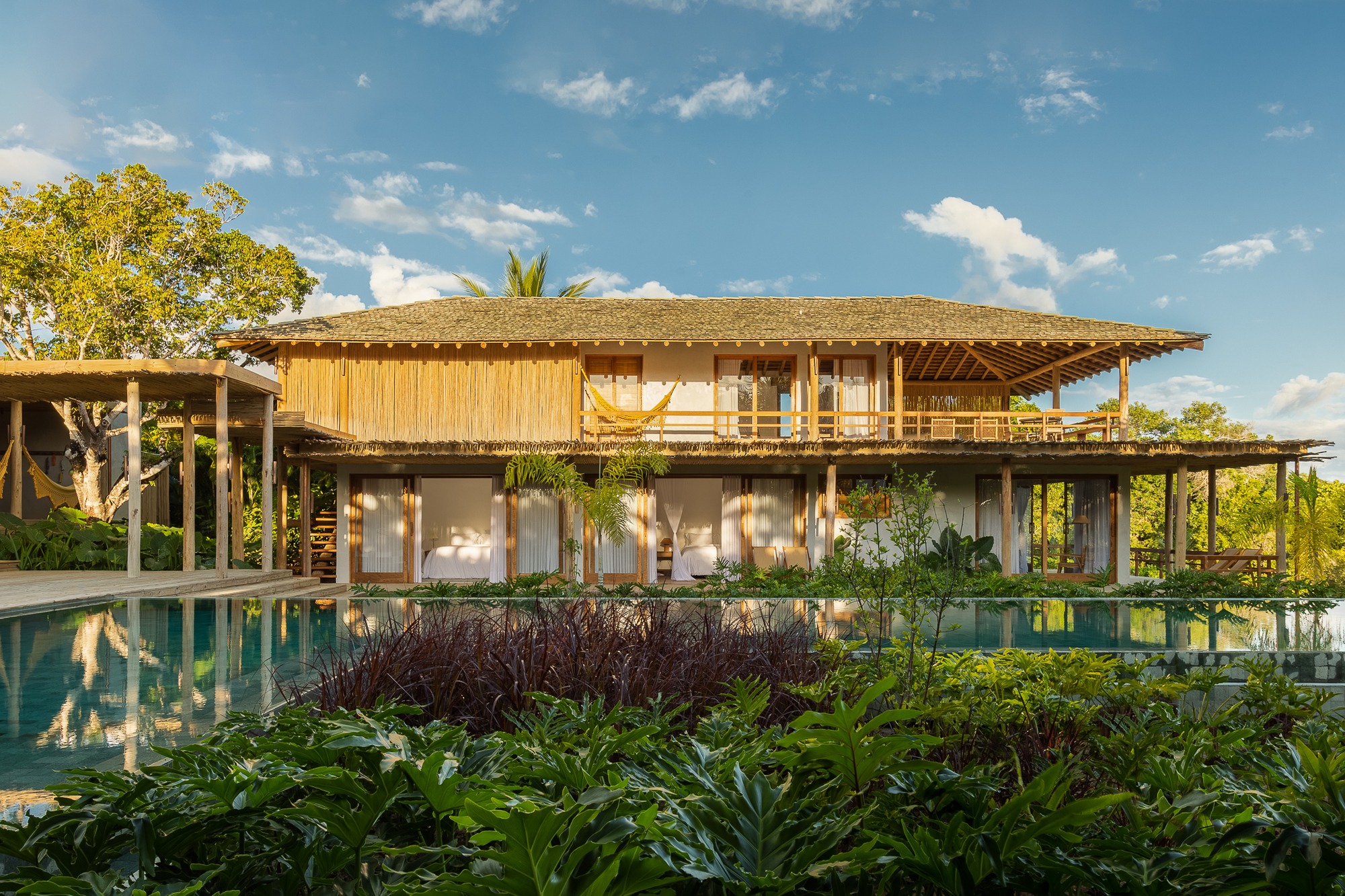
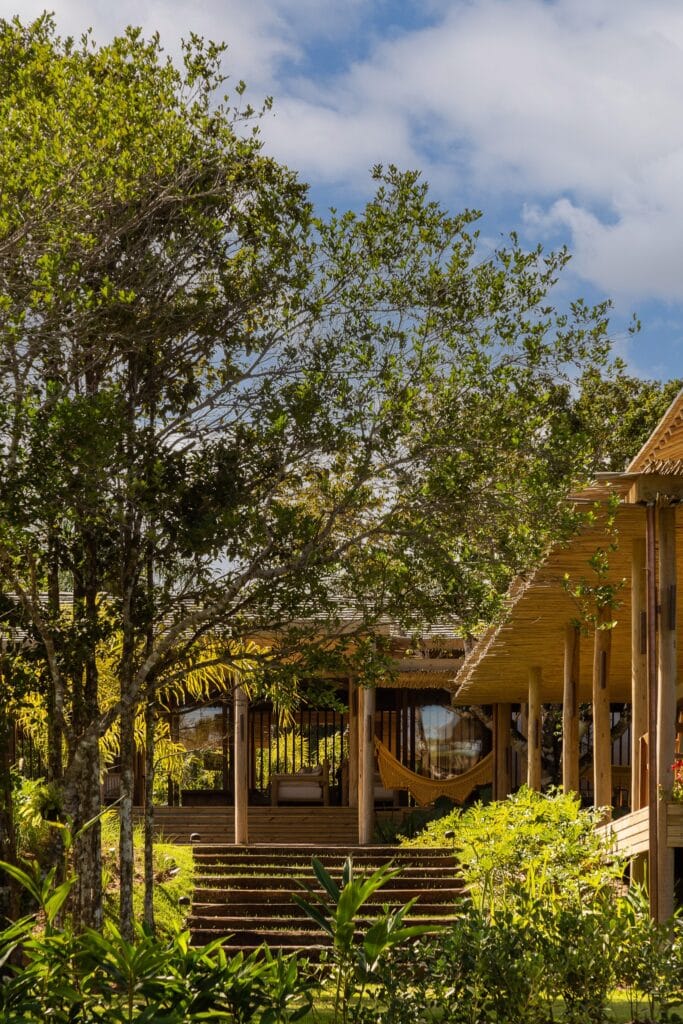
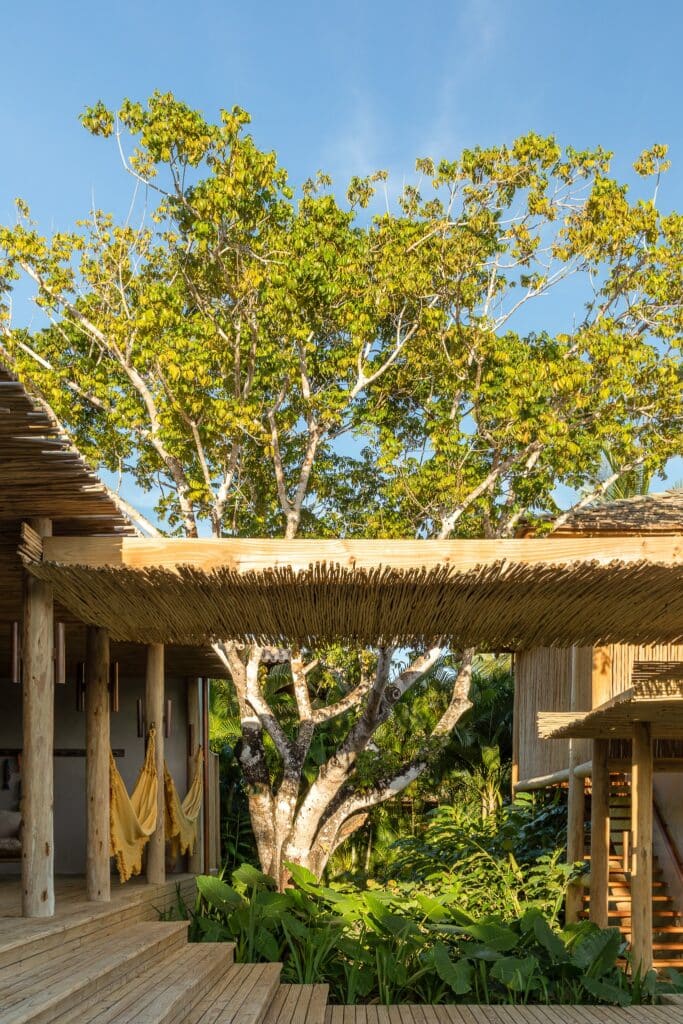
The residence is located within a residential compound and is designed as a holiday home with the possibility of seasonal rental use. The design relies on Building Materials that reflect the natural and cultural characteristics of the region, such as wood, terracotta roof tiles, rustic plaster, burned cement, and eucalyptus wood pergolas, contributing to the formation of a spatial identity connected to the surrounding environment.
Entrance Organization and Spatial Transition
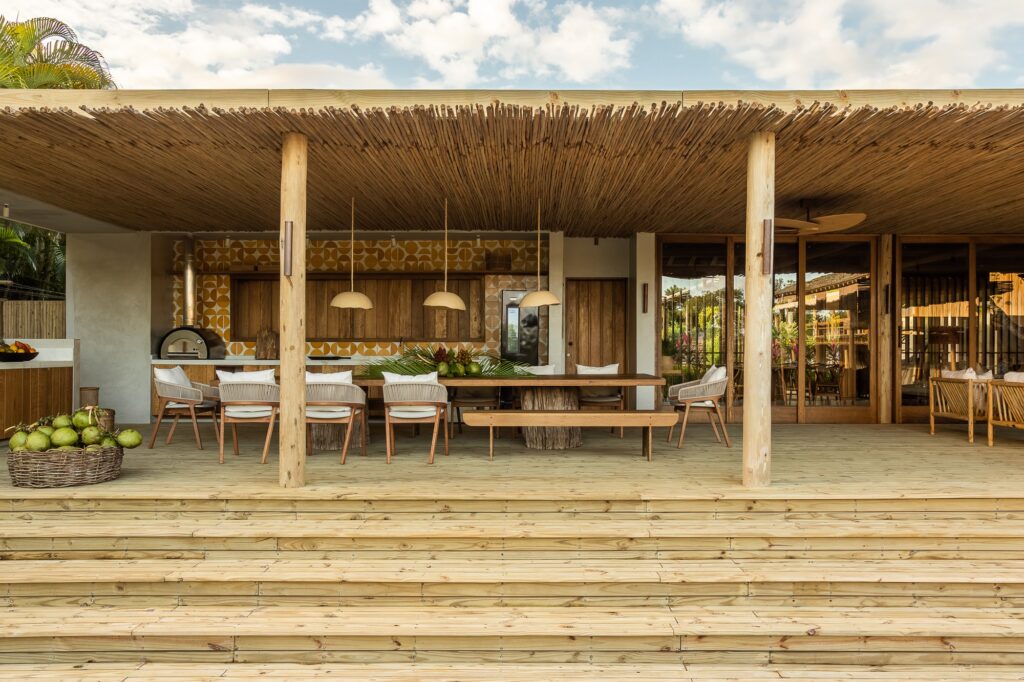
At the main entrance area, the central pergola functions as a covering and transitional element that defines the threshold and frames the front door. Upon entry, the swimming pool appears directly within an axial visual extension, enhancing the connection between interior and exterior and creating a clear spatial sequence with a visual moment of surprise upon arrival.
Visual Treatment and Environmental Control
On the same façade, a vertical wooden brise-soleil has been employed, visually integrating with the texture of the door when closed. This element enables the regulation of natural light and ventilation within the interior spaces, while maintaining the Architecture consistency of the façade treatment.
| Field | Details |
|---|---|
| Architects | 73.Onze Arquitetura |
| Area | 1039 m² |
| Year | 2024 |
| Photographs | Israel Gollino |
| Lead Architect | Julia Regis Bittencourt |
| Category | Houses |
| Collaborations | Ricardo Salem |
| Project Team | Michel Muniz, Ana Paula Simmer |
| Structure | Filipe Teixeira |
| Landscape Architecture | Studio da Paisagem |
| Execution | Escala Nativa |
| City | Trancoso |
| Country | Brazil |
Topographical Influence on Building Placement
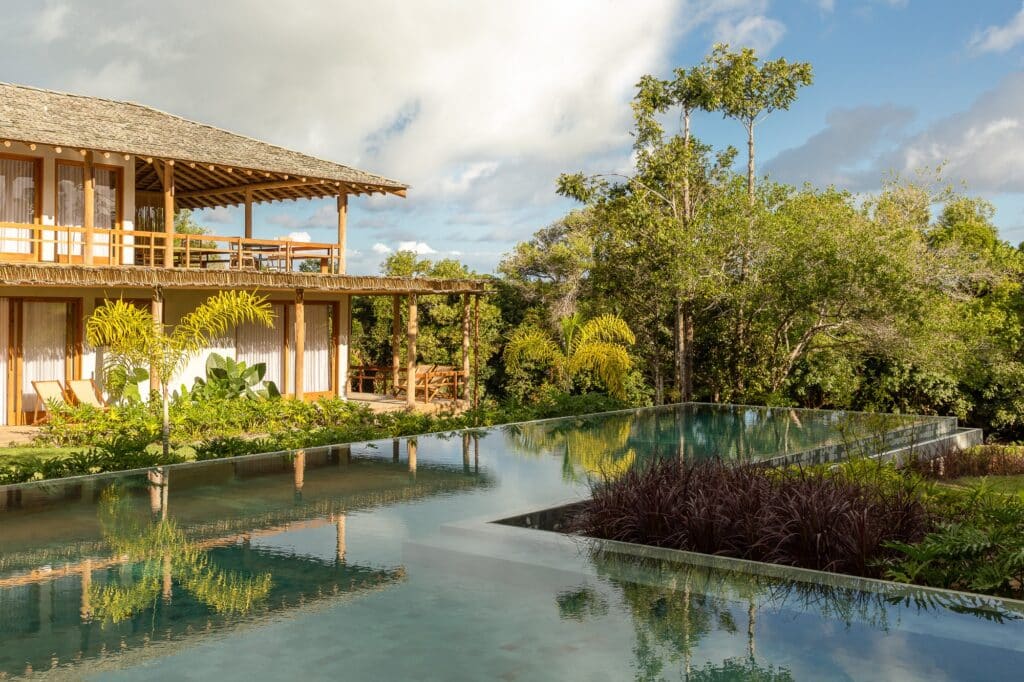
The sloping nature of the terrain, overlooking a shared green area within the residential compound, played a decisive role in determining the building’s position. The structural mass was shifted slightly below street level, reducing its visual presence on the front façade. This decision contributes to integrating the building into the natural landscape despite the scale of the Projects program.
Mass and Functional Organization
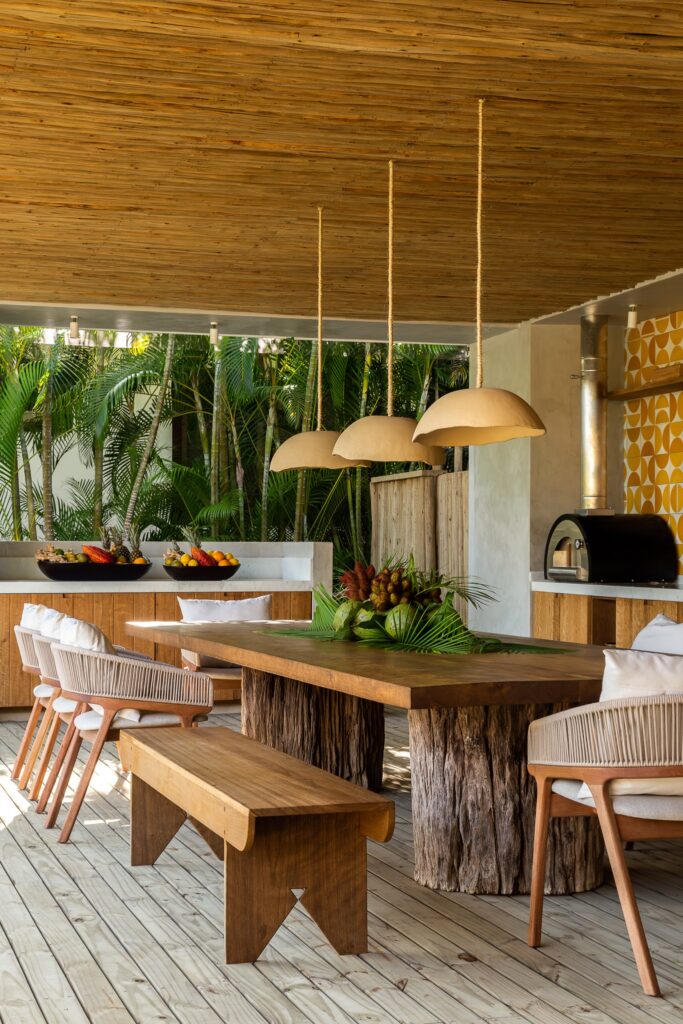
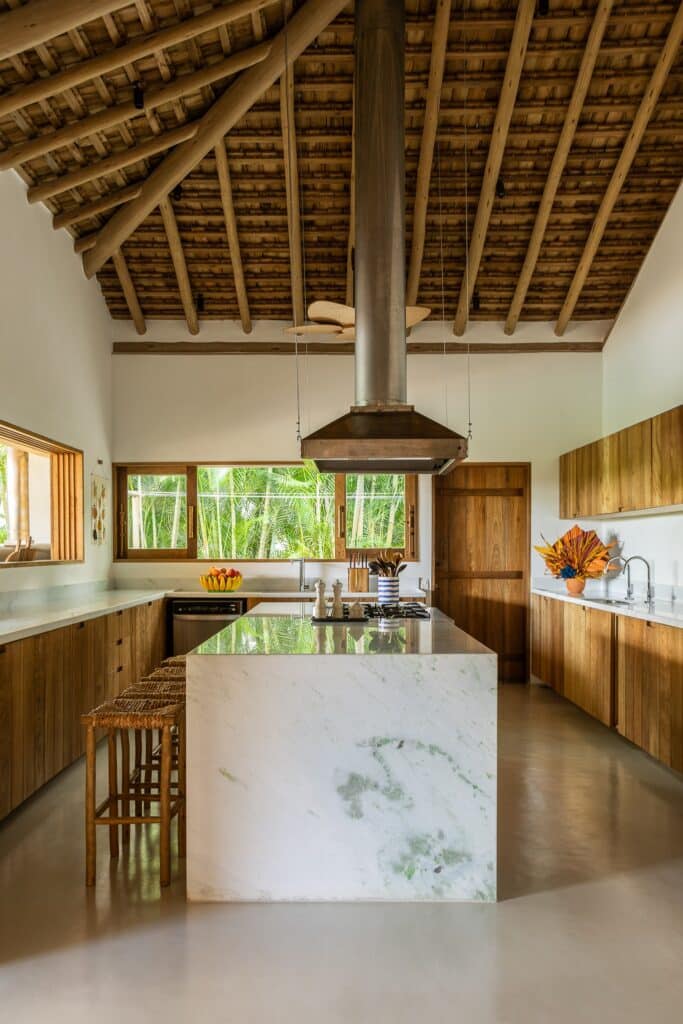
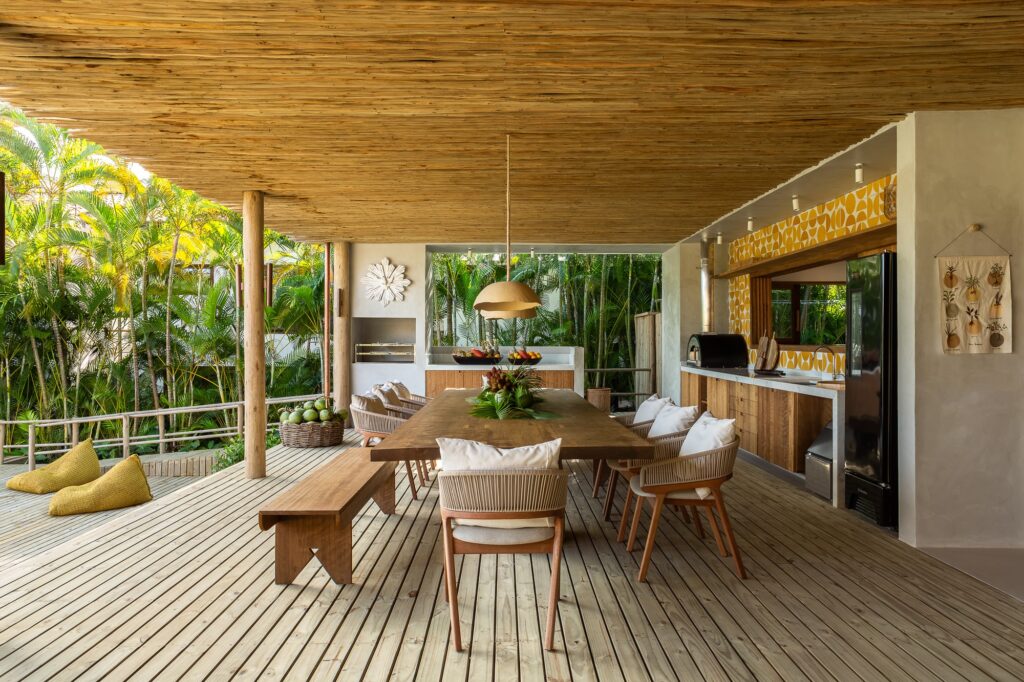
The Buildings is divided into three clearly defined functional volumes. The front volume contains two residential suites and is covered with a waterproof slab roof incorporating expanded clay materials to improve thermal performance. The central volume accommodates the social spaces such as the living room, kitchen, and service areas, and connects directly to the outdoor swimming pool area. The rear volume takes advantage of the site’s slope to create two levels, allowing for an additional distribution of functions.
Spatial Treatment at the Upper Level
In the rear volume, the master suite is located on the upper floor and overlooks the green area within the compound. The terrace has been treated as a functional extension of the interior space, where the railing is integrated with a seating element. This adds an additional layer of use to the space and strengthens the relationship between the view and everyday occupation.
Bedroom Organization and External Circulation
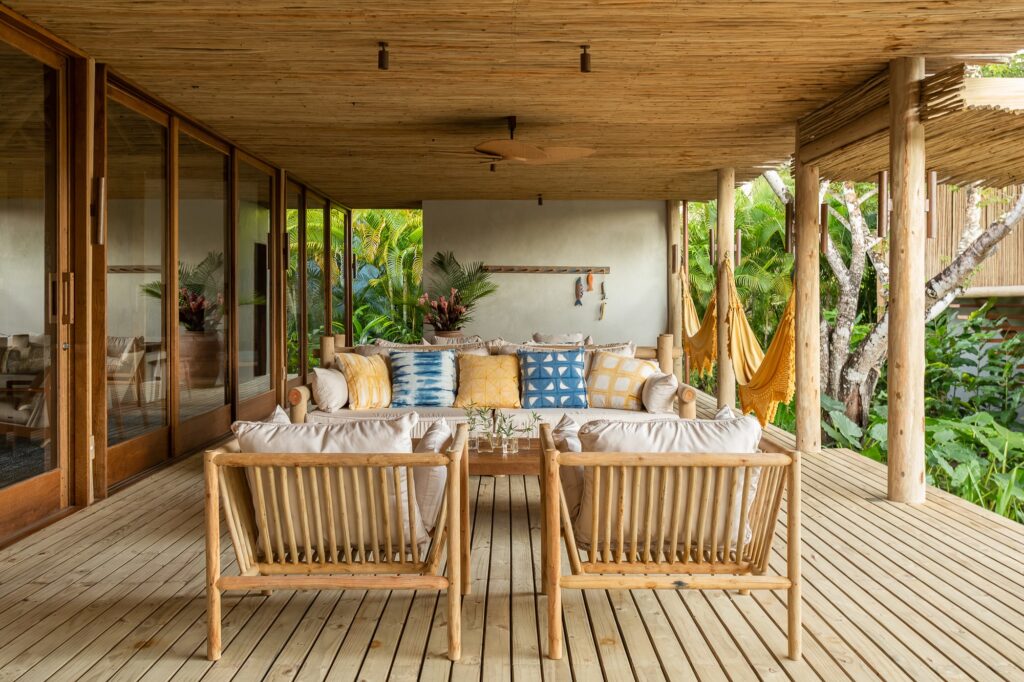
Although the bedrooms are distributed across separate volumes, they follow a unified Design logic based on access through a covered external corridor that also functions as a terrace space. This solution strengthens the connection with the natural site and creates a spatial gradient that allows for social interaction and outdoor contemplation, while maintaining the independence of the volumes without direct internal connections between them.
Material Treatment and Visual Identity
Wooden slats are used as a unified organizational element, appearing in the pergola roof structures as well as in the vertical components of the upper floor. These slats function as a filter for natural light, a tool for visual control, and a means of providing a degree of privacy, contributing to the cohesive Architecture expression of both façades and spatial volumes.
Interior Composition and Material Relationship
The Interior Design was developed through an approach focused on the use of locally sourced and artisanal furniture. The interior compositions rely on contemporary pieces and neutral color palettes, creating a visual balance with the natural materials used in the building. This results in a calm relationship between the interior elements and the overall architectural structure. You can also check similar approaches in our Top News and Research sections.
✦ ArchUp Editorial Insight
In MP House, the spatial organization is shaped by the financing logic of gated residential development and the rising investment-return model associated with short-term rental use, rather than by an independent formal decision. The primary driver is rooted in land subdivision regulations and market requirements for residential assets adapted for seasonal occupation, while the topographical slope and the shared green space operate as regulatory and environmental constraints that redistribute the building mass below street level, reducing visual exposure and reinforcing compliance with privacy. The programmatic decision materializes in three distinct volumes that separate patterns of use between residential, social, and seclusion functions through external circulation rather than internal connectivity. The materials employed reflect adjustments to local supply chains more than expressive intent, ultimately producing a spatial solution that functions as a balance between risk management, thermal performance efficiency, and the fragmentation of occupancy within a controlled urban framework. For more architectural insights, visit our Archive and Architecture Competitions sections.