Damaged Paris Shopfronts Put Commercial Street Repair in Focus

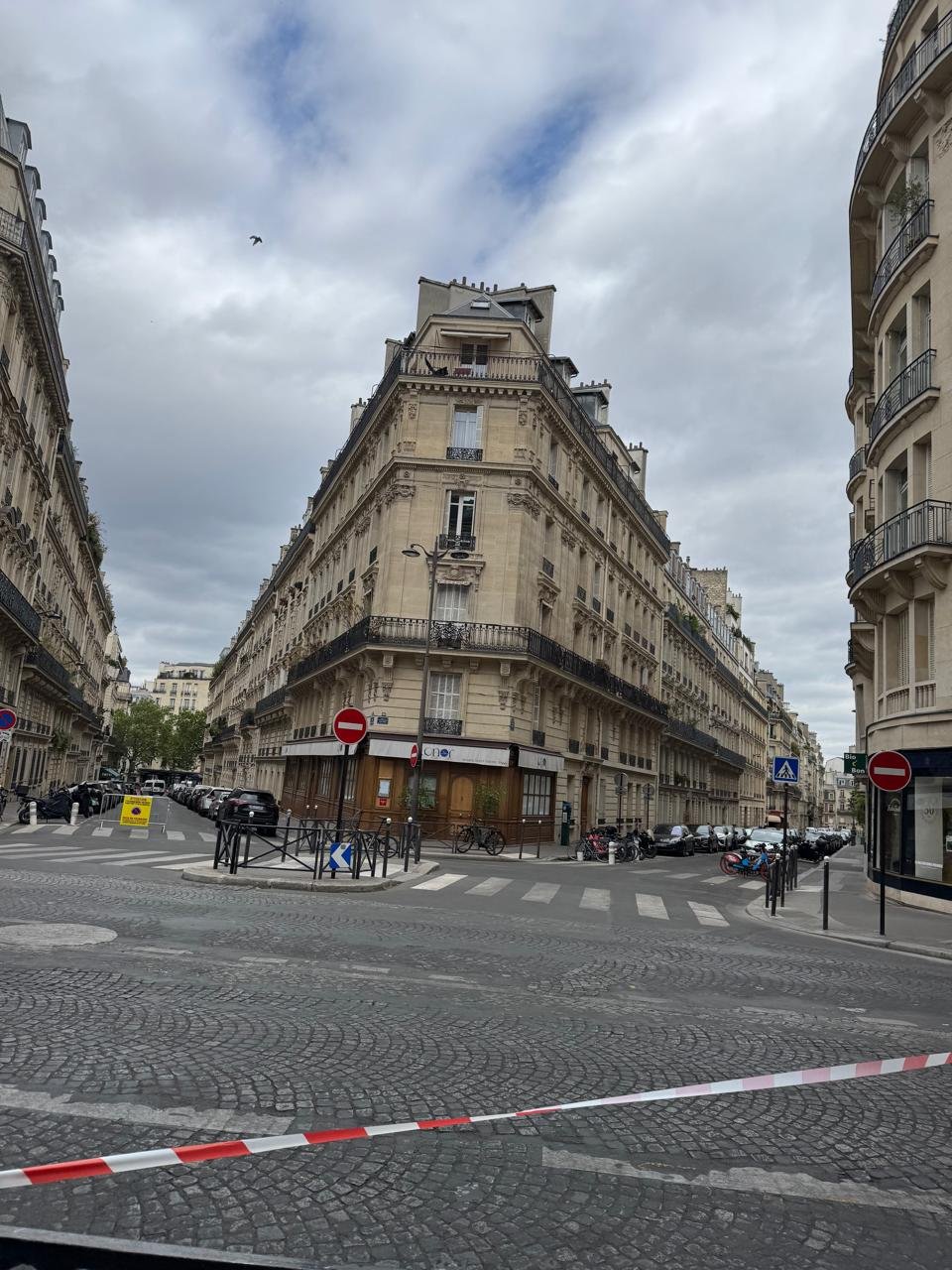
Cover: Parisian building frontages and ground-floor cafés at a street junction, from the July 2026 visit archive. This photograph predates the protests and does not document their damage. © Ibrahim Fawakherji / ArchUp.
Vandalism accompanying the Paris protests on 17 October left damaged shopfronts and looted premises, prompting work to secure openings and repair affected ground floors. Along the streets concerned, restoring shops has become part of restoring everyday urban life, where pedestrian movement, residential entrances and retail activity share a continuous building frontage.
On Avenue Montaigne, Le Monde reported work to secure damaged Louis Vuitton and Jil Sander windows and the looting of Celine. AFP reporting also documented attacks on shops around Place de la République. The damage extends across luxury retail and everyday neighbourhood services.
Repairing the building at street level
The architectural significance lies in where the damage occurs. The ground floor is the building’s most immediate connection to the city: its doors, displays and lighting meet people on foot. Broken or temporarily closed frontages change that relationship even where upper floors remain in use.
Fawakherji’s account of Parisian streets temporarily reassigned during a citywide event offers a useful reading of this dependence on access and activity. The reasons for closure differ, but each reveals how closely urban life relies on the continuity of entrances, pavements and occupied premises.
An architectural repair assessment starts with damaged components and safe access, then establishes the scope of glazing, frame, shutter and interior work for each property. Within historic frontages, repairs must also consider the relationship between the shop and the building above: opening proportions, mouldings, materials and fixings. A temporary enclosure can secure a shop quickly; recovering the architectural frontage may require more precise work.
Public surfaces and urban memory
The City of Paris documented graffiti removal at Place de la République as part of its public-space response. Such work concerns the material details through which a place remains recognisable in daily use.
Fawakherji’s reading of the Louvre as an accumulation of architectural layers provides a broader connection to this question of material continuity. This is a reference to architectural conservation, not a claim that the Louvre was damaged in the current events.
Reopening premises restores part of the street
Glazing, joinery, metalwork, interior fit-out and surface treatment come together in a task that extends beyond a single lease boundary. Reopening a shop restores a lit entrance, an active frontage and a destination. Prolonged closure interrupts that sequence and can leave an urban consequence after the immediate event has ended.
The allocation of recovery responsibilities connects with Fawakherji’s examination of how Parisian public space distributes responsibility for safety. What institutions provide and what occupants must arrange are consequential questions. On a commercial street, landlords, tenants, contractors and public authorities each control different parts of recovery, with potentially different completion dates.
The City of Paris says the detailed damage assessment remains ongoing. Successful repair will depend on returning buildings to use, retaining their frontage details and restoring connections with pedestrians and surrounding activity. Property repairs, stolen stock and business interruption are separate losses; they do not yet constitute a verified aggregate reconstruction bill for Paris.
Sources: City of Paris, update on protest damage and support for businesses, 19 October 2026; Le Monde, reporting by Olivier Pinaud and Juliette Garnier on retail damage, 18 October, updated 19 October 2026; Le Nouvel Obs, reporting on shop looting incorporating AFP observations, 18 October, updated 19 October 2026.