The Mountain Does Not Lie But the Architect May Misread It

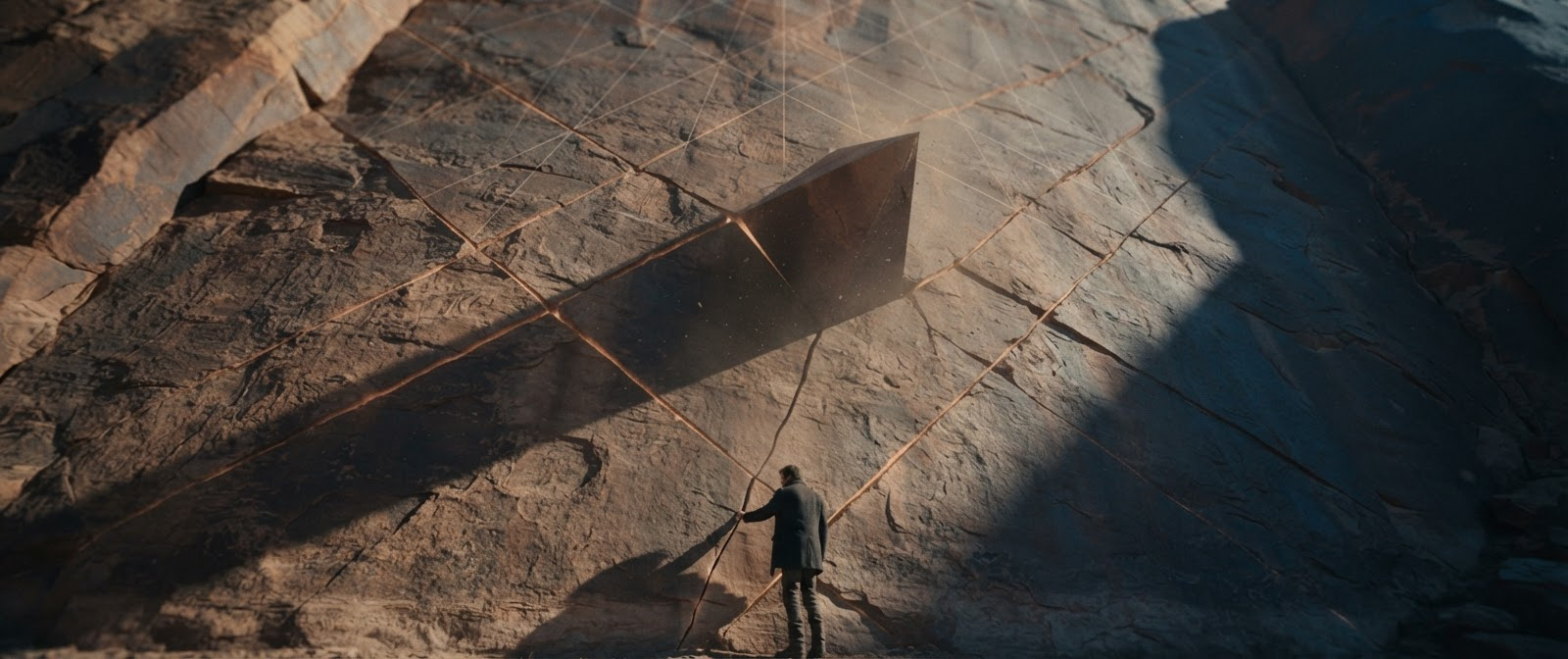
When Rock-Slide Calculations Become a Philosophy for Designing Carved Buildings and Hillside Cities
A silent paradox inhabits the world’s most celebrated cities: Petra was carved into pink sandstone at heights that defy logic; Cappadocia in Turkey transformed petrified volcanic pools into an entire underground city; and the agricultural terraces of Machu Picchu penetrated the heart of the Andes with an engineering audacity that continues to astonish today’s engineers. Yet all these civilizations confronted at some point the same question that faces every designer who dares to invade rock: Will you slip, will you slide, or will the mountain embrace you? Does this mountain know you are here? And does it accept you, or is it preparing to expel you?
The answer does not lie in aesthetics, nor in intuition, nor even in field experience alone. The answer lies in a discipline called rock mechanics, specifically in a computational model known as “rock slope stability analysis against wedge-slide failure,” which at first glance appears to be the sole concern of geotechnical engineers but is in essence a philosophy of reading the site that surpasses any design theory taught in architecture schools.
When the Rock Betrays Its Inhabitant: What Is Wedge Failure and Why Should the Designer Care?
In masses of hard rock fractured by natural joints — what geologists call “jointed rock” — these fractures intersect at specific angles to form, together with the slope face and the upper crest surface, a tetrahedral, wedge-shaped block. This block behaves as an independent rigid body, lying in wait for any external provocation — groundwater pressure, seismic vibration, or mere reckless human excavation — to slide silently and without warning out of the parent rock mass.
What makes this failure particularly dangerous is not its scale but its logic. Unlike planar failure, which can be anticipated by examining the dip angle of a bedding plane, or circular failure, signaled by soil disintegration, wedge sliding is three-dimensional by nature, governed by the dual geometry of two joint planes rather than one. This means the analysis requires two integrated tools: a kinematic analysis that determines whether the wedge exists at all and how it can move, followed by a limit-equilibrium analysis that computes the margin of safety. Together, these two steps comprise the “useful technique” that rock mechanics scholars have accumulated over half a century, now the practical standard in designing any cut or excavated rock slope.
The Stereonet: The Map the Architect Does Not Know
Before any engineer reaches for a calculator, they must answer a fundamental question: Does a kinematically admissible wedge exist at all? Here emerges an indispensable tool in this world, called stereographic projection, or what a few architects know as the “stereonet.”
The idea is simpler than it appears: every geological plane — whether a natural joint, a slope face, or a horizontal surface — can be represented as a great circle on an imaginary sphere and then projected onto a flat sheet. These circles intersect at a point representing the “line of intersection of the two planes,” the probable path of wedge movement. If this line daylights on the slope face — meaning its plunge is less than the dip of the slope and falls within its azimuth — the wedge is a real, lurking entity.
What Lucas achieved in 1980 was a methodological leap: rather than relying on scattered intuitive rules, he developed an integrated stereographic system that precisely determines the wedge’s mode — does it slide on a single joint plane, on both planes along their line of intersection, or does it fall freely? — through twelve possible outcomes read from a single reference table. This system in itself reveals something profound: before any safety calculation, there is an act of geometric reading of the site that cannot be bypassed.
However, Lana and Gripp later pointed to a persistent weakness in this reading: conventional horizontal stereographic projection can yield incorrect answers in limiting cases, when the line of maximum dip of one plane nearly coincides with the line of intersection. They proposed the inclined hemisphere projection method developed by Priest, in which the projection plane is rotated to parallel the excavation face while the dome remains convex toward the free air, a method that corrects ambiguities without requiring additional ad hoc rules.
Here the architect can pause and reflect: Is this not, at its core, the question of “orientation toward the site” posed by phenomenological design theories? The difference is that rock mechanics does not accept a poetic answer.
The Mathematics That Protect Petra: How Is the Margin of Safety Calculated?
Once the kinematic mode is identified, quantitative analysis takes over. The fundamental principle is simple to state: the factor of safety is the ratio of resisting forces to driving forces. The resisting forces emerge from the friction of the joint surface — described by two parameters, cohesion and the internal friction angle — plus the normal pressure on each plane. The driving forces are the components of weight, water, and seismic loads in the direction of sliding. When this margin reaches one, the wedge stands at the brink of collapse.
Warburton established in 1981 the complete mathematical framework for this process in a programmable form: he decomposes any polyhedral rock block with any number of free faces into exactly three modes of movement — free fall in the direction of the resultant force, sliding on a single plane, and sliding along the line of intersection of two planes. He then sets out the algorithm that evaluates the dot product between the resultant force and the block’s faces, identifies the correct mode, and outputs the factor of safety directly, while simultaneously determining the block’s volume and center of mass — information indispensable for anyone who wants to excavate a building into a rock slope and needs to know precisely what is suspended above their head.
Tharp went a step further by translating this framework into a computer program that handles three-plane wedges across eight possible modes of stability and movement, evaluating each by exact calculation rather than graphical reading. More importantly, the program handles any resultant force — weight, water, seismic, and metal anchors combined — which the architect translates into their own context: What is the precise structural cost of treating a specific slope?
Key Block Theory: When Geological Engineering Becomes Design Science
In the world of rock mechanics, key block theory, developed by Goodman and Shi, stands as the most comprehensive and organized framework. The central idea: any rock block is mathematically defined by the intersection of half-spaces bounded by joints and the excavated face. If the block can be removed without penetrating its surroundings, it is a “removable block,” and it alone warrants full analysis. These removable key blocks are then automatically classified into lifting, single-plane sliding, and double-plane sliding modes.
What Huang and colleagues did in 2003 was transform this theory into an actual design tool: on the stereonet itself, they drew “sliding equilibrium regions” with contour lines representing the minimum friction angle required to stabilize each removable block. The result? The designer looks at a single map and knows immediately whether the rock’s natural friction is sufficient or whether they must intervene with rock bolts, and at what angle and density.
What makes this framework compelling from an architectural perspective is that the rock bolt — that hidden structural element behind the walls of carved buildings — is inserted as a force into the same equation, re-plotting the resultant point on the net to fall within the stability zone. It is design by geometry, not by intuition.
When the Equation Reverses: Limits of the Classical Model and What Lies Beyond
The classical two-plane model rests on a deeply embedded implicit assumption: that the block contacts only two planes, and that rotation is negligible. This assumption holds in many cases — but it collapses in three scenarios the designer actually encounters in the field.
The first scenario concerns multiply-bounded blocks. When a rock block contacts three or more joint planes, the problem becomes statically indeterminate in a precise mathematical sense — the equations are insufficient to determine a unique force distribution. Jiang and Zhou developed a rigorous solution that satisfies all force and moment equilibrium conditions across every contacting plane, demonstrating that traditional key block theory yields misleading results for some of these geometries. Sun and colleagues applied a similar optimization model to the large blocks at the Jinping-I Hydropower Station in China, tracking the evolution of the factor of safety as excavation and reinforcement progressed — a living model of continuous design during construction, not before it.
The second scenario is more conceptually provocative: rotational equilibrium about the vertical axis. Hungr and Amann demonstrated that the standard method for computing the factor of safety entirely ignores moment about the vertical axis, which poses no danger in symmetrical wedges but becomes catastrophic in asymmetric wedges laterally constrained by a vertical plane. In their studied example, the factor of safety dropped from 1.64 to 0.90 simply by accounting for rotation and assuming loss of cohesion in the tension zone — meaning the wedge shifted from “safe” to “collapsed” by changing a single assumption. In partially saturated asymmetric wedges, this decline reached from 1.59 to 0.45, a gap sufficient for buildings to stand or fall.
The third scenario touches the nature of the data itself. Joint orientations, friction angles, and groundwater pressures — all are numbers clouded by uncertainty. Genske and Walz applied probabilistic mathematics to this problem to derive design factors that guarantee targeted failure probabilities. Shamekhi and Tannant added another layer of precision by generating multiple realizations of random geological geometry, running finite-element models for each, and building “response surfaces” that predict the factor of safety for any possible realization — and thus calculate the overall probability of failure. This kind of thinking reframes the question “Is the site safe?” into a more mature one: “With what probability will the site remain safe throughout the building’s lifecycle?”
The Mountain as Design Site: An Architectural Reading of Calculation
What this accumulated computational system reveals is not merely an engineering safety protocol, but a radically different vision of the concept of “site” in architectural design theory.
The site in the phenomenological tradition — from Norberg-Schulz to Christian Norberg-Schulz in Genius Loci — is a spiritual and sensory identity read through wandering and contemplation. But the jointed rock mountain presents itself as a design site of a different kind: a three-dimensional force system with specific geometric patterns that permit certain configurations and prohibit others. The architect who cuts their way through this rock without reading the stereonet is no different from one who designs a coastal building without studying wave dynamics — both ignore the dialogue the site demands.
Here a striking historical paradox emerges: the rock-carved civilizations that have endured for millennia — Petra, the cities of Cappadocia, and Khorfakkan in Oman — continue to puzzle geotechnical engineers with the precision of their site selection. Were their builders conducting an implicit kinematic analysis from their knowledge of local rock character? Or was the choice an accumulation of collective memory from devastating collapses? Both answers point to one thing: the mountain was never a backdrop, but a partner in design.
What modern rock mechanics offers is a translation of this partnership into a verifiable mathematical language. The methodological procedure proposed for the architectural practitioner dealing with a rock slope passes through four successive phases: first, cataloging joint orientations, slope dip angles, and estimating friction coefficients and groundwater conditions. Second, kinematic screening by stereographic projection to determine the wedge’s existence and mode of movement, adopting the inclined hemisphere projection in limiting cases. Third, computing the factor of safety through full analysis of weight, water, seismic, and anchoring forces, automating these calculations for three-plane wedges. The fourth phase involves verification and critical review: testing whether the block contacts more than two planes, checking rotational equilibrium in asymmetric wedges, and supplementing the deterministic calculation with a probabilistic assessment when data scatter widens.
Engineering at its core is a dialogue: the rock announces its internal logic through its joints, strata, and slopes, and the designer responds not with creative will alone, but with a precise reading of what this logic permits and what it forbids. The mountain does not lie, but it speaks a different language — and perhaps the greatest loss an architecture school can suffer is its reluctance to teach students how to listen.
✦ ArchUp Editorial Insight
The persistent crisis in rock-carved and hillside architecture is not one of form but of literacy. Architects are educated to read sites through light, memory, and phenomenology, yet the fractured mountain operates as a three-dimensional force system that answers to joint geometry, not poetic intention. From professional experience on excavated projects where geotechnical reports arrived as compliance documents rather than design inputs, the disconnect is tangible: we sketch volumes into slopes before anyone has plotted a stereonet or identified a removable key block. The builders of Petra and Cappadocia navigated this through generational memory of collapse — a brutal but effective pedagogy. Modern practice outsources the reading to engineers, then treats their output as constraint rather than generator. The mountain is not scenery awaiting formal expression; it is a structural partner whose kinematic logic must precede the architectural gesture, not rationalize it after the fact.
References
Lucas, J. M. “A General Stereographic Method for Determining the Possible Mode of Failure of Any Tetrahedral Rock Wedge.” International Journal of Rock Mechanics and Mining Sciences & Geomechanics Abstracts, 1980.
Warburton, P. M. “Vector Stability Analysis of an Arbitrary Polyhedral Rock Block with Any Number of Free Faces.” International Journal of Rock Mechanics and Mining Sciences & Geomechanics Abstracts, 1981.
Tharp, T. M. “Stability Analysis for Three-Plane Wedges.” Computers & Geosciences, 1985.
Huang, T.; Chen, J.; Chang, C. “Stability Analysis of Rock Slopes Using Block Theory.” Journal of the Chinese Institute of Engineers, 2003.
Jiang, Q.; Zhou, C. “A Rigorous Solution for the Stability of Polyhedral Rock Blocks.” Computers and Geotechnics, 2017.
Sun, G.; Zheng, H.; Huang, Y. “Stability Analysis of Statically Indeterminate Blocks in Key Block Theory and Application to Rock Slope in Jinping-I Hydropower Station.” Engineering Geology, 2015.
Lana, M. S.; Gripp, M. F. A. “The Use of Inclined Hemisphere Projections for Analyzing Failure Mechanisms in Discontinuous Rocks.” Engineering Geology, 2003.
Genske, D. D.; Walz, B. “Probabilistic Assessment of the Stability of Rock Slopes.” Structural Safety, 1991.
Shamekhi, E.; Tannant, D. D. “Probabilistic Assessment of Rock Slope Stability Using Response Surfaces Determined from Finite Element Models of Geometric Realizations.” Computers and Geotechnics, 2015.
Hungr, O.; Amann, F. “Limit Equilibrium of Asymmetric Laterally Constrained Rockslides.” International Journal of Rock Mechanics and Mining Sciences, 2011.