Scentra: Plant-Fiber Sensory Packaging

From Inert Filler to Sensory Discovery
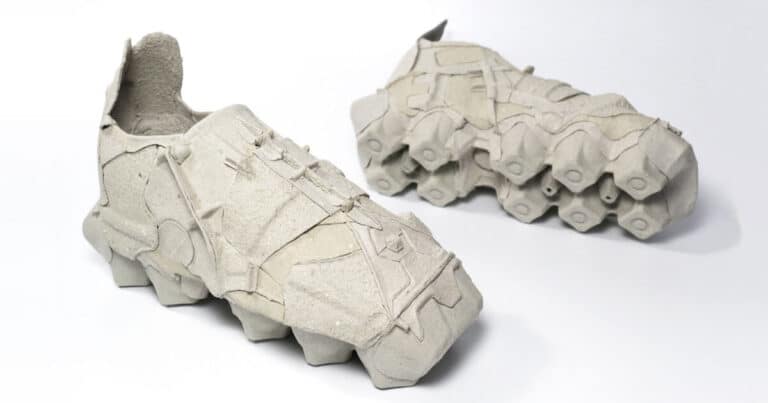
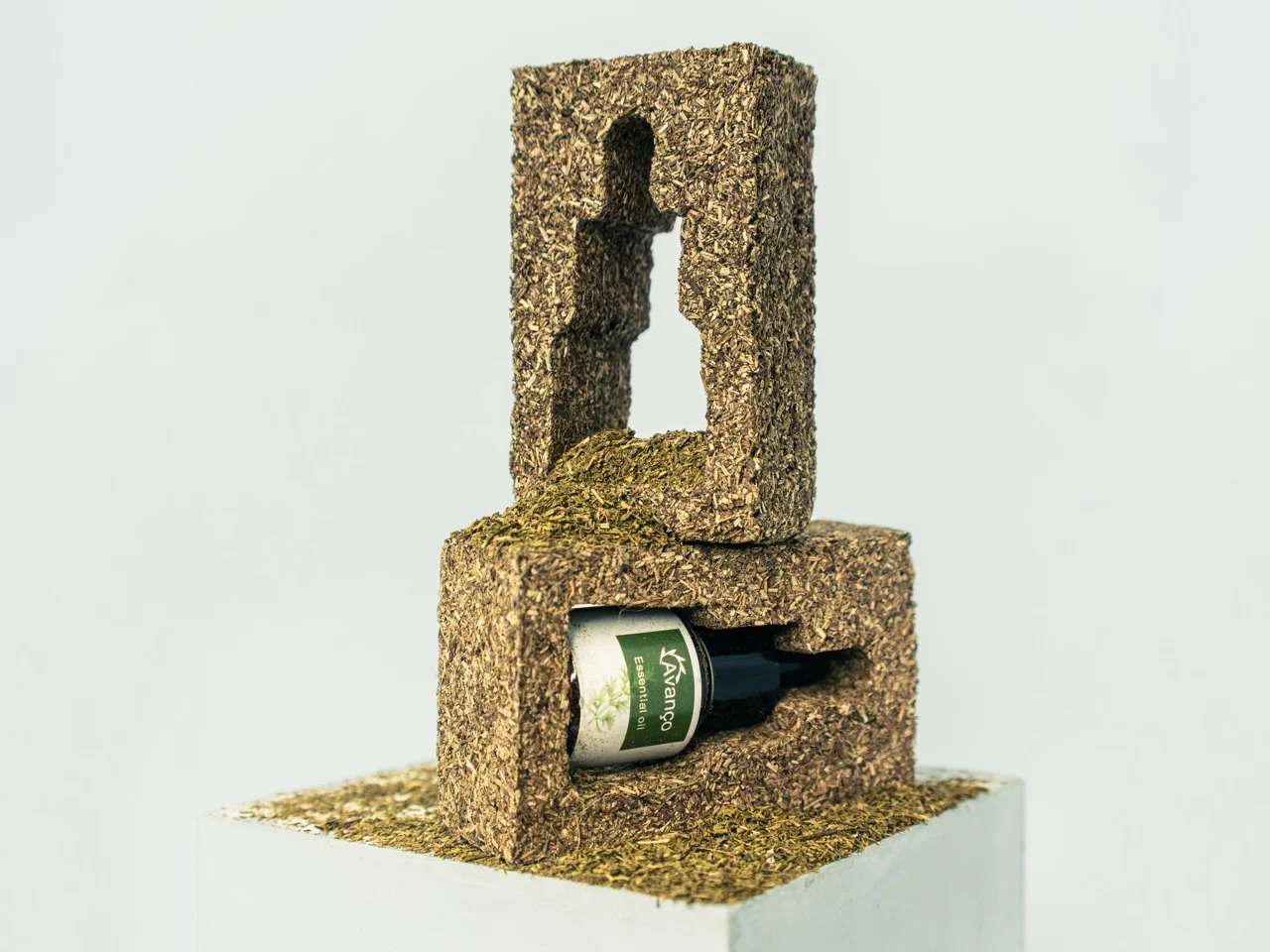
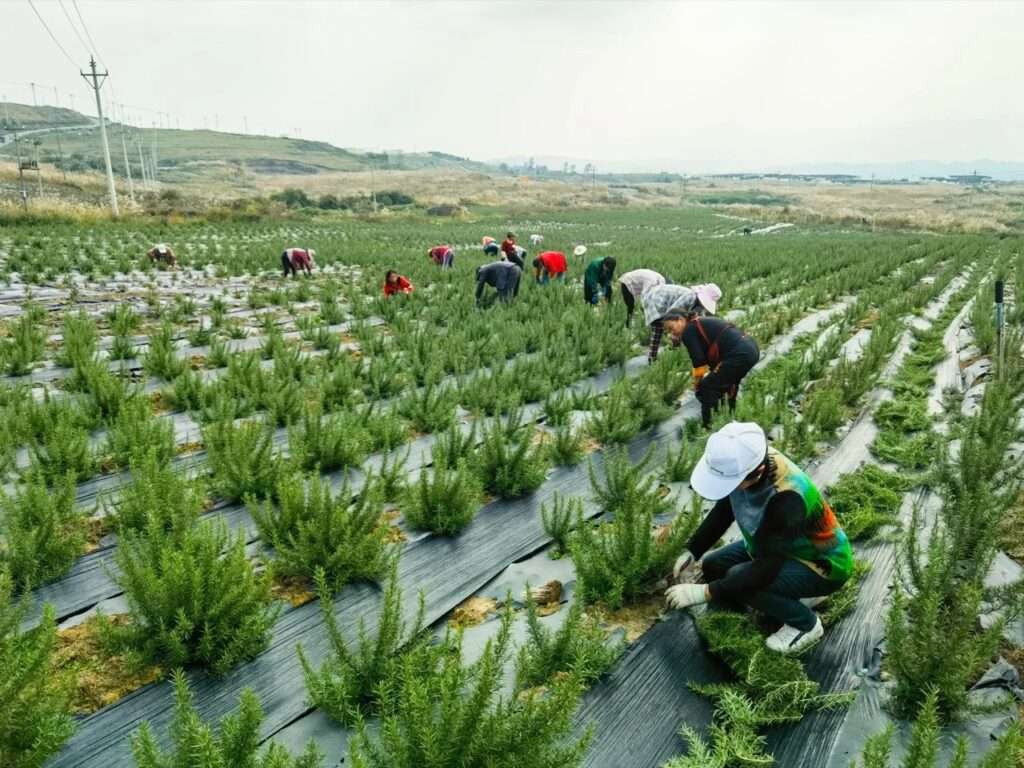
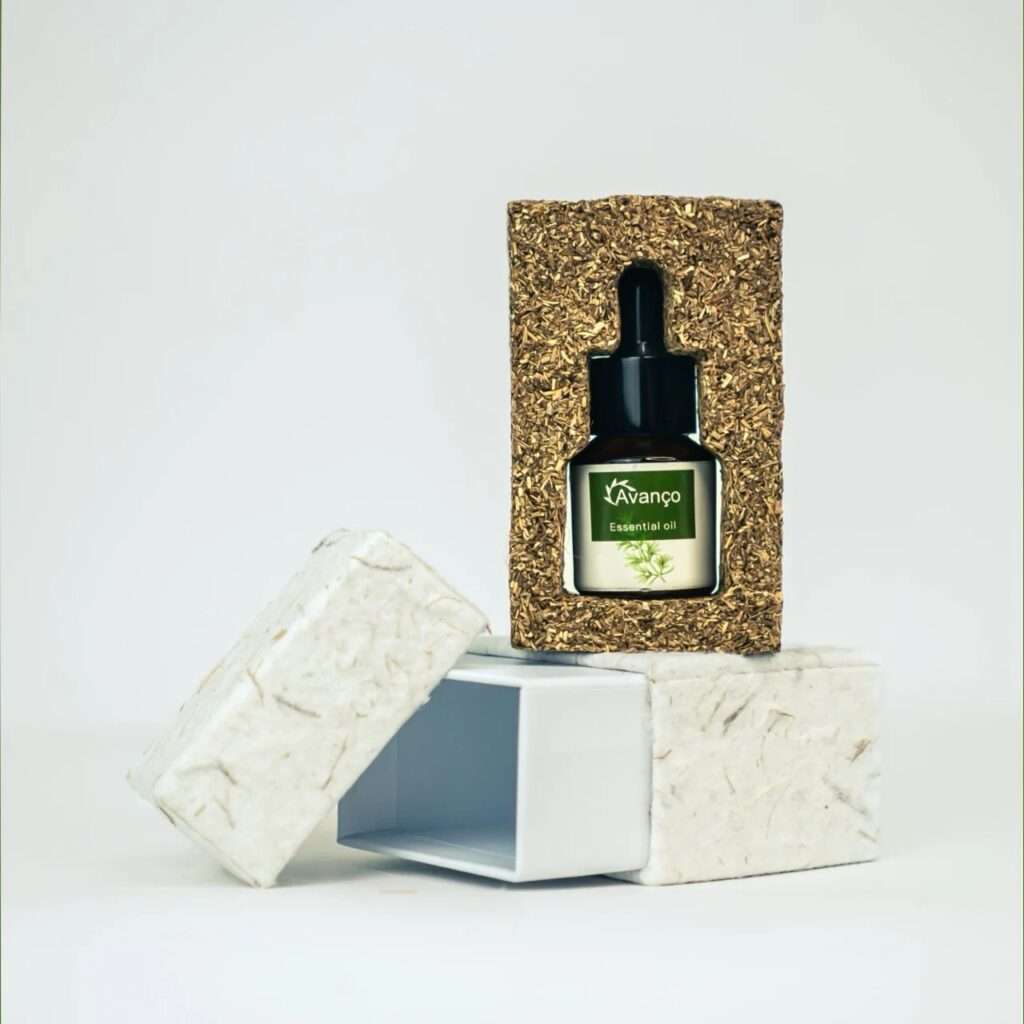
Packaging offers an experience that extends beyond its traditional function of protecting the product, transforming the act of opening the package into an interactive moment driven by movement, touch, and scent. The project replaces conventional polystyrene with a structure made from compressed stem waste, transforming the filler material from a silent functional mass into an essential part of the product-unveiling experience. The compressed fibers, containing a natural binding agent, release the scent of rosemary when the package is opened, adding a sensory dimension that precedes the product’s visual appearance.
Material Formation and Shadows Across the Rustic Surface
The design language focuses on highlighting the material’s natural characteristics rather than concealing them beneath a polished surface. The roughness of the compressed stems and the texture of the plant fibers give the package a distinct visual and material presence, while variations in surface density affect the way light falls across it and how shadows are formed. In this way, the material is not limited to its protective function but becomes part of the package’s interior design, retaining its natural texture and visual presence.
Framing the Product and the Moment of Discovery
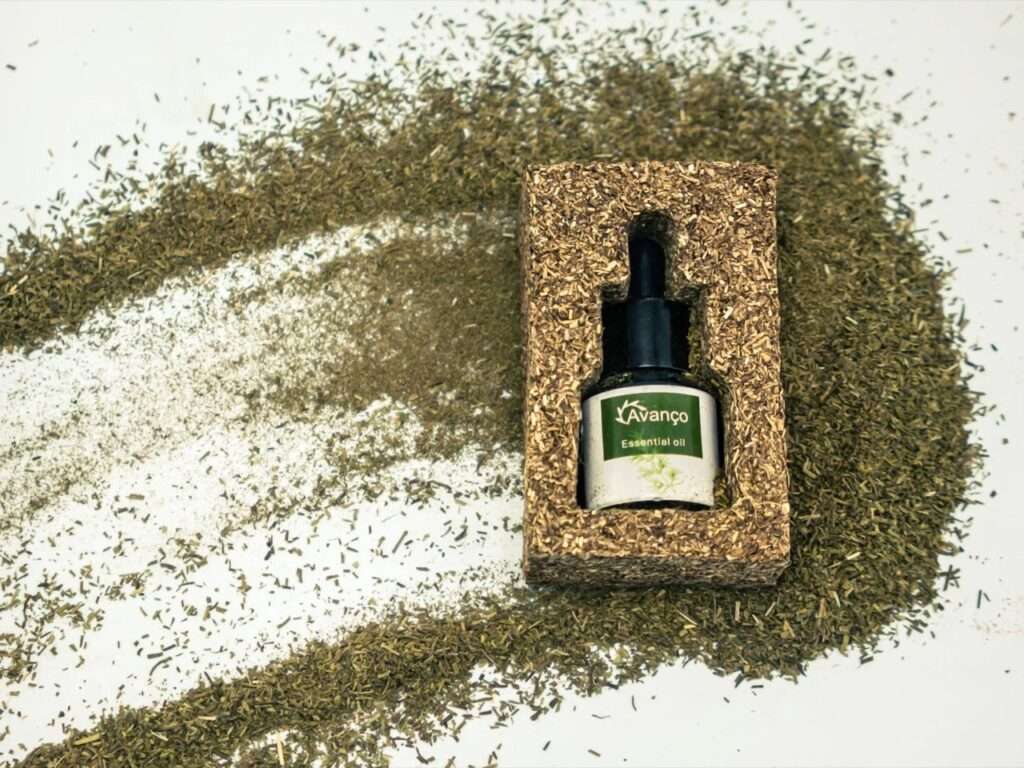
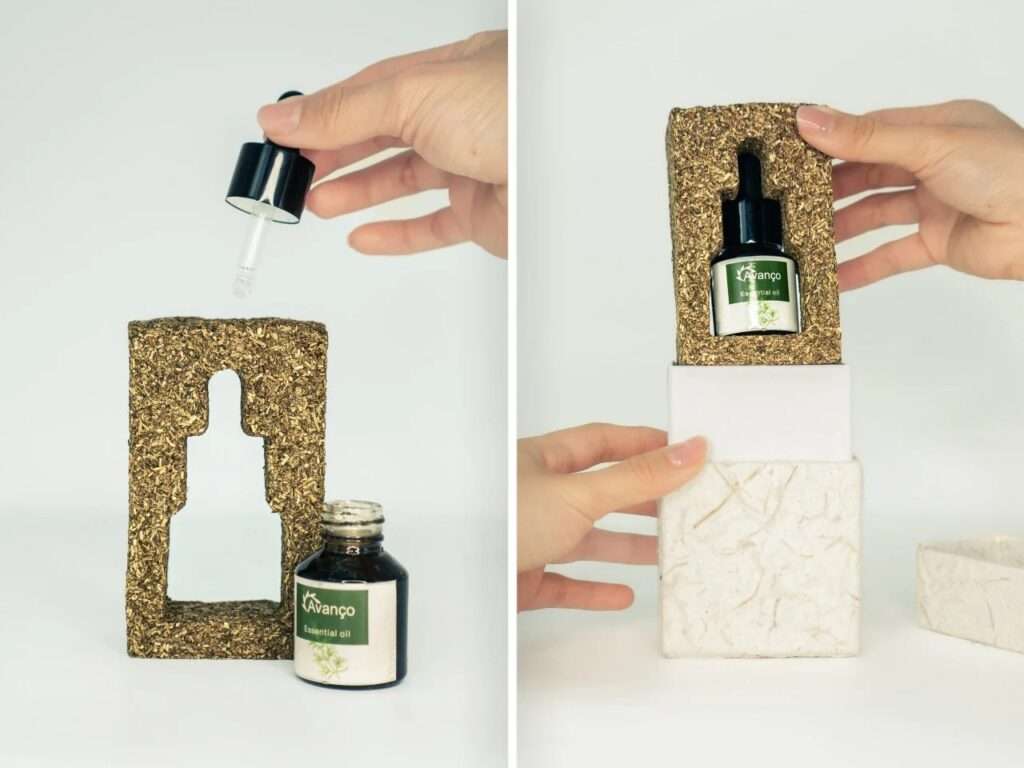
The interior space of the packaging is shaped by a cavity designed to accommodate and secure the essential oil bottle in place, making the process of removing it part of the opening experience. The scene begins with the material embracing the bottle, after which the product is gradually revealed as the packaging is displaced, highlighting the contrast between the roughness of the compressed fibers and the solidity of the glass. This sequence combines protective functionality with the method of presenting the product, transforming the act of opening itself into an essential element of the packaging experience.
The Functional Extension of the Material After Opening
The material’s function does not end once the product is removed from the package, as the plant-based material can continue to have a presence beyond the packaging stage, depending on how it is used. Its retention of material and aromatic properties allows it to become part of the surrounding environment rather than being immediately discarded after the package is opened. Its fibrous surface also maintains its visual presence through its natural texture and interaction with light, giving the material the potential to continue as a functional and visual element after its primary role in protecting the product has ended.

Breaking Down the Mass and Redefining the Function of Packaging Material
The project proposes a different reading of filler material by treating it as part of the product experience rather than simply as a substance used to fill voids and provide protection. Replacing polystyrene with compressed plant waste changes the nature of the material’s presence inside the package and makes its tactile and aromatic properties part of the unveiling process. Rather than remaining hidden from the user, the packaging material becomes visible during opening, combining protection, stabilization, and sensory presence within a single composition.
The Sensory Experience and the Presence of the Material
The package brings together the material properties of the substance and the sequence of its opening, allowing natural textures, light, shadows, and scent to converge with the moment the product appears. The fibrous surface gives light a different quality of reflection than smooth industrial surfaces, while the scent of rosemary adds another sensory dimension to the experience. In this way, the compressed plant material shifts from a conventional protective element into a visible component of the package design, expressing the use of plant waste through its material and sensory properties rather than concealing them.
✦ ArchUp Editorial Insight
The project reframes packaging as a miniature architectural sequence in which material, containment, and sensory revelation occur simultaneously. Replacing expanded polystyrene with compressed stem waste transforms building materials from a disposable structure into an interactive interface. Roughness, shadows, and the scent of rosemary therefore do not function as decorative additions, but as mechanisms that shape how the product is encountered both materially and perceptually.
However, this optimistic material vision leaves a crucial question unanswered: does extending the sensory experience actually constitute circularity? Retaining the fibrous waste material after opening may extend its use, but it does not guarantee an integrated recovery system, predictable durability, or large-scale manufacturability. The project therefore stands between innovation in projects and material discourse; perhaps its most significant contribution lies in making the invisible material decisions embedded in packaging perceptible and open to scrutiny.