Sony Sonic Max 10: Balancing Movement and Precision

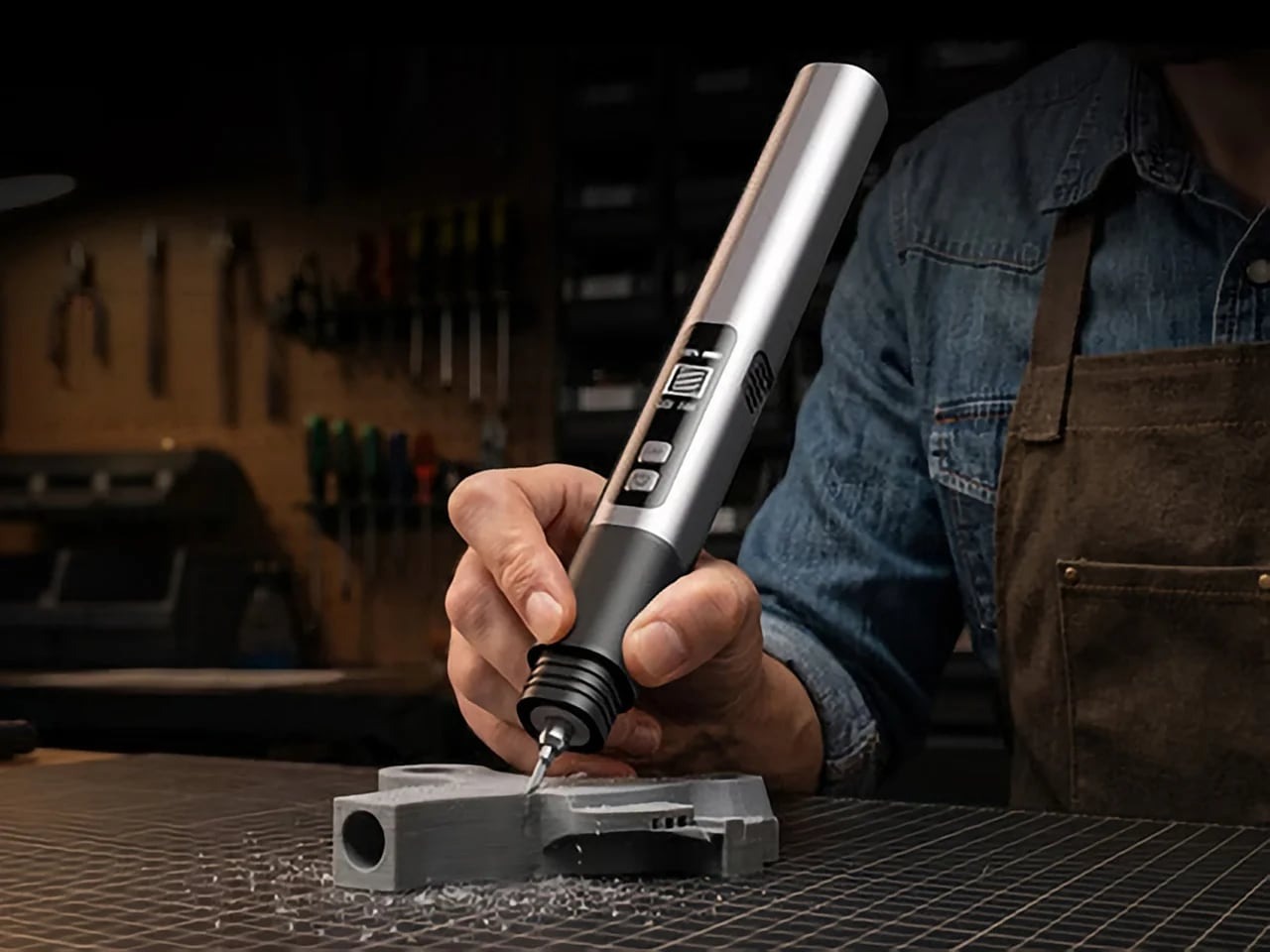
Movement Dynamics and Spatial Transformation
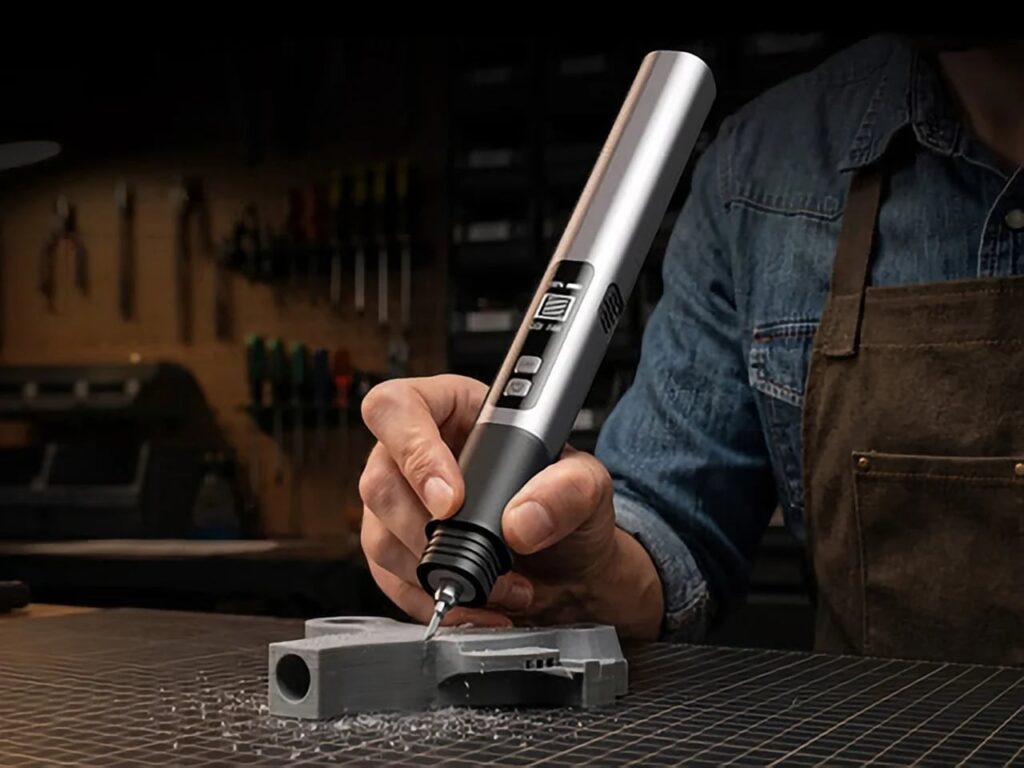
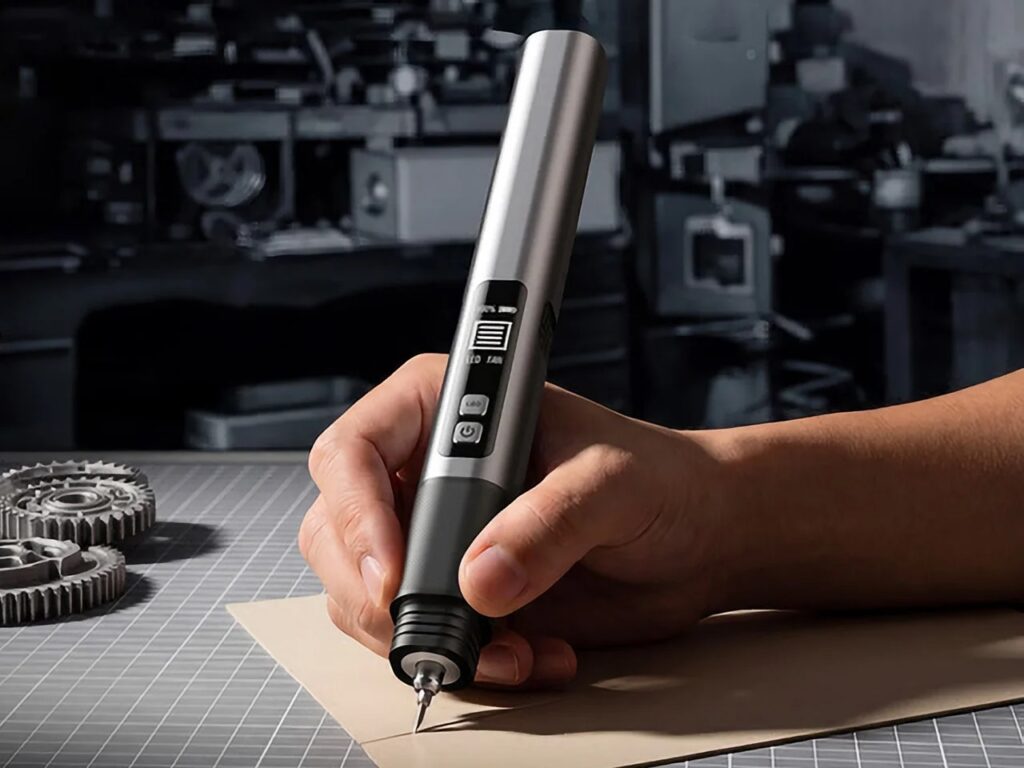
The tool’s user experience is grounded in freedom of movement and ease of control during operation, as its compact design allows for precise guidance across surfaces and edges, particularly when shaping small details. The absence of a cord facilitates access to different areas of the model without restricting the user’s movement, while its handheld form enables successive passes while maintaining a good level of control.
Environmental Interaction and Material Impact
The tool’s significance becomes more apparent when working with different materials, as shaping quality depends on the nature of the material and the way the tool is guided across it. The variety of attachments allows it to work with materials such as foam and plastic, enabling transitions between material removal, edge smoothing, and detail shaping according to the specific attachment being used. In this way, blade selection becomes an essential component of the accuracy of the final result.
Performance Efficiency and Thermal Management
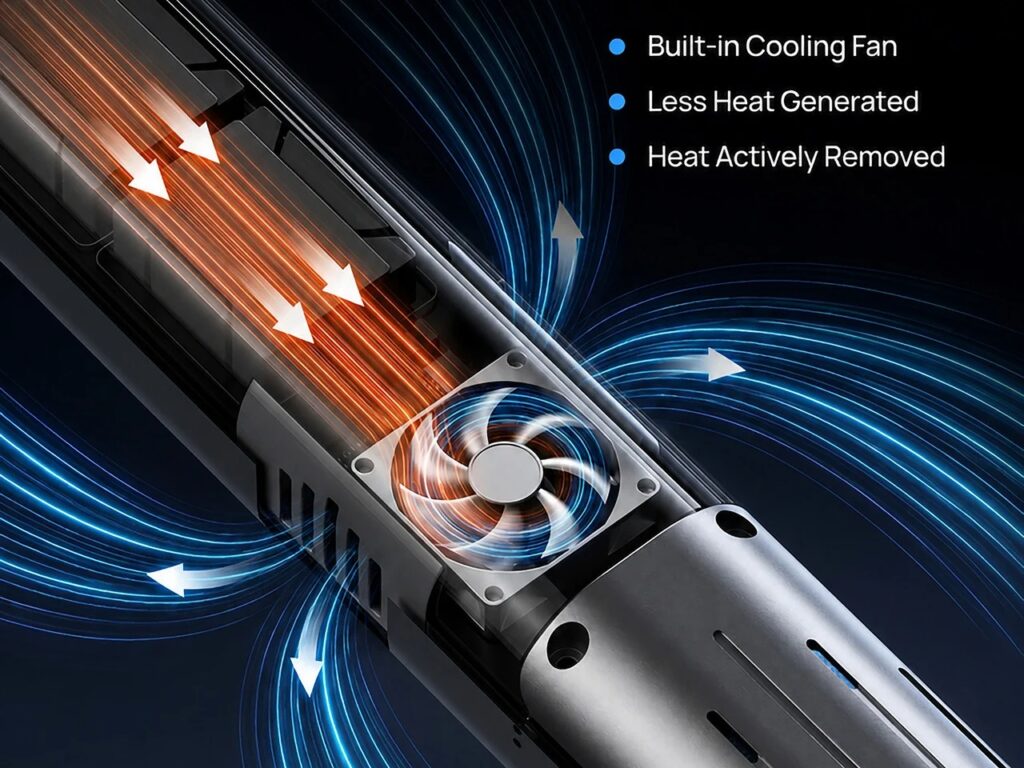
The tool’s efficiency is closely linked to its ability to maintain stable performance during use, particularly during continuous cutting and shaping operations. Power management and thermal protection systems, when incorporated into the tool’s design, help mitigate the effects of heat buildup during operation. This becomes especially important when performing repeated passes that require a consistent degree of control and precision.
User Experience and Control
The tool’s internal and external design directly influences the way it is used; its lightweight construction and cylindrical form facilitate one-handed operation, while the compact design allows it to be guided easily when working on fine details. This approach reduces the effort required to maintain a consistent path, particularly during model shaping or making repeated adjustments to a model.
Adaptability to Different Tasks and Materials
The tool’s range of applications is expanded by its ability to accommodate multiple types of attachments, allowing it to be adapted to the nature of the task and the material being used. This versatility facilitates transitions between cutting, scraping, and shaping operations without relying on a separate tool for each function, while giving the user greater flexibility when working with details of different sizes and forms.
Thermal Management and Operational Stability
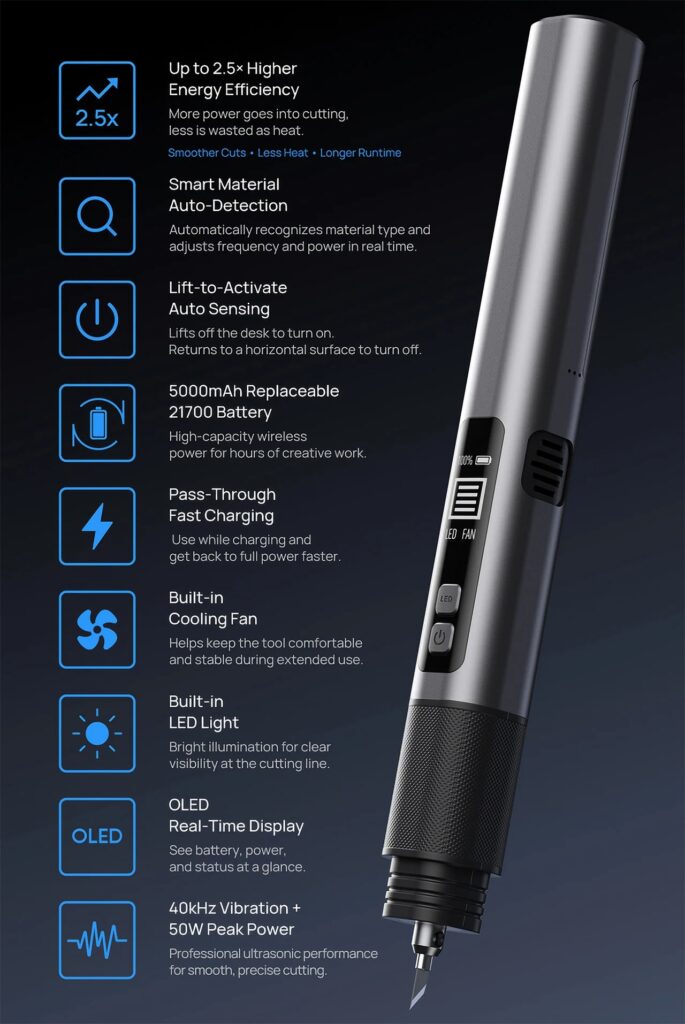
Thermal management becomes particularly important in cordless tools used for extended periods, as operating time and performance stability are closely related to the efficiency of the power and cooling systems. Integrated protection systems help reduce the risks associated with operation under unsuitable conditions, while temperature control helps maintain more stable performance throughout extended work sessions.
Power Autonomy and Freedom of Movement
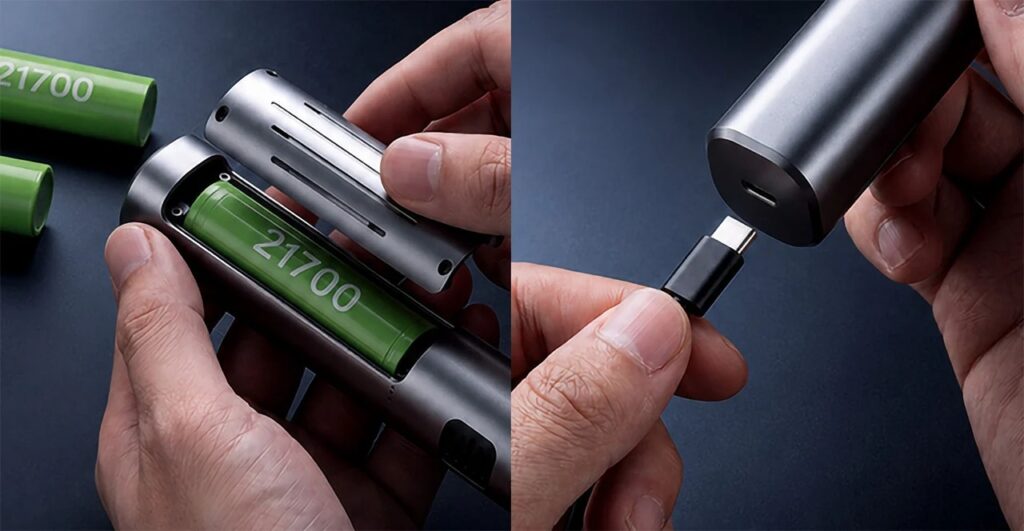
The cordless design provides greater freedom of movement compared with tools that rely on a cable during operation. This allows the user to work around a model and reach different areas without constantly having to manage the cord. Fast charging and pass-through charging also support continued use when needed, while the replaceable battery provides a practical option for extending operation with an additional battery.
Blade Variety and Shaping Flexibility
The tool’s versatility depends largely on the variety of attachments available for it, as it can be used with blades designed for different tasks, alongside a chisel and a wide scraper. This variety allows it to work with materials such as foam and plastic, transitioning from removing larger quantities of material to treating edges and fine details. This gives the tool a multifunctional role in modeling and model-making applications.
Sensory Interaction and Operational Control
The tool incorporates a range of control and protection features intended to simplify operation and reduce the likelihood of unintended activation. The Lift-to-Activate sensor activates the tool when it is lifted and stops it when it is set down, while the OLED display provides direct operating information. The integrated LED lighting source also provides better visibility of the work area, particularly when handling small details or surfaces that require greater precision.
Massing and Ergonomic Proportions
The tool measures 260.5 mm in length and 28 mm in width, while weighing 236 grams. These dimensions support a pen-like grip and enable one-handed control. The tool is available in different configurations, including the standard version and the Maker’s Bundle, which includes a selection of attachments and an additional battery. Certain attachments and batteries are also available separately, allowing users to configure a package suited to the nature of their intended use.
✦ ArchUp Editorial Insight
The tool is presented here as more than a conventional cutter; it functions as a compact fabrication interface that reorganizes the relationship between the hand, the material, and the model. Cordless movement, multiple attachments, thermal management, and sensory control elements transform precision shaping operations into a sequence of controlled material interventions. Its significance lies in reducing the distance between the user and the tool, aligning with contemporary design practices based on repetition and continuous adjustment.
However, this interpretation may overstate the impact of the tool’s ergonomic intelligence. Dependence on the battery, the variety of attachments, thermal limitations, and blade specialization do not eliminate complexity so much as redistribute it. The tool may improve localized control, but its versatility remains conditioned by material behavior, operating duration, maintenance, and user experience. What appears to be seamless fabrication is, in reality, a reformulation of constraints rather than their disappearance.