The Spetses Players: How an Island Became a Distributed Stage


Between 1972 and 1979, the Spetses Players turned a Greek island into more than a backdrop. The group—artists, teachers, students, musicians and writers from several countries—developed performances around local stories and pressures, then staged them through costumes, movement, existing buildings and outdoor spaces. Led by Leda Papaconstantinou, the work was collaborative and changeable rather than a fixed script repeated in a conventional theatre.

From local issue to spatial action
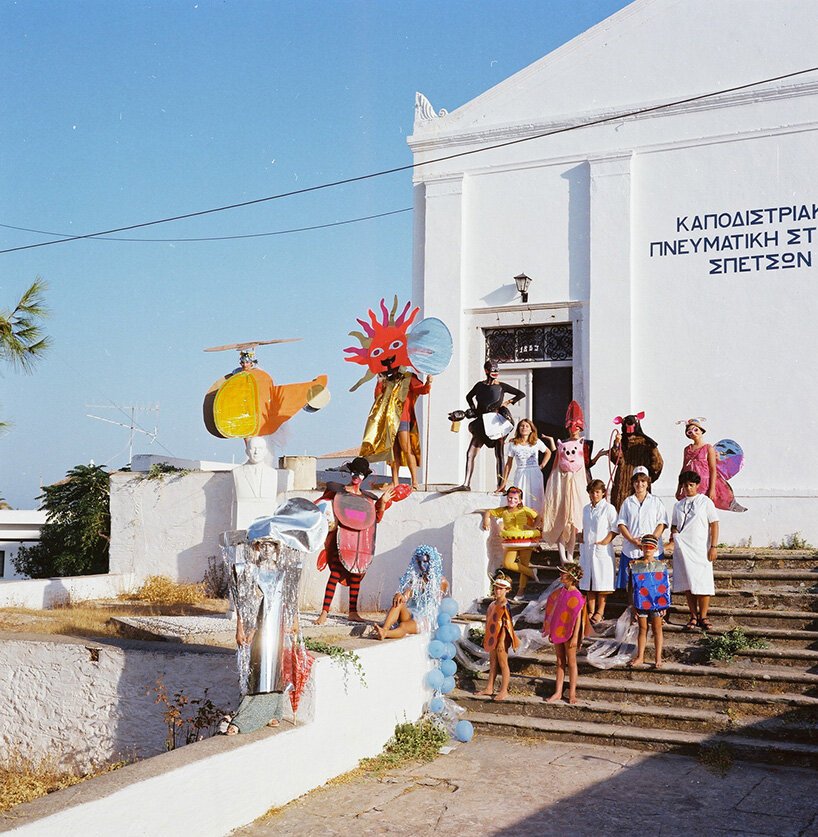
The performances began with subjects affecting Spetses: housing sold beyond local reach, water shortages and cost, waste, tourism and limited medical care. The group then found a form for each issue. A fictional girl, Bouboulitsa, became a recurring character; sea creatures, fishermen and “motorcycle monsters” translated island narratives into figures that could move through public settings.

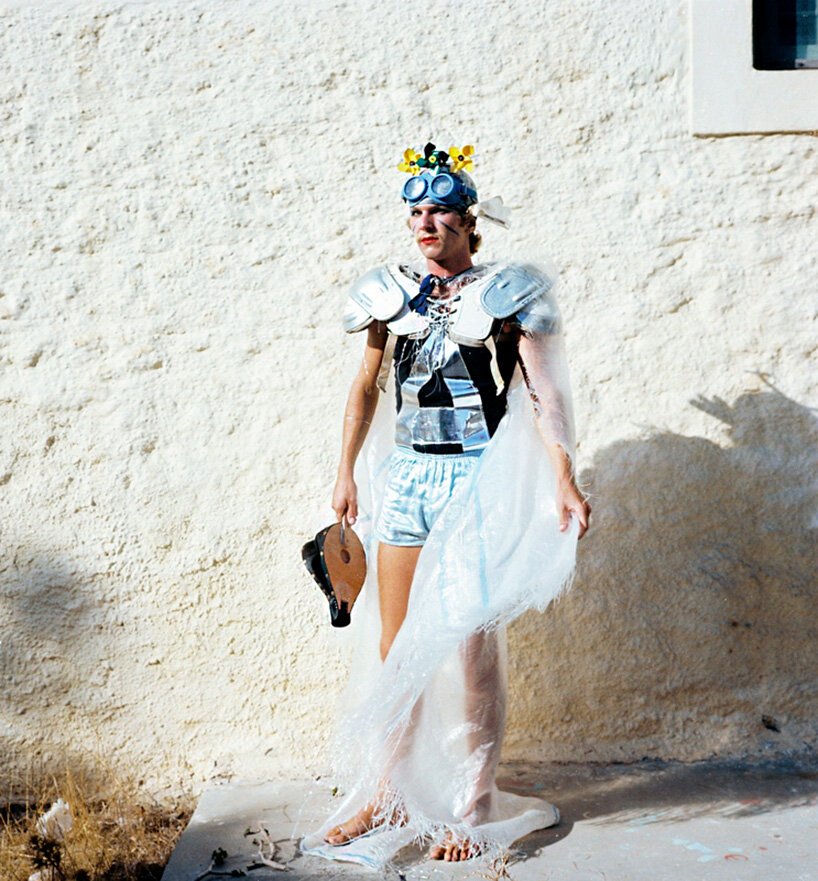

Costume changes how the body occupies space
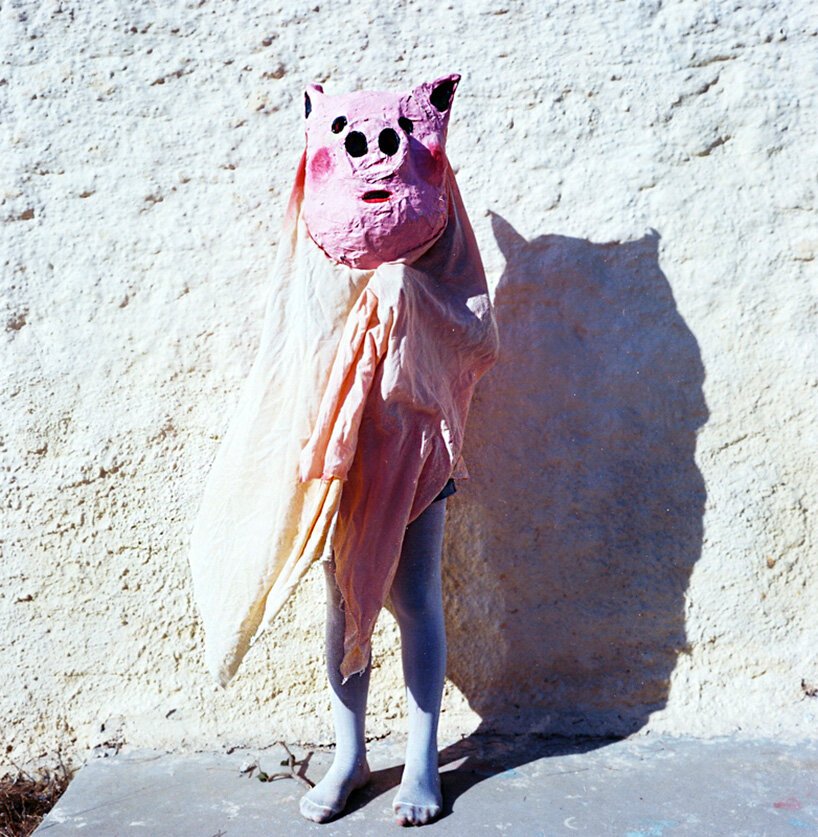
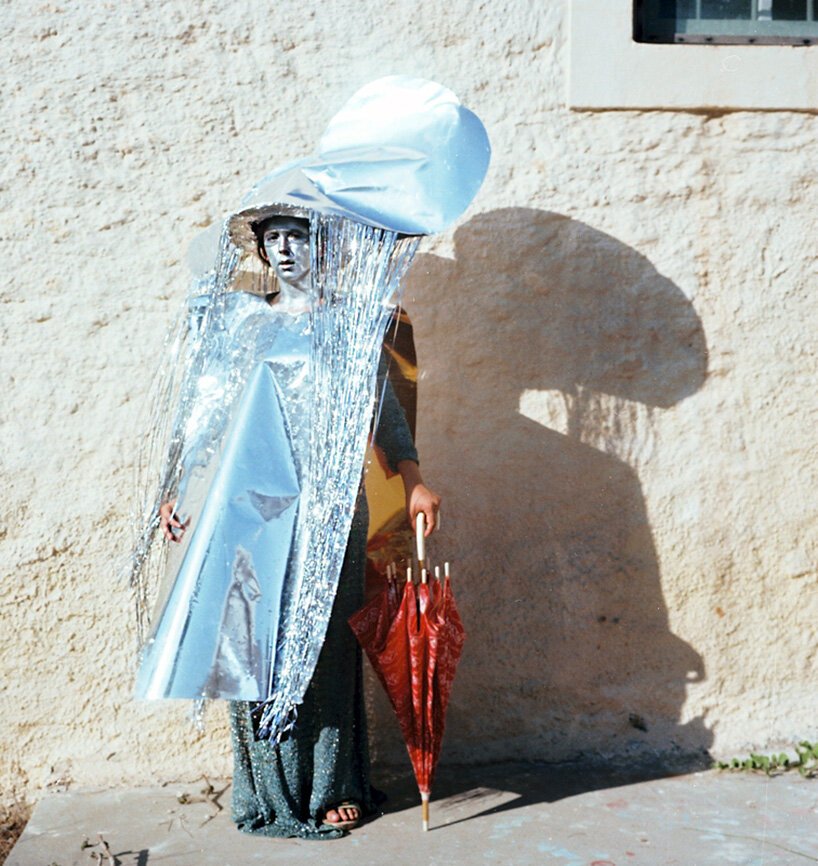
Costume was not added after the story. Feathers, fins, inflated profiles and handmade surfaces altered posture and movement, allowing the body to operate as a mobile piece of scenery. This mattered because many performances lacked a stable stage: silhouette and motion had to establish scale against harbours, houses and open ground.


The island as a distributed theatre
The 1977 Spetses Festival used sites around the old harbour, rooms in the Figaro discotheque and a house by architect Aris Konstantinidis. Rather than importing a sealed auditorium, the program worked with spaces already embedded in island life. Audiences moved, gathered and eventually joined a recurring closing song, making spectatorship part of the spatial arrangement.


What the archive can—and cannot—preserve
The performances were not recreated later. In 2013, surviving collaborators contributed memories and material to an archive, now held by the National Museum of Contemporary Art Athens. Photographs preserve costume, colour and fragments of setting, but they cannot fully recover duration, sound, route or audience behaviour. Their renewed circulation therefore begins a second encounter: viewers see the image first and reconstruct the spatial event afterward.
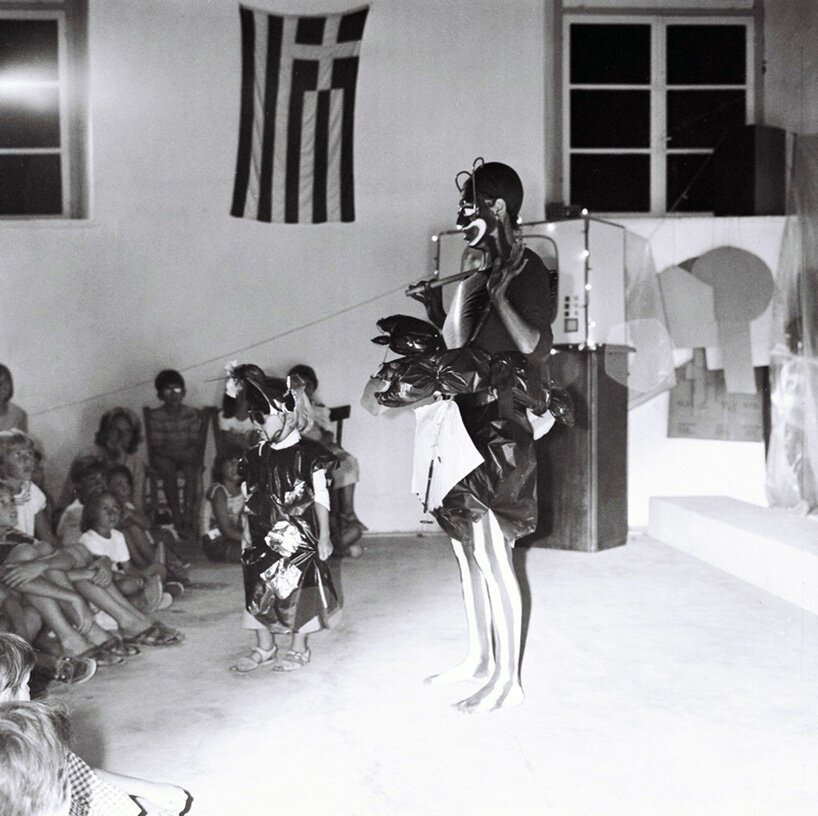


Credits: Project: The Spetses Players; artist and organizer: Leda Papaconstantinou; collaborators included David Hughes and the wider Spetses Players group. Archive held by EMST, National Museum of Contemporary Art Athens. Photography includes Dimitris Papadimas; other images courtesy of the artist’s archive.
✦ ArchUp Editorial Insight
The established pressure was a shortage of formal cultural infrastructure combined with urgent local questions about housing, water, waste, tourism and care. The Spetses Players’ decision was to avoid a fixed theatre and instead turn existing island spaces, handmade costumes and collective movement into the production system. Architecturally, this distributed the stage across harbours, rooms, houses and open ground; the audience did not simply face a permanent proscenium but encountered performance within places already carrying everyday meaning. The gain was accessibility and specificity: local issues were discussed where they were lived, while lightweight props and wearable forms allowed the work to move without a dedicated building. The tradeoff is archival. A photograph can preserve colour, silhouette and a fragment of setting, but not the acoustics, route, duration or social composition of the original encounter. Any present reading must therefore resist treating the images as complete documentation. Their value lies in showing a spatial method: cultural activity can occupy a place temporarily, intensify its meanings and build collective memory without pretending that temporary use removes the need for durable local facilities.