
Titlis Mountain Station: Alpine Infrastructure Redesign

Topographical Expansion and Mountain Infrastructure
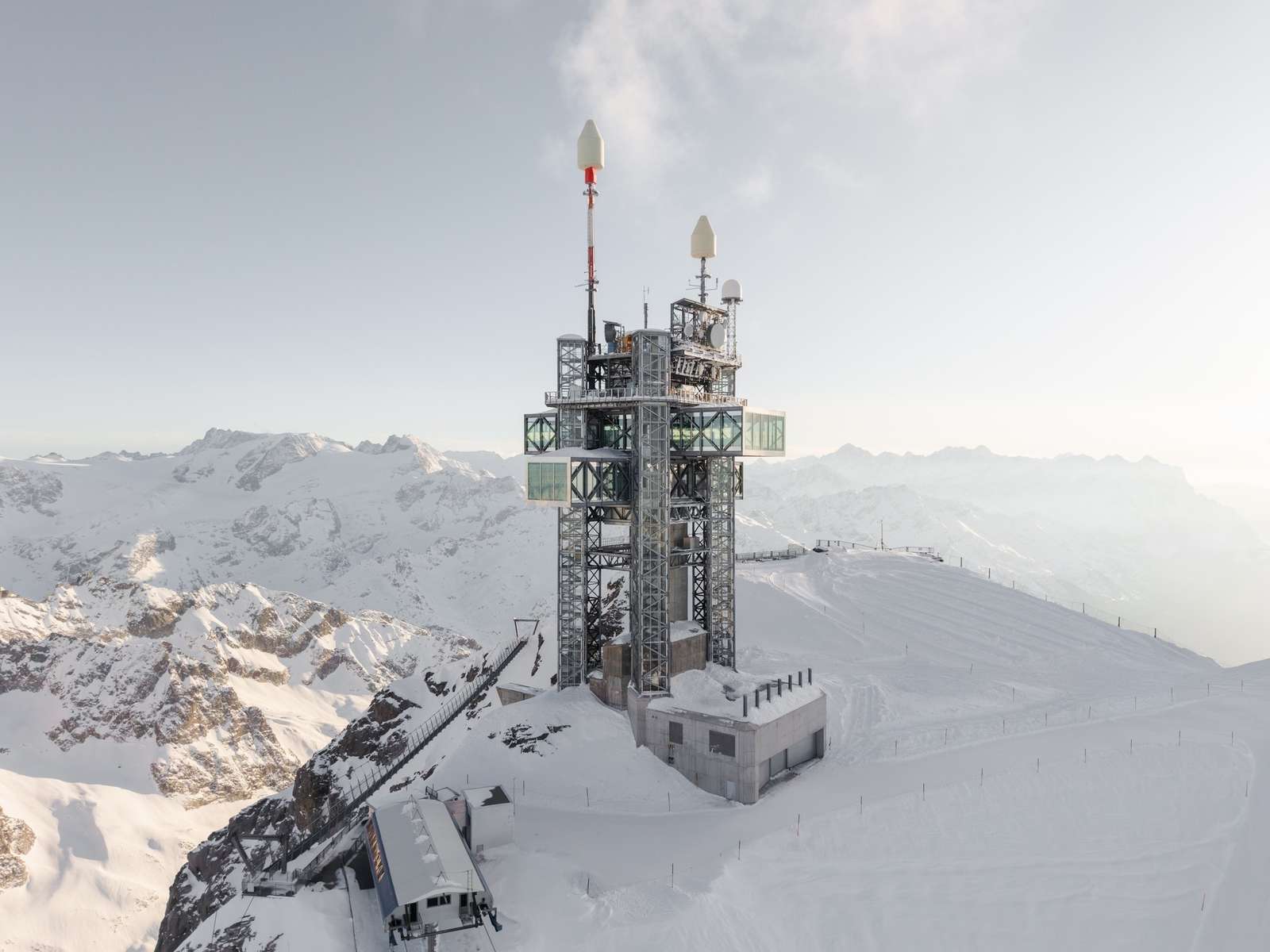
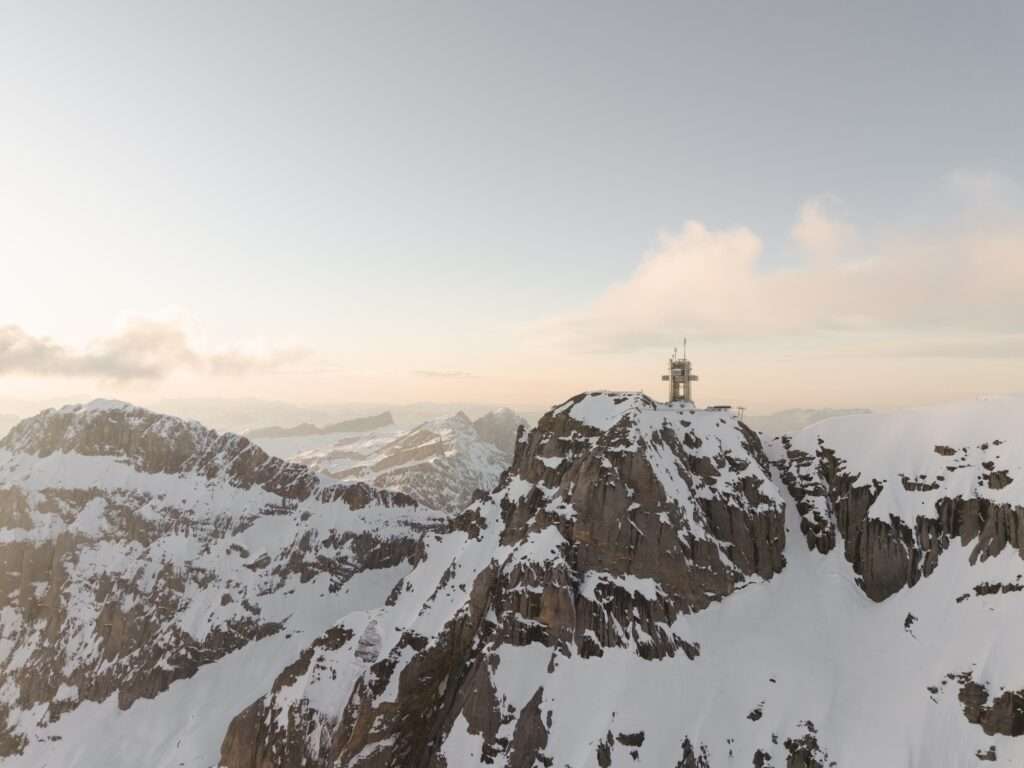
At an altitude exceeding 3,000 meters above sea level, Mount Titlis asserts an exceptional geographical presence as one of Switzerland’s most prominent alpine landmarks, transforming from a mere natural formation into a global attraction for sports enthusiasts and visitors. The architectural discourse of the site is established on a mountain summit that offers an expansive 360-degree panoramic visual experience, where the topographical scene is divided between a glacial mass extending southward and a flat Swiss plateau to the north. This strategic positioning above the town of Engelberg and near Lucerne enhances accessibility and mobility efficiency, turning the summit into a vital hub that attracts massive human flows throughout the year.
Spatial Transformations and the Scenography of Movement
The spatial configuration of the site began with the inauguration of the first cable car line to the summit of Klein Titlis in 1967, at a point approximately 200 meters below the rugged peak, initiating a series of continuous physical expansions in the infrastructure. Today, visitors experience a complex mobility pattern combining a quarter of traditional winter sports users with a majority of international tourists consuming the surrounding visual landscape. Over the decades, this flow has evolved into a hybrid architectural fabric in which vertical and horizontal pathways intersect to guide human movement through a sequence of functional spaces, ranging from hospitality points and retail areas to a scenographic climax in the sensory passage through the glacier cave and the suspended bridge.
Mass Accumulation and Challenges of Spatial Efficiency
The built aggregation at the Titlis mountain station, which evolved historically in an organic manner, has reached its maximum capacity after successive additions led to a highly complex mountain station suffering from a clear deficiency in accommodating modern capacity requirements and visitor flow management systems across its spatial routes. This critical condition necessitated a rethinking of the infrastructure, transforming it from purely functional facilities into an integrated architectural concept, particularly after Titlis Bergbahnen acquired a former Swiss military antenna tower dating back to the 1980s. This element introduced a new scenographic dimension through an underground tunnel directly connecting the tower to the mountain station and the glacier cave below, calling for an architectural approach that goes beyond superficial solutions toward exploiting the deep spatial potential of the available mass.
Architectural Reconfiguration and Resource Integration Strategy
The project’s overarching concept was defined by the 2017 commission to renovate the mountain station within a comprehensive masterplan for the entire summit, aiming to transform the military antenna tower from a silent mass into an active component of the visitor experience. This approach is grounded in a strategy of conscious reuse of existing architectural resources, rejecting complete demolition in favor of integrating old infrastructures, such as the tower, tunnel, and cable car station, into a unified system. Within this new configuration, users experience a spatial sequence that respects the physical history of the site while redirecting it to serve crowd movement and environmental interaction at the mountain summit.
Structural Junction and Challenges of Physical Rehabilitation
The architectural and structural assessment of the existing mountain station, particularly its load-bearing structural system, revealed that mere modification would be insufficient to address fundamental issues related to circulation, user orientation, and capacity absorption. Based on this physical limitation, the alternative vision proposes a partial replacement strategy of the structural system, preserving selected elements for reuse while replacing parts of the existing composition with a new architectural volume that encloses and surrounds the current cable car station. This intervention recalibrates spatial flow and creates a structure capable of efficiently accommodating human experience. These structural solutions are further integrated with smart construction technologies aimed at drastically reducing energy consumption across the summit facilities, ensuring environmental and material balance between the built masses and the mountain tower.
Tectonic Anchoring of Communication Infrastructure
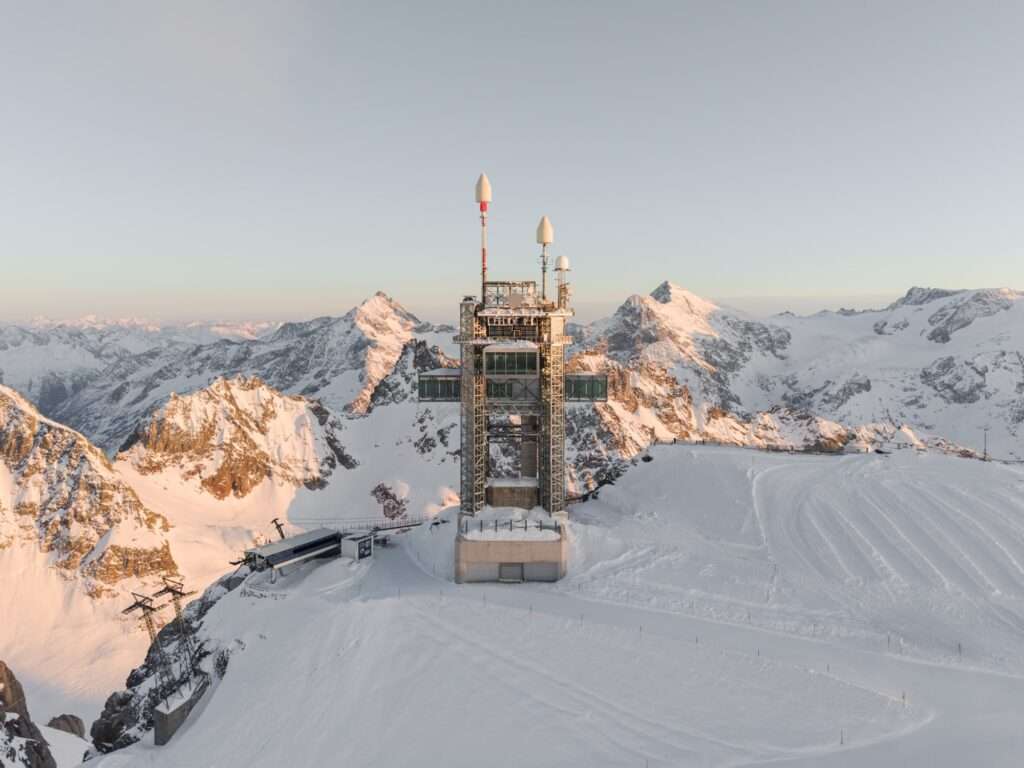
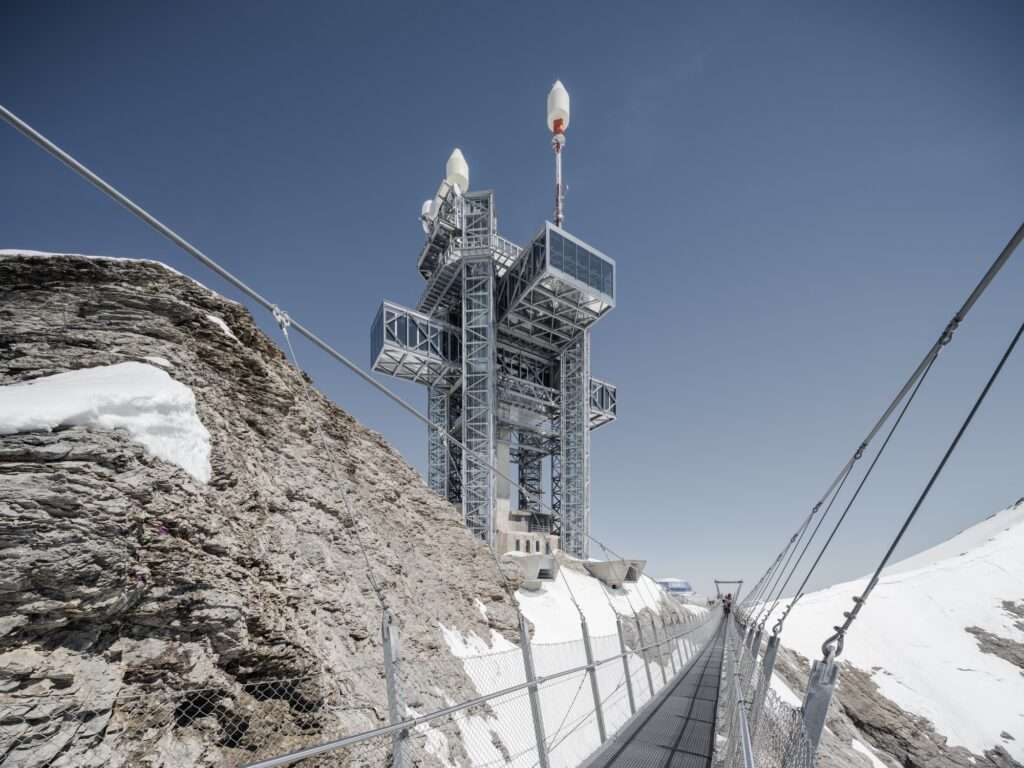
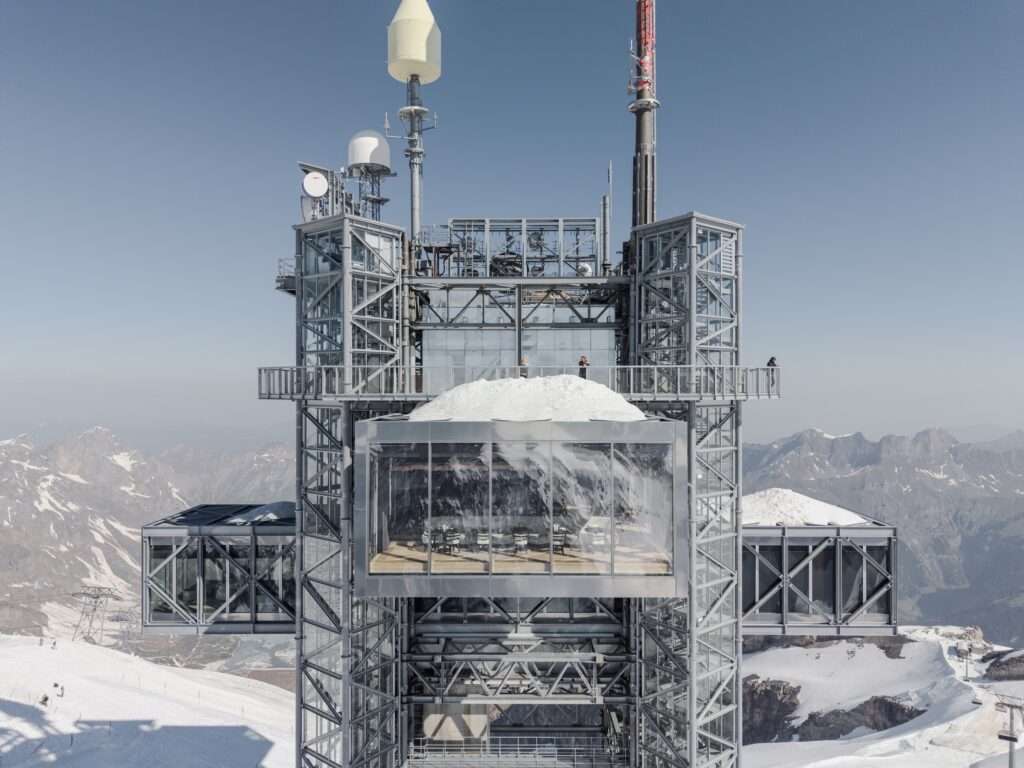
The 56-meter Titlis antenna tower, constructed in the mid-1980s, stands as a distinctive visual marker embodying the language of functional architecture dedicated to communication infrastructure. The tower derives its tectonic stability from its exposed geographical context at over 3,000 meters above sea level, deeply anchored into the limestone formation through massive concrete foundations and structural core elements, while its upper section rises in a lightweight steel framework. This creates a balanced structural dialogue between the heavy concrete base embedded in nature and the light steel structure designed to withstand extreme climatic conditions, allowing the user to perceive this material contrast within the sensory environment of the site.
Structural Anatomy and Spatial Transformation of the Tower
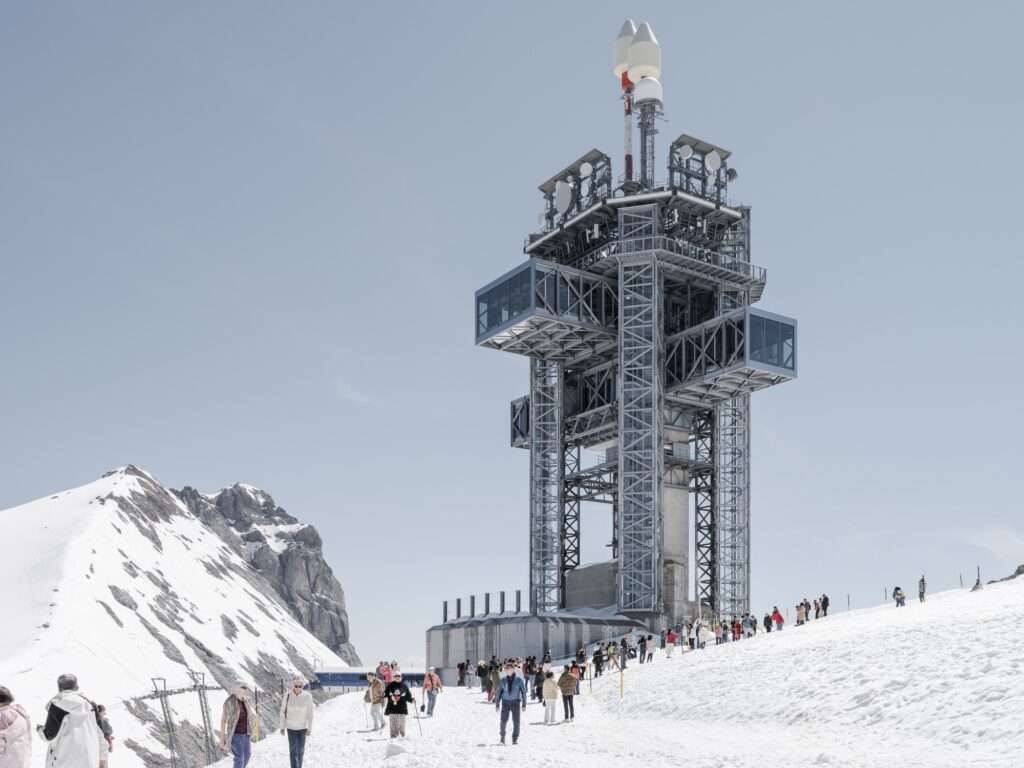
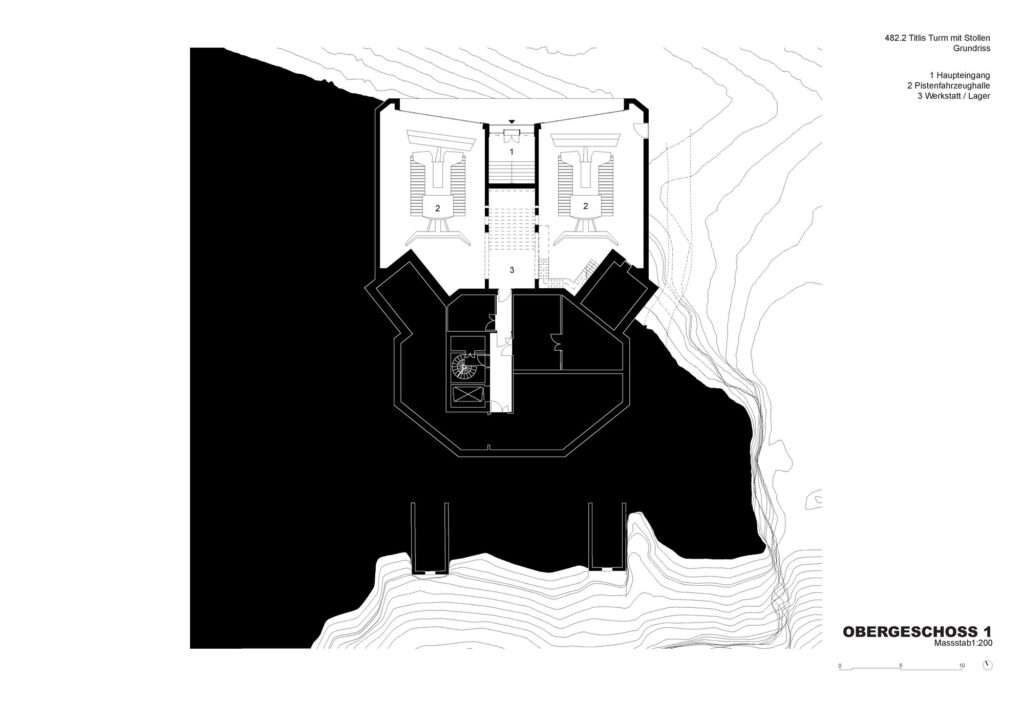
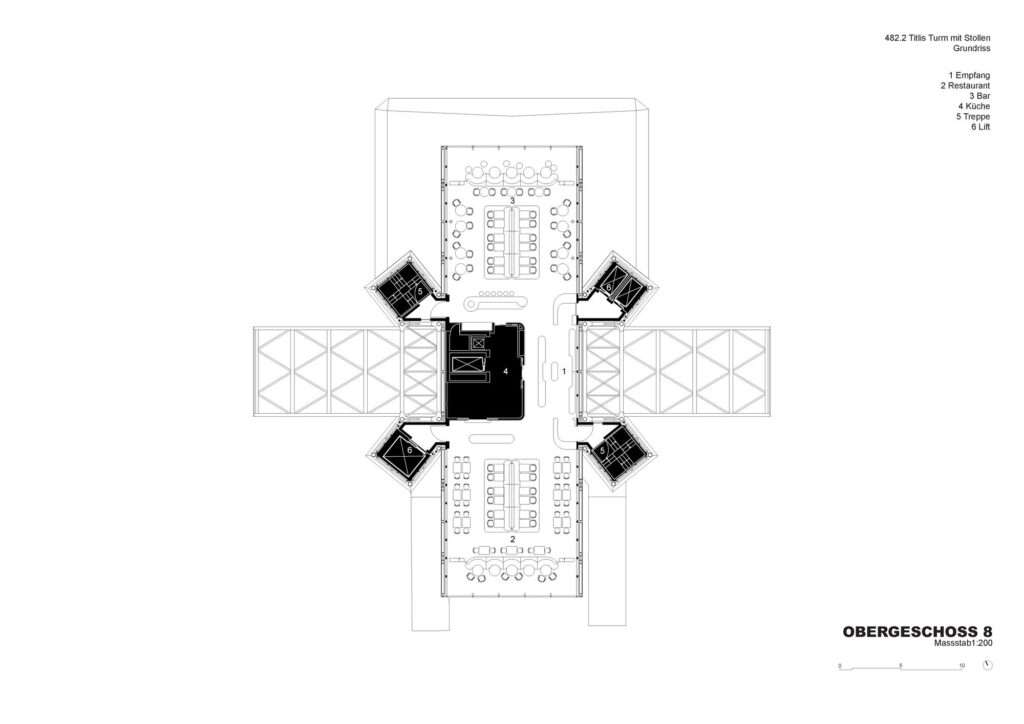
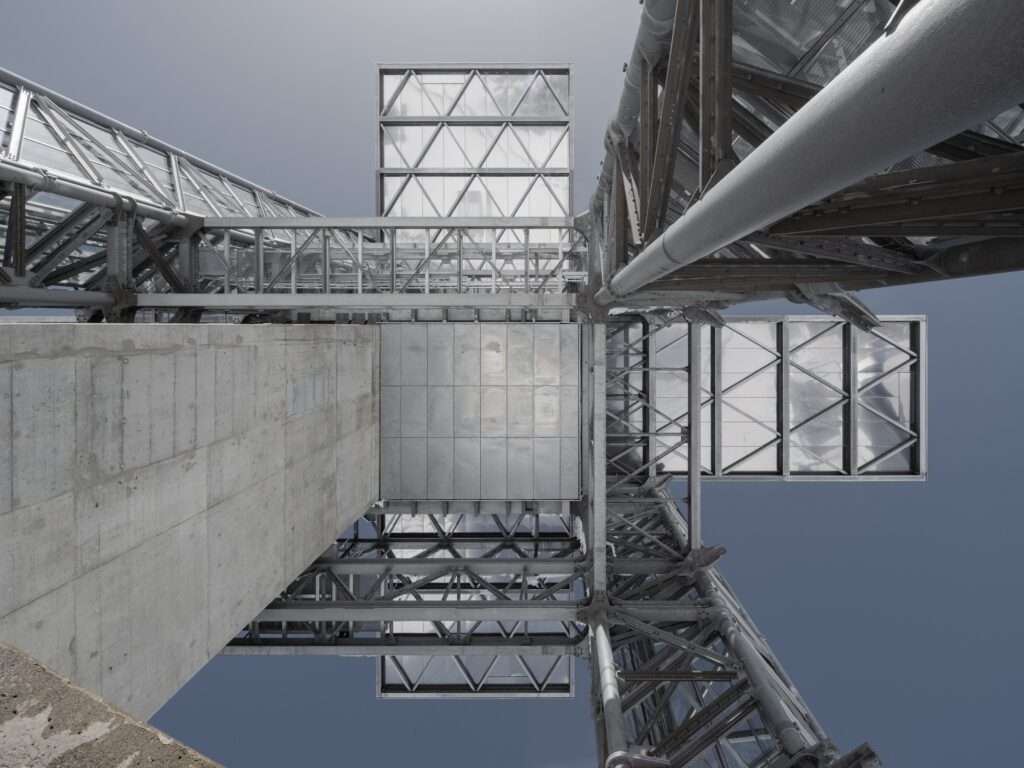
The final form of the tower is defined by its existing steel structure, which undergoes expansion through the addition of two horizontal volumes supported by four vertical circulation towers. The external load-bearing exoskeleton frees the interior spaces of the new volumes from columns and structural obstructions, enabling a fluid and continuous spatial experience. This elevated system is complemented by an expanded concrete base that forms an entrance and orientation level, successfully integrating incoming visitor flows with essential technical zones, as well as accommodating a garage for mountain maintenance vehicles within a single functional mass.
Rock Passage and the Scenography of Visual Orientation
The underground tunnel, originally constructed during the same period as the tower, functions as a carved structural artery within the rock, ensuring a direct and fully protected circulation link between the tower mass and the mountain station, while also providing access to the glacier cave and project technical connections. In contrast to the raw materiality of the rock walls, a reflective steel strip guides visitors visually and sensorially toward the tower, until the passage opens into a cavern-like hall. In this subterranean space, technology and architecture merge through two large integrated LED screens embedded within the steel strip, broadcasting information about the surrounding mountain landscape and assisting users in navigating the space seamlessly.
Vertical Ascent and Panoramic Protrusions
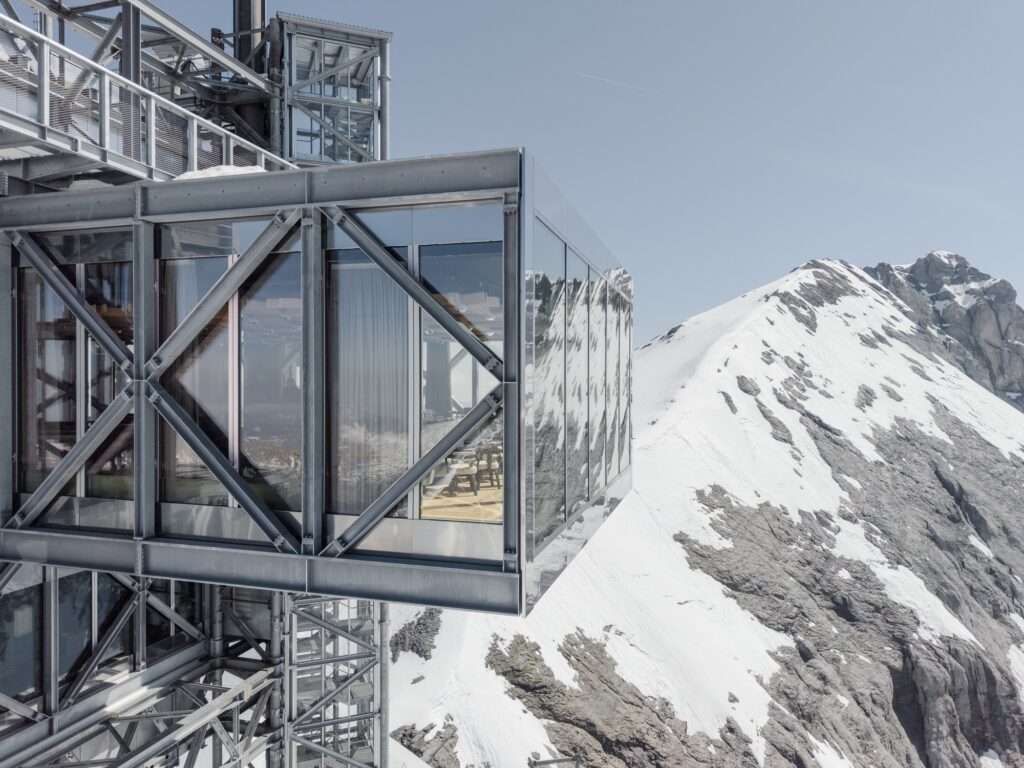
Visitors move from the base of the tower upward through four vertical circulation towers, designed to geometrically align with the existing steel columns at each corner, reaching the observation platform at the top. Two of these towers serve as emergency staircases, while the other two accommodate elevator systems. Externally, the two fully glazed horizontal volumes extend in long-span cantilevers, intersecting to form a striking cross-like composition visible from afar within the landscape, while offering uninterrupted panoramic views of the alpine surroundings from within. The program of these volumes is divided between a commercial area in the lower mass and a 140-seat restaurant in the upper volume, while the public observation deck crowns the tower as its final culmination, offering a fully unobstructed 360-degree visual experience as the highest point of the structure.
Spatial Materiality and Interior Environmental Contrasts
The material concept of the project directly follows the structural system and the harsh climatic conditions of the site, expressed through the use of galvanized steel, stainless steel, concrete, and glass. Inside the building, raw materiality is deliberately left exposed, preserving traces of the existing structure and its temporal and physical imprints, complemented by precise architectural additions. In contrast to these cold structural surfaces, the restaurant interior introduces a deliberate material shift, being fully clad in wood to create a warm and intimate scenographic environment that offers visitors a sense of shelter and protection from the surrounding alpine severity.
✦ ArchUp Editorial Insight
The comprehensive Titlis scheme defines the spatial boundaries of extreme high-altitude tourism, introducing a structural intervention that transforms an abandoned military tower into a public programmatic anchor. By enclosing the old cable car station within new volumes and employing an exoskeleton to liberate spatial layouts, the project shifts mountain architecture from fragmentation and accumulation toward a unified topographical system optimized for dense international flows.
However, this anatomical transformation carries a romantic illusion: the claim that highly dense infrastructure can harmonize with harsh environmental conditions through smart construction technologies. This vertical expansion preserves the existing footprint yet simultaneously commodifies the summit as an exclusive scenic product. As a result, the raw Alpine landscape is transformed into a technological leisure park, demonstrating that high-altitude design ultimately serves capital flows rather than genuine environmental stewardship.


🖼️ Editorial Notice:
Where is the featured image for this article? A main image is required and cannot be omitted. Please add an appropriate featured image before publication, as it is an essential part of the article presentation and reader experience.
done, thank for warning.