Urban Regeneration in Greece: The Ellinikon Plan and Beyond

The built environment in Greece is formed by the layering of architectural strata. Historic structures intersect with modern interventions and evolving urban systems. Classical landmarks continue to define the spatial character of the cities
. This heritage serves as the foundation for the current efforts toward Urban Regeneration Athens. This continuity provides the basis for design approaches. These approaches seek to balance heritage, environmental considerations, and contemporary urban renewal.

A Landscape Reclaiming Nature: From Airport to Coastal Front
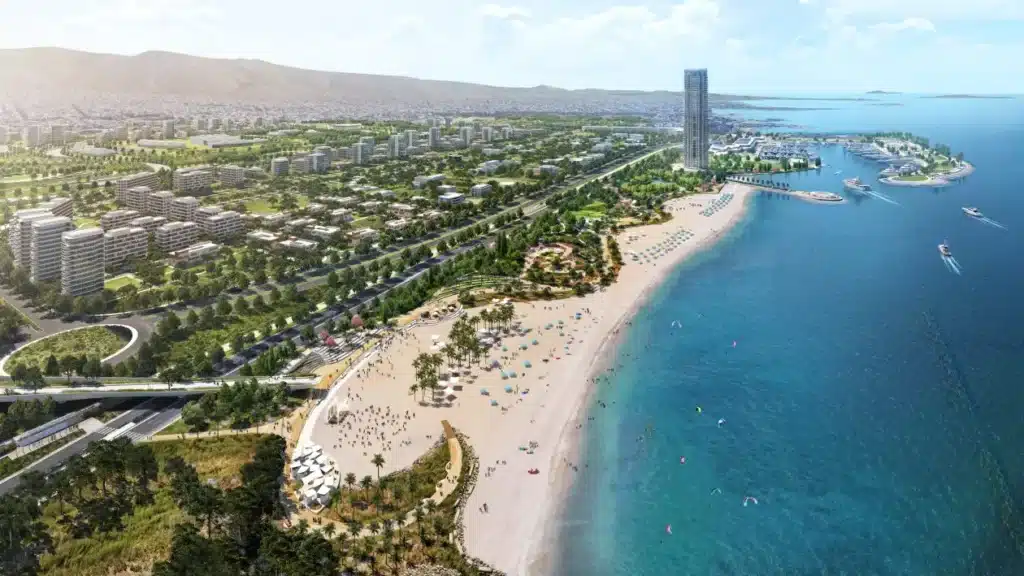
The Ellinikon project represents a pioneering model in Urban Regeneration in Greece. This development rises on an area of 6.2 million m2. This land was formerly an international airport site. The goal is to reshape the heart of the Athenian coastline. The site is becoming a fully integrated urban extension. The masterplan embodies an urban vision. This vision transcends conventional building. Its focus is effective climate adaptation and social cohesion. This shift in public land use redirects national planning priorities. It highlights the importance of integrating open space with the new urban fabric.

Wandering Through the Gardens and Athens’ Public Beach
The sense of transformation begins within the Metropolitan Park. The park spans 2 million m2. It is the largest coastal park in Europe. The pathways are designed to encourage sustainable movement. Pedestrians and cyclists can easily navigate. They move between residential and commercial zones. The boundaries between land and sea gradually dissolve. This occurs upon reaching the coastal front. A new public beach welcomes visitors along a 1 km stretch. To ensure uninterrupted connectivity, the main traffic road passes underground. A tunnel keeps the traffic out of sight. These designs allow residents and visitors to experience life. This follows the 15-minute city principle. Most needs are available within a short walking distance.
Architecture Driven by Technology and Sustainability
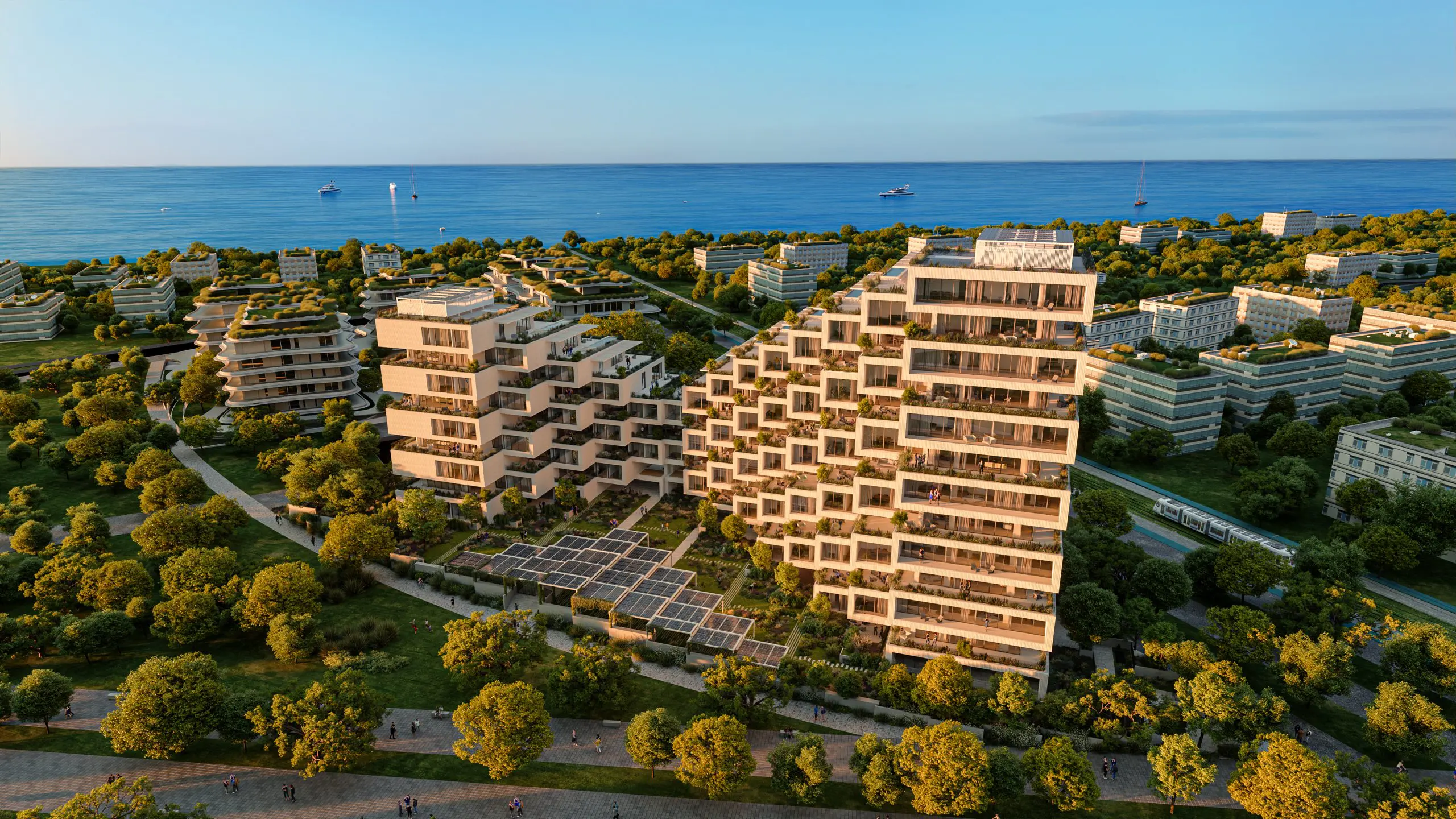
The new residential complexes and office buildings rely on technology. It serves as an essential pillar for an advanced living experience. The development aims to construct approximately 9,000 residential units. Smart technologies and digital infrastructure are integrated into every detail. The developers set strict goals. The aim is to achieve carbon neutrality in energy and waste management.
Key Materials and Technologies for Sustainable Construction:
- Use of low-carbon concrete in 90% of structural building frameworks.
- Adoption of a smart irrigation system. It uses treated and recycled wastewater for the park.
- Planting over 3 million local saplings and 31,000 trees. This boosts local biodiversity.
- Provision of an integrated 5G network. It supports all smart city applications, from waste management to transport.
- Application of smart building systems. These systems reduce energy consumption by over 35% compared to traditional buildings.

Ambition Beyond the Capital Towards a National Vision
The ambition of Urban Regeneration in Greece is not limited to this mega-project alone. It extends to similar initiatives in Thessaloniki and Piraeus. These cities are also witnessing the transformation of their former industrial sites. The sites are turning into new urban centers. This is achieved through an adaptive reuse approach. On the official level, the governmental Konstantinos Doxiadis Program is actively seeking. The program aims to modernize national urban planning. It also seeks to raise the percentage of areas covered by approved urban plans. This target is about 80% of the national territory. Ellinikon represents an international benchmark for integrated development. It affirms the capacity for Urban Regeneration in Greece to strike a balance. This balance occurs between global economic demands and environmental and social responsibility.
✦ ArchUp Editorial Insight
The Ellinikon signifies a visual transformation of 6.2 million m2 of coastal land, featuring a residential tower that stands out as the first high-rise landmark over the sea in the traditional Athenian context. The design commitment to delivering Europe’s largest coastal park is clear, yet it faces a critical challenge in balancing this public promise with its intensely commercial and privatized nature. The design approach is anchored in creating a 15 minute city supported by smart and sustainable infrastructure. However, the heavy emphasis on high-end residential units raises concerns about the model’s comprehensive social applicability. Nevertheless, the project marks a positive turning point in Urban Regeneration in Greece, redefining the use of strategic public land with advanced environmental standards.