ABC Apartment: Making Room for Cooking and Company in 60 m²

In a 60 m² apartment, a kitchen counter can shape social life as much as an extra room. ABC Apartment starts from a specific brief: a young couple’s first home, a limited budget, regular cooking and frequent visits from friends. The question is how those activities can share space without making everyday movement an obstacle course.
Giving the entrance a clear position
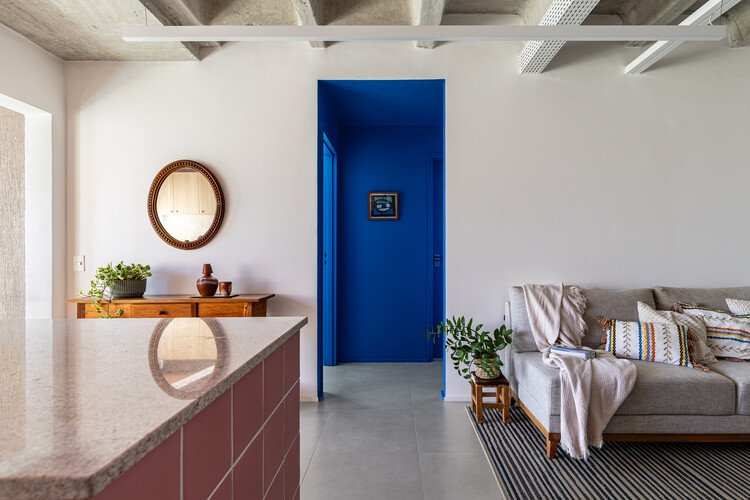
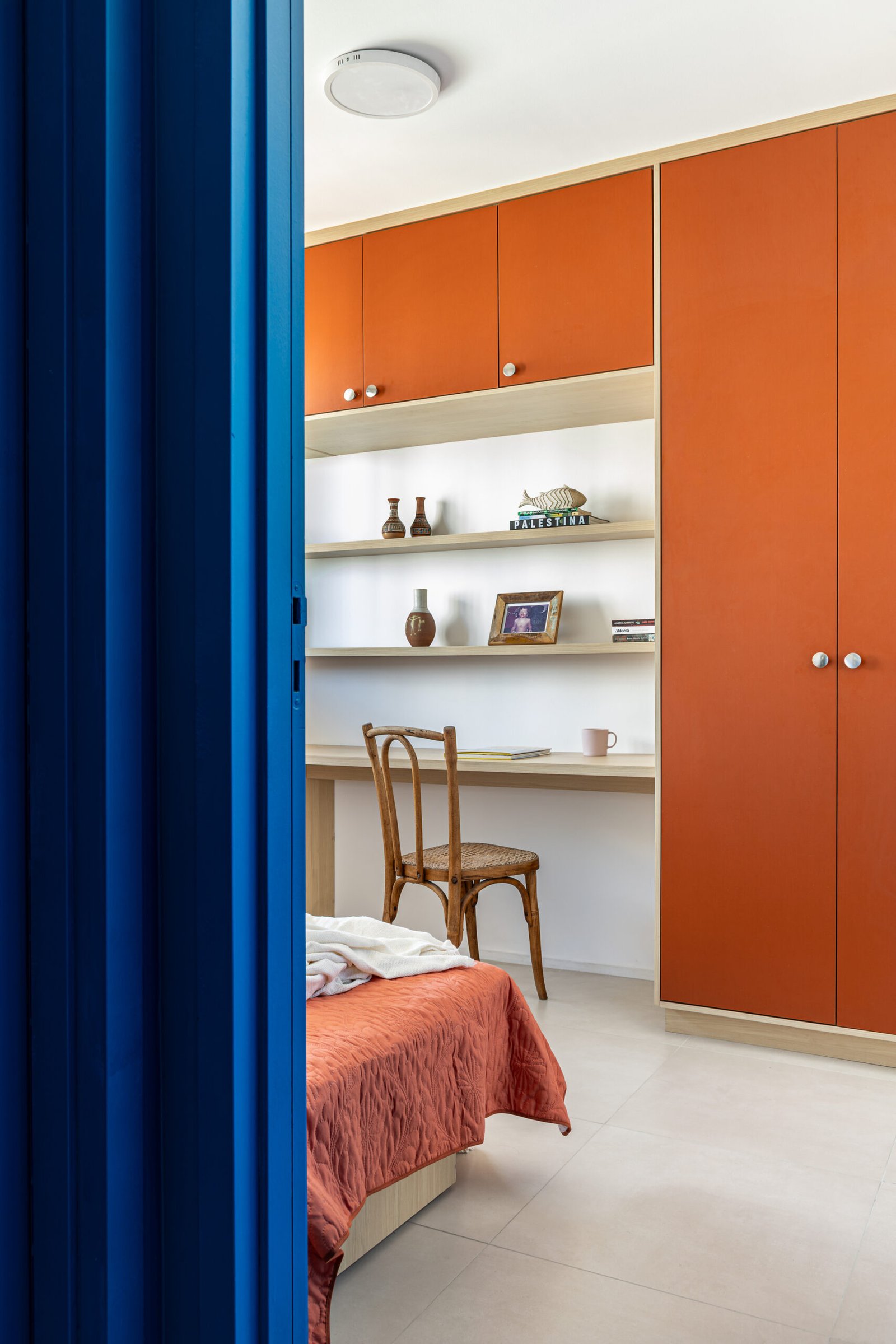
The blue entrance recess is immediately legible beside the living area. In the photographs, its saturated surfaces establish a threshold while the adjacent walls remain light. This is a useful distinction in a compact interior: colour can mark arrival without requiring another freestanding object or a new partition.
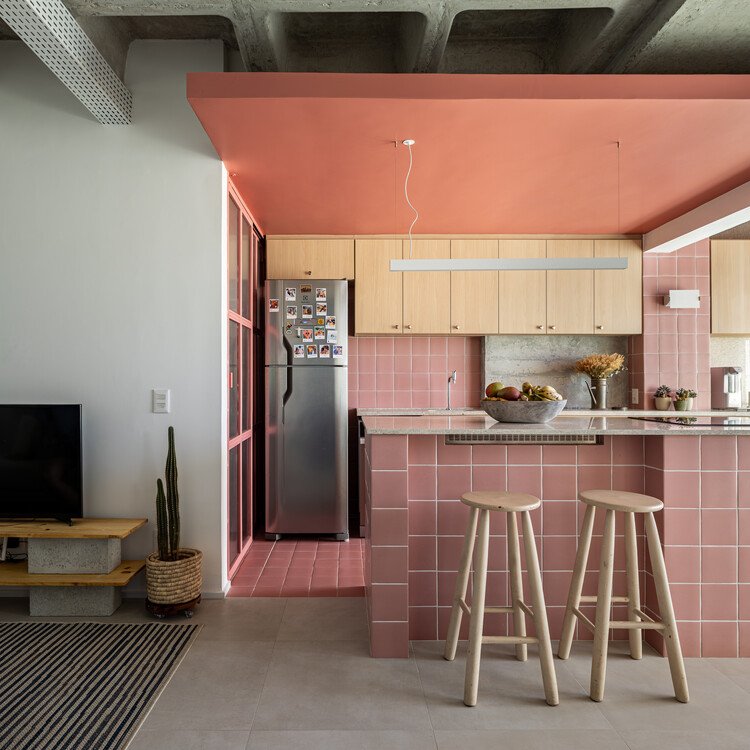
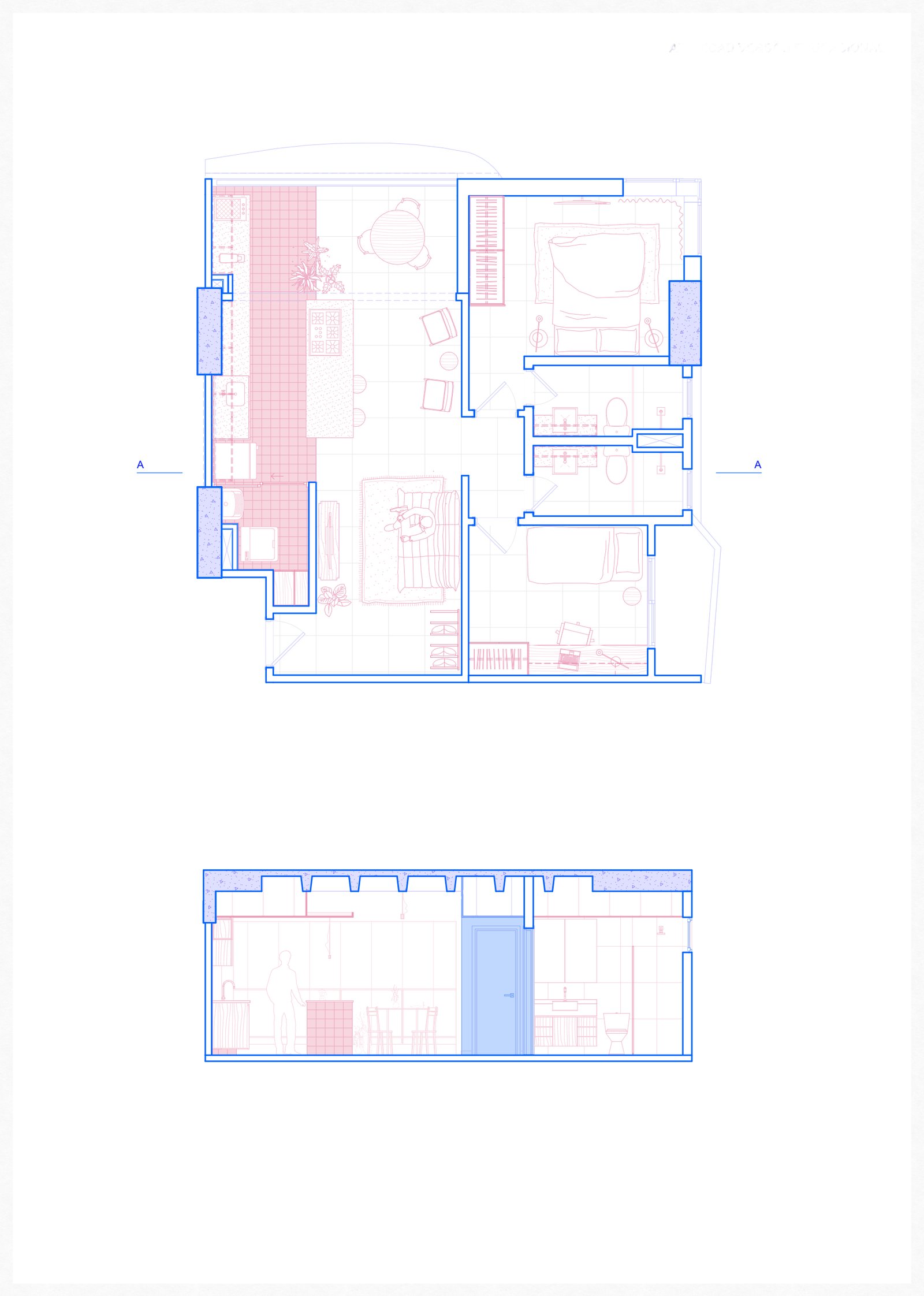
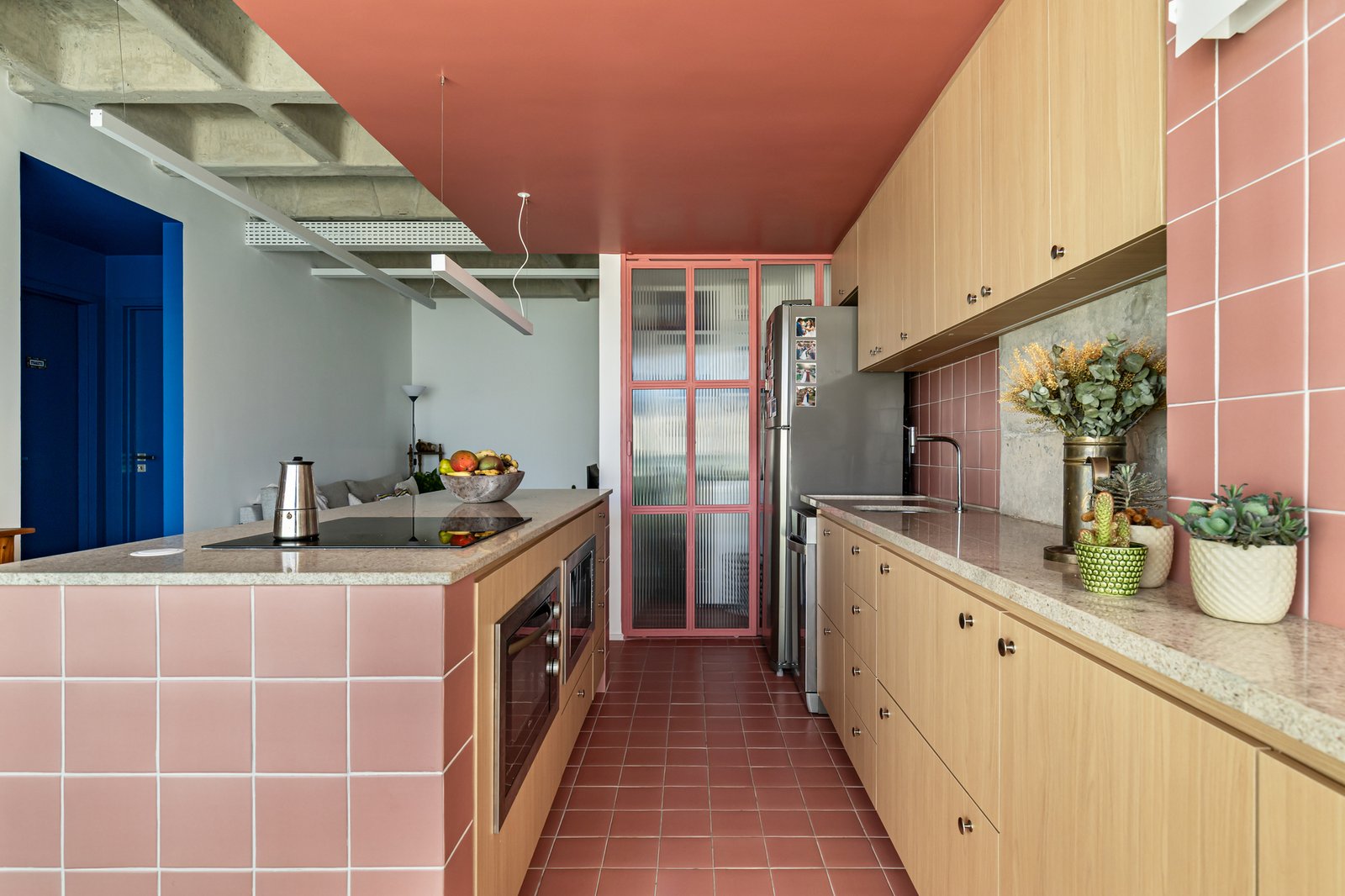
The pink kitchen has a different role. Its tiled counter faces the living space, with stools placed at the outer edge. ArchUp reads this arrangement as a place where preparing food and receiving visitors can overlap. That overlap still needs a clear route around occupied seats; a counter only earns its social function if it remains usable during the less photogenic parts of cooking.
Removing a ceiling is a technical decision
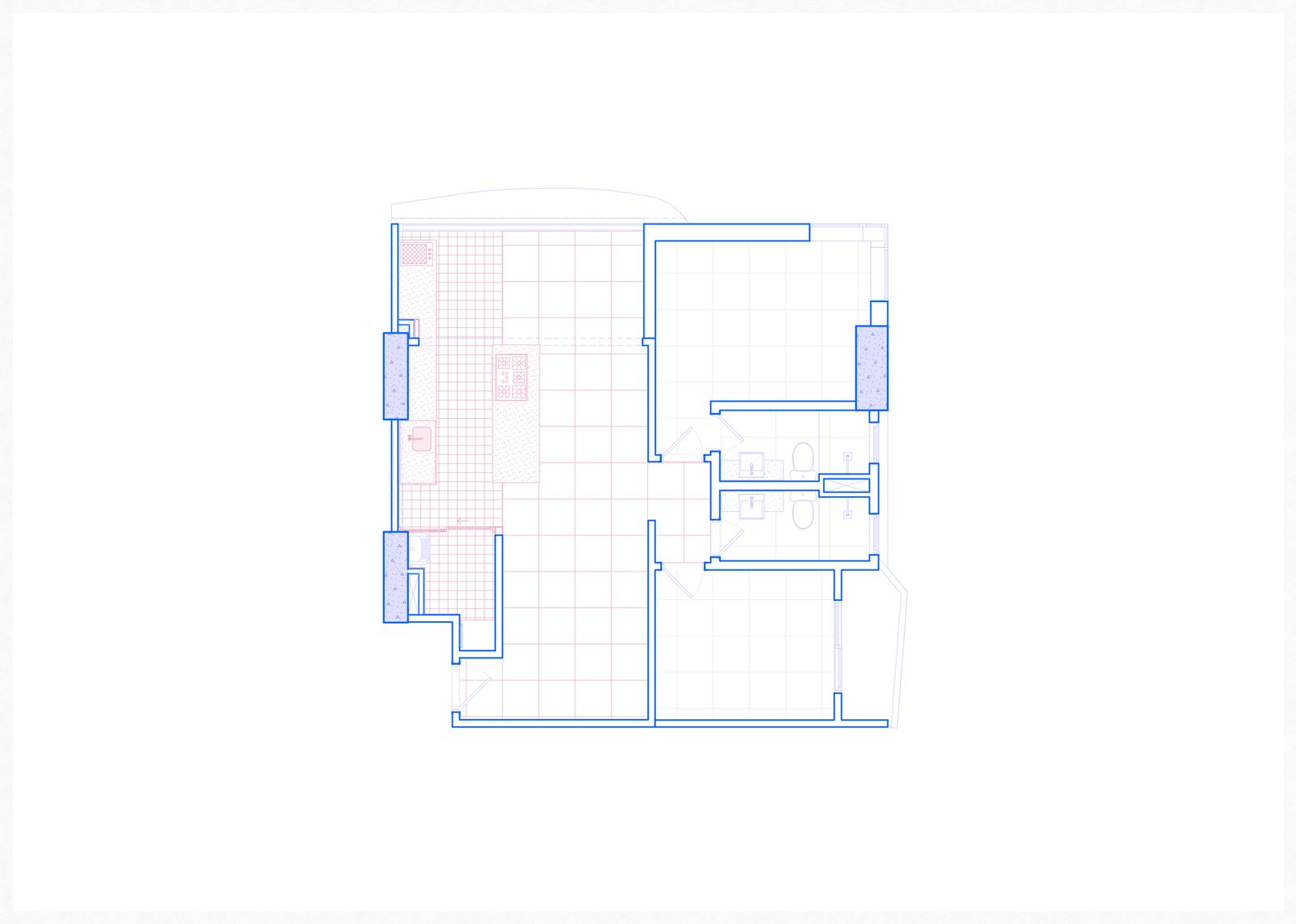
The architects describe checking building drawings before removing the living-room ceiling: no services occupied the void above it. The exposed ribbed slab increases the room’s clear height. They also removed the frame separating the balcony from the interior, extending the social space toward the view.
The distinction matters for renovation practice. An apparently empty ceiling is not evidence that another apartment can undergo the same intervention. Access to installations, lighting routes and the finished condition of the structure all belong in the decision. Here, the visible ribs give the ceiling a strong rhythm; their presence should not be confused with evidence of measured acoustic or thermal performance.
A small palette with practical consequences
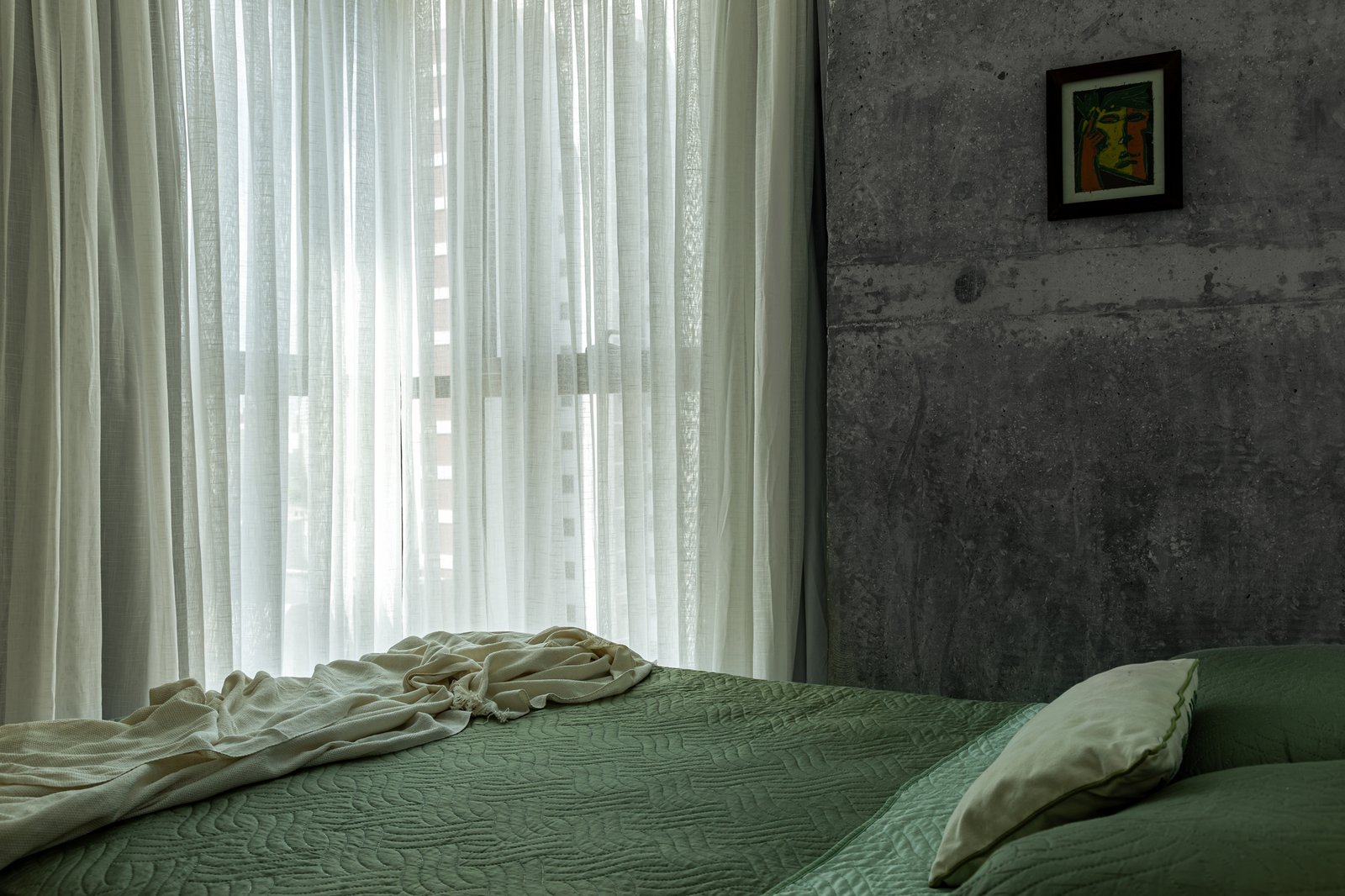
The photographs show light timber cabinetry, a grey floor and pink tiling beneath the exposed concrete. The contrast helps identify different activities within a shared volume. At close range, however, the usefulness of this palette depends on details: the junction of counter and tile, accessible cleaning edges, and finishes capable of being repaired locally.
These are the questions that make the project relevant beyond its appearance. Removing a layer can release volume, but savings cannot be inferred from the amount removed alone. Making good the surfaces and adapting installations also belong in the comparison. The limited budget is part of the brief; it is not a published cost benchmark.
✦ ArchUp Editorial Insight
The documented brief brings together three pressures: a small floor area, a limited budget, and a household that cooks and receives friends regularly. The useful lesson is the order of decisions. First establish which concealed space can safely be recovered; then decide where separation remains valuable; only then select the finishes that make those choices legible. In ArchUp’s reading, the blue entrance and pink kitchen give this apartment a hierarchy without asking every activity to occupy an enclosed room. The counter can support conversation across the kitchen boundary, although seating there also competes with the passage needed during preparation and clearing. Opening the balcony connection offers a similar exchange: a more continuous social space makes the treatment of the outer edge more consequential for daily comfort. The project therefore should not be reduced to a recipe of exposed concrete and bright paint. Its transferable value lies in testing what each removed layer was doing, and assigning that responsibility elsewhere when necessary. A convincing compact home is one whose openness remains workable when guests arrive, food is being prepared, and ordinary household objects are in use.
Project credits: ABC Apartment, Fortaleza, Brazil, 2026. Design: agência campo espacial. Lead architects: Gabriel Dias, Frederico Leite, Santiago Ridmuim and Aida da Costa. Construction: Cm2 Engenharia.