The Sealed Box Trap: How Air Conditioning Systems Transformed into Mechanical Vectors for Health Risks

Reevaluating the Environmental Engineering of Indoor Spaces Between Climatic Imperative and Air Quality Crises
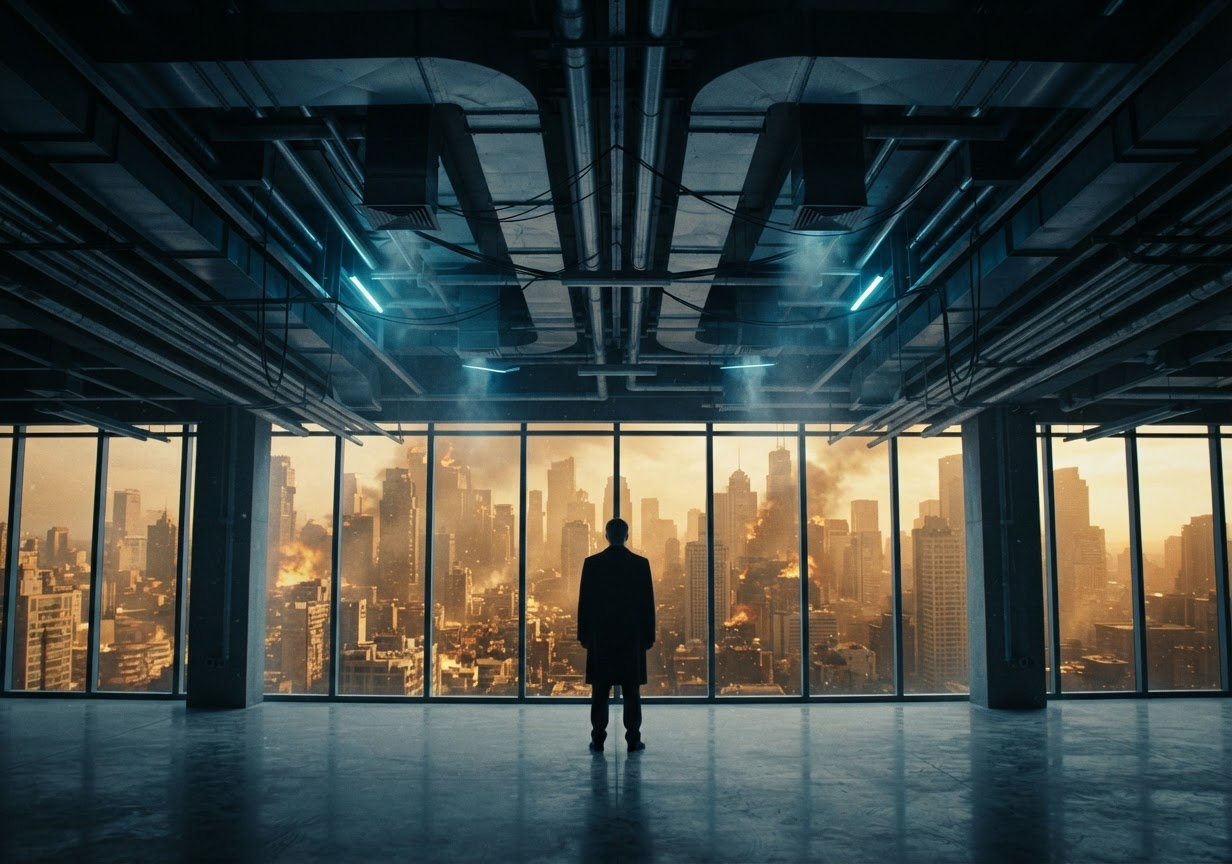
One of the central paradoxes in modern architectural history is that the technology enabling humans to inhabit harsh environments and construct glass skyscrapers is the very technology weakening human immunity and compromising interior spaces. Central air conditioning afforded designers the freedom to eliminate operable windows, sever the building mass from its external climatic context, and rely entirely on a closed mechanical loop for thermal and humidity control. Yet this total detachment from the natural environment carries a heavy health and engineering cost. While these systems protect millions from lethal heatwaves, sealed indoor spaces have simultaneously become breeding grounds for biological and chemical threats, forcing a fundamental rethink of ventilation design and envelope integration.
The Lethal Mechanical Artery: Biological Dispersion Pathways in Air Ducts and Cooling Towers
The hazards of air conditioning extend beyond the mere distribution of cooled air; its mechanical components can turn into primary vectors for disease if not designed and maintained with strict engineering precision. Legionnaires’ disease stands out as one of the most severe and well-documented health risks directly tied to these systems. A systematic review led by researcher Stefanie Walser evaluating outbreaks across twelve countries revealed that cooling towers attached to large-scale air conditioning plants were responsible for hundreds of confirmed cases, carrying a mortality rate approaching six percent. The crisis emerges when warm water accumulates in condensate pans and cooling towers without periodic chemical treatment, creating an ideal environment for biofilms where Legionella bacteria proliferate. The system then aerosolizes this contaminated water, dispersing airborne pathogens across distances reaching up to twelve kilometers from the building source.
These biological threats are not limited to bacteria; heating, ventilation, and air conditioning (HVAC) ductwork serves as an efficient conduit for airborne respiratory viruses. A scientific review conducted by Francesco Chirico and his team demonstrated that indoor airflow patterns and system architecture directly facilitated the transmission of severe viruses, such as SARS-CoV-1 and MERS-CoV, across different floors and rooms in hospitals and high-rise residential complexes. This risk escalates in structures configured for high air recirculation rates to conserve energy. Recirculating indoor air rather than flushing spaces with fresh outdoor air elevates the concentration of fine viral aerosols suspended in the space, placing conventional energy-efficiency strategies in direct opposition to public health requirements.
Sick Building Syndrome: The Environmental Price of Sealing the Architectural Envelope
The architectural shift toward airtight construction aimed at eliminating thermal bridging birthed a medical and engineering phenomenon known as Sick Building Syndrome. In an extensive reanalysis of European epidemiological studies, researchers Mark Mendell and Allan Smith identified a consistent pattern showing that occupants of sealed, air-conditioned office buildings reported significantly higher rates of work-related symptoms compared to those working in naturally ventilated environments. These manifestations included central nervous system disorders such as headaches and chronic lethargy, alongside dry mucous membranes, throat irritation, and ocular discomfort.
Similarly, a broad field study in China led by Bining Cao demonstrated that individuals habituated to regularly air-conditioned environments experienced up to a 2.5-fold increase in symptoms affecting the nervous, digestive, respiratory, and integumentary systems compared to non-users. Engineering that reduced the indoor environment to a static thermostat setting overlooked the dynamic qualities of natural air movement. The absence of subtle thermal variations and direct outdoor air exchange transforms the architectural space into a sensory and physiological void, which the human body registers as continuous biological stress.
Atmospheric Stagnation and Toxic Accumulation: Ventilation Ducts as Chemical Conduits
The internal components of air conditioning systems interact with interior building materials in complex chemical ways that can severely degrade indoor air quality. When structures operate under energy-saving protocols that restrict fresh air intake, volatile organic compounds (VOCs) emitted from wall paints, adhesives, and office furniture—including benzene and formaldehyde—accumulate within the volume at elevated concentrations. These compounds cause respiratory tract irritation, dizziness, and nausea, alongside long-term toxicological risks.
Beyond passive accumulation, air conditioning ductwork actively distributes chemical toxins across distinct architectural zones with the same efficiency it spreads pathogens. An occupational case study documented by Alexander Gerber and colleagues detailed an instance where a bank manager suffered an acute asthma attack, followed by colleagues developing neurological symptoms, after organic solvent and isocyanate vapors from upper-floor sealing works were drawn into the central HVAC network and distributed throughout the building. This incident highlights how a failure to mechanically isolate ventilation zones across varied functional program spaces represents a structural design flaw capable of turning mechanical supply ducts into distribution channels for chemical hazards.
Office Microclimate Desiccation: The Impact of Low Humidity on Digital Workspaces
The continuous reduction in relative humidity required by mechanical cooling creates an arid indoor microclimate that conflicts directly with human physiology. In research examining modern office environments, Peder Wolkoff and his team demonstrated that low relative humidity rapidly desiccates the precorneal tear film, triggering “office eye syndrome” characterized by persistent burning and ocular irritation. This condition is compounded in contemporary open-plan workspaces that demand prolonged interaction with digital displays, where human blink frequency naturally drops by two- to three-fold in response to visual focus, exacerbating tear evaporation in the presence of dry supply air.
The ramifications of this mechanical desiccation extend beyond commercial office spaces into residential environments. A survey led by Hua Qian studying thousands of children in Nanjing, China, linked household air conditioning use directly to higher rates of doctor-diagnosed asthma, allergic rhinitis, and pneumonia, with adjusted odds ratios ranging from 1.3 to 2.1. The study attributed these elevated risks to prolonged window closure, diminished air exchange rates, and biological contamination arising from mold and microbial growth within domestic unit filters and damp cooling coils.
Thermal Monotony and Impaired Physiological Adaptation: The Biological Cost of Artificial Comfort
Modern mechanical practice aims to maintain a constant, static indoor temperature throughout the operational day—typically anchored around 22 degrees Celsius. However, contemporary theories of adaptive thermal comfort suggest that this thermal monotony degrades the human body’s biological capacity to adjust to natural climatic variations. Research led by Bining Cao demonstrated that prolonged, continuous exposure to uniform mechanical cool climates weakens physiological heat adaptation mechanisms, diminishing human tolerance for warm outdoor conditions and heightening thermal distress during movement between indoor environments and urban public spaces.
Sharp temperature differentials between the exterior streetscape and the over-cooled interior induce autonomic nervous system disturbance and suppress normal physiological activation. Consequently, contemporary architectural theory is moving away from uninterrupted central cooling, advocating instead for dynamic thermal environments that integrate intermittent natural ventilation. This approach preserves biological adaptability and strengthens the occupant’s physiological connection to the external environment.
The Architectural Paradox: Balancing Life-Saving Cooling and Healthy Engineering Design
Despite these documented health risks, central air conditioning remains a critical technology for preventing heat-related morbidity and mortality. A comprehensive epidemiological cohort study conducted by Eugene Rogot in the United States demonstrated that access to central air conditioning during extreme heat waves reduced overall mortality rates by 42 percent compared to households lacking mechanical cooling, with the most pronounced protective benefits observed among the elderly, women, and individuals spending extended periods indoors.
This evidence presents architects and environmental engineers with a precise design imperative: air conditioning is not an inherent hazard to be abandoned, but a vital life-safety system requiring engineering recalibration. Correcting the indoor environment does not demand the elimination of mechanical cooling, but rather the remediation of mechanical and spatial design deficiencies.
This recalibration requires comprehensive engineering strategies: increasing fresh outdoor air intake while minimizing air recirculation—especially during respiratory disease outbreaks—and mechanically segregating airflow paths across distinct functional zones to prevent biological or chemical cross-contamination. Furthermore, projects should leverage hybrid ventilation systems that integrate natural airflow via automated operable windows with mechanical cooling deployed only during extreme climatic conditions. Mechanical components must be designed for unhindered maintenance access to ensure regular cleaning, disinfection, and filter replacement, thereby preventing biofilm formation in condensate pans and cooling towers. Finally, dynamically modulating indoor temperature and relative humidity rather than enforcing static setpoints safeguards the ocular tear film while actively stimulating the human body’s physiological thermal adaptation.
Ultimately, the crisis lies not in cooling technology itself, but in an architectural philosophy that transformed buildings into sealed, isolated glass boxes. The future demands an architecture that breathes intelligently, balancing energy efficiency with occupant health, and seamlessly integrating mechanical systems with the building envelope to ensure the built environment remains a safe, restorative sanctuary for human life.
✦ ArchUp Editorial Insight
The proliferation of the sealed, mechanically conditioned building envelope is not an aesthetic choice, but the physical outcome of post-energy-crisis financial logic and municipal risk-management frameworks. Corporate real estate models demand maximized floor-plate depths and standardized thermal baselines, while environmental compliance codes incentivize tight envelope insulation to minimize operational energy loads. When capital allocation prioritizes thermodynamic predictability and utility conservation over atmospheric turnover, mechanical systems are engineered to recirculate conditioned indoor air rather than supply external air. The resulting indoor environmental hazards—ranging from Sick Building Syndrome to accelerated pathogen dispersion—are the logical byproducts of a procurement ecosystem that treats ambient air as a financial liability to be controlled rather than a biological necessity to be continuously renewed.
References
- Walser, Stefanie M., Daniel G. Gerstner, Bernd Brenner, Christian Höller, Bernhard Liebl, and Caroline E. W. Herr. “Assessing the Environmental Health Relevance of Cooling Towers – A Systematic Review of Legionellosis Outbreaks.” International Journal of Hygiene and Environmental Health, 2014.
- Chirico, Francesco, Antonio Sacco, Nicola Luigi Bragazzi, and Nicola Magnavita. “Can Air-Conditioning Systems Contribute to the Spread of SARS/MERS/COVID-19 Infection? Insights from a Rapid Review of the Literature.” International Journal of Environmental Research and Public Health, 2020.
- Qian, Hua, Xiaohong Zheng, Li Zhou, Xiao Chen, and Charles W. F. Yu. “A Survey Investigation of the Associated Effect of Using Air Conditioning Equipment on Children’s Health in Nanjing.” Indoor and Built Environment, 2014.
- Mendell, Mark J., and Allan H. Smith. “Consistent Pattern of Elevated Symptoms in Air-Conditioned Office Buildings: A Reanalysis of Epidemiologic Studies.” American Journal of Public Health, 1990.
- Cao, Bining, Qiang Shang, Zhen Dai, and Yingxin Zhu. “The Impact of Air-conditioning Usage on Sick Building Syndrome during Summer in China.” Indoor and Built Environment, 2012.
- Wolkoff, Peder, Jens K. Nøjgaard, Christian Franck, and Poul Skov. “The Modern Office Environment Desiccates the Eyes?” Indoor Air, 2006.
- Yu, Bing Feng, Zhen Bo Hu, Ming Liu, Huan Lin Yang, Qing Xin Kong, and Yue Hua Liu. “Review of Research on Air-conditioning Systems and Indoor Air Quality Control for Human Health.” International Journal of Refrigeration, 2009.
- Gerber, Alexander, Andreas Fischer, Karl-Heinz Willig, and Dietrich A. Groneberg. “Air Conditioning Systems as Non-Infectious Health Hazards Inducing Acute Respiratory Symptoms.” Industrial Health, 2006.
- Rogot, Eugene, Paul D. Sorlie, and Eric Backlund. “Air-conditioning and Mortality in Hot Weather.” American Journal of Epidemiology, 1992.