Coral Installation: Repetition and Human Interaction on the Coast

Spatial Scenography and the Deconstruction of Mass
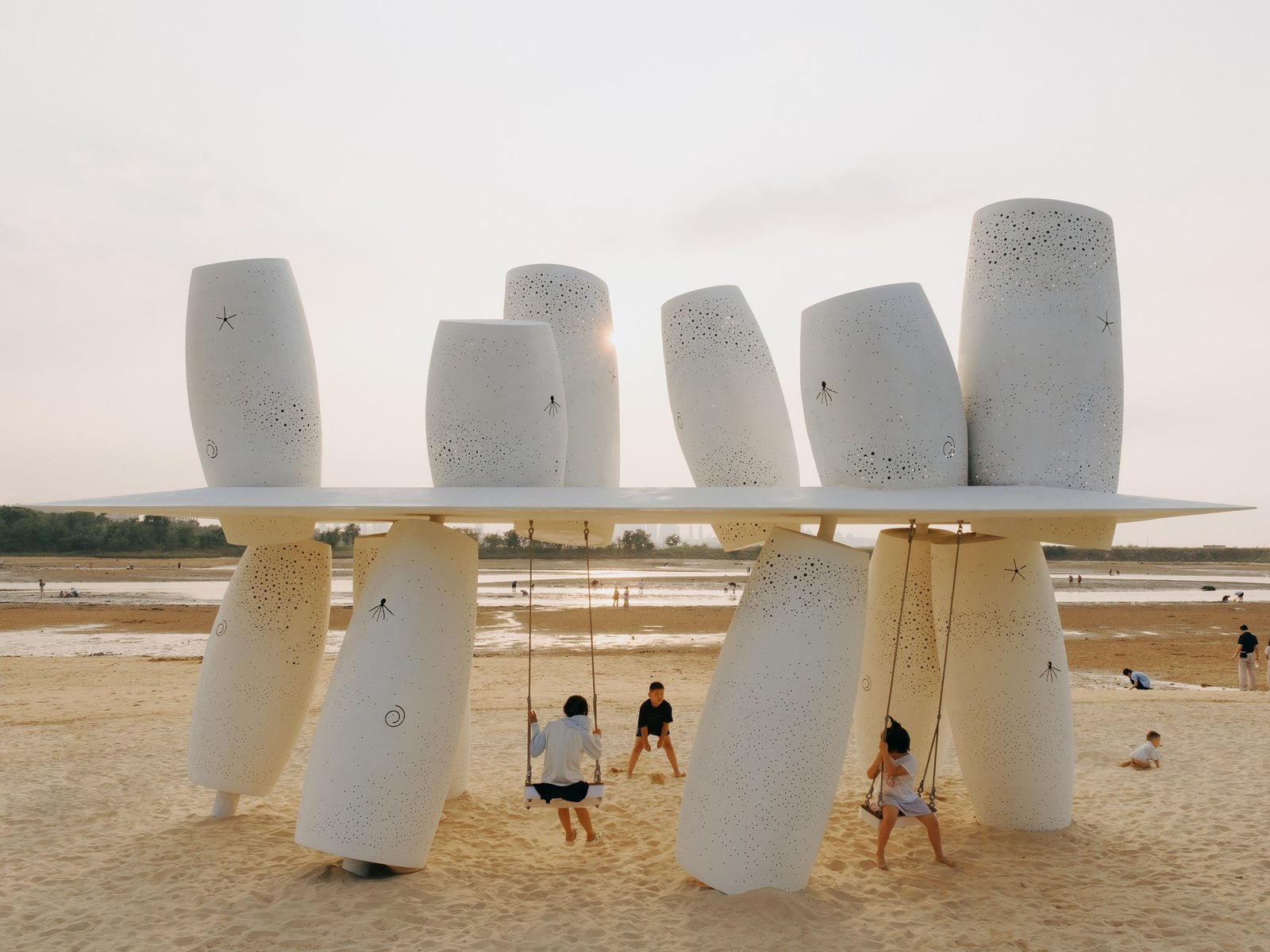
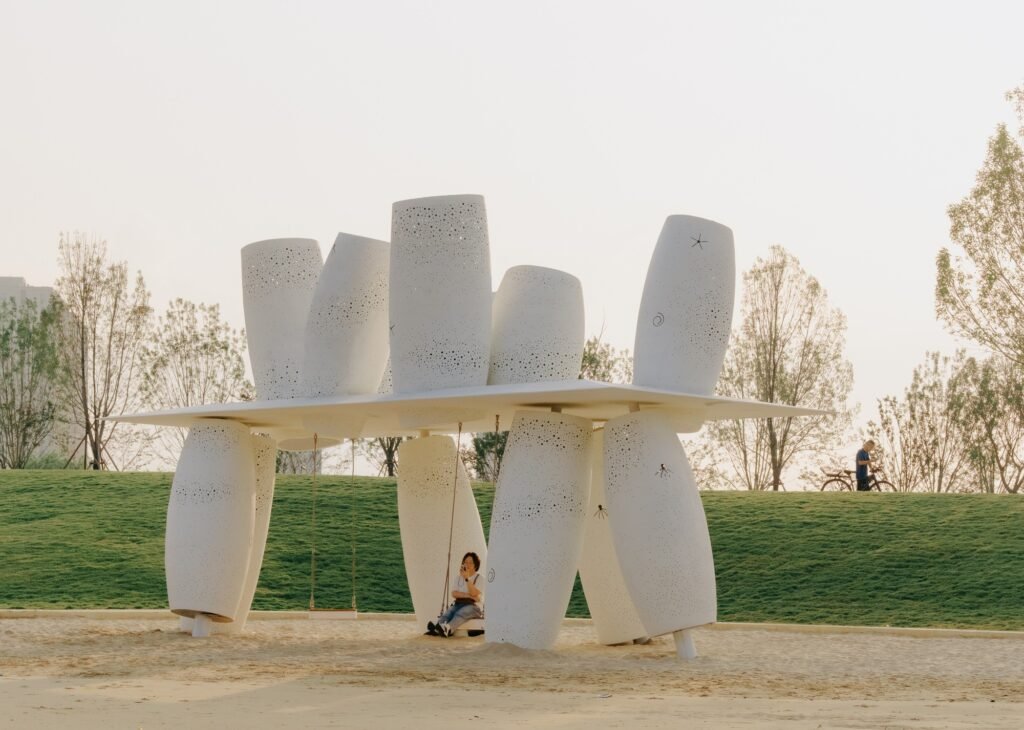
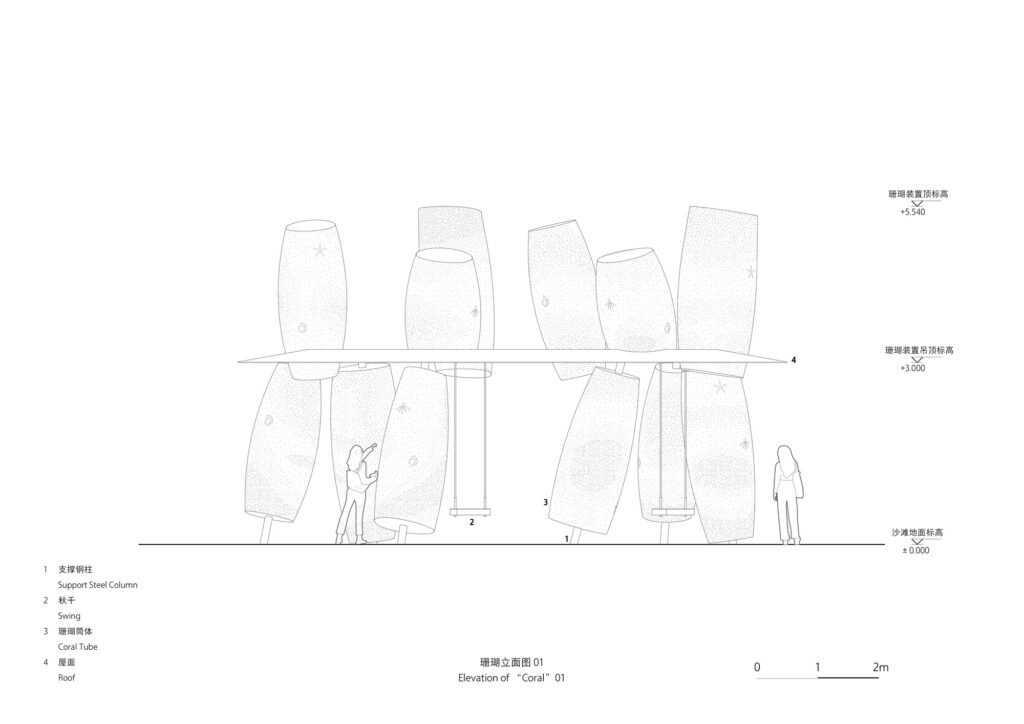
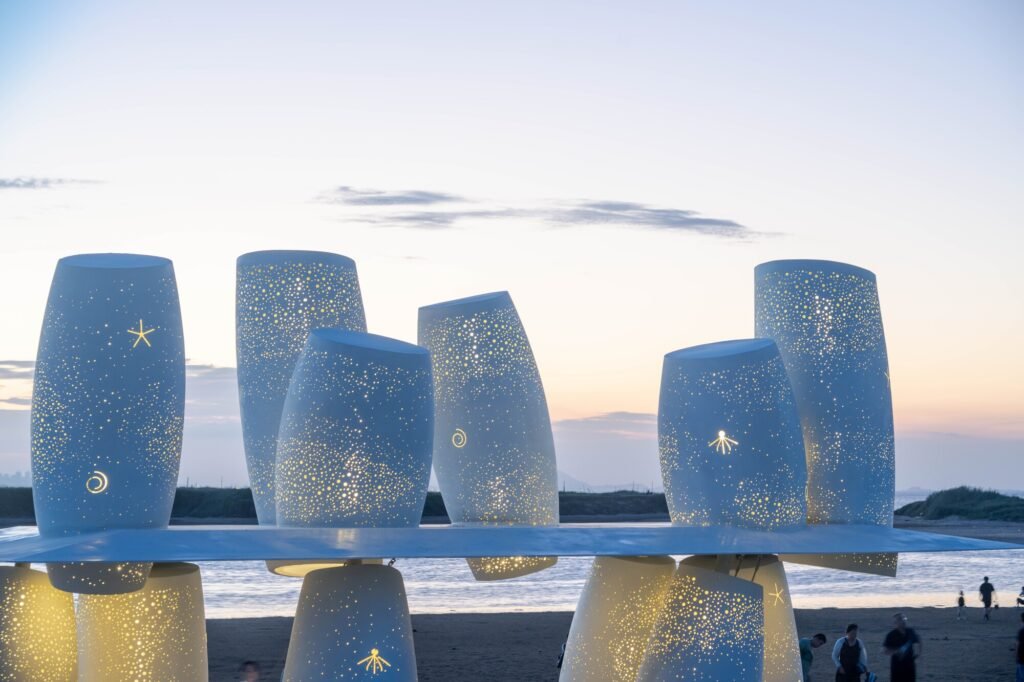
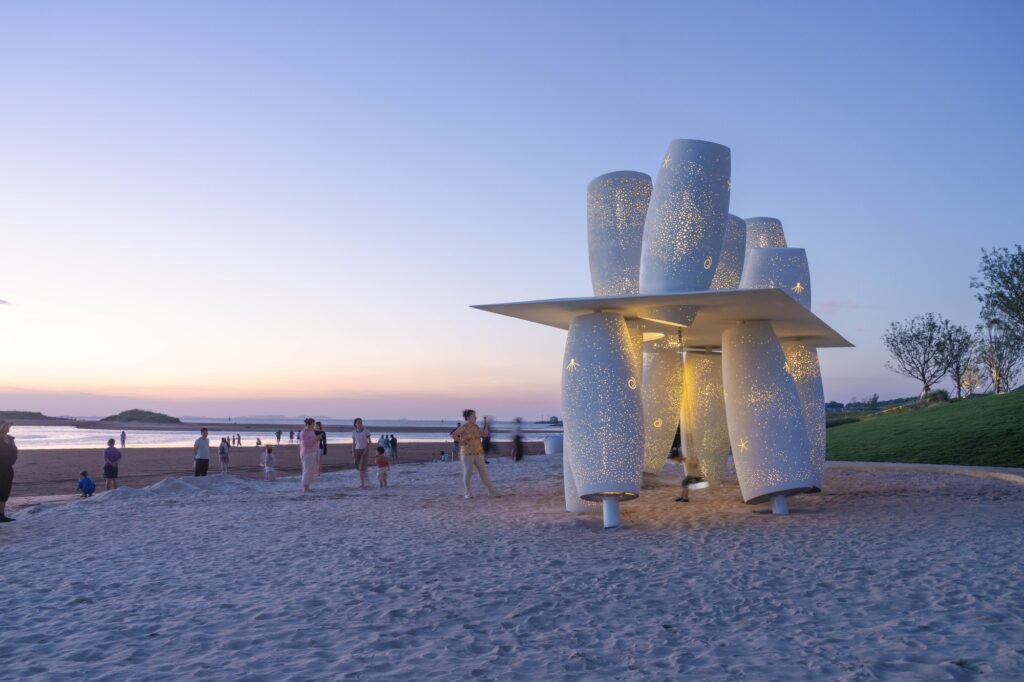
The art installation takes shape through the repetition of twelve white-painted stainless-steel cylinders, arranged in two groups that vary in height and orientation. A thin horizontal roof intersects this mass, bringing the vertical elements together within a unified composition and defining their relationship without compromising the individuality of each cylinder. Rather than appearing as isolated units, their repetition and overlap create a penetrable space through which visitors can move, while variations in their positions and dimensions give the composition a shifting sculptural character depending on the viewer’s angle and position.
Human Experience and Kinetic Interaction
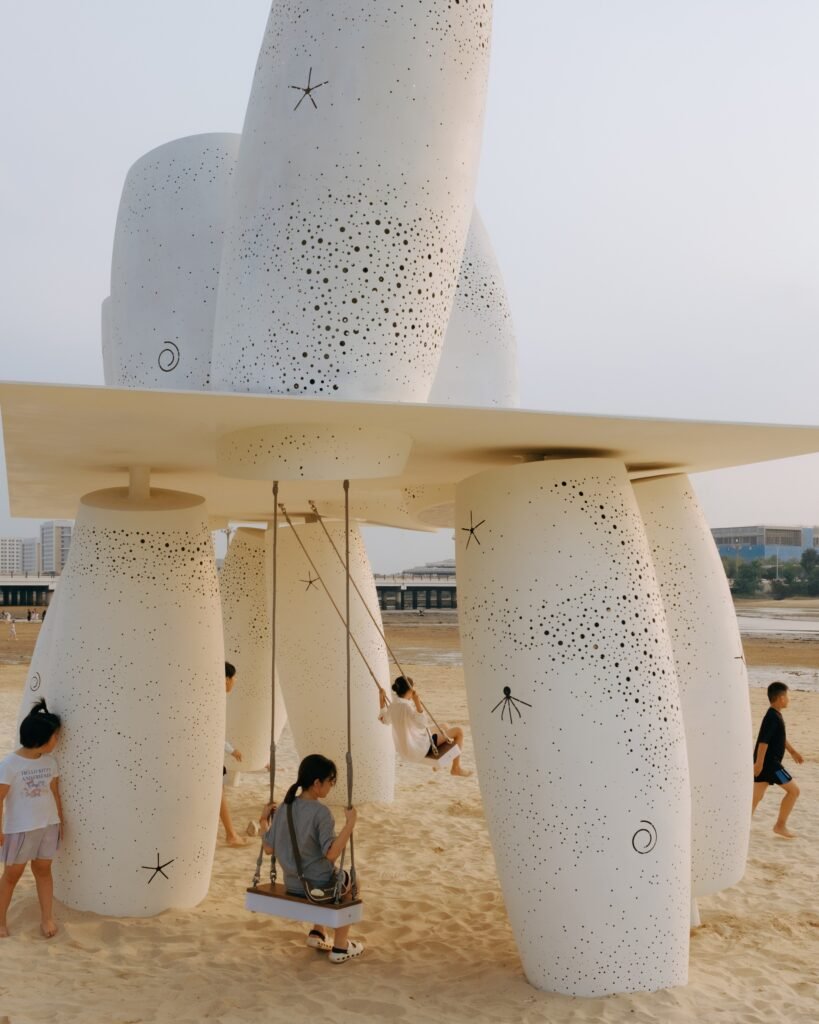
The installation’s function extends beyond the creation of a visual scene, as its spatial experience is based on bodily movement between the cylinders and within the space they generate. As visitors move toward the center of the composition, the relationship between the user and the surrounding elements changes, shifting the experience from observing the installation from outside to directly interacting with it. Beneath the horizontal roof, two swings face west, making the swinging motion part of the site experience itself, where use coincides with the presence of the sea, tidal flats, sea breeze, and changing light throughout the hours of sunset.
Scenographic Framing and Horizon View
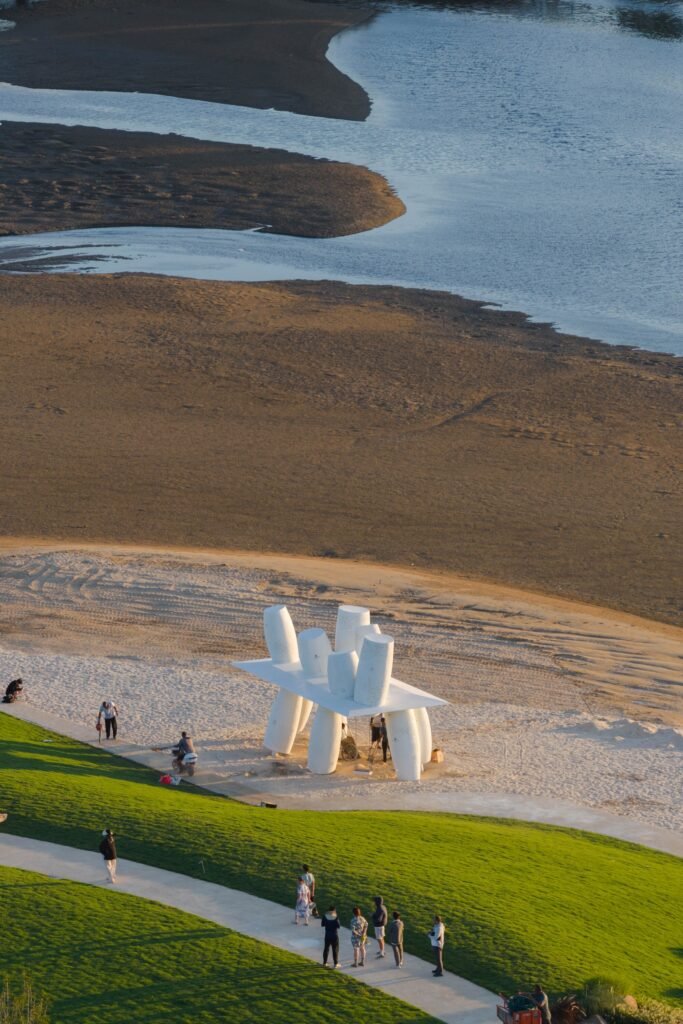
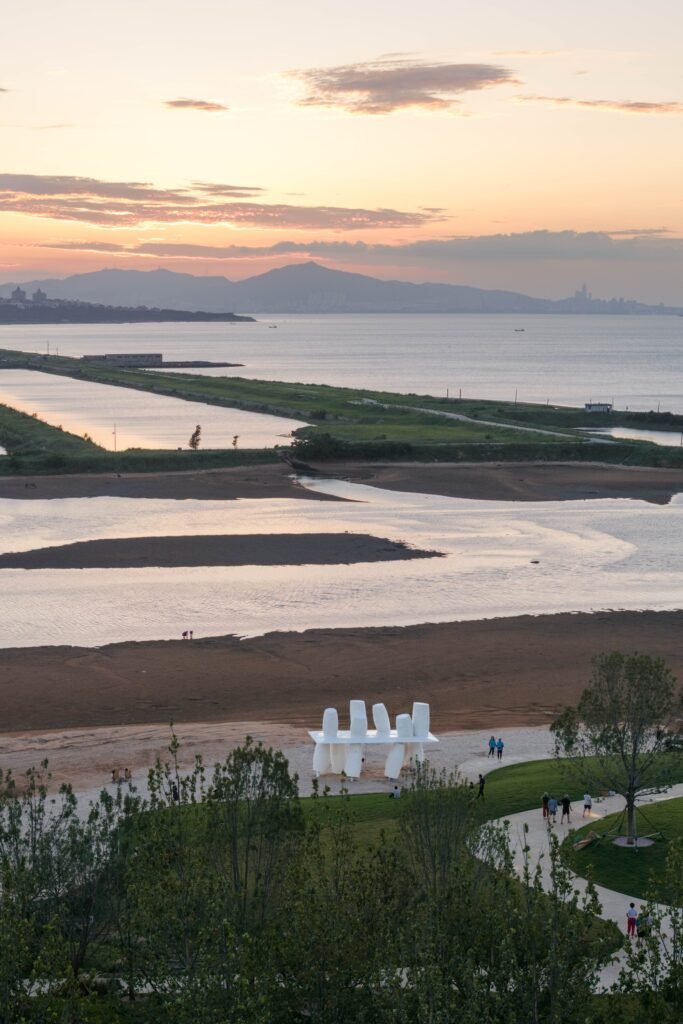
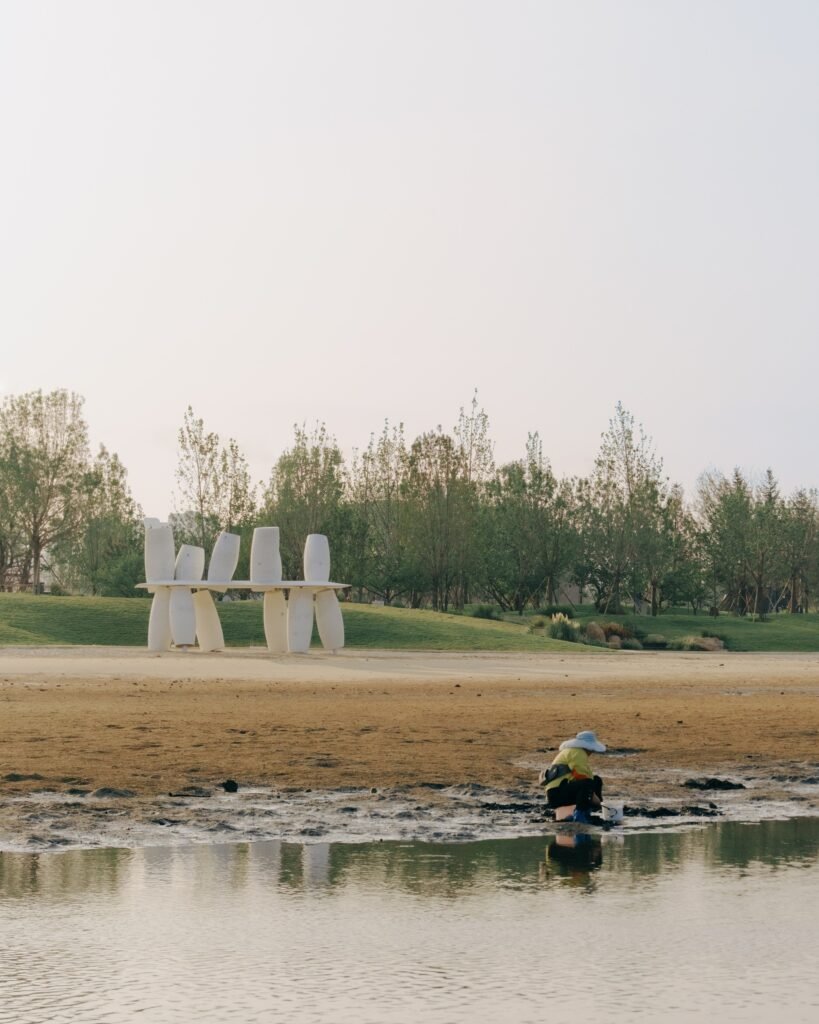
The installation derives its presence from the contrast between its white mass and the open coastal landscape surrounding it. From a distance, the cylinders evoke the appearance of gatherings of marine organisms, while the gaps between them, as visitors approach, reveal successive fragments of the sea, sky, and tidal flats. The natural landscape is therefore not concealed behind a solid mass; instead, its view is reorganized through the openings within the composition itself, with the framed scene changing according to the viewer’s movement and position within the installation.
Transformation of Scale and Spatial Immersion
The experience of scale changes as soon as visitors enter among the large cylinders, as the elements that appear separate from the outside become enclosing walls that form a more contained space. This transformation temporarily distances the experience from the familiar image of the coast, evoking the sensation of entering an underwater environment. At the same time, the open space allows movement between the elements or provides opportunities to settle on the west-facing swings, allowing bodily movement to intertwine with the surrounding natural influences, particularly the sea breeze, changing light, and the movement of the tides.
Surface Poetics and Gradual Light Modulation
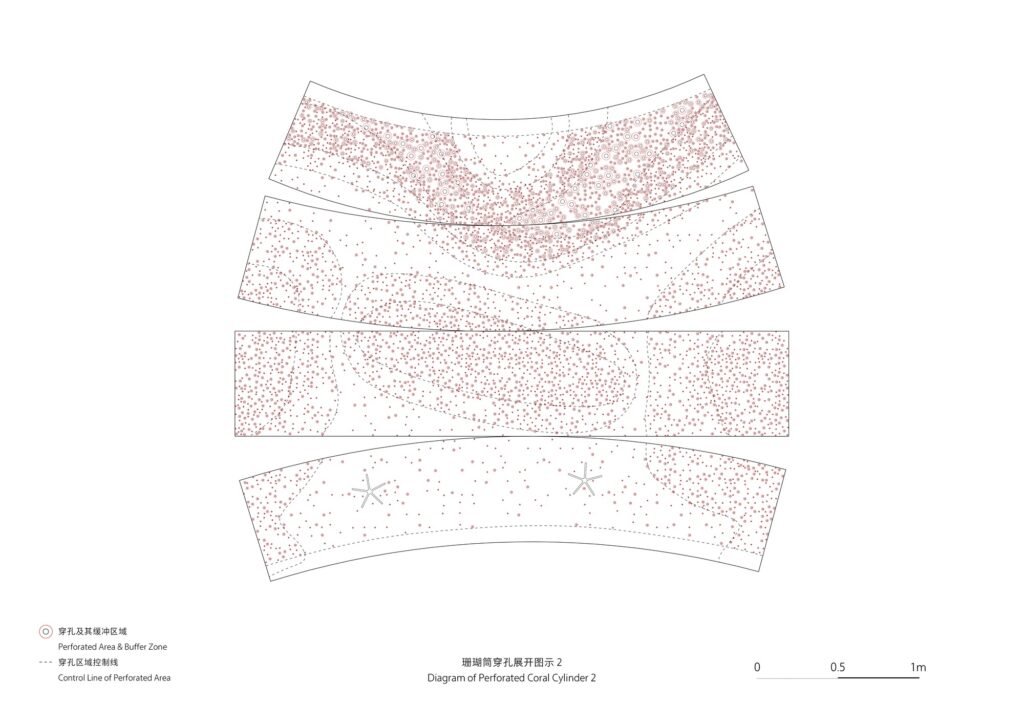
The cylinders derive their material presence from their perforated surfaces, which draw inspiration from the changing density patterns of fish aggregations in the depths of the sea. Each cylinder contains between 2,000 and 4,000 perforations, with diameters ranging from 4 to 25 millimeters, producing an uneven surface whose visual density changes from one location to another. Some of the larger openings also take the form of elements inspired by marine shapes, such as starfish, octopuses, and shells. As evening falls, the perforations allow the interior light to pass outward, transforming the reading of the cylinders from fixed white masses into illuminated elements whose relationship with the surrounding landscape changes as darkness sets in.
Social Interweaving and Nighttime Transformation
The installation extends beyond its role as a visual element to become a space for use and interaction along the waterfront. The swings provide a direct point of interaction, allowing children and adults to use them in different ways, while the surrounding composition enables sitting, movement, and observation of the landscape. At night, the cylinders’ internal lighting continues to emphasize the composition and draw attention to it, transforming the atmosphere of the site as the installation shifts from a daytime presence associated with natural light and the coastal landscape to a nighttime presence shaped by internal illumination and the interaction between light and the perforated surface.
✦ ArchUp Editorial Insight
The installation reframes coastal architecture as a controlled field of repetition, perforation, and bodily movement. Twelve stainless-steel cylinders transform apparently separate elements into an inhabitable mass, while their openings regulate views, air, natural light, and nighttime illumination. Its significance lies in the way architecture reshapes perception through scale, permeability, and directed movement, rather than relying primarily on formal resemblance to marine organisms.
However, this approach may romanticize the experience of immersion. The perforated surfaces and marine references aestheticize the environmental rhythms they evoke without materially engaging with the coastal forces themselves. Tides, wind, changing light, and public use become sensory variables rather than structural and operational constraints. The cylinders therefore function primarily as instruments for producing perception; design orchestrates atmosphere and interaction, while leaving their performance in the face of weather conditions, maintenance requirements, accessibility, and long-term public use open to question.