Brisbane’s Glasshouse Theatre Opens with Striking Undulating Glass Facade

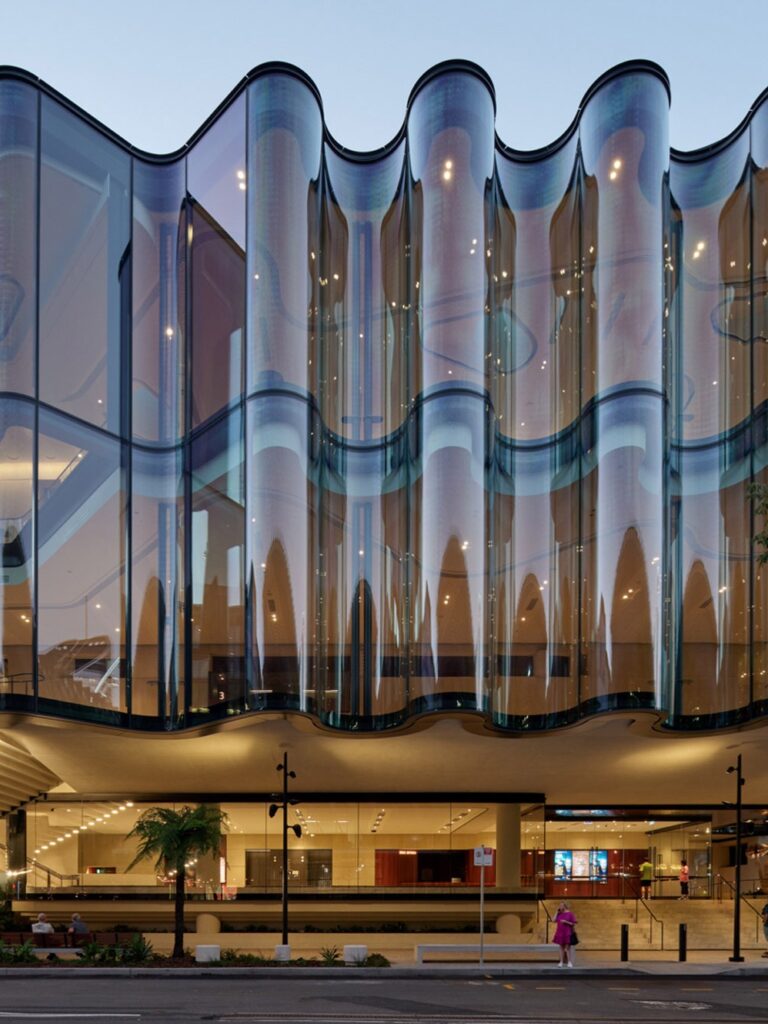
A new 1,500-seat performing arts venue has opened in Brisbane, Australia. The Glasshouse Theatre features a distinctive wavy glass exterior that redefines the city’s cultural landscape. This architecture project creates a unique dialogue between performers and the urban street life.
Cantilevered Design Maximizes Urban Space
The building presents a bold cantilevered second floor that extends over the street. This six-meter overhang addresses two streets simultaneously. Therefore, the design maximizes the site potential within Brisbane’s dense urban fabric. The floating volume creates a dramatic entrance experience for visitors approaching from multiple directions.
Indigenous Poetry Inspires Facade Design
The undulating glass facade draws inspiration from local Indigenous heritage. Lines from a prose poem by artist Lilla Watson guided the design concept. The poem references the Brisbane River, its waves, and fish beneath the surface. Moreover, the wavy glass panels evoke this aquatic imagery through their flowing form. The building materials include two levels of seven-meter glass panels. Some panels feature black ceramic inserts that reduce solar glare and interior heating.

Transparent Walls Create Public Stage Effect
The facade functions as what designers describe as a public stage. Passersby observe people moving through the bright lobby spaces. However, the curved glass partially obscures silhouettes, maintaining privacy while encouraging visual connection. This transparency inverts the traditional theater relationship between viewer and performer. Meanwhile, natural light floods the foyer areas, contrasting with the intentionally dark performance spaces inside.

Interior Balances Intimacy with Flexibility
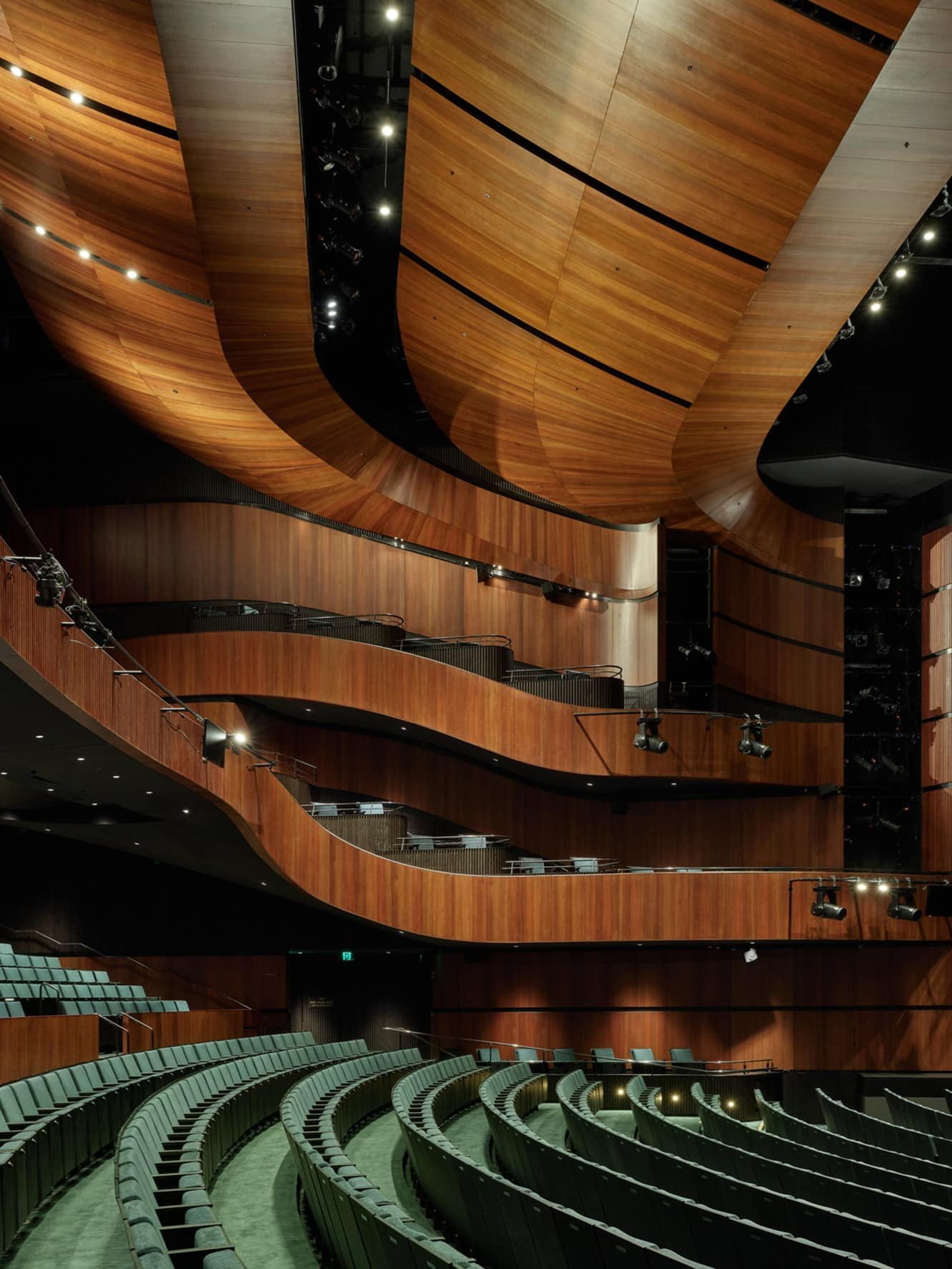
The theater hall accommodates 1,000 seats on the main level plus 500 on the balcony. The maximum distance from stage to the furthest seat spans only 28 meters. This creates intimacy for audiences and performers alike. The interior design features eucalyptus wood walls and dark green carpet. The construction includes flexible staging technology with a three-section orchestra pit. Each section raises or lowers independently. Additionally, 100 automated suspension mechanisms handle scenery and lighting changes. Seven roof lanterns symbolize Queensland’s seven watersheds, honoring regional Indigenous cultural heritage. This sustainability approach connects the building to its environmental context.

A Quick Architectural Snapshot
The Glasshouse Theatre demonstrates how contemporary cultural buildings can honor Indigenous narratives while serving modern performance needs. Its wavy glass skin transforms a standard theater typology into an urban landmark that actively engages with Brisbane’s streetscape and river heritage.
✦ ArchUp Editorial Insight
The Glasshouse Theatre emerges from three converging forces reshaping Australian cultural infrastructure. First, post-pandemic municipal governments face pressure to justify public spending on arts venues. A transparent facade literally puts taxpayer investment on display. Second, Australian cities compete aggressively for cultural tourism dollars, requiring landmark buildings that photograph well for social media circulation. Third, Indigenous consultation requirements now influence major public projects, pushing designers toward narrative-driven facades rather than purely formal exercises.
The cantilever solves a real estate problem. Brisbane’s density leaves little room for plaza spaces around cultural buildings. Extending over the street captures public realm without purchasing additional land. The flexible staging technology addresses another economic reality. Venues must host everything from opera to corporate events to survive financially.
This project is the logical outcome of transparency politics plus urban land scarcity plus cultural tourism economics.