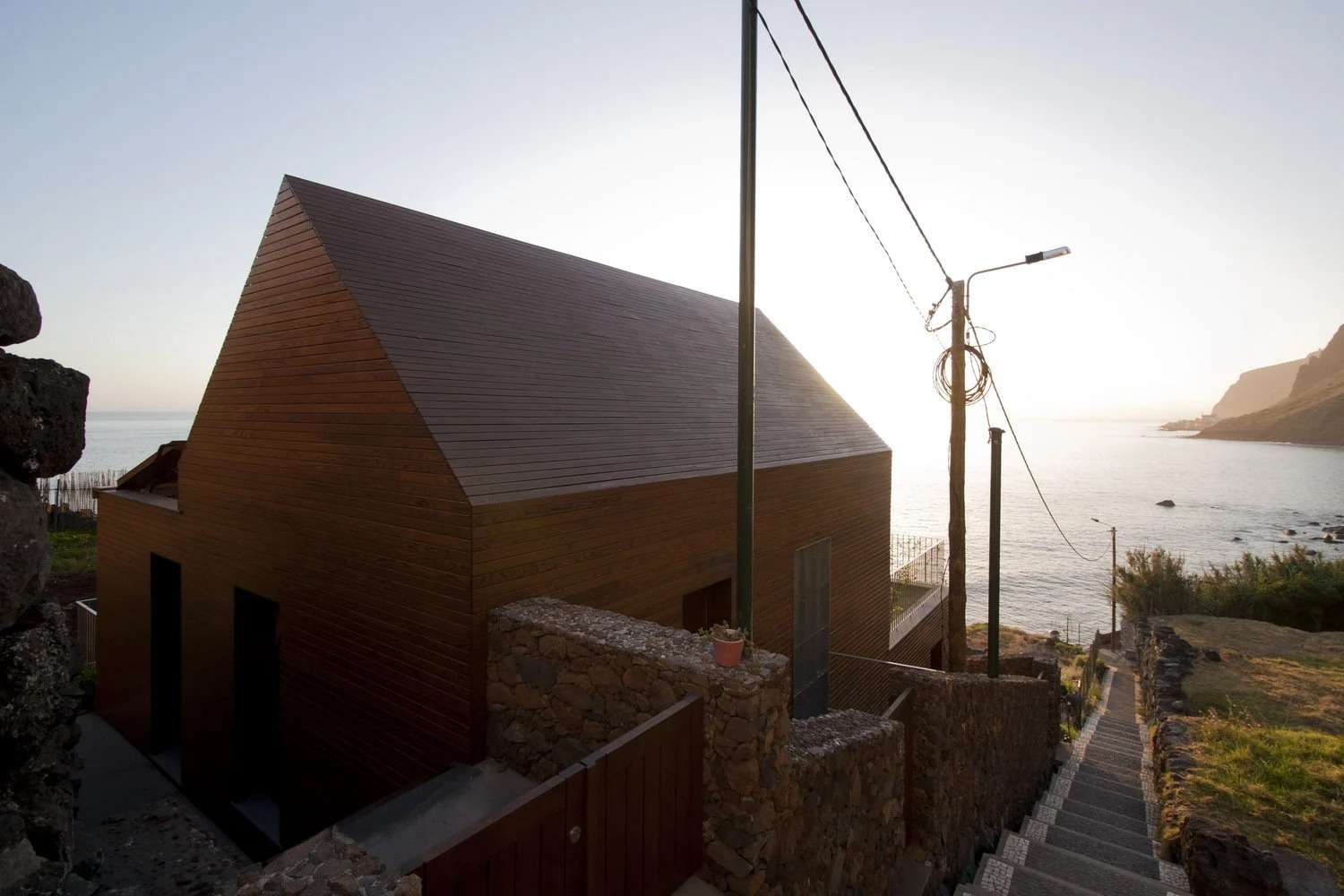
Jardim do Mar Houses and Contemporary Living

Massing Formation and Topographical Response
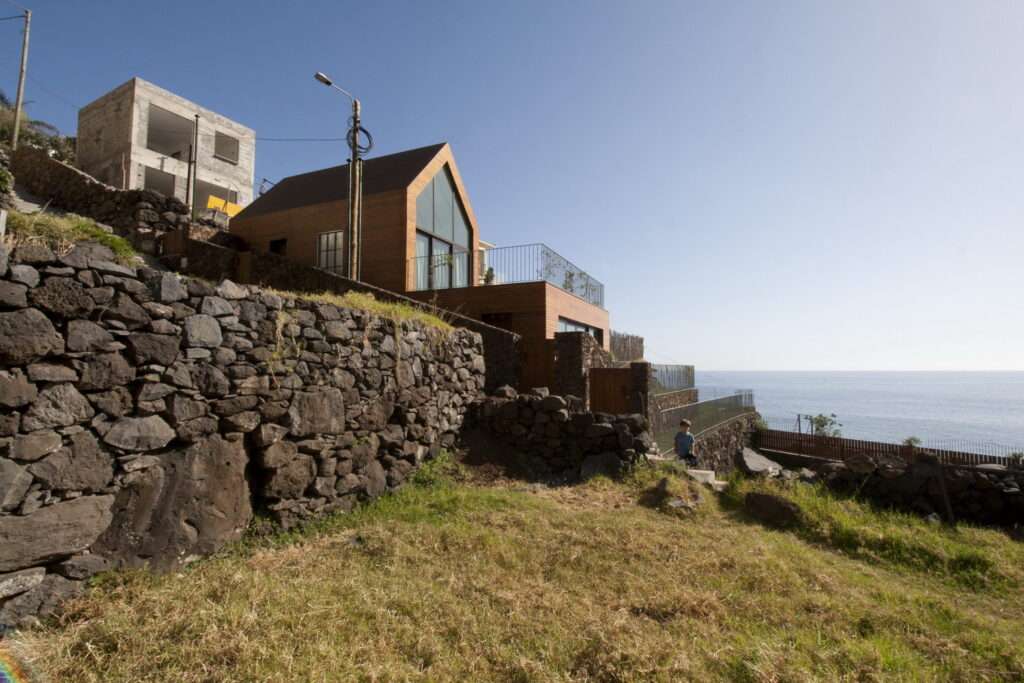
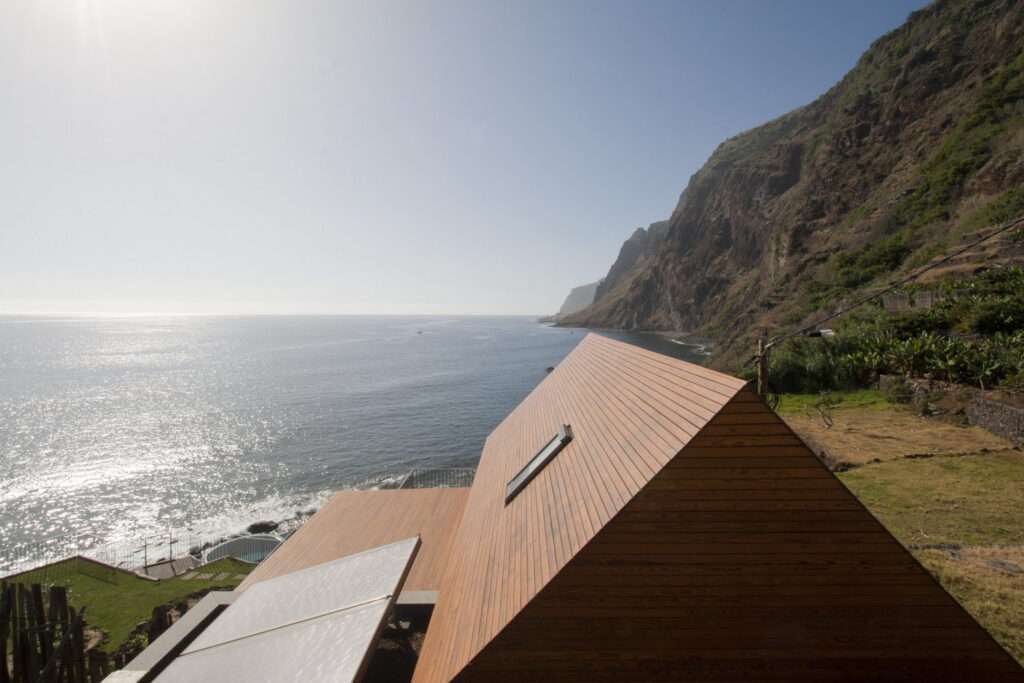
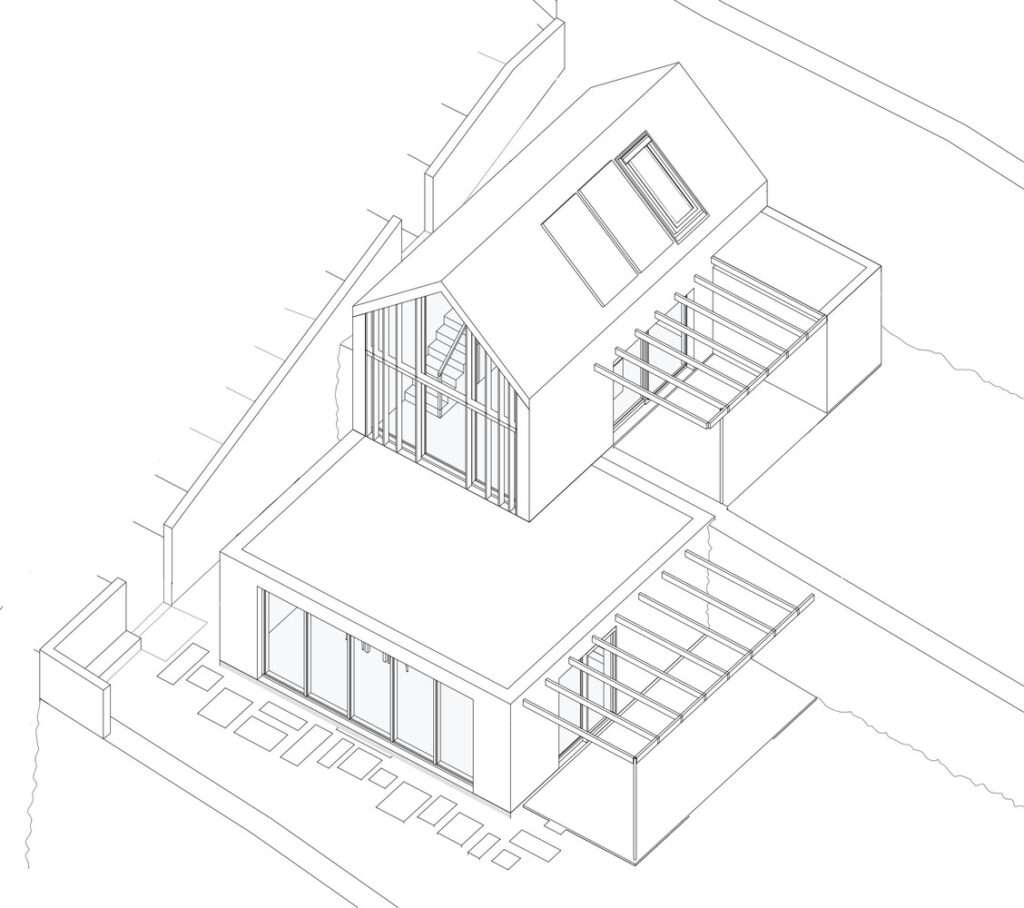
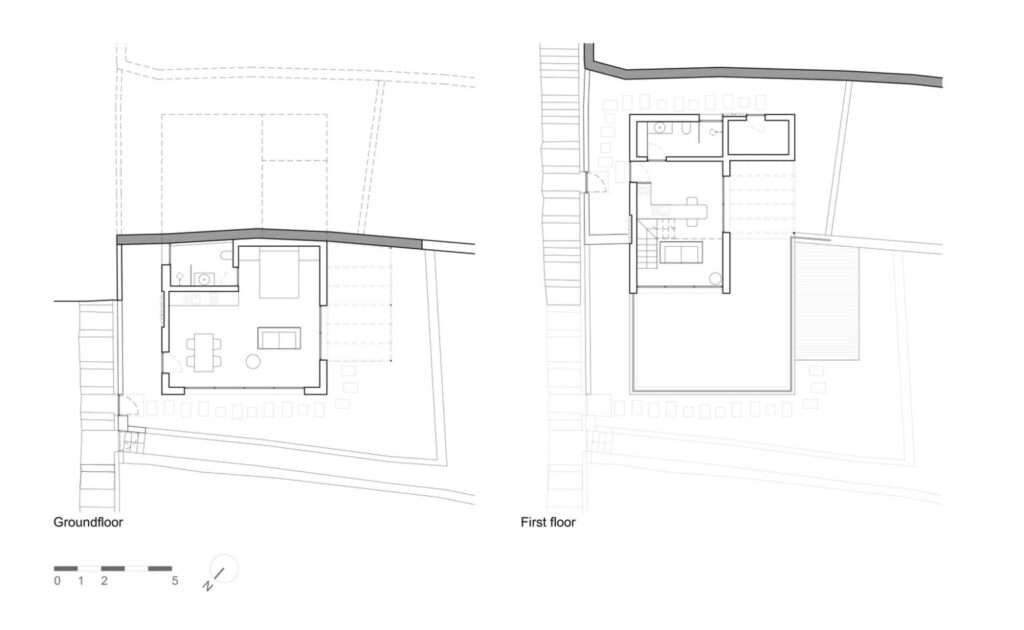
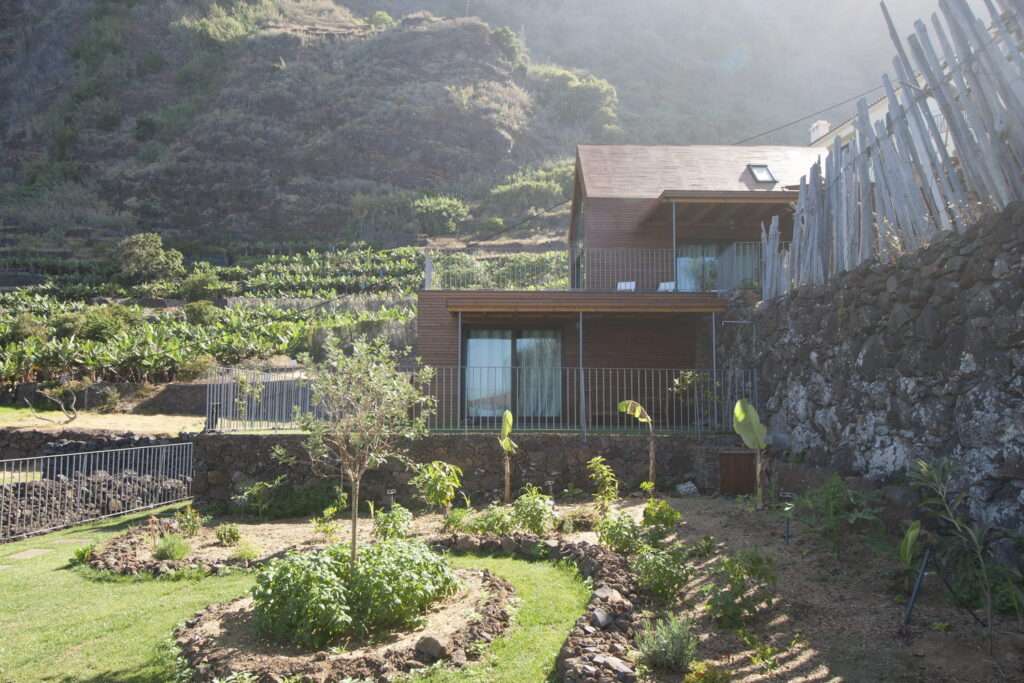
The project emerges from a narrow L-shaped plot situated on the coastal slopes of Jardim do Mar village on Madeira Island, where the design capitalizes on the existing agricultural terraces to organize the architectural program across two separate levels. The two studio apartments were arranged vertically in accordance with the site’s natural gradient, minimizing structural intervention while preserving the direct relationship between architecture and terrain. The northwest orientation also informed the placement of the main openings, framing ocean views and introducing natural daylight into the interior spaces.
| Item | Details |
|---|---|
| Architects | Mayer & Selders |
| Area | 110 m² |
| Year | 2016 |
| Manufacturers | Ezarri, Alunik, Atlantic Wood, BRUMA, Duarte Abreu, Revigres |
| Coordinator | Dirk Mayer |
| Structural Engineering | Luis Canha |
| Constructor | Tomas Canha |
| Author | Dirk Mayer |
| Design Team | Dirk Mayer, Susanne Selders, Elizabeth Nobrega |
| Municipality | Calheta |
| Country | Portugal |
Local Materiality and Preservation of Site Identity
The existing basalt stone wall constitutes one of the project’s defining elements, as the architects chose to preserve and integrate it into the new composition rather than remove it. This decision reflects a direct connection to the site’s traditional agricultural landscape, where dry-stone walls have historically been used to shape terraced fields. As a result, the new architectural volume appears as a natural extension of the existing structure rather than an independent insertion.
Interior Organization and Spatial Experience
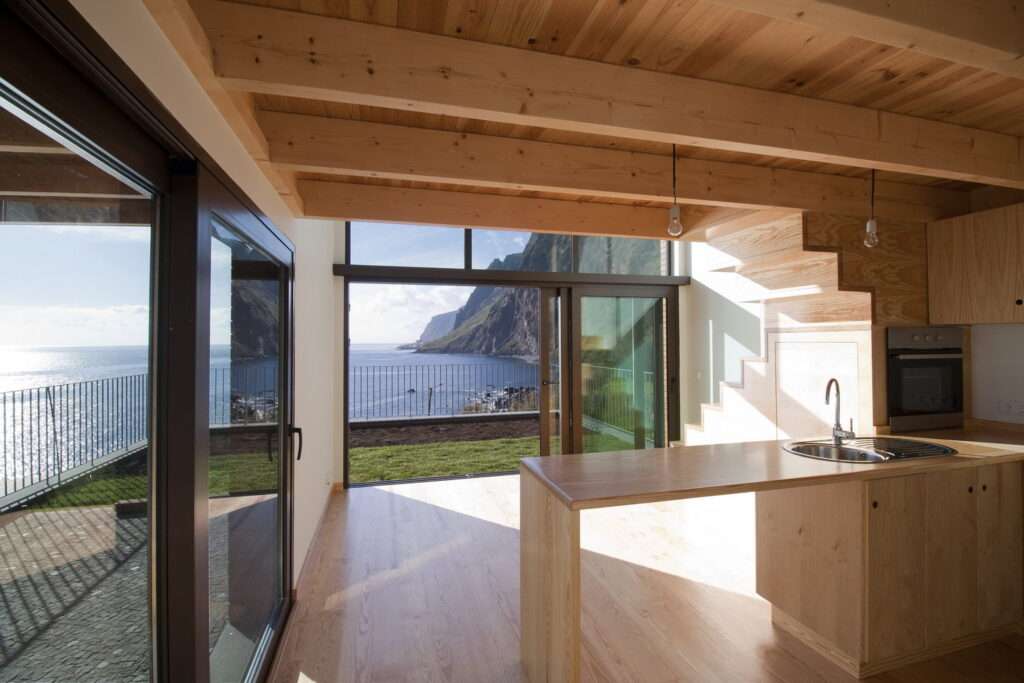
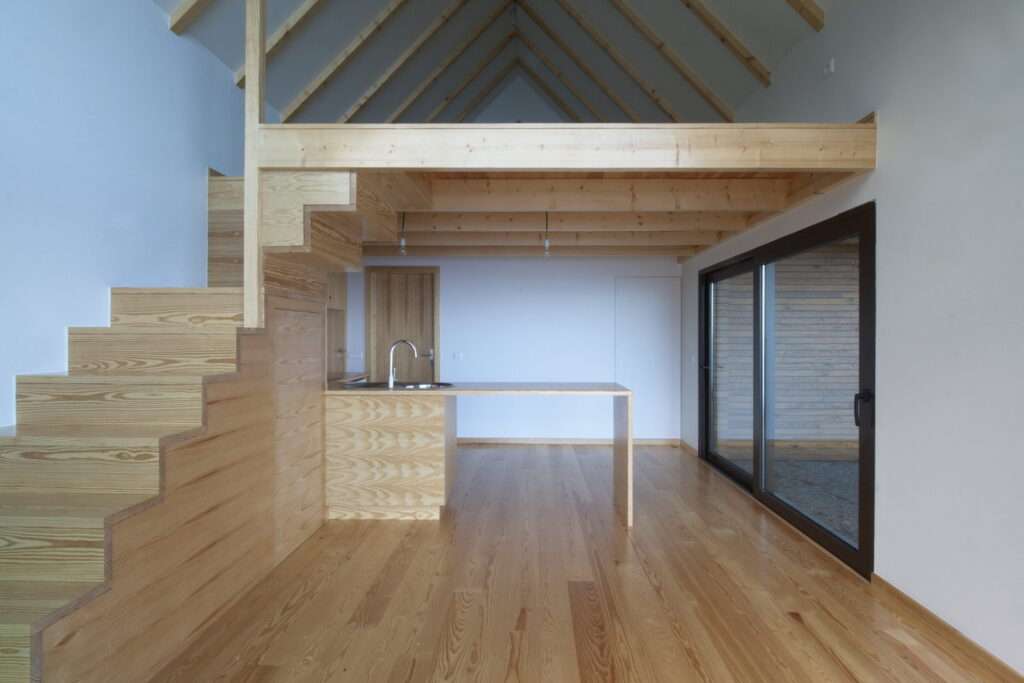
The lower apartment offers a spatial experience based on horizontal continuity through an open-plan layout that combines living, cooking, and dining functions within a single space oriented toward the coastal landscape. In contrast, the upper apartment adopts a vertical organization that takes advantage of a double-height volume and a gabled roof, with an internal staircase leading to a mezzanine sleeping area. This contrast between horizontal and vertical movement gives each unit a distinct spatial character despite the limited floor area.
Functional Compression and Relationship with the Exterior Landscape
In response to the restricted footprint, the staircase, kitchen, storage area, and dining table were consolidated into a single multifunctional furniture element, maximizing the amount of usable living space. The residential experience extends outdoors through a lower terrace featuring a small swimming pool composed of two intersecting circular basins and organic gardens planted with fruit trees and vegetables, allowing natural elements to become an integral part of everyday life.
Construction Challenges and Execution
The site imposed significant logistical constraints due to difficult access and the inability to use heavy machinery, requiring construction materials to be transported manually over a distance of approximately 50 meters. These conditions directly influenced the construction methodology, which relied on restrained and precise building solutions suited to the site’s sensitivity while minimizing disruption to its existing natural structure.
✦ ArchUp Editorial Insight
The project reorganizes residential living within a narrow plot on a coastal slope in Madeira by transforming topography into the governing framework for mass distribution. Through the fragmentation of the program into vertically stacked units that utilize existing agricultural terraces and the preserved basalt wall, the project minimizes structural intervention while reinforcing the continuity of the natural landscape. It redefines the relationship between interior and exterior spaces through a contemporary interpretation of residential density and highlights a rigorous logic of spatial efficiency.
However, this romanticized approach to integrating architecture with local materiality overlooks certain limitations of operational sustainability in contemporary environments. The preservation of stone walls and reliance on manual construction processes can become a long-term economic burden. Furthermore, the dependence on integrated furniture solutions and the reduction of structural and mechanical complexity may limit future adaptability and expansion, particularly in contexts that require building systems with greater flexibility for upgrading, industrialized construction methods, and digitally fabricated building components rather than a slower contextual approach. For further insights into related topics, readers may explore research, notable buildings, and the broader discourse surrounding contemporary architectural practice through discussion.