Mixed-Use Tower to Feature Sculptural Mesh Facade in Miami

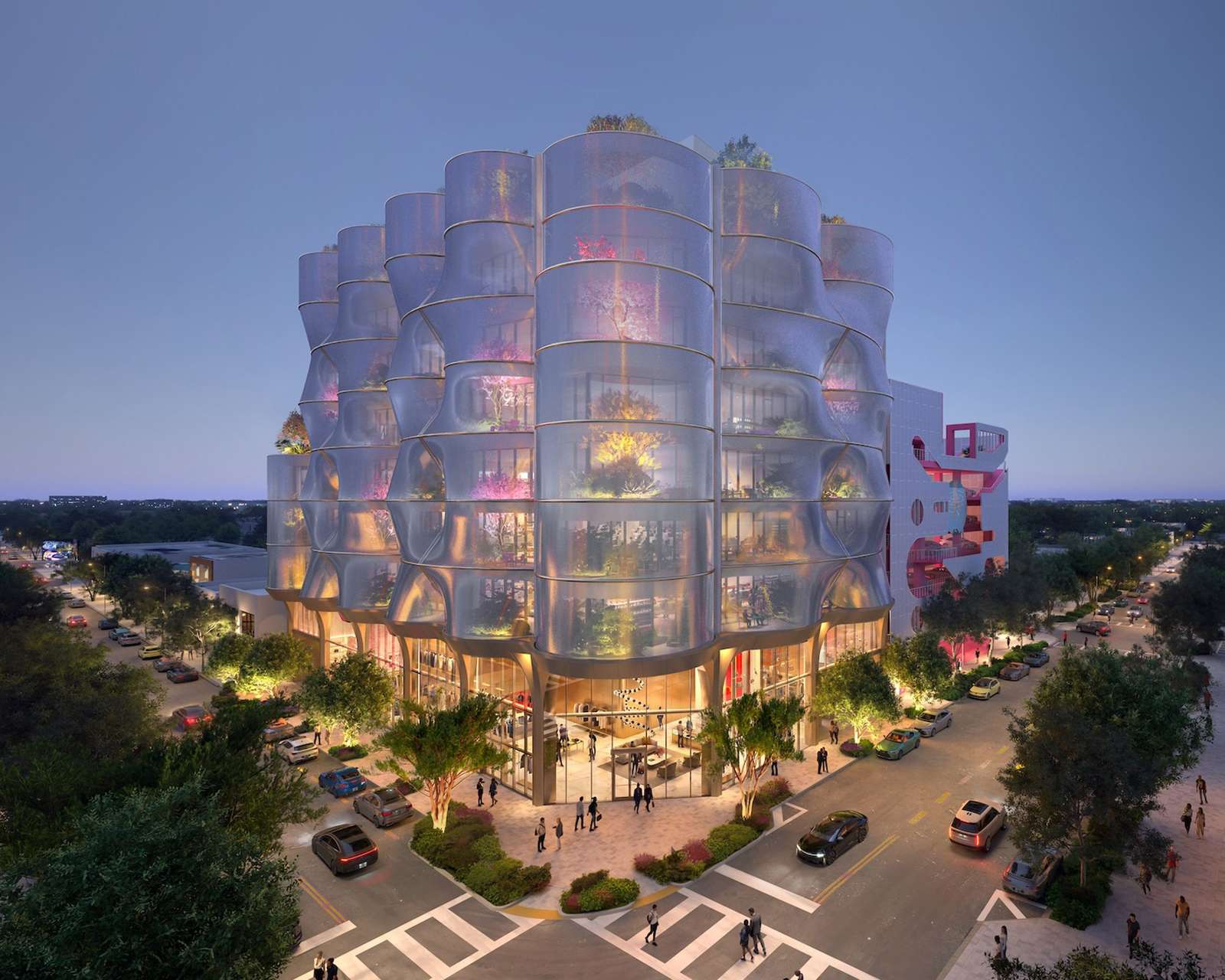
A new eight-story office and retail building will soon rise in the Miami Design District, featuring a distinctive outer skin made of shimmering metal. The project introduces a series of garden terraces behind a semi-transparent screen to provide a calm working environment within the dense urban neighborhood. This development continues the rapid expansion of the district into a hub for specialized architecture and luxury commerce.
The design features two distinct zones that organize the building’s functions. The first and second floors serve as a retail base, which the team designed to connect directly with the street-level activity of the district. Above this base, six floors of office space cater to creative and luxury industries. The floorplates offer flexible layouts to accommodate different tenant needs while maintaining a connection to the outdoors.
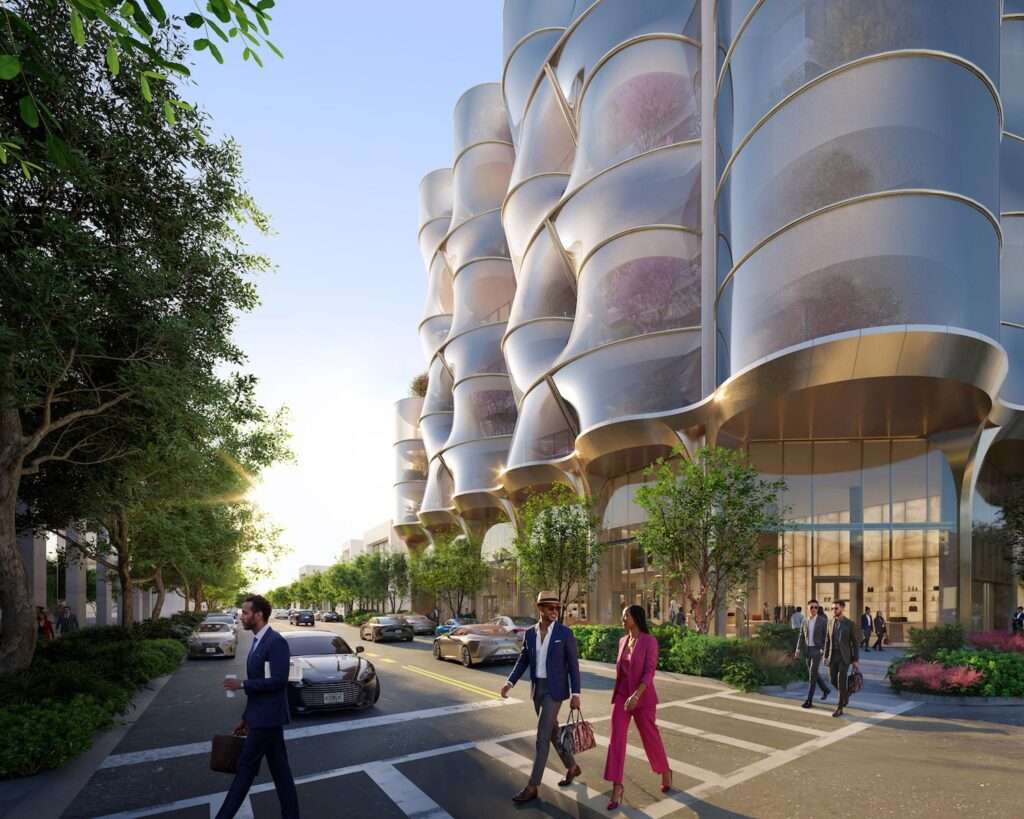
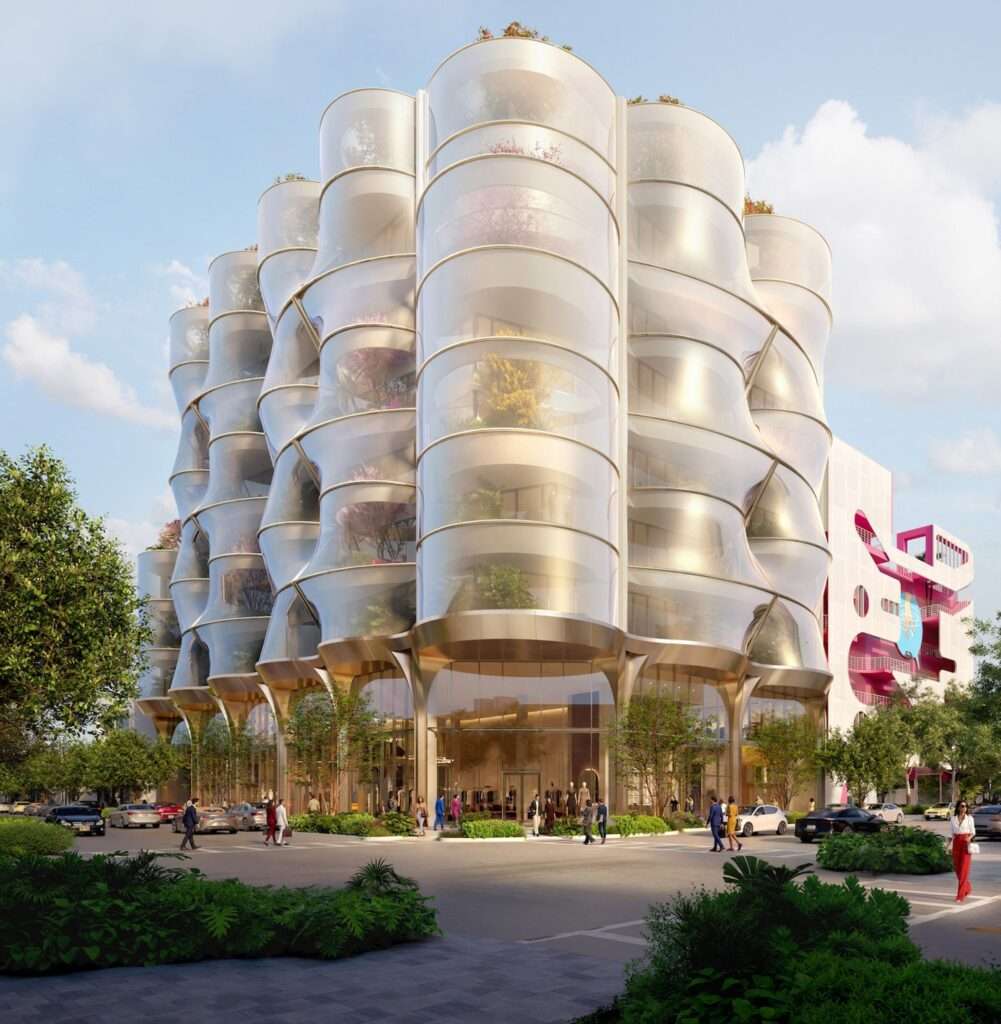
A stainless-steel mesh sunscreen wraps the entire building, acting as a secondary skin. This mesh layer sits away from the glass envelope to create a protected zone for vegetation and terraces. The screen features large, circular dimples that create an undulating, bulbous surface across the facade. These curves catch the light at different angles, causing the building to appear opaque and reflective or nearly transparent depending on the time of day.
Structural Logic and Thermal Comfort
The project follows a regular structural grid where interconnected columns extend upward from the metal-plated base. On the upper levels, the design modulates these columns to allow for outdoor terraces. These deep balconies provide shaded spaces for tenants, using lush plantings to introduce a sense of permeability and soft edges to the otherwise hard construction materials.
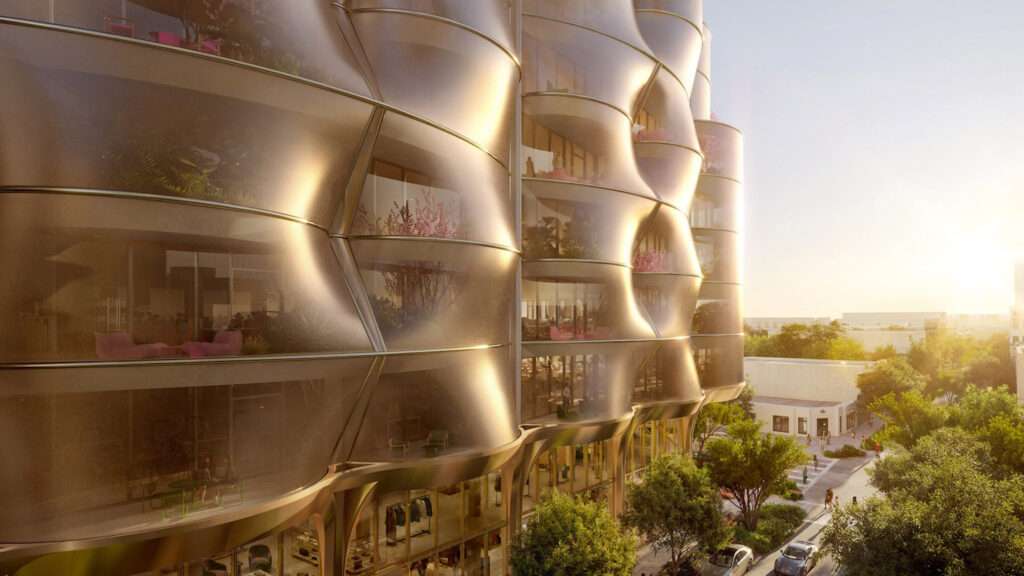
By using a mesh veil, the team reduces solar heat gain while maintaining views of the surrounding city. This passive cooling strategy works alongside the garden spaces to improve the energy performance of the envelope. The team expects to break ground on the project in August of this year and anticipates a 2028 completion date. The building sits adjacent to the existing Museum Garage, adding to the district’s collection of experimental facades.
Facade Depth and Programmatic Rhythm
The project utilizes a dual-skin strategy to resolve the tension between the privacy of commercial offices and the transparency of the street. By pulling the stainless mesh away from the primary glass wall, the design creates an interstitial space—a functional gap between the exterior and interior—where landscape and structure overlap. This depth transforms the facade from a flat surface into a three-dimensional volume. The rhythmic placement of the dimples provides a consistent visual identity, while the flexible floorplates behind the screen allow for a variety of internal configurations without disrupting the external silhouette.
✦ ArchUp Editorial Insight
The project uses a sophisticated metal veil to mediate the harsh Florida sun, turning a functional sustainability requirement into a sculptural urban gesture. This strategy successfully blurs the boundary between private corporate space and the public cities environment through deep, vegetated terraces. However, one must question if this decorative exterior prioritizes visual novelty over genuine environmental performance. While the mesh provides shade, the bulbous geometry appears more focused on achieving a distinct silhouette than optimizing thermal resistance. In a neighborhood known for architectural branding, the building risks becoming another ornamental object in a gallery of facades, where the internal work environment remains secondary to the exterior’s performance as a luxury advertisement. The success of the intervention depends on whether these terraces truly offer usable sanctuary or merely serve as greenery for the street-side viewer.
Project Team: Snøhetta. Location: Miami Design District, Florida, USA.
Project Notes: Developed by Raycliff Capital. Construction begins August 2024. Completion expected in 2028. Mixed-use office and retail program.