PAU and HOK Reveal Redesigned Vision for Penn Station Renovation

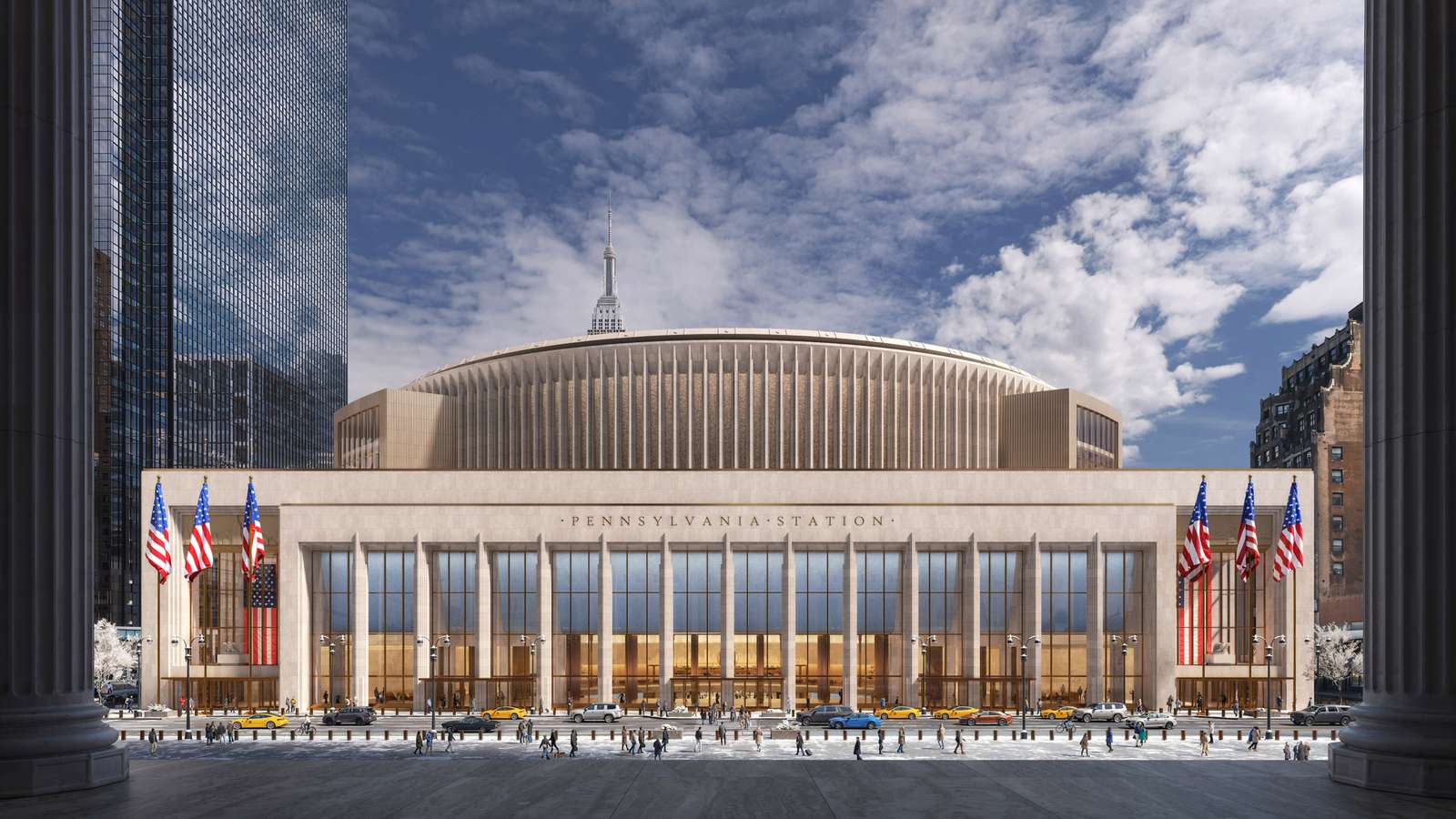
Architecture studio PAU and lead collaborator HOK designed a major renovation for New York’s Penn Station to address the facility’s congested internal spaces and dark concourses. The Federal Department of Transportation and Amtrak selected Penn Transformation Partners (PTT), a consortium led by developers Halmar and Skanska, to execute the redevelopment of the subterranean transit hub. The plan maintains the presence of Madison Square Garden (MSG) while expanding the station envelope to create a more functional and dignified public realm.
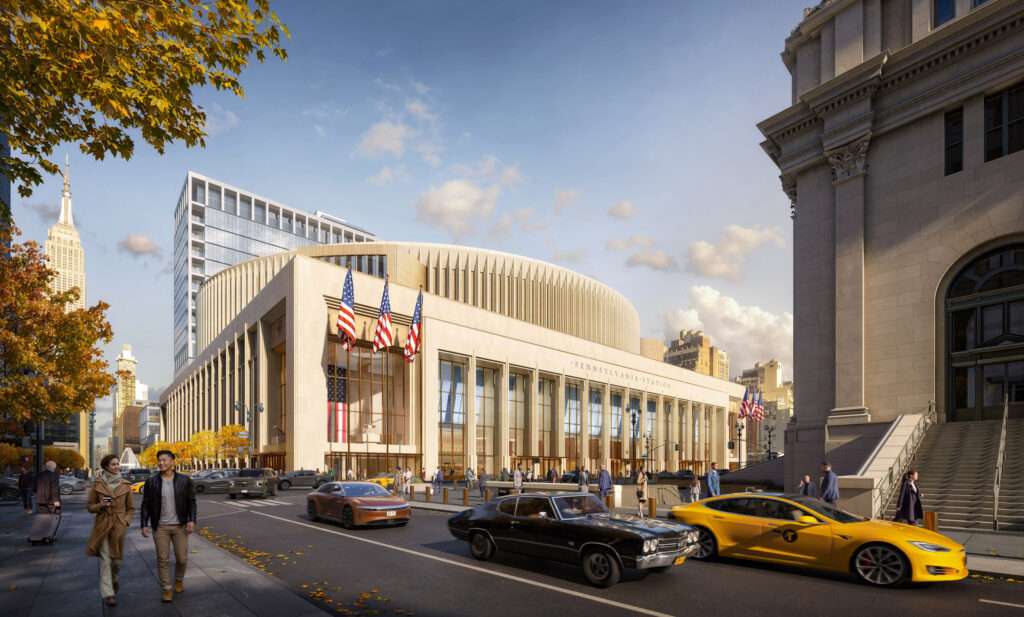
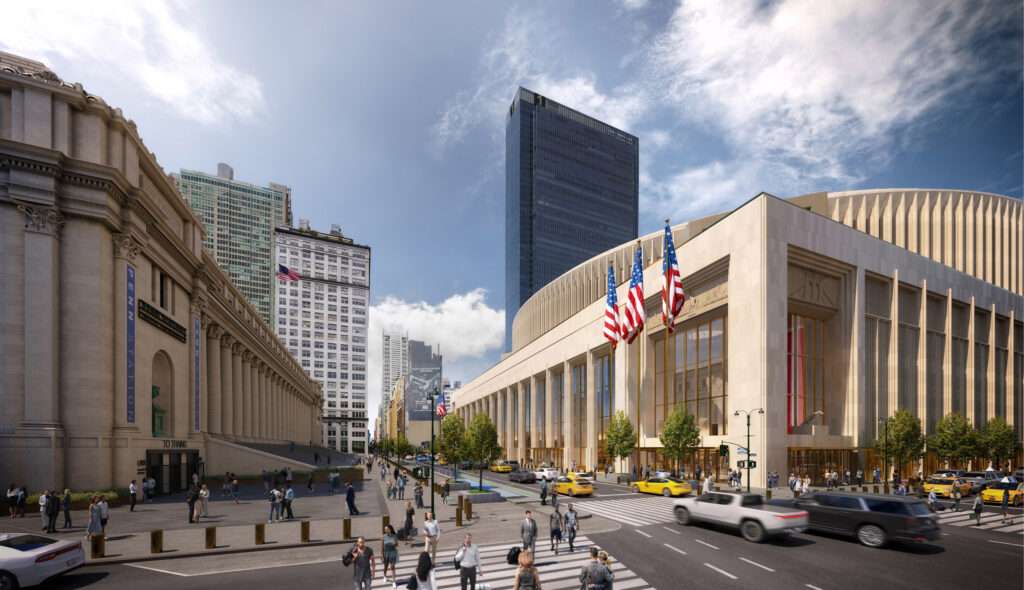
The updated scheme introduces a 450-foot-long colonnade along 8th Avenue, shifting the current MSG entrances to the sides of the structure. This architectural move creates a monumental architecture that references Art Deco and WPA-era federal buildings rather than pursuing direct historical imitation of the original Beaux-Arts station demolished in the 1960s. The design team uses stone, bronze, and layered entablatures to establish a sense of permanence and civic identity without employing gilded ornamentation.
Infrastructural Integration and Material Reuse
The project follows a philosophy of radical reuse by integrating existing structural elements from the current site. The design incorporates the arena’s mast columns into the interior geometry of the train hall, cladding them in ribbed bronze. Additionally, the team incorporates existing columns into stone entry porticos known as “McKim Vestibules.” This strategy allows for significant construction efficiency while modernizing the buildings that currently occupy the block.
Inside the station, a central 50-foot-tall parabolic train hall anchors the interior design. A grand staircase provides direct street access, leading passengers into expanded concourses with higher coffered ceilings. These interventions aim to resolve the labyrinthine nature of the current station by introducing more natural light and clearer wayfinding. The plan also embeds public art and craft throughout the sequence, including the restoration of bronze eagles salvaged from the original 1910 station.
Civic Identity and Operational Capacity
The redesign responds to federal preferences for classical and traditional architecture as outlined in recent executive orders. PAU synthesized these requirements with New York’s specific Art Deco heritage and the work of classical modernists like Eero Saarinen and Aldo Rossi. This approach seeks a middle ground between overtly nostalgic reconstructions and modern transit requirements, ensuring the station meets the political and engineering realities of the present moment.
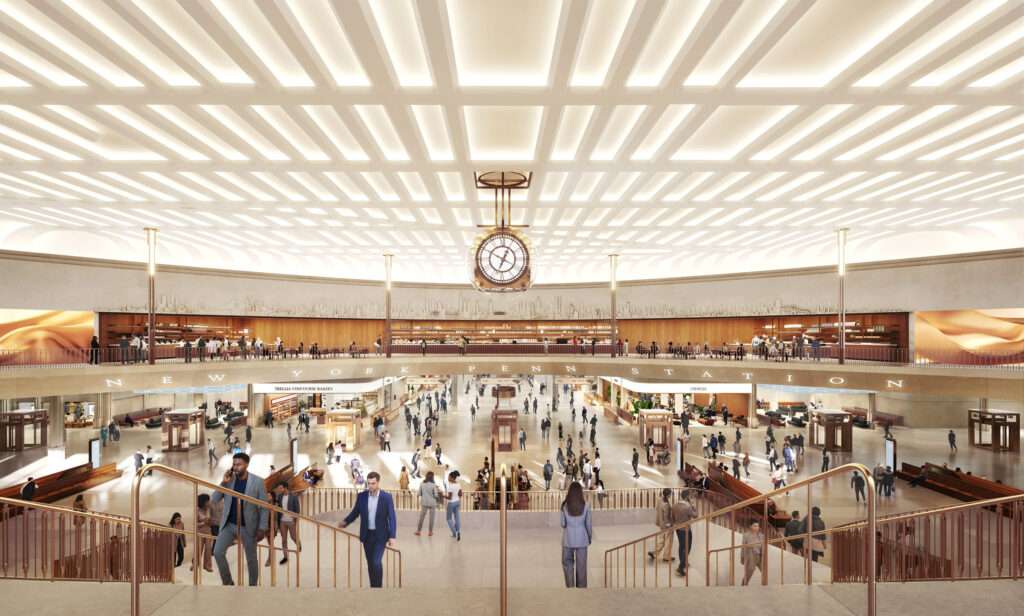
The reconfiguration increases total floor area for retail, amenities, and passenger egress to accommodate hundreds of thousands of daily travelers. Former Transport for London commissioner Andy Byford serves as the project lead and special advisor for Amtrak, overseeing the technical and operational delivery of the renovation. This project follows the 2021 completion of the Moynihan Train Hall across the street, continuing the multi-phase modernization of the district’s transit urban planning.
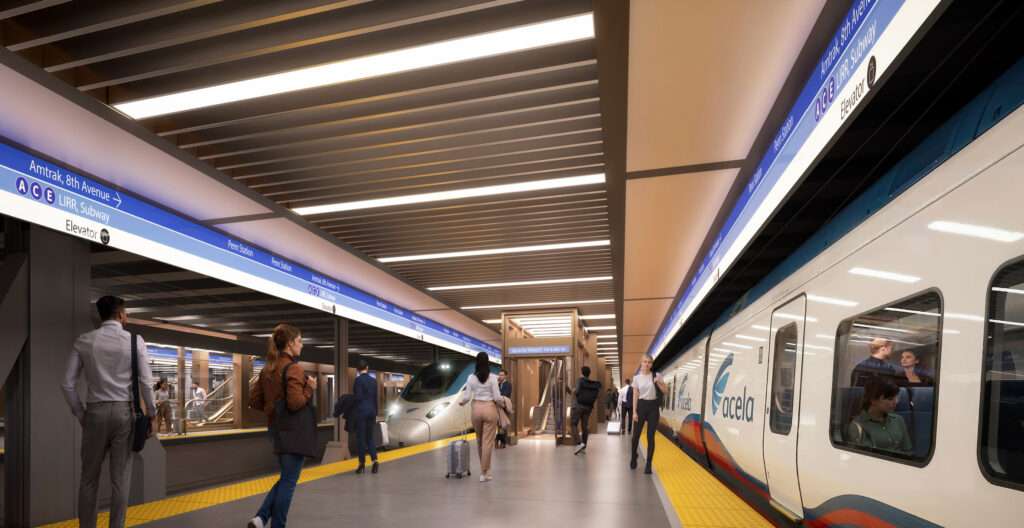
Project Team: PAU (Design Architect), HOK (Architect), Severud (Structural Engineering), Halmar and Skanska (Developers). Location: New York City, USA.
Project Notes: Construction begins in 2027 with a target completion date of 2034. The project incorporates the existing Madison Square Garden structure and salvaged historical elements.