

Amtrak Selects Design Team for New York Penn Station Transformation

Amtrak appointed Penn Transformation Partners as the master developer to lead the comprehensive redesign of New York’s Penn Station. The HNTB–HOK Joint Venture, in collaboration with lead design architect PAU (Practice for Architecture and Urbanism), will oversee the architectural evolution of the busiest transportation hub in the Western Hemisphere. The project aims to convert the existing facility into an efficient, accessible, and civic-minded gateway for the city.
The design team centers its vision on a process of surgical reconstruction. This strategy preserves substantial portions of the current construction while implementing major architectural interventions to resolve spatial shortcomings. The proposal draws inspiration from the original Pennsylvania Station and the adjacent Farley Building to reconnect the hub to the architectural legacy of New York.
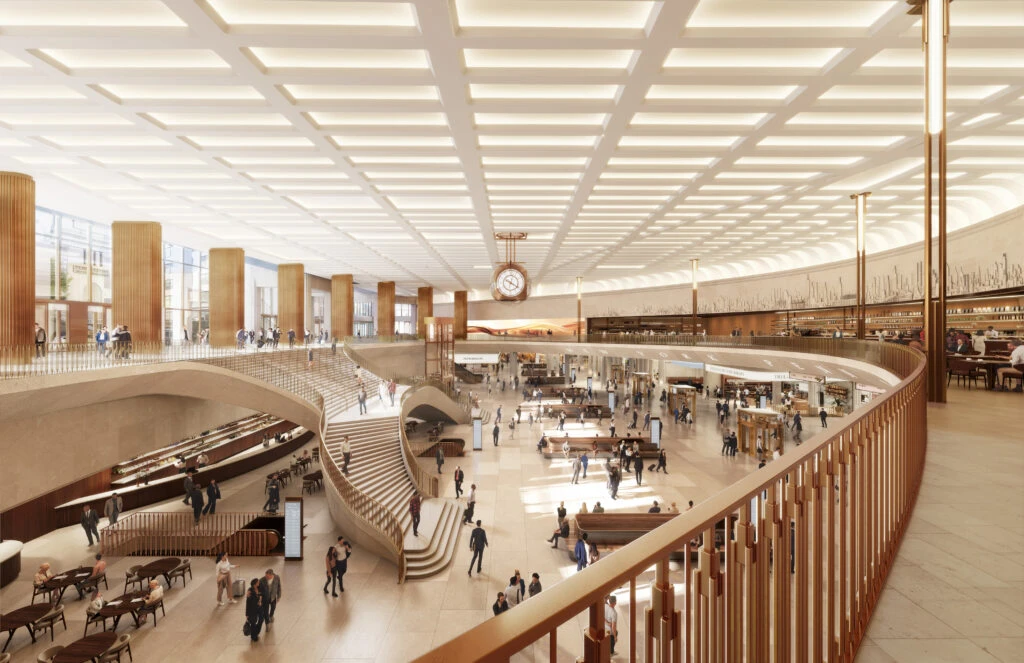
The 1.3 million-square-foot project replaces fragmented passenger routes with a coherent public environment. This reorganization focuses on restoring clarity to the architecture of the transit facility. The team expects the intervention to resolve decades of operational issues through a more legible spatial logic.
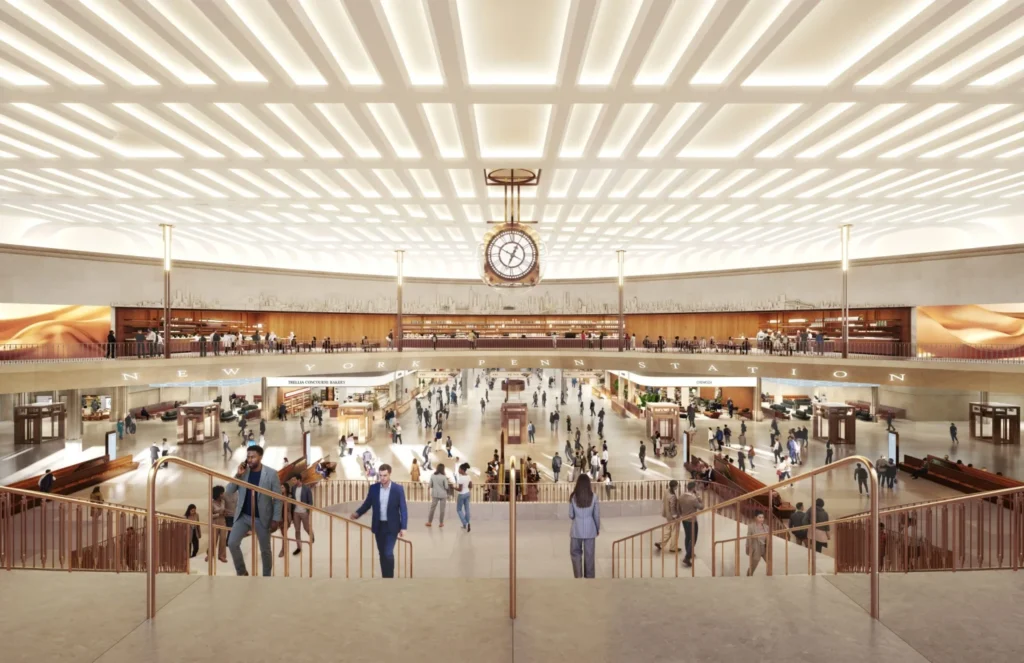
Light-filled halls and reorganized circulation
The transformation introduces a grand new entrance along Eighth Avenue. This portal leads passengers into a spacious, light-filled train hall designed to improve the arrival sequence. Expanded concourses will replace existing constrained circulation areas, providing more volume for the hundreds of thousands of daily commuters who navigate the buildings and platforms.
In addition to the public-facing areas, the design addresses the station’s aging subterranean infrastructure. The plan includes upgrades to track capacity and overall operational efficiency. The design team integrates these improvements with the surrounding urban fabric and Madison Square Garden, allowing the project to proceed without relocating the existing arena.
Upgraded wayfinding systems and new passenger amenities will define the interior experience. HOK describes the station as a critical civic space where the renewal offers an opportunity to restore accessibility and a strong public identity. The project treats the station as an urban repair task that addresses the historical loss of the original structure.
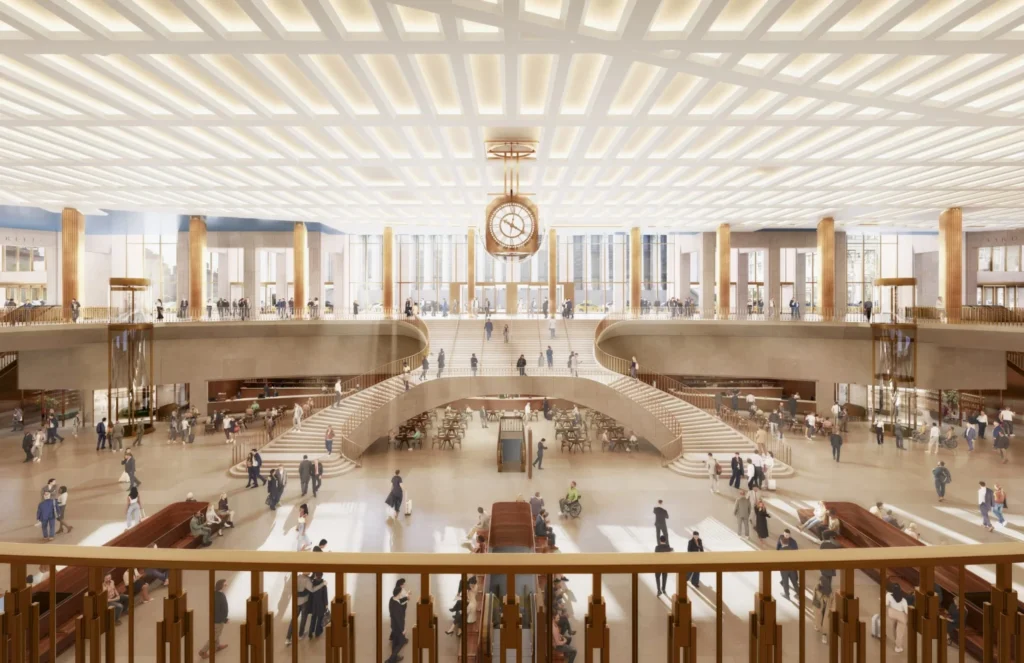
Development timeline and construction phases
Penn Transformation Partners, a joint venture between Halmar and Skanska, currently advances the redevelopment alongside the design firms. Design and development activities remain underway as the team coordinates approvals and permitting. The project partners expect to begin construction in 2027 following the completion of the current design phase.
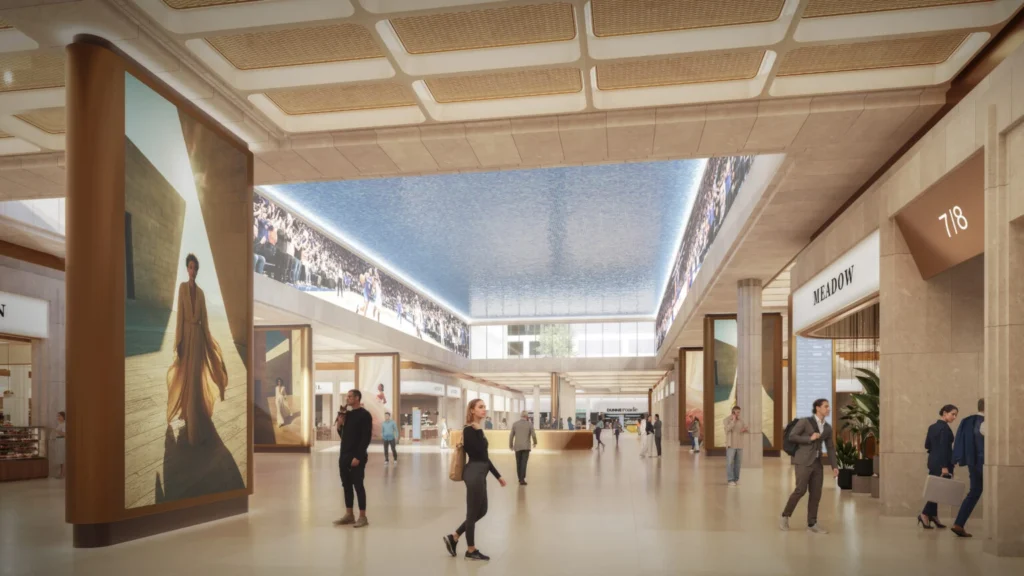
The final configuration will prepare the regional rail network for future growth while improving the daily experience of arrival and departure. By combining contemporary material systems with improved functionality, the project seeks to redefine the relationship between the station and the city it serves.
Project Team: PAU (Lead Design Architect), HNTB–HOK Joint Venture (Architects of Record), Penn Transformation Partners (Master Developer: Halmar and Skanska). Location: New York City, USA.
Project Notes: Design and development phases currently underway. The team expects to begin construction in 2027 following necessary approvals and permitting.
✦ ArchUp Editorial Insight
The Amtrak redesign of Penn Station proposes a radical “surgical reconstruction” to rectify decades of subterranean neglect. By introducing a new Eighth Avenue entrance and expansive, light-filled halls, the design team attempts to restore civic dignity and spatial clarity to a historically fractured architecture. This intervention prioritizes passenger experience and arrival sequences as the primary tools for modernizing New York’s primary transit hub.
However, the refusal to relocate Madison Square Garden creates a permanent ceiling on the project’s true potential for urban repair. While the new design improves circulation within the existing footprint, it remains a secondary layer pinned beneath a massive private arena. This compromise suggests that even the most ambitious transit upgrades must navigate an intractable reality where corporate real estate interests outweigh fundamental infrastructural transformation in major cities.




⚠️ Editorial Warning:
Please note that this article appears to place excessive focus on the architect rather than the building itself. This approach conflicts with ArchUp’s editorial direction, which prioritizes the documentation, analysis, and archival value of architecture over individual promotion.
Please review our editorial guidelines before publishing similar content:
https://archup.net/editorial-guidelines/