The Architecture of Recovery: How Spatial Design Treats Psychological Fatigue and Ensures Visitor Return

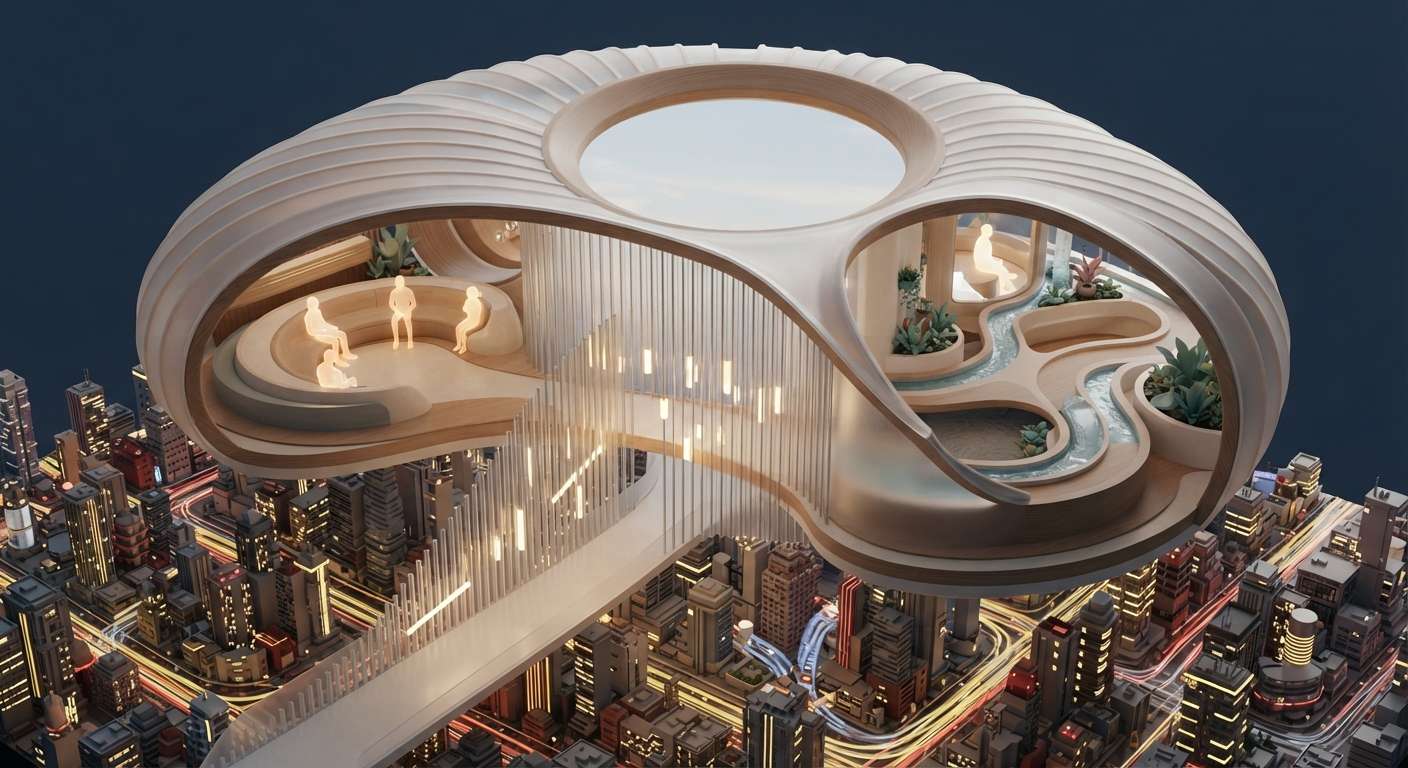
Have you ever returned from a trip feeling more exhausted than when you initially left? The secret does not lie in the duration or cost of the journey, but rather in the “spatial architecture” you inhabited. In an era where cities constantly compete for our attention, our minds increasingly suffer from what is known as “directed attention fatigue.” Here, the role of the architect or urban planner extends far beyond designing appealing facades or functional circulation paths; it assumes a distinctly therapeutic dimension. Ultimately, the built environment’s capacity to restore the depleted cognitive and psychological resources of its visitors determines whether they will decide to return to this space or abandon it entirely.
Formulating Space as a Therapeutic System
The design philosophy of psychologically comforting spaces builds upon “Attention Restoration Theory,” which researcher Xinran Y. Lehto redirected toward the urban and tourism environment. Lehto’s research demonstrates that destinations can be systematically evaluated based on their restorative properties. These include the space’s ability to mentally and physically separate visitors from their routines, the compatibility of the design with user inclinations, and the unforced fascination of the location. Together, these urban dimensions comprise more than just an aesthetic experience; they account for over half the variance in overall visitor satisfaction, with the compatibility between spatial identity and visitor needs serving as the strongest predictor of a location’s success.
The Architecture of Separation and Emotional Healing in Urban Heritage
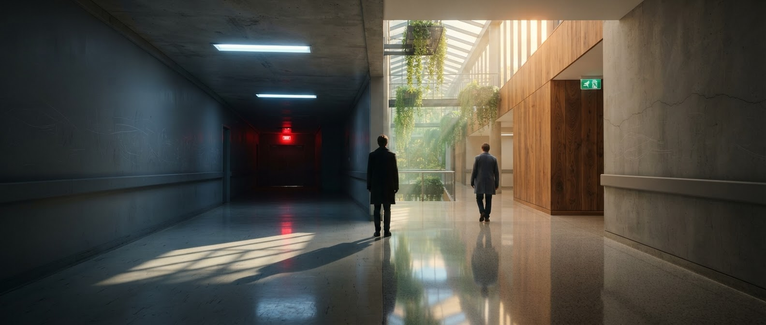
Designing a restorative space does not necessarily mean creating complete visual isolation. Instead, it relies on the architect’s ability to construct a spatial sequence that transitions the user from the noise of daily life into a state of mental detachment. This dynamic becomes clearly evident in studies led by researcher K. S. Cho and his team on visitors to cultural and heritage sites, where they found that the design of circulation paths in royal shrines generates a state of “emotional healing.” This healing, translated architecturally through spatial scale and visual depth, proves to be the most powerful driver of a visitor’s intention to return, surpassing even general satisfaction levels. A visitor who experiences genuine psychological recovery within a space develops a conditioned attachment that compels them to return to it.
The Anatomy of Fascination: When a Place Captures Our Senses Effortlessly
Architectural fascination functions as a powerful psychological tool rather than mere superficial ornamentation. Researcher Liu and colleagues developed a multidimensional scale to understand “destination fascination,” revealing that spaces characterized by spatial mystery, visual richness, and uniqueness involuntarily draw users into deep engagement without requiring any mental effort. Whether the space is natural or built, this type of fascination integrated into the design fabric contributes directly to establishing spatial loyalty. It ensures that users not only return but also become enthusiastic advocates for the space.
The Trap of Urban Discord: How Design Drives Visitors Away
Just as design can heal, it can also drain. In an in-depth study conducted by researcher Packer, evidence shows that competent spatial planning can render a short three-day break more effective for cognitive restoration than a vacation spanning several weeks. The architectural secret here lies in minimizing what is known as “discord,” or visual and operational noise. Spaces suffering from chaotic planning, poorly designed wayfinding systems, or unmanaged overcrowding impose a heavy cognitive burden on the visitor. This architectural discord completely negates any restorative benefits of the location, confirming that the quality and fluidity of a space matter far more than the duration spent within it. This reality addresses the need for designers to create sanctuaries free from disorienting distractions, as demonstrated by the studies of researcher Gill and his team regarding the design of spiritual retreats, which necessitate the architectural separation of visitors from technology and the clamor of daily life.
The Culture of Space: Does Everyone Recover in the Embrace of Nature?
One of the most common architectural misconceptions asserts that only natural spaces possess the capacity for restoration. Although studies, such as those led by Arbelo and his team, demonstrate the power of mountain and coastal spaces, the cultural dimension of the user significantly shifts this equation. In cross-cultural comparative research conducted by Lehto and his team, an intriguing paradox emerges: Chinese tourists found bustling urban environments rich in social and educational activities more capable of treating their psychological fatigue than quiet natural spaces. This stems from a cultural framework that views social connection and developed infrastructure as sources of safety and recovery. Conversely, studies by researcher Lu and his team highlight the importance of “compatibility” in rural spaces to achieve visitor satisfaction. This places a critical responsibility on urban planners; the restorative space is not a one-size-fits-all template. Instead, it must be designed with the flexibility to accommodate the user’s cultural code, meaning an intelligently designed, bustling city square can function as a therapeutic sanctuary rivaling a tranquil forest.
✦ ArchUp Editorial Insight
The growing institutional interest in “restorative architecture” is not primarily a response to human psychological need. It is the logical outcome of a tourism economy increasingly dependent on repeat visitation metrics, where destination managers face direct revenue pressure to convert single-visit tourists into returning consumers. The therapeutic spatial language emerging from Attention Restoration Theory enters architectural practice not through public health policy or urban welfare mandates, but through destination competitiveness frameworks and hospitality investment logic. When compatibility and fascination are measured as predictors of revisit intention, they are being operationalized as retention instruments. The built environment, in this context, is being optimized for behavioral loyalty rather than genuine recovery — a distinction that the research itself leaves largely unexamined.
References
[1] Lehto, Xinran Y. “Assessing the Perceived Restorative Qualities of Vacation Destinations.” Journal of Travel Research, 2012.
[2] Cho, K. S., Um, S. H., & Lee, T. J. “Perceived Restorativeness of Visits to Cultural Heritage Sites.” Asia Pacific Journal of Tourism Research, 2015.
[3] Lehto, Xinran Y., Kirillova, K., Li, H., & Wu, W. “A Cross-Cultural Validation of the Perceived Destination Restorative Qualities Scale: The Chinese Perspective.” Asia Pacific Journal of Tourism Research, 2016.
[4] Lu, J., & Amponstira, F. “The Effect of Perceived Environment Restorative Qualities on Chinese Visitors’ Satisfaction in Rural Destinations.” Management Science Letters, 2020.
[5] Liu, C. R., Wang, Y. C., Huang, W. S., & Chen, S. P. “Destination Fascination: Conceptualization and Scale Development.” Tourism Management, 2017.
[6] Arbelo, K., Delgado, N., Ruiz, C., & Hernández-Fernaud, E. “The Role of Perceived Restorative Capacity and Crowding on Satisfaction: A Study in Different Tourist Spaces.” International Journal of Social Psychology, 2021.
[7] Packer, J. “Taking a Break: Exploring the Restorative Benefits of Short Breaks and Vacations.” Annals of Tourism Research Empirical Insights, 2021.
[8] Gill, C., Packer, J., & Ballantyne, R. “Spiritual Retreats as a Restorative Destination: Design Factors Facilitating Restorative Outcomes.” Annals of Tourism Research, 2019.